OBITUARIO
Paul L. Lyman
19 julio, 1926 – 8 mayo, 2018
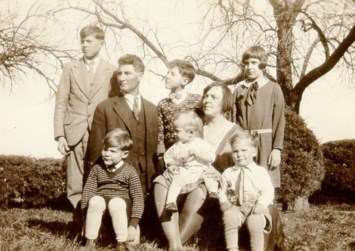
Paul l. Lyman was born on July 19, 1926 to Raymond S, Lyman and Alice R. Lyman in Burrton, Kansas. Paul was the 5th child, following - William, Dorothy, Richard, Merrick (Mike) and Eugene would follow after Paul.
This was written by our father, Paul. L. Lyman, many years ago:
My life on the Kansas plains was quite different in the '20s & '30s than it is today. We didn't feel deprived--it was just different. For instance, electric power from the utility company was not available until I was about 15 years old. Of course, that meant that we didn't have electric lights, electric motors, convenience outlets every four feet around every room, no forced air furnaces or air conditioners or indoor plumbing. During the 30's brother Bill installed a wind-powered generator to charge a 6 volt battery, which was used to operate a radio. We spent many a night listening to programs like "Lux Radio Theater", "The Jack Benny Show", "Fred Allen", "I Love A Mystery", "The Texaco Hour", "Grand Central Station" and many others. The living room (we called it the front room), dining room and the kitchen were heated with a wood-burning stove, until about 1938 when it was replaced with an oil-burning stove and that was replaced with a butane floor furnace around 1940. Light to read by was provided by gasoline-fueled Coleman lamps or kerosene-fueled wick-burning lamps. Water came from a hand pump at the kitchen sink. Winter baths were taken in a portable tub by the kitchen stove. Summer showers were taken under a 55 gallon drum of solar-heated water pumped up by the windmill. Any food items requiring "refrigerator like" storage were kept in grandmother's ice box. My grandparents lived in a house directly across the road from our house. Ice was delivered twice a week by a delivery man. It was quite a treat when the delivery man came because he would give my brother Gene and I a small chunk of ice to suck and chew on.
We had to wash dishes, make beds, learn to cook, milk the cows, feed the horses, mules, sheep, hogs, chickens and pets and all sorts of other cruel things, like tend the garden, plow and till the fields, put up the hay, harvest the crops, etc.
I attended Victor Grade School, a one room school house for 8 grades. The school was about one and three quarters of a mile from our house--if one went by road. During most of the year we walked across the fields which saved about one half a mile of walking. I remember sitting at my desk as the upper grades recited their lessons. I always felt that was an advantage to me, I was able to learn from the successes and failures of those pupils. After I had completed the first four grades, the school house was replaced with a larger building that allowed separation of the first four grades from the rest of the eight grades. As I remember it we had about 13 pupils when I started school. This grew to about 40 when the children of the oil field workers moved into the area in 1937. That was the year that I contracted rheumatic fever and was bed ridden for about three months. Fortunately I was able to keep up on my school work and was promoted to the next grade without interruption. I was like most students--I enjoyed recess as much as anyone. We played tag, softball, did track and field items. We usually did well against other schools in the area. I could high jump better than most of the other kids--never did too well in pole vault.
I attended Haven High School which had an enrollment of about 140 students. Going to high school meant driving or riding in the car with my brother, Mike, until he graduated. I would have driven in my junior year--except that the school district decided it was time to furnish bus transportation for the students. I was really disappointed!!! While other family members drove to high school they always had to go home right after school to attend chores. With the buses, we were allowed to stay after school and participate in extracurricular activities. I made it to the varsity football team. Unfortunately, at 140 pounds I didn’t knock down many opposing linemen. I did better in a couple of stage plays and the men’s glee club.
Social life during those years centered on the activities at our local United Brethren Church (now merged with the United Methodist Church), the school, neighbors or with family and relatives. We occasionally attended a "picture show" in Haven or Hutchinson. Summer band concerts were held every Saturday night in the Haven town square. Family reunions were rather frequent. 'We always had a celebration at birthdays--including lots of home made ice cream and cake. Thanksgiving and Christmas meant bountiful feasts.
During my senior year of high school, I enlisted in the Army Air Corps to be called soon after my eighteenth birthday for training as a future fighter or bomber pilot. As it turned out, I wasn't called until January 19, 1945. My basic training was completed at the Kessler Army Air Base in Biloxi, Mississippi. My next assignment was to "On Line Training" (OLT) at the air base in Bakersfield, California. OLT cadets were given this type of assignment because the need for pilots had greatly diminished, so we were placed in a "holding pattern" so to speak, until a decision about our future could be made. Since I had taken typing in high school, I was assigned as the company clerk. It was my job to issue on arrival and receive on departure a gas mask for each arriving and departing officer assigned to the base. While stationed in Bakersfield, I was fortunate in being able to take some weekend passes to travel to Los Angles and Santa Barbara. In Los Angles I visited the Hollywood USO Cantina and the home of Fred DiAgistino, Art Director for RKO Pictures. He hosted a cocktail party for lonely servicemen. The trip to Santa Barbara was to visit some Lyman relatives—also welcome to someone away from home for almost nine months. After three months of luxurious living in the California desert, the Army decided there wasn't a need for OLT cadets but they needed aerial photographers--so I was sent to Lowry Field in Denver to study photography. Three months later--we don't need photographers--would you like to be aerial gunners--or given a discharge and sent home? Of course I thought it was time to get on with my life so I went home to return to college.
I particularly remember two summers between college years when Mike and I worked for the Haven Alfalfa Mill to save money for college expenses. The first year we worked 12 hours per day, seven days per week for 70 cents per hour--no overtime bonus either. The good thing about it was that we didn't have any time to spend the money. The following year the pay was raised and overtime paid, but we made less money because they shortened the work week to 40 hours. The only vacation that I can remember was during World War II when there was a shortage of workers to pick fruit in Colorado. Gasoline was rationed, but the government was providing extra ration stamps to anyone willing to drive to Colorado to pick peaches. Our car load consisted of Father, Mother, Gene, Aunt Grace, Sister-in-law Reba and I. We spent about a week in Grand Junction, Colorado picking peaches and apricots. On our way home we drove through Cheyenne, Wyoming to visit Dorothy. She was working as a nurse at the local hospital.
I spent one semester before and one semester after army life at the Hutchinson Junior College. By then Mike was back from the Marines and Gene had finished high school. On a trip to Manhattan to checkout K-State, Mike and I determined that suitable housing was not available for the 1946 school year; therefore we decided to buy a mobile trailer and move it to Manhattan (the trailer was just barely suitable, it contained a sofa that made into a bed and the dining table dropped down to provide another bed--but we survived). Gene and Fred Bennett, a neighbor from the community, joined us in our quest of engineering degrees. Mike and Gene switched to Agricultural Business degrees; I continued and completed my studies in 1952 with a Masters in Agricultural Engineering. I don't remember what happened to Fred.
I didn't try out for K-Sate varsity sports--I'm not sure whether it was because I didn't feel that I could spare the time from my studies or whether I thought I wouldn't make the team. I did play intramural sports--touch football, volleyball and basketball. An incident in one of our football games put me in the student hospital (overnight) for my first ever hospital stay. One of the opposing linemen kicked my ankle and the swelling was so bad it was thought to be broken--it wasn't.
During those "fun filled college days" I met, wooed and wed Jo Ann Stroup. Jo Ann's childhood was entirely different from mine. She grew up in the city--I grew up on a farm; she was an only child without a mother—I had four brothers a sister and a mother. The Great Depression (as far as I was concerned there wasn’t anything “GREAT” about it) of the thirties was probably harder on city dwellers than it was on farm people—at least we were able to raise the food we needed to eat.
At K-State, Jo Ann joined the Alpha Xi Delta sorority and I joined the Kappa Sigma fraternity. We spent many hours studying in the library, talking at the student union, dancing at "hour dances" at her sorority house or my frat house, and attending social or collegiate functions. Our wedding was held in the Chelsea Baptist Church in Kansas City, Kansas on October 2, 1949. That was followed by a three-day honeymoon in Excelsior Springs, Missouri (I had been on my job for only three months and that was all the time off I could get). Later we were to travel to Hawaii, the Philippines, Hong Kong, Japan, Canada England, Scotland, Wales and Mexico but more on that later.
It seems that the "Firsts" of our life are the easiest to remember--first marriage, first child, and first job. I had more children and jobs but I am very happy that there has been only one marriage.
The job market for college graduates was quite slim in June of 1949. The head of the Agricultural Engineering department said he wanted me to work for him, but money for the position had not yet been made available. Brother Gene had decided to operate a custom wheat cutting crew and I said I would help him until the College position became available. As it turned out, that was July 1, 1949. I moved what little worldly goods that I had to Manhattan and rented a one bedroom duplex on South 15th Street for $50 a month--sounds cheap today but it was 20 percent of my monthly salary. I worked and kept house until our marriage in October, traveling back and forth to Kansas City at every opportunity.
The job was titled "Research Engineer"; the work was funded by the Committee on the Relation of Electricity to Agriculture. The committee received their funds from the public electric utilities of the state of Kansas. During the three years that I was there, we convinced the Rural Electric Cooperatives that it was in their best interests to also contribute to the committee's efforts. Studies were completed on the use of any form of electric devices such as: electric blowers in grain drying, ensilage unloaders, portable grain elevators, solar driers, and my favorite, the heat pump. Most of my time was spent on studying methods of obtaining heat for the heat pump. We installed buried pipes in various soils; we used well water and air as heat sources. One of the studies entailed my traveling to Stafford and Reno counties once a month to collect data on heat pump installations in the farm homes. This also gave me the opportunity to visit my parents more frequently.
While I was employed full time, I was allowed to take 5 hours of classroom instruction (per semester) toward my Masters degree. My Masters thesis was written on the heat pump--everything just seemed to fit together--get paid for doing the work and be able to use the information for my thesis. It was at this time that I took seriously the sport of bowling. We had a team made up of members of the Ag Engineering staff. I got a free bowling ball by selling one year Saturday Evening Post subscriptions to the team members. Summer activities included forming a softball team to compete in the city league. We won the championship one year! I played left field (and probably hit a ton--but I don't remember).
In that first year, Jo Ann started to work at the Building and Repair Department` of the College. Little did we know that Jo Ann's start in the "Facilities" world would be the forerunner for my career in Facilities at Boeing and Northrop.
We both kept busy with our sorority and fraternity groups, in fact the Kappa Sigs asked us to be House-parents for two summers while we were in Manhattan. So we moved out of our duplex to spend the summer at the Kappa Sigma house. Diane was born on August 12, 1950 at the Manhattan Parkview Hospital. She caused quite a stir the first year she was at the Kappa Sig house. She even made it to the front page of the Campus News.
One of the activities that I enjoyed as a member of the College staff was being able to attend the annual meeting of the American Society of Agricultural Engineers held in Chicago. Chicago in late December is not always pleasant, but the meetings were always interesting. At the meeting in 1951, a man named Bob Owen from the Pineapple Research Institute was interviewing candidates for the position of plantation engineer for the California Packing Corporation (CPC) in the Hawaiian Islands. I thought that sounded interesting, so I brought all the info back to discuss it with Jo Ann, more as interesting conversation than a serious proposal. Well as you know, we were soon off to San Francisco to discuss the move with the Vice President of Pineapple Operations, Mr. L.W. Jongeneel. We left Diane with Mike and Phyl--we were devastated that she was calling them "Mommie and Daddy" when we got back! Fortunately, she relearned who her parents were quite rapidly. Before leaving Manhattan, I spent some time at the grocery store trying to find out what products CPC packed--I never found out until our conversation with Mr. Jongeneel (it wasn't too long after that the board of directors decided to change the company name to Del Monte).
After returning to Manhattan and some anxious waiting on a Del Monte decision, I hurriedly finished my Master's thesis and prepared for my oral exams. The offer came in mid-February. In two weeks we finished the masters work, prepared for the trip and said goodbye to our families. By early March we were off to paradise!
The next day we drove to Long Beach where we would board the Matson Line luxury liner "Lurline" to sail to Honolulu. Being land locked-Kansans, we had no idea nor were we given any guidance on the type of clothes that we should have to enjoy a cruise. For instance the last evening out before arrival in Honolulu was a formal dinner affair, and of course we didn't have any formal wear with us. The crossing took four and a half days--I really got tired of seeing nothing but water day after day. I kept wondering how that water could be used on all the dry land of the world to grow crops. The fact that I got seasick probably had something to do with it.
As we entered the Honolulu harbor, we were fascinated with the native divers and their retrieval of coins tossed overboard by the ship's passengers. We were watching the people lined up on the pier waiting to greet the incoming passengers, when we spotted a tall man holding a sign, "LYMAN". It turned out to be the plantation manager, John Hoxie, and his family from Molokai to greet us and make sure that we got to Molokai as soon as possible. It seemed as though they were afraid that if we stayed on Oahu too long, we might not make it to Molokai. They did allow us to spend the night at the Royal Hawaiian Hotel before boarding a Hawaiian Airline DC-3 for the trip to Molokai.
We moved into the company guest house, until our furniture and household goods arrived from Manhattan. The house was perched on the mountain-side above the main portion of the plantation. It had a marvelous view of the island and the surrounding ocean. Of course, one of the first things we did was to go into the field next to the guest house and pick a pineapple to eat. It was delicious (or so we thought, until we found out later that it wasn’t quite ripe and that the really sweet pineapples were found at a lower elevation, where it was warmer and received more sunshine). The first days were full of social activities to integrate us into the Del Monte family.
My job "Assistant Plantation Engineer" was to assist the Plantation Engineer, Jim Sullivan. He was responsible for building and maintaining the plantation buildings (including the employee’s houses and recreational facilities), equipment and utility systems, except for the telephone and electricity. We purchased them from the local utilities. Much of the agricultural equipment used in raising pineapple was designed and built by the company; therefore, spare parts had to be made in our own machine shop and repairs were accomplished by our mechanics--there weren't any local machinery dealers to assist us in maintaining the specialized equipment.
Molokai Ranch owned the land and leased it to Del Monte and Libby for their pineapple growing operations on the island. The ranch was owned by George and Sophie Cooke, both of whom were descendants of early missionaries. Even though they were worth millions, they were an integral part of the island social life. Dinner at the Cooke's was a very special evening. The staff leased a Moomomi beach house with patio and outdoor barbecue. It was a very pleasant place to spend a quiet Sunday afternoon--swimming, fishing or just loafing.
After we had been on Molokai a little over a year, Debra Kay was born at the Hoolehua Hospital on Thursday May 7, 1953. Jo Ann had been planning to attend a gala party at the guest house on Saturday May 9--it just didn't make sense to miss it so, I picked her up at the hospital and we attended the party (caused quite a stir among the guests). One afternoon, when Diane was about 3, she awoke from her nap and left the house without anyone seeing her. As soon as she was missed we mounted an all-out effort to find her. After about an hour, I went back in the house and found her sitting in the bathroom lavatory washing her feet. She was unconcerned about the whole affair. She had just gone for a walk through the pineapple fields with Hula, a neighbors red cocker spaniel. Diane's very blonde hair was admired by many, since the majority of the population was Japanese, Chinese, Filipino or Hawaiian. One little Japanese friend called her “the girl with hair like vanilla ice cream”. She was the only Caucasian angel in the Christmas pageant.
In June 1954, the company asked us to consider an offer to go to the Philippines, where I would be the plantation engineer. After some serious deliberations, we said yes. The company paid for the airplane tickets for us to return to Kansas to visit our families before flying off to the Philippines. Jo Ann's folks were living in Avoca, Iowa operating a Western Auto store. We borrowed my folk's car to drive to Iowa--it turned out to be rather unpleasant trip—the car did not have air conditioning! The temperature hit 114 degrees as we traveled near Emporia. After flying to San Francisco, Jo Ann tried to buy all the household supplies she would need for the next two years while living in the Philippines. She did a good job of it too. We still have the steak knives that she bought. And she was doing all of this while she was six months pregnant with Joyce! Joyce Elaine was born on November 7, 1954 at the American Hospital in Manila. By the time she was one week old she had completed her first airplane trip.
The Philippine pineapple plantation was on the Island of Mindanao about 500 miles south of Manila. The plantation consisted of approximately 15,000 acres leased from the Philippine government and another 5000 acres owned by the company. My job was similar to Jim's, plus operating the electrical, telephone and radio systems. We had about 2100 employees on the plantation. The staff lived on a compound consisting of 18 houses, a runway for aircraft, a clubhouse, golf course, tennis courts, bowling alley and a swimming pool. Jo Ann took up golf--I stuck to volleyball and bowling. Social activities were abundant, we had dinner parties for most everything--bienvenida and despedida parties were given whenever a staff member or top plantation foremen left and returned from vacations. We had Christmas parties and an Easter egg hunt for the kids. It was a great place for the girls to grow up in their pre-school years. The year-round warm weather meant that the children on the compound spent a lot of time at the swimming pool. Ramon, one of the yard maintenance boys served as a lifeguard. He pulled Debbie out of the pool one day when she was about three. She was in an inner-tube, held up her arms and slipped out into the water. The girls each had a maid to watch over them to be sure no harm came their way. The compound did have snakes--so constant care was a must. They even had a doll house made from Philippine mahogany which was big enough to hold four or five little girls along with their dolls.
Douglas Mac Arthur spent about four days in the Del Monte compound on his retreat from Corregidor to Australia during World War II. The clubhouse had several guest rooms for visitors. We received frequent visitors from Del Monte headquarters in San Francisco and the corporate office in Manila, also the area was popular with Filipino and U.S. government officials, as a place to get away from the heat of Manila.
The company formed a joint venture with a group near the town of Cotabato to experiment with commercial growing of other agricultural crops. These included: coffee, cassava (a root crop that yields a nutritious starch), and tomatoes. Bob Leavitt was responsible for the agricultural portion; I went with Bob to provide the engineering support. I remember one night Bob and the plantation operator, Pete Chancko, asking me to design and build a dust collector for the drying system on the cassava mill. I scratched my head and poured over my books for that one; fortunately, I made one that worked.
Our return to the states started at the end of August 1956. The first leg was by ocean liner from Manila to Yokohama by way of Hong Kong and Kyoto. In Kyoto, we left the girls on the ship with a baby sitter while we took a tour of Kobe, the ancient capital of Japan. We were supposed to have a day and a half in Tokyo, but the ship was held up by a typhoon so we flew out of Tokyo the next day. We stopped in Honolulu and San Francisco before flying back to Kansas. We spent about three months vacationing before deciding not to return to the Philippines!
Bob Baker, a friend of the family from Burrton, suggested that I go to work for Boeing in Wichita. At that time, the company had just over 35,000 employees. I thought what a place to find opportunities (or get lost in the shuffle). The employment office kept sending me to the engineering offices where they designed the airplane. I finally asked about the group that kept the factory running. They sent me to talk to Joe Marcello in Plant Engineering. He offered me a job as a Facilities Engineer--Mechanical. I was to be responsible for utilities--such as compressed air, water for drinking, water for cooling machines and air conditioning and refrigeration throughout the 6,000,000 square foot plant. What a switch from raising pineapple.
In 1960, I received my most interesting assignment when the company asked Ross Bair, Al Inglis, George Wells and myself if we were willing to work at the Cape Canaveral Space Center. Other than the fact, that we had to leave our families behind, it was a dream come true. Our job was to be project engineers on the installation of test equipment at the Minuteman Missile test facility. Al drove his car, we found a motel suite with two bedrooms and set up bachelor housekeeping. We cooked some of our meals but also ate in a lot of restaurants. We were there from the first of October until the week before Christmas. Jo Ann was able to come down for a week's visit at Thanksgiving time. My folks stayed with the girls while she was gone. We had a front row seat for the launching of many rockets. It was a tremendous sight to see (and hear) the launch of a Titan rocket--the ground literally shook--it was enough to bring you out of a sound sleep. All of us tried to get a permanent transfer to the Cape, but it never worked out. I went to Philadelphia and the other three went to Seattle.
Through the years, I had the following titles: Supervising Engineer; Superintendent of Maintenance; Manager--Major Construction (responsible for directing the remodeling of an old steel mill into a modern aircraft assembly plant, plus building the world's largest wind tunnel and an engineering laboratory); Manager of Facilities Engineering and Operations and Manager of Equipment Engineering. Other duties included managing a special task force investigating opportunities for diversification into the business areas of pollution control, solid waste management and development of new energy sources. One project referred to as the "Trash Project" was completed in mid-1972 just as the first Arab oil embargo hit. The project was designed to burn 3000 tons of municipal trash per day in a boiler plant that would furnish steam for heating and cooling the buildings in Center-City Philadelphia. I truly believe that if we had been12-18 months later, we cold have sold the concept to the city. However by that time Boeing had decided that it should get back to its main business—making aerospace products.
After high school, Diane enrolled at Shippensburg University to study Liberal Arts. She completed two years and then married Wayne Tracy Stuard on September 11, 1971. She enrolled in a medical technician's course in Chambersburg and is currently employed as a hospital lab tech in Carlisle, PA. Wayne is (now retired) an employee of the Letterkenny Arsenal. They built their own house on 11 acres of rocks and trees near Shippensburg. We spent many a weekend visiting and building (Wayne has stated that the house contains about equal parts of building materials and beer and I think I can drink to that!). The house can be heated by burning wood or coal in a stove or in the fireplace. Diane has a wood burning cook stove for winter use and a kerosene cook stove for summer. They have two children--Laurel Emily born on June 17, 1980 and Samuel Edwin born on May 7, 1984.
Debbie did office work for Chilton Publishing Company and the United States Fidelity and Guarantee Insurance Company, respiratory therapy for the Bryn Mawr and Philadelphia College of Osteopathy Medicine hospitals before deciding to be a nurse. She completed the course for a RN diploma at the Thomas Jefferson University School of Medicine in 1979. After graduation, Debbie went to work at the Lankenau Hospital(now retired) in suburban Philadelphia. While working full time she attended Gwynedd-Mercy College to obtain her degree in Nursing. She graduated with honors. Debbie decided to buy a house of her own in Drexel Hill. The house she purchased had belonged to an elderly couple that had been unable to properly maintain the house during their final years. She has spent many hours scraping and painting, removing the old carpet to expose the natural wood flooring and now has something to be very proud of. The house provides a fine place for Deb to display her grand piano and entertain her friends. Debra met Joe Rybak, who has spent most of his career in the optical world. They married in1994 and were blessed with Zachary Joseph on January 27, 1995, who just recently graduated from James Madison University.
Joyce knew what she wanted; she married Richard Andrew Theil on June 17, 1972. They held several jobs in the Delaware County Pennsylvania area until March of 1977 when they moved to Largo, FL. Rick worked in the printing business and Joyce as a teller at a savings bank. Part time they delivered papers and worked in a hi-fi appliance store. After working for several firms in the financial service industry, Rick is (was) now a partner in a finance company that has several branch offices in the Tampa Bay area. Joyce kept busy with their three children, their schooling, school activities and a myriad of sports activities plus teaching Jazzercise classes three times a week. Ryan Eric was born May 20, 1978; Jamie Lynn June 15, 1980 and Kyle Andrew on January 23, 1983.
In 1970, after 20 years of mothering, coaching, nursing and guiding our three girls, Jo Ann went back to full time paid employment at the American College in Bryn Mawr, PA. Jo Ann had taught in a private kindergarten while Debbie and Joyce attended there, did substitute teaching in the Haysville elementary schools and did volunteer work for church, school and the Girl Scouts. She made many a "Sunday-go-to-meeting" dress and tap dance, ballet and Halloween costumes for the girls; monitored their music lessons--Diane and Debbie on the piano, Joyce studied the violin until she decided that the instrument, books and lunchbox was just too much to drag around.
At the College, Jo Ann was instrumental in examination development, monitoring the examination process and grading for Certified Life Underwriter (CLU) candidates. She finished her seventeen--year career at the College in the Research and Evaluation Department under the direction of Dr. John Bajtelsmit. There were a lot of tears shed by Jo Ann, her fellow employees and her "lunch support group", when I decided to leave Pennsylvania for a new position with Northrop in California.
There were a lot of tears shed by Jo Ann, her fellow employees and "lunch support group", when I decided to leave Pennsylvania for a new position with Northrop in California. Jo Ann retired from The American College in Bryn Mawr (continuing education for those in the insurance industry) where she was an Administrative Assistant in the Exam and Research and Evaluation Departments.
Our youngest daughter blessed us with our first grandchild, Ryan Eric Theil. Ryan was born May 20, 1978. I took some vacation days to help Joyce through the early days of Ryan’s life. Joyce also, provided us with our first granddaughter, Jamie Lynn Theil. Jamie was born on June 15, 1980. Not to be outdone, Diane gave birth to Laurel Emily Stuard on June 17, 1980. So it required a quick trip to Florida to pat and burp Jamie and a hasty return to Chambersburg to pat and burp Laurel. Joyce continued the joys with the delivery of Kyle Andrew Theil on January 23, 1983. Diane continued with the birth of Samuel Edwin Stuard on May 7, 1984.
Our social activities included: Couples Club at the church; Boeing Management Association functions (Fall dances, dinner meetings, day at the races, etc.), attending movies, plays, concerts and playing bridge with friends and neighbors. Don Lester transferred from Seattle to Vertol at about the same time that Paul did. It didn't take long to become acquainted and find out that Don and his wife, Lou, were avid bridge players. Other regular bridge players were: Al and Doris Moore, Don and Betty Arnold, Dave and Shirley Blake and John and Glenda Justice. We played as often as we could with the Lesters--either in Wenatchee or Palmdale.
In December 1986, after nearly 40 years of continuous employment since graduating from Kansas State University, I said it was time to stop and smell the roses. But no such luck. Stu Tays, a former fellow employee at Boeing Vertol had left Boeing and taken a job at Northrop in California. Stu made me an offer that I couldn’t refuse. We flew out to Los Angeles to find a place to live in the Antelope Valley near the new place of employment. We located a condo by a golf course, made an offer which was accepted. Went back to Wallingford, put our house on the market--it sold on May 23, 1987. We spent a week in Florida with Joyce and family enroute to Palmdale arriving on May 30. The moving van with our furniture and car were there waiting for us.
To celebrate our 80th birthdays, our daughters, their families and two spouses of our grand-children made a journey back to Hawaii for a cruise to four islands in February 2007. We were thrilled to reconnect with John Hoxie, his son Johnny and Frank Dillard—people that we had not seen since 1954! There seemed to be very little change on the Island of Molokai—except the plantation has been changed from a pineapple to a coffee plantation.
In May 2012, we drove to Clearwater Beach Florida to spend time in the newly acquired three bedroom fourth floor condo located on a finger of water that is part of the intra-costal waterway. It was so nice that we decided to move into it in November. My original plan was to be here November 1; however, we decided to postpone leaving until after the election and then came Hurricane Sandy causing another delay so we arrived here on November 14!!!!
We have had many enjoyable hours with Evan Keyser our first Great Grandson and expect to spend many more visits with him here on the beaches of Florida. We are also expecting to do the same with two more Floridian Great Grandsons and our first Great Granddaughter in 2013.
At the time of his passing, Dad/Grandpa/Great Grandpa was blessed with 6 grandchildren and 8 great grandchildren. He was a smart, kind and generous man. Dad lost his beloved wife, JoAnn on December 27, 2016. He suffered a stroke in May 2017 and moved to an assisted living facility. The staff and residents spoke highly of his kindness and how everyone loved him. He passed away peacefully in his sleep. He is happy now in the arms of his beloved wife.
* * * * * * * * * *
Paul L. Lyman, 91, passed away May 8, 2018 in Palm Harbor, FL. Paul was born in Burrton, Kansas, the son of Raymond Seymour and Alice Ruth Osborne Lyman on July 19, 1926. Raymond and Alice had six children, Paul being the fifth in line; all of Paul’s siblings predeceased him.
Paul served in the US Army Air Corps in World War II. He graduated from Kansas State University as an Agricultural Engineer with a B.S. in 1949 and an M.S. in 1952. Paul was a licensed Professional Engineer by the state of Kansas. He served in various management positions with Del Monte, Boeing, and Northrup over the next 40 years. Del Monte employment included the family living on the islands of Molokai in Hawaii and Mindanao in the Philippines. Reflecting back on his career, Paul was most proud of being called out of retirement after 30 years with Boeing to be part of the team to roll out the Stealth Bomber. Paul retired in 1989.
Paul was the husband of Jo Ann Stroup Lyman for 67 years, who passed away on December 26, 2016. His three daughters, their spouses, grandchildren and great-grandchildren survive him. Daughters are Diane Lyman Stuard and husband, Wayne, of Shippensburg, PA; Debra Lyman Rybak and husband, Joseph, of Exton, PA; and Joyce Lyman Theil and her husband, Richard, of Clearwater, FL. Six grandchildren include: Ryan Theil and wife, Tabatha, of Clearwater, FL; Jamie Theil Holcomb of Clearwater, FL; Kyle Theil and wife, Richella, of Oldsmar, FL; Laurel Stuard Keyser and husband, Jeff, of Dresher, PA; Sam Stuard and wife, Deborah, of Chambersburg, PA; and Zachary Rybak of Exton, PA. And finally, Paul’s nine great-grandchildren are Evan, Karlee, Brody, Benjamin, Kiera, Addison, Ethan, Isla, and Andrew.
Paul was a lifetime member of the United Methodist Church, a member of the Kappa Sigma Fraternity, and the American Legion.
Paul was an avid reader, bowler, bridge player, and enjoyed spectator sports – particularly when it included his grandchildren. He enjoyed listening to semi-classical and popular music and engaging in music as a member of the church choir. Traveling by land and sea to view people and places was one of his most pleasurable hobbies.
Funeral services will be held at Sylvan Abbey United Methodist Church, 2817 Sunset Point Rd, Clearwater, FL 33759 on Tuesday, May 29, 2018. Visitation begins at 12:30, Funeral Service at 1:30, and a Committal Service will follow in Sylvan Abbey Memorial Park.
Paul was a generous man and gave freely to his favorite charities. If desired, contributions may be made in Paul’s name to your favorite charity.
He is now in eternal peace resting in the arms of his beloved wife.
Muestre su apoyo
Comparta Un Recuerdo
Comparta
Un Obituario
Obtenga actualizaciones
Servicios
COMPARTA UN OBITUARIOCOMPARTA
- RECIBIR RECORDATORIOS
v.1.18.0