
OBITUARIO
Rafael Esteban Rodriguez
26 diciembre, 1929 – 31 agosto, 2010
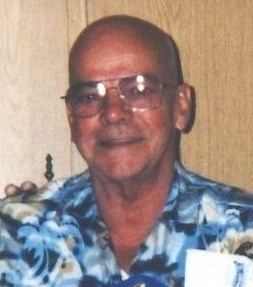
Rafael Esteban Rodriguez Toledo y Tapia was born in Cienfuegos, Cuba on December 26, 1929, as the fourth of six children (four brothers and one sister). He grew up in the small town of Caunao, in the province of Las Villas. Since times were tough in those days, as a young boy of 12, Rafael went to work at the town’s local clinic of Cienfuegos. There he worked doing odd-end jobs, cleaning, and helping move around the sick patients. Despite his early entrance into the workforce, he was able to finish up to what we know as 8th grade. He always, however, had a deep love for reading, much like his father, Matias. At the age of 22, when Rafael’s father passed away, he went on to work as a security guard in the famed harbors of Cienfuegos. His father had held this position before him and, upon his passing, Rafael was given the job thanks to some family connections in the local government.
Around 1950, he left to the capital city of Cuba, La Habana, in search of more opportunities. Upon arriving, he was employed as a salesman at a furniture store. While working in the furniture store, he observed his uncles, Panchito and Mario working as radio telegraphers. He soon developed a strong interest in this area of communication and began studying for the licensing exam. On January 30, 1959, Rafael received his degree in radio telegraphy from the Academia de Comunicaciones, graduating first in his class.
That same year the country experienced the dawning of the Cuban Revolution, after which the Cuban society would never be the same. Having obtained his degree, he began to work for the merchant marine (marina) in the docks of La Habana. In 1961, while still working at the marina, he met Minerva Hernandez Diaz, his future wife, during a carnaval in La Habana, a time when the streets are filled with music, parades, and food. They dated for two years before marrying in 1963, in a modest wedding at the local court house. The following year, they were blessed with their first son, Jorge Rafael Rodriguez. Around this time, Rafael applied for a job with the Ministry of Communication and began working there as a radio telegraphist for the government.
However, all was not well in Cuban society post-revolution. The promise of the Cuban Revolution never came to fruition and Rafael became very disillusioned with its empty promises. In 1969, he made the difficult decision to leave his beloved country. By this time, the dream promised by the leaders of the Cuban Revolution had turned into the nightmare of a Communist society. Any person wishing to leave the country was considered a traitor to the cause. Consequently, due to the stigma that was placed upon him for wishing to emigrate the nation, he was required to give something to society before he would be allowed to leave. It was at this time he was mandated to work, as a punishment for betraying the Revolution, in the agricultural fields in forced hard labor. Rafael not only endured horrific working/living conditions, but was also kept away from his family for the next five years; these conditions created a virtual internment camp.
In 1974, the exit visas finally arrived, and Rafael, Minerva and Jorge left their beloved country to start a new life in the United States. However, since they weren’t able to fly directly to the U.S, the family was given refuge in Madrid, Spain as they waited for the entry visas. When they left Cuba, the only possessions that they were able to take were the clothes they wore on their backs. A little over a year later, they received their entry visas to the U.S. While in Spain, Rafael provided for his family by working in a cafeteria waiting tables and later as an electrician fixing laundry machines.
In September of 1975, they left Madrid for the U.S., arriving in Los Angeles, California, where Rafael’s youngest brother and sister had already established roots. Within one month’s time of arriving, he gained employment in the shipping department of a local factory in order to provide for his family. Four years later, they were blessed with their second son, Jose Francisco Rodriguez. He remained working at the factory for the next 17 years, while rising through the ranks, ultimately obtaining the position of Shipping Department Supervisor.
Shortly after his retirement in 1994, Rafael achieved his ultimate dream to become a naturalized U.S. citizen, a major step in his life since he had to renounce his Cuban citizenship. In 1995, he moved to Miami, Florida to be closer to his son, Jose who was in high school. Nine years later, he returned to Los Angeles, where he lived with his son Jorge and his family.
In 2007, he was diagnosed with lung cancer and began successful treatments at the City of Hope. He would remain in remission for the next three years as he fully enjoyed the company of his four grandchildren. In March 2010, the family received the unexpected news that the cancer had returned and that he would have to undergo further treatment. Rafael received numerous sessions of chemotherapy, which eventually took a tremendous toll on his health; however, he did not submit to the negative effects and fought valiantly until the very end. On Tuesday, August 31, 2010, at 6:25 PM, Rafael found his peace with the Lord and answered His call.
Muestre su apoyo
Comparta Un Recuerdo
Comparta
Un Obituario
Obtenga actualizaciones
Servicios
COMPARTA UN OBITUARIOCOMPARTA
- RECIBIR RECORDATORIOS
v.1.18.0