
OBITUARIO
Rose Margaret Watel
15 abril, 1938 – 26 octubre, 2024
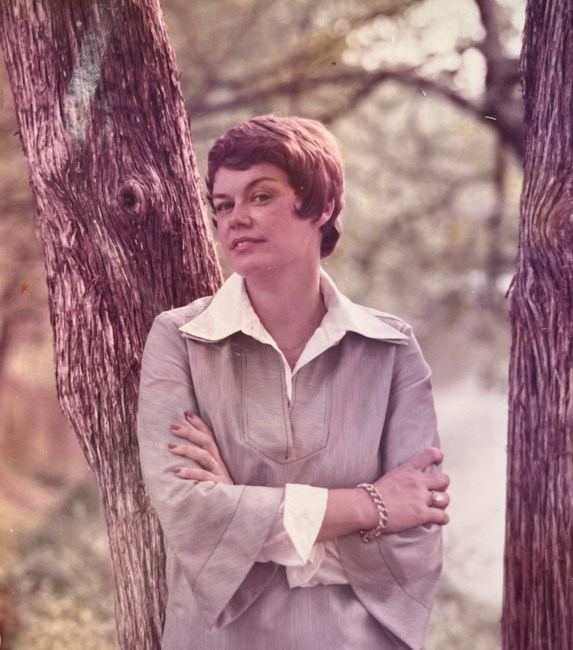
Our family, the city of Dallas, Texas, and the world lost a devoted shopper, drinker of skinny margaritas, and chocolate lover. Rose Margaret Falk Watel died peacefully on Saturday, October 26th, 2024 at the age of 86. Born on April 15th, 1938 in Cushing, Oklahoma, Rose grew up on the grounds of her Hungarian parents’ motel in Corpus Christi, Texas. She attended the University of Texas and moved to Dallas, where she got married and had three children.
Rose was a passionately involved member of Temple Emanu-El. She sang in the choir, served on the Music Committee, became a board member, founded and ran a food pantry, and was inducted into the Women of Reform Judaism Sisterhood’s Hall of Fame. She also traveled with Jewish groups to Cuba, Nicaragua and Israel.
An adult learner of Spanish, she fell madly in love with Mexico and made countless Mexican friends. Rose also helped run the transportation office for the Dallas women’s tennis tournament and remained close to some of the most famous players of the 1980s.
Rose’s most winning quality by far was her gift for friendship. She made friends of all ages and walks of life, from her electrician to her dentist to her manicurist. People loved her for her wicked sense of humor, her raucous spirit of fun, her flirting, her bawdy remarks, and her thoughtful gift-giving.
Rose was preceded in death by her parents Frieda and Sam Falk, her beloved older sister Edith Zinn, and her husband, Louis “Buddy” Watel. She is survived by her three children, Lauren K. Watel, Jeff Watel, and Wendy Watel-Burno, her step-son Craig Watel, her grandchildren Paris Watel-Young and Quinn Burno, and her step-granddaughter Halee Watel.
Please make any donations to Rabbi Stern’s Good Works Fund at Temple Emanu-El.
Eulogy for Rose Watel
written by Lauren K. Watel
When people say that someone they know is a character, I believe what they mean is that the person isn’t like someone encountered in daily life, but more like someone out of a story, someone with flair, someone who is lusty and quotable and incomparable and memorable and shimmers with life. My mother, I think we can all agree, was just such a character. A legend, though not necessarily the heroic or mythical kind; more like the kind who loves chocolate and whiskey and men, swears inventively, monograms everything, and always remembers your birthday.
As the youngest of two girls, my mother was indulged by her entire family; as a result, I think it’s safe to say, in many ways she remained a child her entire life. “We don’t ever grow up too much,” she once said to me. When I or my sister would suggest that icecream was not, perhaps, the best lunch for a diabetic, she might roll her eyes, sulk, curse us under her breath, or, if she was feeling charitable, dutifully murmur, “Yes, Mother,” before submitting to a sandwich.
Like many people in our family, my mother was intense to the extreme, her ups were up high in the clouds, her downs were down deep in the dirt, and she had endless passions. She was—and you all know this about her—a supremely fun person. In her day she drank and carried on with lavish enthusiasm. Once when I told her I’d had one too many bourbons and was feeling a bit drunk, she said, “Drunk is good. I love drunk.” Mom loved fun, loved nothing better than dressing up, going out, carousing, overindulging. She loved a good time, loved a good story, a good laugh. And boy, could that lady laugh, she laughed hard and loud and wicked, her laugh was infectious and rang through the room.
My mother also loved food. Miniature foods held a special allure for her, mini sandwiches, mini crackers, mini apples delighted her. But she loved sweets the most, and chocolate above all other consumables, even as a diabetic, and for the thousands of dollars I spent on sugar-free milk chocolate pecan caramel patties, you’re welcome, Neuhaus Café.
When my mom was a child, her father would buy her a shirt every time he went to town, so she was a lifelong lover of shirts; my friend Louis counted 123 hanging in her closet just yesterday, and that doesn’t include T-shirts, night shirts or monogrammed fleeces, which have their own closet, I kid you not. She loved jewelry, perfume, silk, cashmere, leather, luxury purses and luggage. “I love fine things,” she often said. She also loved shoes—the more expensive the better—and was very proud of her feet, a 9 AA in her heyday, so if this is your size, I encourage you to stop by the house and go shopping in her closet.
She loved buying things, period. Shopping was one of her great obsessions and pleasures, it didn’t matter what, she loved new products, brand names, and trends of every sort, and we have in our kitchen cabinet many monogrammed Yetis to prove it. She loved buying nicknacks; her house was filled with so many tchotchkes that my sister and I dubbed it Tchotchkelandia. She loved buying weird novelties, including a clock that showed the time when you clapped, a 3-carat ring that was actually 3 carrots, and a bust of a man wearing a tie that said Pull Me, and when you pulled the tie, the man spit water and laughed at you.
My mother loved men. Oh, how she loved men. Young men, handsome men, men with muscles. She loved straight men and she loved gay men. She loved flirting and would flirt with just about any man, the Japanese shoe wholesaler, the electrician, or our goofy childhood dentist. Once while I was trying to get her in her wheel chair, her legs collapsed and she was lying on the carpet moaning and shouting, but as soon as two hulking fire fighters strode in, she perked right up, a smile on her face, and started flirting.
My mother loved her name. Honestly, it was kind of strange just how much, though I guess I can’t blame her, Rose is a beautiful name, full of significance and symbolism, and my mom was quite the rose: smelled nice, soft velvety skin, lovely to look at, but watch out for the thorns, those could really do some damage. She loved Rose-themed everything, the house was a veritable garden of rose pins, rose plates, rose pyjamas, rose tissues, rose stationary. In her honor I’m wearing rose boots.
She also was a rabid fan of monograms, her initials specifically. Princess Margaret Rose, the younger sister of Queen Elizabeth, was born eight years before my mother and was my mother’s namesake—a totally unJewish move, by the way—so I imagine that having her initials monogramed on everything—towels, bedding, fleeces, cufflinks, yetis—made her feel royal.
My mother grew up on the grounds of a motel in Corpus Christi owned by her Hungarian immigrant parents, and there she met people from all over the world. I believe these encounters inspired her fascination with people from other countries, as well as her perpetual yen for travel. As an adult she learned to speak Spanish fluently, with an excellent accent. If she heard people speaking Spanish, anywhere, any time, she’d start talking to them, total strangers; this was rather embarrassing when we were kids but amazing to me now. She fell in love with Mexico, traveled there frequently, and made countless Mexican friends. She often used to say, “Dejé mi corazón en México,” which was both totally corny and utterly true.
She loved women’s tennis. Every year when the WTA tournament came to Moody Colosseum, she and her friend Lucy Belknap would round up a fleet of Cadillacs and a motley assortment of drivers, set up their table in the players lounge, gossip and schmooze, drink and smoke, and get everybody where they needed to go.
My mother loved music. Classical music, choral music, big band, soundtracks to Broadway musicals, canciones románticas mexicanas. When I was a girl, age eight or nine, she used to take me out at night to a bar called Captain Cook’s to see a group of musicians, indigenous Guaraní people of Paraguay. She’d order a scotch and soda for herself, a Shirley Temple for me, and we’d sip our drinks and request songs and enjoy the show. Once when Lorenzo, the harpist, was down on his luck, she gave him a bunch of cash for one of his harps, which sits to this day in her living room. She also loved to sing and taught me harmonies when I was a girl.
More than almost anything, my mother loved her friends. She made friends wherever she went, friends of every age and all walks of life, practically everyone she met was a potential friend. Her friends were men, women, gay, straight, every conceivable skin color, religious background and ethnicity. As a friend she was a patient listener, a great confidante, sympathetic and indulgent. She always remembered birthdays and relished in buying her friends presents, perfectly thoughtful, usually lavish. She was also a supremely fun friend, up for a cocktail, a nice meal, a juicy gossip session. With her friends she was devilishly charming, mean-funny, bawdy and naughty, but also tenderhearted and appreciative to the core. She was truly the best kind of friend, forgiving, doting, and loyal. There are many people here who’ve been her friend for decades.
My mother saved her deepest love for her family. She loved her parents, so much so that her story of their marriage, as seen through her Rose-colored glasses, was an absurd fantasy. She adored, admired, and depended on her sister Edie, who called her Babe and took care of my mom her entire life. She loved my dad, probably more than he deserved. She loved her step-son Craig and always looked out for him. She loved her children—me, my brother Jeff, my sister Wendy—sometimes too much, sometimes way too critically, often needing more than we could give her, but she loved us fiercely. She loved her grandchildren. She loved her cousins, her nieces and nephews, their spouses and children. She loved us all, loved us body and soul, and only wanted the best for us.
When I was in my early thirties, my mom embarked on what would become the most meaningful endeavor of her life outside of family: her involvement in Temple Emanu-El. Though it might seem as though she was interested only in fun, food and fellas, the time she spent in the temple community nurtured her in every way possible; it also revealed her more serious side, her depth of character, not only to the congregation but, even more importantly, to herself. The temple was the rich soil in which my mom came into full flower. She joined the choir, served on the Music Committee, became a board member, founded and supervised a food pantry, and was inducted into the Women of Reform Judaism Sisterhood’s Hall of Fame. Not surprisingly, her temple friends ran the gamut, from Morris the longtime maintenance worker to her all-time favorite, much esteemed, Rabbi-who-could-do-no-wrong, David Stern, the most brilliant, most noble, sweetest, handsomest man alive.
It's strange to be standing here again after almost forty years. The last time we gathered in this spot with a rabbi was at my father’s funeral, a very different occasion, our family shattered by suicide. And my mother was left to raise three teenagers on her own, ill equipped for the task but doing her best to give us everything we needed and get us through. And get us through she did, we made it here all these years later, still together, still bonded in sorrow and love. I thank my mother for that, and I wish that struggle had never been her burden to bear. Equally I thank my sister, who for the last seven years did her best to give my mom everything she needed and get her through. And get her through she did, right up to the end, day after day, through the best and the worst of it. I thank my sister for that, and equally I wish that struggle had never been her burden to bear.
Finally I thank all of you, for being here—with us, and for us. This bewildering loss, this mournful day, is also a testament to the love and loyalty my mother inspired in so many who knew her. Thank you for showing up for us, for giving us what we need, for getting us through. And thank you, most of all, for loving my mom, who flourished and laughed and flirted and ate and drank and sang and cursed and sassed and traveled on the force of that love. Rose Watel, the first and greatest character of my life, I will miss you. And we, all of us gathered here, will miss you.
Muestre su apoyo
Comparta Un Recuerdo
Comparta
Un Obituario
Obtenga actualizaciones
Servicios
COMPARTA UN OBITUARIOCOMPARTA
- RECIBIR RECORDATORIOS
v.1.18.0