
OBITUARIO
Russell Thompson Dodworth
25 abril, 1938 – 6 octubre, 2013
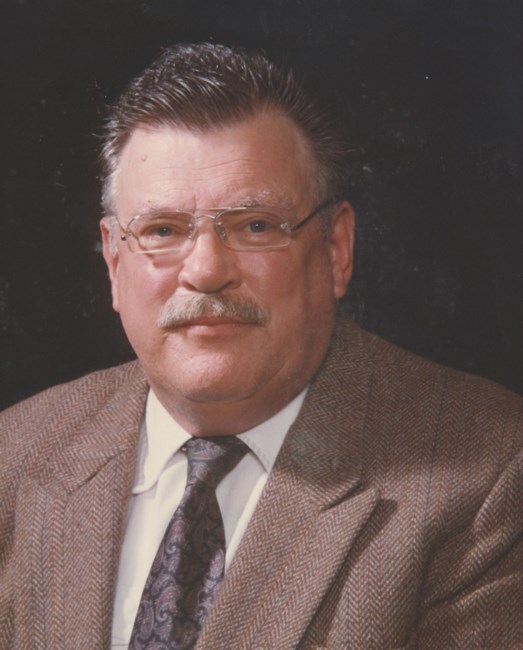
On March 27, 1981, Rusty Dodworth gave an address to the students of Nebraska Wesleyan University called “The Science of Failure.” Rusty’s then-current wife, Jean Henderson of Lincoln, Nebraska, taught as a Professor of Music at Wesleyan at the time of Rusty’s address, and would continue teaching there until the spring of 2013. The eldest two of Rusty’s three sons also graduated from Wesleyan. The circumstances of Rusty’s address at NWU typified not only his thorough connection to Nebraska, despite his origins in the Northeast, but also his unabashed confrontations, conquests, and even occasional embrace of failure along with its consequences and implications. As stated in an article in the local paper, The Lincoln Star, publicizing his address on the day of the event, “Dodworth feels he would have missed a lot if it hadn’t been for failures. For example, if he hadn’t been a failure in New York, he would have never come to Nebraska.”
Russell Thompson Dodworth was born in Pittsburgh, PA, on April 25, 1938 to James Russell Dodworth and Dorothy Thompson Dodworth. He began his schooling in Pittsburgh public schools, but eventually attended an all-boys boarding school, Appleby College, in Oakville, Ontario, Canada. Rusty and his family would also spend their summers cottaging on Stony Lake near Lakefield, Ontario, Canada. Rusty’s familial and lifelong connection to Stony Lake would eventually be passed on to his three sons.
After Appleby, Rusty earned an Associate’s degree in Communications from Grahm Junior College in Boston, MA, which would prove to be the first of numerous post-secondary diplomas, degrees, licenses, and certifications that Rusty would earn throughout his lifetime, including certification with the Wine Advisory Board, a diploma from the Lewis hotel-motel management school, a diploma from bartender school, certification as a piano tuner, certification as a notary public, and he would also a be licensed as a New York City cab driver, just to name a few.
Rusty was also certified as a steam engineer while in the Merchant Marine, as he sailed in the Merchant Marine from 1959-1968, having visited ports in India, China, Vietnam, South America, Africa, and Europe. During his time in the Merchant Marine he also introduced Fleer’s Double Bubble gum to Yugoslavia, and introduced Jiffy Pop popcorn to Russia and Poland in 1963.
Even while serving in the Merchant Marine, Rusty maintained his life on ship by purchasing a 40-foot motorized yacht, the Breadwagon II, which would be his home in New York City while docked at a slip in Manhattan. According to an August 5, 1973 article in the Omaha World Herald, while serving in the Merchant Marine, Rusty “broke into newspapering by publishing a bootleg tabloid at night aboard the cruise ship U.S. United States while he directed children’s activities during the day.” While in New York, Rusty would further pursue the field of journalism, and would also continue working with kids by starting a publication in 1970 called the Mother Goose News, which was a national newspaper written by, for, and about children. Representative of one of Rusty’s first failures, the paper ran for only one issue of 10,000 copies.
Rusty would follow the Mother Goose News up with another failure as a talent manager and promoter in New York City, although he could at least boast the success of having managed Irene Cara’s early career, as she later went on to star in the 1980 film Fame (she also recorded the movie’s title song, “Fame”), and she recorded the song “What a Feelin’” for the film Flashdance (1983).
Again combining failure with success, Rusty would build on his experience working with children as well as his experience as a promoter by founding the “Robin Hoods,” which was an organization made up of kids that fed expired parking meters in New York City for donations used to clean up graffiti. The kids would save the vehicle owners from a $25 fine by feeding the meters, and then would leave a flier on the car windshields asking for a donation to the organization. Although the “Robin Hoods” organization didn’t last long, and eventually failed, the publicity it created resulted in Rusty making television guest appearances on Good Morning America and also on To Tell the Truth in 1972.
After briefly working as a toy promoter for FAO Schwarz in 1972, Rusty would finally leave New York City. In a quite drastic change of pace and scenery—perhaps in an act of exasperation as a result of his perceived failures in New York—Rusty decided to attend a crash course at Reisch Auction College in Iowa. It was through this Midwestern connection that Rusty finally made his move to neighboring Nebraska. In that August 5, 1973 Omaha World Herald article, Rusty would claim to have discovered Nebraska “through a classmate at Mason City, Ia., auctioneer’s school” named Orliff “Odi” Snell. As a result, in 1973, Rusty moved to Hickman, NE (which was actually referred to as “Hickman, Kan.” in a July 28, 1973 edition of the Amusement Business newspaper!). Promptly on his arrival in Nebraska, Rusty comically received a parking ticket in Lincoln, NE. In an act of comedic irony, Rusty paid the fine with a check from the “Robin Hoods” account—which still had $8 remaining in it—and he also included a flier promoting the “Robin Hoods” organization in the payment envelope! As a New Yorker making his transition to life in Nebraska, also very soon after his arrival Rusty took out a classified ad in the local Lincoln Star paper asking where in town to get a good shoe shine.
Once again motivated by his love for the newspaper industry, in 1973 Rusty resurrected the historic Hickman Enterprise newspaper that had folded in 1953. The paper lasted 6 issues under its sole proprietor and employee, Rusty Dodworth, until it went out of business once again. After the failure of the Hickman Enterprise, Rusty became certified by the City of Lincoln as a steam engineer as a result of his experience in the Merchant Marine, and he worked in that capacity at the St. Elizabeth Medical Center (the same hospital where all three of his sons would eventually be born a few years later), and then at the Nebraska Penal Complex, and then finally at the Arthur Daniels Midland plant in Lincoln, NE. Rusty would soon meet his wife, Jean Henderson, and they would be married late in 1974. Their marriage would last 15 years.
Typical of Rusty’s comical and also heartfelt fascination with the romantic, in 1977 he would start his own business as the town chimney sweep in Lincoln, NE. Consequently, in the fall of 1978, Rusty would quit his job at ADM to sell wood-burning stoves, first out of his home and then out of the Dodworth and Sons Farm Store which represented Rusty’s sojourn into the retail business in the Havelock area of Lincoln, NE. At first, Rusty’s association with Temp Wood wood-burning stoves would trump his self-proclaimed penchant for failure, as his sales of wood-burning stoves alone would gross half a million dollars by the end of 1979. However, after some bad business luck and associations, and also as a result of some unseasonably warm Nebraska winters in succession, Rusty’s stove sales and retail store would eventually fail. However, it would not do so before he would rename the store as the Dodworth and Sons Retail Museum in 1982, taking a jab at the frustration of lagging retail sales that would plague the Havelock area during that time. Rusty even established a “Wailing Rock” in his store in 1983, inventing a legend that a local retailer’s cash register would begin to flow if he or she were to kiss the rock on 40 consecutive days. However, there was a catch, as Rusty’s store was not open on Sundays!
Although Rusty’s philosophy on failure would always parallel the cliché of a window opening as a door closes, the final closing of the doors of the Dodworth and Sons Farm Store/Retail Museum would mark Rusty’s final experience as a retail store owner. Throughout the 1980s, Rusty would work at various occupations until eventually moving to a cabin on Stony Lake after his divorce. While spending the hard winters in Canada, Rusty would continue his relationship with the newspaper industry, publishing multiple articles in the local papers. Throughout his life, Rusty’s articles appeared in newspapers in New York City, Nebraska, and also Ontario, Canada. Likewise exhibiting his fascination with publicity and his unique sense of humor, Rusty would appoint himself as the “Lord Mayor” of the town of Nephton, Ontario, Canada, after the town was evacuated and subsequently flooded for the purpose of a mining company. Rusty would get plenty of mileage off his byline as the Lord Mayor of Nephton, inventing the goings-on in the extinct town in his articles. Also consistent with his sense of humor, and also his complicated relationship with failure, Rusty boasted failed invention concepts such as a lunch box with a timed lock that doesn’t open until noon, and also a bathroom scale that verbally insults you or praises you according to your weight loss or gain.
As a direct result of the long and harsh Canadian winters on Stony Lake, Rusty moved to South Florida in 1994. For the rest of his life, Rusty would thoroughly enjoy the weather and social environment in Deerfield Beach, FL and the surrounding area. He would also love his part-time work at Publix grocery stores, a corporation that he regarded with much respect, loyalty, and admiration. Rusty’s job at Publix allowed him to do what he loved most: connect and communicate with people. For those that had the privilege of meeting and knowing Rusty, they would have to agree that this would be his defining and lasting quality. As a human being, and as a man that enjoyed vast and diverse experiences in life, Rusty Dodworth was a resounding success. As humans, we are all failures. Some more than others, but we must all suffer that permanent, final failure. Therefore, even though he loved to embrace his role as a failure, on a comedic and self-deprecating level, Rusty was far more a success than a failure, particularly as evidenced by his, arguably, three most valued successes: his sons, whom he loved dearly and who love and miss him severely. As Rusty would be quoted in that March 27, 1981 Journal Star article, “‘Sometimes it’s nice to be a loser,’ he said. ‘Most people don’t really like winners because they’re too busy envying them. But I say, when you’re going to lose, be a good loser. People will still love you.’”
Rusty is survived by his three sons: Cameron, Graeme, and Adam, as well as by his former wife, Jean Henderson, and his sister, Dotty Scullin.
Muestre su apoyo
Comparta Un Recuerdo
Comparta
Un Obituario
Obtenga actualizaciones
Servicios
COMPARTA UN OBITUARIOCOMPARTA
- RECIBIR RECORDATORIOS
v.1.18.0