OBITUARIO
Diego Serna
9 abril, 1929 – 14 abril, 2011
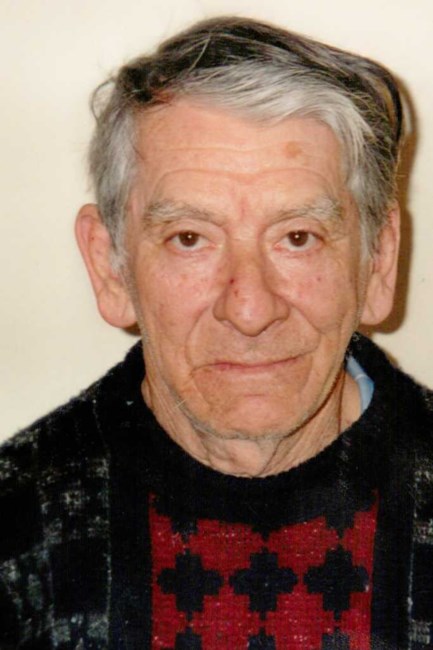
It is impossible to describe the full life of Diego Serna Rodríguez in a few mere words. But perhaps it’s better to present events in his life so we can picture who he truly was Diego Serna Rodríguez was a petite man with an enormous heart and a gentle soul. Born at La Felisa, a farm near the hamlet of Salamina, high in the Cordillera Central of the Colombian Andes, Diego was the youngest child of Jesús Antonio Serna and Ana Félix Rodríguez de Serna. Being the baby of a very large, rural family, Diego was the child who probably received the most attention. But although he was doted on, he was not spoiled as he was made to perform backbreaking chores and go to school, which was not an easy task given that he had to walk many leguas BAREFOOT through the mountains. His formal schooling abruptly ended when disaster struck…Ana Félix died after suffering a short illness when Diego turned 9. Shortly thereafter, Jesús Antonio remarried a younger woman, and the two of them started a family of their own, and Diego had to leave and he became separated from all his brothers and sisters. Alone in the world, he was forced to work odd jobs in different farms throughout the region. Despite these difficulties, Diego prospered in many ways. He learned to play the classical guitar by watching others play, and had the exceptional ability to hear a song once or twice and then to play it. He also learned about plants and became an expert botanist, educated at the school of life. In one of his positions, he worked at large plantations and at an agricultural station and had contact with scientists. As a humble student with tremendous coping mechanisms, he learned as much as he could about the region’s flora, which is the most diverse in the world due to variations in topography. One thing he learned that was very valuable was to determine whether a plant was “male” or “female,” which as we know, is crucial in reproducing a plant. Diego also worked as a farm laborer picking coffee beans. At each position, he was friendly with his coworkers and supervisors. Perhaps his most impressive skill was as a wordsmith and songwriter, creating rhymes and changing syntax and word structure to create amusing melodious poetry. Diego did not have a mean bone in his body.
Eventually he made his way to Manizales, the capital city of Caldas, and the largest town in the region. Now in his 20s, he continued to work on nearby farms for the oligarchs of the community. On one of his errands for his boss, his eyes sparkled when he saw delicate and innocent Doralia Vélez Sánchez. Since she was very young, Diego waited for her to get older. He regaled her with what he could: his wit, his looks, romance, sweet melodies, and a few pieces of candy. Now that Dora fell madly in love with Diego, his biggest obstacle was Dora’s strict father. Eventually Manuel succumbed and Diego married Dora in 1959. Dora and Diego were the perfect couple. She was the macher, the go-getter who moved mountains. Diego was the gentle soul who provided the wisdom and stability. Diego continued to work on farms, as a chauffeur for the wealthy. They had two children, Dolly and Juan Diego, and raised them among flowers, animals and tropical flora. Although Dora and Diego never accumulated a great deal of money, they were the richest people in the world when it comes to happiness and spirit. After several years working the fields, the young family moved to the city. Diego worked as a trucker where he learned about Colombia’s geography and history by traveling to diverse places, as a taxi driver where he learned certain survival skills in a tough urban environment, and as a garden designer for companies and individuals, creating gorgeous landscaped properties that still stand to this day. Although they were country folk, by moving to the city, they allowed Dolly and Juan Diego greater possibilities in education and hope for the future. Both kids, similar to their parents, have good hearts and progressive ideas with attainable dreams.
After Diego retired, Diego and Dora immigrated to the United States and truly lived well in their golden years. Diego and Dora proudly became U.S. citizens. Living with Dolly, his son-in-law Adam, and his grandson John, Diego used the opportunity to create works of art using natural elements of our planet. In Chicago, for example, a pair of robins built a nest. After the parent birds raised their young and left their nest, Diego examined the nest and created a sturdy design for hanging flower pots that could survive the caprichos of the Windy City. Also in Chicago, John taught Diego to ride a bicycle, which became Diego’s preferred form of transportation. Diego became inseparable with his bicycle (and later, tricycle), his guitar (which he played every night, caressing Dora’s ears with boleros and waltzes), and his plants. In Florida, Diego experimented with plants, creating multi-colored bougainvilleas and discovering natural ways of fertilizing soil with destructive chemical compounds. He took a home that was unicolor green, and turned it into a colorful medley where people drive by, stop their cars, knock on the door, and ask Diego if he could transport their properties into a semblance of what Diego has created.
Even more impressive than Diego’s versatility is his people skills. Diego has a set of friends and acquaintances that could resemble the General Assembly of the United Nations. He counts among his friends from children in their preteen years to people entrenched in their 90s. He has Muslim, Christian, and Jewish friends, Atheists, Conservative, Liberal, Democrats, Republicans, Latinos, Americans, Asians, and people of color. Every time he had a doctor’s appointment, the nurses fell in love with him, and he earned the respect of doctors by showing his respect for the illness and his strength in willing to fight it.
In Colombia, Diego has left his son Juan Diego, his daughter-in-law Cristina, three grandchildren, and two greatgrandchildren. In America, Dora, Dolly, Adam and John continue living with Diego’s granddogs, grandrabbits, grandbirds, grandfishes, a grandhen, and a grand guinea pig.
Diego will always be remembered as a warm vivacious man who brought great cheer and mirth to everyone with whom he made contact.
Un homenaje para Diego Serna Rodríguez
Una vida de 82 años no se puede describir con tan pocas palabras. Pero bastan unas anécdotas de su vida para darnos una idea de cómo era Diego.
Diego era un hombre chiquito con un corazón enorme y un alma apacible. Nació en la finca La Felisa, cerca de Salamina, que en 1929 era una aldea bien metida en la Cordillera Central de los Andes colombianos. Era el hijo más joven de Jesús Antonio Serna y Ana Félix Rodríguez de Serna. Por ser el raspado de la olla de una familia muy grande y rural, probablemente recibió la mayor parte del afecto de su mamá. A pesar de ser muy contemplado, a Diego le tocó muy duro. Él tenía que trabajar en la finca, y recorrer a pie varias leguas para llegar a la escuela, subiendo y bajando por el monte DESCALZO. Después de cumplir los 9 años de edad, falleció Ana Félix, dejando a Jesús Antonio con muchos hijos. Pronto el papá de Diego volvió a casarse, y la nueva madrastra hizo la vida miserable para Diego y sus hermanos. Diego se fue sólo a trabajar en otras fincas, la única cosa que sabía hacer. A pesar de estas dificultades, Diego prosperó en otras áreas como en la música y la jardinería. Él aprendió a tocar la guitarra observando a otros tocar, y tenía la capacidad excepcional de oír una canción una o dos veces y después dominarla. También Diego aprendió la flora regional, la cual es probablemente la más diversa en el planeta. Aunque no sabía leer ni escribir conoció las plantas, se hizo botánico experto, educado en la escuela de la vida, escuchando hablar a los agrónomos que visitaban los grandes viveros donde trabajaba. Como estudiante humilde, escuchó y absorbió todo lo que pudo para poner en práctica sus propios experimentos y crear nuevos colores de flores a partir de la flor hembra y la flor macho. En otras ocasiones trabajó cultivando el aromático café donde se ganó la amistad no sólo de sus compañeros de trabajo pero también la de sus jefes (capataces). En el campo artístico, quizás una de sus habilidades más impresionante fue la de jugar con rimas y componer canciones lo mismo que cambiar el orden de las letras en las palabras, para crear poesía mágica con distintos tonos. Diego no tenía un hueso malo en su cuerpo.
En sus 20s se trasladó a Manizales, la capital de Caldas. Diego continuó trabajando en las granjas cercanas donde uno de sus patrones le enseño a manejar. En esta nueva tarea él era el encargado de llevar a los hijos del jefe a la escuela y recogerlos en la tarde. En las idas y venidas, vio a la estrellita de sus sueños, una niña hermosa, esbelta e inocente a la que llamó la chilcagua. Esta jovencita cuyo verdadero nombre es Doralia Vélez Sánchez cargaba comida para los cerdos y llevaba las vacas al potrero por los polvorientos caminos de la vereda Morrogacho; él se perplejo de su belleza pero sabía que era muy niña para pedirla en matrimonio. Eventualmente la conquistó con su ingenio, las miraditas, el romance, las melodías dulces, y probablemente algunos caramelitos. Pero el obstáculo más grande era el papá de Dorita, el imponente don Manuel Vélez. Con el tiempo y con muchos chaperones, Diego conquistó a Manuel y a Rita, la mamá de Dorita. Diego y Dorita se casaron formando una pareja ideal. Ella era la majer, una persona que mueve montañas. Diego era el alma apacible que proporcionaba la sabiduría y la estabilidad. De esta unión, florecieron dos hijos, Dolly y Juan Diego, quienes crecieron entre las flores de su humilde hogar, los animales y la flora tropical. Aunque Dora y Diego nunca acumularon mucho dinero, se consideraban muy ricos. Por algún tiempo Diego trabajó como camionero donde recorriendo la rica y hermosa topografía colombiana. Como diseñador de jardines para compañías y familias ricas, se hizo famoso y sus servicios eran requeridos los siete días de la semana. A pesar de ser un hombre pobre y humilde, se codeaba con las señoras de alta alcurnia quienes lo besaban y abrazaban por mantener sus patios y jardines llenos de bellas flores y árboles. Estos trabajos permitieron dar mejor futuro a sus dos hijos.
Después de su jubilación, Dora y Diego emigraron a los Estados Unidos a vivir sus años dorados. Diego y Dora obtuvieron con orgullo la ciudadanía americana. Dieguito tuvo la oportunidad de vivir en varias ciudades desde Chicago hasta Hollywood (Flórida), y de Hollywood a Phoenix. Durante sus últimos años siempre estuvo cuidando de los animales y las plantas como construyendo nidos para los pájaros y diseñando coloridos jardines en las casas que compartía con su esposa, su yerno y su nieto. Hablando de su nieto John, le enseñó a montar en bicicleta, lo que desde entonces se convirtió en su forma preferida de transporte. Por supuesto la música siguió presente y las cuerdas de su guitarra sonaron hasta los últimos días de su vida. Con una de sus plantas favoritas (las veraneras o buganvillas) creó nuevos colores de flores que aún embellecen con sus radiantes destellos su hogar en Hollywood. Aún más impresionante fue el don de gentes de Dieguito. El círculo de amigos y conocidos se puede comparar con la Asamblea General de los Naciones Unidas. Él hizo amistad y compartió con niños y adultos y gentes de diferentes nacionalidades, religiones e ideas políticas. Durante el tiempo que estuvo luchando con su corta enfermedad, Diego se ganó el corazón de las enfermeras y el respeto de los doctores quienes siempre admiraron su deseo de vivir y luchar hasta el final. A Dieguito le sobreviven su hijo Juan Diego, su esposa Cristina, tres nietos y dos bisnietos quienes viven en Colombia. Dora, su hija Dolly, su esposo Adam y su nieto John continúan viviendo en Hollywood con su pequeño zoológico de animales rescatados los cuales eran parte de la adoración de Diego. Estos afortunados animales de Diego incluyen su gallina, perros, conejos, pájaros, peces y guinea pig.
Siempre recordaremos a Diego como un hombre cálido, alegre y lleno de inteligencia.
Arrangements under the direction of Forest Lawn Funeral Home, Fort Lauderdale, FL.
Muestre su apoyo
Comparta Un Recuerdo
Comparta
Un Obituario
Obtenga actualizaciones
Servicios
COMPARTA UN OBITUARIOCOMPARTA
- RECIBIR RECORDATORIOS
v.1.18.0