OBITUARIO
Thomas Nathaniel Tentler
25 octubre, 1932 – 21 julio, 2021
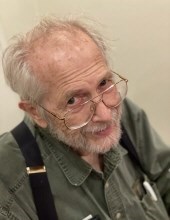
Born October 25, 1932 in Evanston Illinois, he lived in Chicago until he went to Harvard in 1950. He earned his graduate and undergraduate degree at Harvard University and went on to a long academic career as a Professor of History at the University of Michigan in Ann Arbor, Michigan. In his retirement he moved to Washington DC when his wife, Leslie, joined Catholic University as a Professor of History. He is survived by Leslie, his wife of 49 years, his children Kate, Justin, Sarah, Daniel and Gregory, daughters-in-law Jasmine Kim and Jennifer Jolley, grandsons Jake, Thomas and Victor, 21 nieces and nephews and countless more great nieces and nephews.
Tom Tentler was the kind of person he liked to call ‘a character.’
His enduring curiosity was evident in the precariously stacked towers of books that rendered his study – still in daily use decades after retirement – virtually unnavigable, and in his need to interrogate strangers about their lives, whether on the Metro, at the market, walking down the street, or from his hospital bed in his final days.
Those conversations – carried out in his trademark booming voice – were also driven by enormous kindness and genuine interest in others. He would recount, with equal enthusiasm and delight, observations from a friend whose work appears in the national press and one who made his home in a park nearby. For years, Tom would make a Sunday morning bagel run, taking a path through that park to drop off a bagel and have a chat. When that friend passed away, Tom couldn’t bear to make those Sunday morning trips any more.
The characteristics that so defined him were more than a set of beliefs; they were hard-wired, innate to his being. He found something to celebrate in everyone he knew and was incapable of favoritism (even though some of his children think there are clear winners).
He had boundless patience for those in need, often staying on the phone with a troubled friend for hours on end, but none for the mispronunciation or grammatical misapplication of words, often pulling out a dictionary at the dinner table to make his case (or, later, a smartphone that was thrust upon him in his 80s, which he quickly adapted to, in order to bang out lengthy, esoteric texts that often resembled academic critiques).
He was a deeply respected historian, an excellent cook, a great thinker, and a mentor and role model to students, colleagues, friends and his dozens of nephews and nieces. But above all, he was a husband, father and grandfather, as expert in those disciplines as in academia. He was kind, funny, and larger than life. Injustice in any form made him apoplectic, even after almost nine decades on the planet. None of us know yet how to live in a world without him. We can only try to emulate the very best of him.
If anyone would like to do something in tribute here are two ideas that would be very meaningful.
Tom’s illness was severe and he was basically sustained by regular, often weekly transfusions, that he has had since last summer. There is always a need but never more so than now — blood banks are looking for donors. So if you can, please consider giving blood. Most states have local donation centers or you can try the Red Cross.
Tom was also deeply concerned about the environment and despaired, frankly, over the future of the planet and what we were leaving for his grandkids. There are many environmental groups that can use support. One we have given to is Union of Concerned Scientists. And please make sure you recycle. Even in the hospital he was scandalized that someone (aka his oldest daughter) would just throw the newspaper away in the garbage and not recycle.
Funeral Services will be Saturday July 31, 2021 at 1:00 pm at St. Joseph’s on Capitol Hill, 313 Second Street SE, Washington DC.
Muestre su apoyo
Comparta Un Recuerdo
Comparta
Un Obituario
Obtenga actualizaciones
Servicios
COMPARTA UN OBITUARIOCOMPARTA
- RECIBIR RECORDATORIOS
v.1.18.0