
OBITUARIO
Joseph Howard Ammerman
6 septiembre, 1932 – 22 junio, 2021
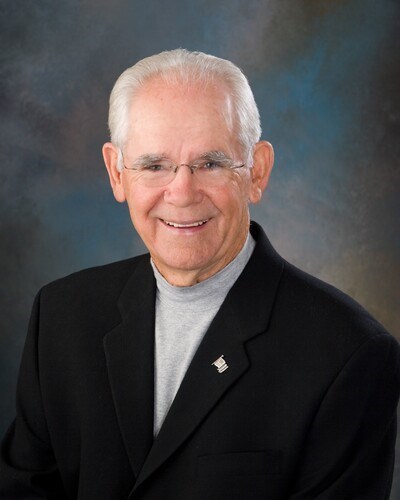
Joseph Howard Ammerman was born to Homer Clark and Gracie Lorene Ammerman in Viola, Arkansas on September 6, 1932, and went home to be with his Lord on June 22, 2021 after a full and impactful life as a US Air Force Captain, Athletic Trainer, School Administrator, husband, father and grandfather.
He graduated from Patti Welder High School in Victoria, Texas in 1949. In 1950, while attending Tarleton State Junior College in Stephenville, TX, he was on the tennis team and performed the duties of Student Manager/Trainer for Coach Willie Zapalac. Joe enrolled at Southwest Texas State Teachers College in San Marcos in 1951 graduating with a BS in Education and a commission as 2nd Lieutenant in the U.S. Air Force in 1954. Coach Milton Jowers signed Joe to work for him as Student Manager / Trainer for Coach Strahan as the Ticket Manager and to play on the Tennis team coached by Frank Gensberg.
He was an “Outstanding Cadet” at ROTC summer camp in Long Beach, CA in 1953 and became a Jet and Multi-Engine Pilot while serving in the U.S. Air Force from 1954 to 1959. While at Charleston Air Force Base, in Charleston, SC, he helped organize the Base football team, the “Hurricanes”, and was their Head Coach. The team was invited to play in the first “Georgia Peach Shrine Bowl” game held in Savannah, GA on December 7th, 1957.
He married the love of his life, Barbara Shannon Ammerman, in 1954 at the First Baptist Church in Uvalde, TX. They then moved to and lived in Winter Haven, FL, Charleston, SC and Big Spring, TX during his four-years in the United States Air Force. They began expanding their family in Big Spring when Clay was born in 1955 and after moving to Uvalde, TX, where Lauren was born in 1959. Joe and Barbara were an example of life-long love to all that knew them.
After completing his military service, Joe returned as a graduate student to Southwest Texas State College in San Marcos, TX. He worked as a Junior High teacher, assistant Coach and Athletic Trainer for San Marcos High Football Coach Owen Goodnight. Joe was a summer assistant for Frank Medina, Head Athletic Trainer for The University of Texas. He received his Masters degree in Administrative Education in 1960 and was hired as the Head Athletic Trainer at Permian High School in Odessa, TX after being recommended by Frank Medina. He was known to the Panther Team as “Doc” Ammerman.
Four years later, Joe became the Head Athletic Trainer at North Texas State University in Denton, TX. He was recommended for the job by Milton Jowers, Head Football Coach at Southwest Texas State College. Jerry Rhea, President of the Southwest Athletic Trainers Assn. at the time, was instrumental in his being hired.
While at North Texas State University, Joe was also an Assistant Athletic Trainer for the Dallas Cowboy home games in the Cotton Bowl for two seasons 1964-1965. Joe likes to share fond stories about working with the players and especially Robert (Bob) Lilly, nicknamed "Mr. Cowboy", the All Pro defensive tackle for the Cowboys. Later Joe reconnected with Bob at a neighborhood gathering after they both had moved to Sun City at Georgetown, TX.
In November of 1965 Joe was offered an administrative position at Uvalde High School, Uvalde, TX. He worked in the Uvalde School District for the next twenty years serving in positions from Assistant High School Principal to Assistant Superintendent for Business. He played a major role in computerizing student scheduling, grade reporting and attendance accounting while at the high school and junior high school. The Uvalde business office, payroll and accounting were changed to computer assisted while he was Assistant Superintendent for Business.
He was on the Texas State Teachers Association Executive Committee, a Director of the Uvalde Chamber of Commerce, President of The Uvalde Lions Club and Deacon in the First Baptist Church. Joe proudly served as a Volunteer Athletic Trainer for his son’s winning Uvalde Coyote Class 3A, 1972 State Championship Football team for football coach Marvin Gustafson.
Joe spent the last thirteen years of his career as Assistant Superintendent for Business and Operations in The Rockdale Independent School District in Rockdale, TX. At Rockdale he was responsible for the business office operation of budget, payroll, accounting and tax office. He was also in charge of food service, maintenance and transportation. Joe was responsible for getting the Rockdale business office fully computerized.
He is a life member of Texas Association of School Administrators, National Athletic Trainers Association, Texas State Teachers Association, National Education Association and Texas State University Alumni Association.
He was inducted into the Texas State University T-Association Hall of Honor in 2008. Joe played tennis for the Bobcats from 1952-1954, earning three letters as a student-athlete. Joe was also an athletic trainer during those same years. He was the first nominee ever to be inducted into the Hall of Honor based on both his athletic accomplishments and his accomplishments in athletic training. He said that athletics had done more for him than he would ever be able to repay.
Joe retired with the Teacher Retirement System of Texas in January 1994. The Rockdale School Board allowed him to continue to work “half time” for the next four years. He and Barbara moved to Sun City at Georgetown, TX to be near their daughter’s family. He took trips, cruises, hunted pheasant, went to Austin City Limits and played more golf than there is space to tell. He was an active member of First Baptist Church and a friend to everyone who knew him.
Above all, Joe loved his family. He was a devoted, adoring husband. He was a loving father, uncle and grandfather. He was loyal and caring. Joe never met a stranger, he loved people and was a very generous man. If they needed anything, he was there in the drop of a dime. His commitment to and faith in God guided him throughout his life. He had love and kind words for all that came in to contact with him. Joe always had a warm smile, caring eyes and a wonderful sense of humor. Family was everything to Joe, and we were blessed to be able to love him and laugh with him for as long as we did.
Joe joins in heaven with his parents, daughter Lauren Ammerman Krenek, granddaughter Elissa Ammerman and his sister Betty Ann Killebrew. He is survived by his family, wife of 66 years Barbara Ammerman, and their son and his wife, Clay Ammerman (Erin), and two granddaughters and their husbands, Shannon Roberson (Lance) and Katelyn Scolaro (Mark). Also surviving him are his son-in-law and his wife, Frank Krenek (Nancy), and their blended family, Jennifer Barrett (Ryan), Frank Charles Krenek III (Shannon), Ellen Ash (Johann), Kenneth O’Meara (Kelsey) and Monica Axtell (Luke). He was a wonderful “Grandy” to his grandchildren and his seven great-grandchildren, Rowan Barrett, Daphne Barrett, Henrietta Ash, Lane O’Meara, John O’Meara, Ashlyn Axtell and Ryder Axtell. All of whom loved him dearly and will greatly miss him.
A Memorial Service will be held at 2:00 pm, Tuesday, July 13, 2021, at the First Baptist Church of Georgetown, following a private inurnment ceremony at the Central Texas State Veterans Cemetery. In lieu of flowers, the family wishes memorial donations be given in his honor to either of the following:
ROCK – Equine, Ride On Center for Kids, Georgetown, TX www.rockride.org/
Oak Ridge Discipline House, Florence, TX www.oakridgedisciplehouse.com/
_________________________________________________________________________________________________________
A retrospective as recorded by Joe Ammerman
1945-1949 PATTI WELDER HIGH SCHOOL VICTORIA, TEXAS
My first real experience with athletics was my senior year at Patti Welder High School in Victoria, TX. I played football, baseball, basketball, and tennis. The basketball coach, Ray Dorsett, asked me to be the team manager shortly after seeing my basketball skills. I loved athletics from the start and considered it an honor to be asked to be the basketball team manager. How could I know that this honor would one day pay part of my way through college and lead to a future career?
1949-1951 TARLETON STATE COLLEGE, STEPHENVILLE, TEXAS
I lived off-campus, directly across the street from the college gymnasium. Athletics still held a fascination for me, so I spent a lot of time hanging out at the gym. I became acquainted with some of the football players and head football Coach Willie Zapalac and line coach Bob Tullis. The college tennis courts were behind the gym, so I played tennis on occasion with some of the athletes who were out there practicing. C.M. Flory was the director of physical education, tennis coach and golf coach. His office was in the gym. Coach Flory saw me playing tennis with some of his tennis team members and offered me a half scholarship to be on the tennis team beginning the second semester.
Soon after the tennis team surprise, Coach Zapalac asked me if I would be interested in doing the athletic laundry and working as a team manager. I jumped at the chance to help in any way I could. I joined the National Athletic Trainers Association as a student trainer and started learning as much as I could about Athletic training. Coach Zapalac moved me into the athletic dorm beginning the second semester to include payment of tuition and books as student team manager. I had to provide my own meals. I lettered two years in tennis at Tarleton. I was also a cadet in the army Basic ROTC while at Tarleton State College.
1951-1954 SOUTHWEST TEXAS STATE TEACHERS COLLEGE
I came to Southwest Texas State Teachers College in the summer of 1951 with Pence Dacus who was the quarterback at Tarleton State. We had both attended Jr. College at Tarleton State College. Coach Milton Jowers offered Pence a full scholarship. I was standing beside him, so Coach Jowers asked what I could do. I told him who I was and what I had done at Tarleton. Coach Jowers asked Frank "Chico" Gensberg to offer me a half scholarship in tennis and he asked Athletic Director Oscar Strahan to offer me a job as the ticket manager with the understanding that I would also be a student manager for the athletic teams. I often wonder what my chances of getting that same offer would have been if had not been in the right place at the right time with the right person.
In 1951, the term, Athletic Trainer was seldom used and not very well understood. The first meeting of the National Athletic Trainers Association was held in 1950. I joined in 1951 as a student member and as an Associate member in 1954. My first view of the "Training Room" was actually a "Medicine Cabinet" in the equipment room on the lower floor of the old gymnasium. In the medicine cabinet I found: a few rolls of adhesive tape, tuff-skin tape adherent, some cloth ankle wraps, some foot powder, a jar of "jock itch" ointment, analgesic balm, a bottle of iodine, some aspirin and numerous boxes of salt tablets. There was also a heat lamp and a make-shift whirlpool. I was not surprised because that was what was being used when I first started working as a student basketball manager in high school and at Tarleton. In those days, athletes were taught by their coaches, how to wrap their own ankles with cloth ankle wraps, treat themselves for athlete's foot, jock itch, blisters, abrasions, bruises etc. using the items stocked in the "Medicine Cabinet". I started trying to help the players and the coaches with all of the above-mentioned activities with the little amount of experience that I had. A lot of my work was issuing and taking up equipment and laundry and cleaning up after practice and games.
I was glad to be where I was and more than willing to do whatever I could do to be helpful. I bought and studied books on Prevention and Care of Athletic Injuries that were the latest on the market. Dr. Schieb was the team doctor and gave me advice and encouragement.
There were no college courses being taught in those days that pertained to the health care of student athletes other than the Red Cross first aide courses. I became acquainted with the head athletic trainers from other schools, observed their work and asked them questions about how they would handle different injuries. They were always friendly and helpful to me while I was a student trainer at SWT. Frank Medina, University of Texas Head Athletic Trainer then and now a member of the National Athletic Trainers Hall of Fame, was the man I looked up to in the field of Athletic Training in Texas. He invited me to watch, ask questions and practice with him and his student trainers when I was with the Bobcats at track meets.
In 1952 I was invited to go with Coach Jowers and the Bobcat basketball team to the NAIA Basketball tournament in Kansas City, Missouri. This was an experience of a lifetime for me. One of the personal highlights of this trip was to meet the Cramer brothers, founders of the Cramer Chemical Co. These men gave me copies of all the athletic training manuals that were currently available, and each brother signed the manuals. I was very impressed with the helpful attitude of these men and Jack Cramer went out of his way to help me through-out my career as an athletic trainer. I will always remember Coach Jowers and every athlete that allowed me to be a small part of that unforgettable thirty wins and one loss season.
One of the highlights of my first two years at SWT was, as the Athletic Ticket Manager, being allowed to drive Coach Strahan's car to deliver and pick-up football game tickets that had been on sale downtown prior to each football game. Coach Strahan did not know that I got my driver’s license on a Cushman motor scooter. I claim to be the only student at SWT ever to be allowed to drive his car and I am sticking to that story until someone can prove otherwise.
Another once in a lifetime experience is being allowed during my senior year to drive the car that followed Coach Jowers while taking the basketball team to out of town games. I will always remember the night we were returning to San Marcos from Alpine after a basketball game with Sul Ross. Coach Jowers car quit just outside of Langtry, about 11:00pm, more than a hundred miles from the next town of any size, which was Del Rio. Coach Jowers instructed me to push the car he was driving with the car I was driving to Del Rio. There were five basketball players in each car with each trunk loaded with uniforms and equipment. I can still visualize the two black, college owned Chevrolet four door sedans, loaded to the hilt, moving about forty (felt like 100) miles an hour, down the highway close to midnight. It must have looked like we were stuck together as I was determined not to let up on the gas and risk bumping his car when I had to make contact again.
After my first year and the 1951 Football and Basketball season were over, the "T" Association voted me an "Honorary Letter". I was shocked, and thought the guys were just pulling a prank on me. I realized after I went through the initiation "belt line" that it was really true. I do not know if other Honorary Letters had been awarded prior to that time or if others have been awarded since. My second letter award came at the end of the tennis season of 1951.
The summer before my senior year I went to R.O.T.C. summer camp in Long Beach, CA. Lewis Gilcrease drove Charles Gross and me to Long Beach, in his car. One of the activities at the summer camp was the formation of a precision drill team. I was chosen as the leader and we marched in two large parades held that summer in Long Beach and in Los Angeles, CA. I was selected as an Outstanding Cadet at the summer camp, probably because I got to talk the loudest and the most as the drill team leader.
Coach Jowers and Coach Strahan gave me a full scholarship as student athletic trainer my senior year. What wonderful memories of the past: so many student trainers and managers that worked with me as we all tried to do our best to be a valuable part of the team that we were working with; the great coaches and players that inspired us then and helped us get good jobs later in life with their recommendations and recollections of our past efforts.
Please do not let me give you the impression that I have done much of what I have achieved by myself. There is an old saying that "all that counts is who you know, not what you know". Some say that “being in the right place at the right time” is all that counts. Every step of the way I have been given a boost by someone that gave me a recommendation, an idea or a kind word. I did not "lift myself up by my own bootstraps".
I have been a Christian since I was twelve years old. I have not acted like one on numerous occasions. It appears, however, that every time I failed to do what I should have, I was given another chance to do it right. I look back now and see that, over all these years, there surely must have been "Devine" intervention provided through close friends and acquaintances that had a feeling "I would need some help".
1954 MARRIAGE
The best decision that I ever made was to convince Barbara Shannon to be my wife. We were married in The First Baptist Church in Uvalde, TX on July 17th, 1954. We had both graduated from SWT in June and I reported to Lackland Air Force Base on July 21st, 1954 for Air Force Flight Officer Basic Indoctrination. Barbara was eighteen years old, "Who's Who" in American Colleges and Universities, Alpha Chi, and never made a grade below "B" while graduating from college in three years. We have been married for almost sixty-seven wonderful years and had two children that made us proud at every opportunity. I have been asked many times, if Barbara was so smart, why did she marry you? That is still a good question and I hope I have never done anything to make her regret her decision.
1954-1959 UNITED STATES AIR FORCE
While an officer in the United States Air Force, I served as a Pilot, Passenger Service Officer and Head Football Coach with The Military Air Transport Service (MATS) at Charleston Air Force Base, Charleston, South Carolina. I was fortunate during my service in the Air Force to be Head Football Coach of the Charleston Air Force Base Hurricanes. There was no football team when the Base Commander assigned me to “special services” for the football season. We recruited players and coaches, built a field, bought uniforms and equipment and developed a schedule. A one-week coaching clinic was held for military service coaches. The clinic was held at the Marine Base, Camp LeJeune, NC. Woody Hays from Ohio State and Duffy Daugherty from Michigan State conducted the clinic. We had a good season this first year considering our start from scratch.
The next year, Bob Sherman, an All-American tackle from Georgia Tech, made arrangements for our coaches to go to Atlanta and spend five days with Coach Bobby Dodd's staff. Don Aungst, from Kansas State, was the Asst. head coach and linebacker. Great athletes, coaching clinics, and a supportive Base Commander allowed us to be successful. Our team was selected to play in the first Georgia Peach Shrine Bowl game on December 7th, 1957 in Savannah Georgia.
HEAD ATHLETIC TRAINER, PERMIAN HIGH SCHOOL ODESSA, TX
Head Athletic Trainer at Permian High School in Odessa, TX was my first job after receiving my Masters Degree from Southwest Texas State University in San Marcos. This class 5A high school opened in 1959 and was considered one of the top positions in Texas for a high school athletic trainer. Cooper Robbins was the Athletic Director for Ector County Independent Schools. In August of 1960, Cooper Robbins called Frank Medina, Head Athletic Trainer at The University of Texas and told him that he would hire anyone that he recommended, without an interview. I had been assisting Frank Medina with summer training workshops at the time. Mr. Medina called me about the middle of August 1960 and asked me if I would be interested in the Permian Athletic Trainer job. I had never even heard of Permian High School and barely knew where Odessa was. He said the job was full time athletic training with no classes to teach. The starting salary was $7,200. per year. I was making $3,200 a year teaching all day, coaching all seventh sports after school and serving as the Athletic Trainer for San Marcos High School. I asked Mr. Medina if he thought I could handle the job. His answer to me was, "If I hadn't thought you could handle it, I would not have recommended you". I took the job. Permian was a high school that most coaches and trainers could only visualize in their dreams. This area of west Texas, at that time, contained many of the best high school Athletic Trainers in Texas. Jerry Rhea was the Head Athletic Trainer at Ector High School in Odessa, James "Doc" Dodson at Midland High School, and Louis Grevelle at Andrews High School. These men went out of their way to make me feel welcome and offered their assistance whenever needed. All these men are now in the Southwest Athletic Trainers and National Athletic Trainers Associations Hall of Fame.
My primary responsibility at Permian was prevention and care of athletic injuries with records kept on each case. I taught no classes. Other duties were arranging for all transportation, meals, and lodging for all out of town trips for all sports. I was responsible for all equipment issues, fitting, inventory, purchase, cleaning and storage. Each athlete was fitted and issued a Permian Panther dress jacket (Blazer) to be worn on out of town trips. These jackets had to be issued the morning of the game to be worn at school and on the trip. They were returned to the school before they left the field house after the game. The Permian athletes not only played well, they looked impressive when they got off the bus.
My family and I spent four of the best years of our lives in Odessa, Texas. The Permian administration, coaches, team doctors, student managers and student trainers were supportive in every way. The Permian Panther booster club was a "can do" organization that is unequalled in the high school sports arena. Ted Dawson and Jim Cashion were the head football coaches at Permian while I was there. Gene Mayfield came in 1965 and coached Permian to their first State Football Championship in Class 5A. I like to think that the athletic staff that worked with that 1965 State Championship Team, when they were sophomores and juniors, could feel some pride as having contributed to their success.
HEAD ATHLETIC TRAINER, NORTH TEXAS STATE UNIVERSITY
Jerry Rhea was the Head Athletic Trainer at Ector High School in Odessa and had become a good friend as we visited often concerning mutual training interests.
In 1964, Jerry Rhea was contacted about applying for the Head Athletic Trainers job at North Texas State University. Jim Cody had been the Head Athletic Trainer there for a number of years, and was leaving to go into business with an Athletic Training supply company. Jerry was President of the Southwest Athletic Trainers Association at this time. When Dr. Jess Cearley, Athletic Director at North Texas State contacted Jerry Rhea about the vacancy he was interested until he found out that the job required a Masters degree. He then told Dr. Cearley about me because he knew that I had a Masters degree.
Jerry also told Dr. Cearley that I went to Southwest Texas State. A few years after this, Jerry Rhea became the Head Athletic Trainer for the Atlanta Falcons and stayed with them throughout his career.
Dr. Cearley called Coach Jowers for a reference on me for the job at North Texas State. I have been told that the only thing Coach Jowers said to Dr. Cearley was "If you can get him, hire him".
Dr. Cearley called me to come to Denton for an interview. I had not filled out an application nor had I been asked anything other than, was I interested in the job. My wife and I went to Denton for the interview. The interview was so short that I do not remember a single thing about it except that I was hired as Head Athletic Trainer and Instructor starting in August of 1964.
Clint Houy was Head Athletic Trainer for The Dallas Cowboys when I took the North Texas State Head Trainers job. Jim Cody had been helping Clint at the Cowboy home games. Clint asked me if I would be interested in doing the same thing and of course I said I would. Serving as an assistant Trainer with the Dallas Cowboys home games in the Cotton Bowl, for two seasons, was an Athletic Trainers dream. This position was very rewarding but paid no salary.
During the two football seasons that I was at North Texas State, I worked as Head Athletic Trainer, Instructor in The Care and Prevention of Athletic Injuries, Sports Officiating, Red Cross Water Safety and Physical Education. My office was in the old original training room at the football stadium (Fouts Field). The training room was moved to a new location in the stadium and remodeled, as well as could be done, upon my recommendation. Carroll "Termite" Montgomery was a graduate student trainer and T.C. "Skip" Cox was a graduate assistant equipment manager. Both men distinguished themselves in the Athletic Training field after graduation. I had other undergraduate student trainers that did a fine job and went on to athletic training and other careers. Bobby Patton was in my Prevention and Care of Athletic Injuries class while working on his doctorate. Dr. Patton has had a distinguished Athletic Training and Academic career at Texas State University and has been a member of The Southwest Athletic Trainers Association Hall of Fame since 1995.
Barbara and I attended the National Athletic Trainers convention in Chicago, IL in 1965. This convention was memorable because it was the last one that we attended before I became a Public-School Administrator. The special memory was a night out to dinner in Chicago with Jerry Rhea and his wife Beverly, Bobby Gunn, Billy Pickard and Jack. Bobby Gunn and Billy Pickard were the Head Athletic Trainers at Lamar University in Beaumont, TX and Texas A&M University in College Station, TX respectively. All three of these Athletic Trainers are in the National Athletic Trainers Hall of Fame.
One of the finest men that I had the honor to know and play golf with during the off-season at North Texas State was Professor Emeritus Henry "Pete" Shands. We talked often of our memories of San Marcos and Southwest Texas State. He had been the Head Basketball Coach at NTSU from 1936 to 1959. Coach Strahan had made reference to Pete Shands accomplishments many times to students attending his classes. I was very familiar with the esteem in which he was held as a Bobcat athlete and Coach.
Out of the blue, I was offered the Assistant Principals job at Uvalde High School in Uvalde, Texas. This happened because my father-in-law knew that I had a Masters degree and a Texas Administrator's certificate. He was an Elementary School Principal in Uvalde and knew that the school board wanted the newly authorized position filled as quickly as possible. I was really confused about what to do. I loved my job at North Texas State and had never given any thought to any other type of career. I explained my problem to Coach Shands and he advised me to go into public school administration. He said, "If you don’t like it, you can always come back to what you are doing now". My wife graduated from Uvalde High School and her mother was a teacher in the Uvalde school system. I think you can see why I accepted the Vice Principal job at Uvalde High School.
1965-1970 ASISTANT PRINCIPAL- UVALDE HIGH SCHOOL
Uvalde Independent School District, Uvalde, Texas
My new job started in late November. School started around the first week of September and I did not have a clue as to what an "Assistant Principal" was supposed to do. Well, it did not take long to find out. Discipline, attendance, textbooks, custodians, cafeteria, duty schedules, parking lot, parents, and extra-curricular activities that last from 6:00pm to 10:00pm three or four nights a week. I worked with the Football Coach and Basketball Coach as volunteer Athletic Trainer in my spare time. Lions Club meetings were held at noon once a week.
Hemisfair was held in San Antonio in the summer of 1968. A big I.B.M. mainframe computer was on exhibit. The use of this computer was made available to a consortium of area public schools. Uvalde was given the opportunity to participate and I was asked to take the Lead in changing from manual class scheduling to computer assisted scheduling for the 1969-70 school year. Working with the Principal and Counselor, a master schedule was developed. The drive from Uvalde to the Hemisfair site in San Antonio took about two hours. The master schedule and student registration cards had to be taken to the Hemisfair site to have punch cards prepared and then reconciled and printed. I usually left Uvalde after school was out about 3: 00pm to drive to San Antonio. We would work with the computer operators from around 5:30pm to 9:30pm, sometimes later if we were having trouble or trying to meet a deadline. I arrived home from these trips around midnight most of the time. The computer scheduled about 85 percent of the student class requests just like they had been requested but about 15 per cent of the class requests resulted in a schedule conflict that had to be resolved by the school counselor. That was not bad for the first year and was reduced to about 5 percent conflict resolution required the second year.
I was pleased with the result of the program and volunteered to continue with the transition to computer assisted grade reporting and attendance accounting. I was pleased when I received a letter of commendation from the superintendent with a four-hundred-dollar bonus for my work with data processing. This transition was going well when I was promoted to Director of Federal Programs and moved to a new office in the Central Administration building.
One other happening that is worth mentioning was the school "walk-out" that occurred around March of 1970. There had been a school "walkout" in Crystal City the previous year or so and racial tension had been increasing for some time in the Uvalde schools. A few hundred of the students that came to school one day left in the middle of the day as a protest to alleged racial discrimination. The "walk-out" got a lot of publicity. The school board allowed students that participated to return to school and be able to take their final exams no matter how long they had been out of school. Some returned before final exams, some returned during final exams, and some did not return to school for the rest of the year. This was a trying time and required a lot of diplomacy and negotiating skill in dealing with students, parents and the media.
1970-1971 DIRECTOR OF FEDERAL PROGRAMS - UVALDE I.S.D
Director of Federal Programs was a job that I had no previous experience with and no knowledge of federal education regulations. I spent many hours trying to learn what the different programs entailed, and where to find the corresponding regulations that would show me how to prepare the federal application that was required for continued funding. I finally succeeded in completing the required applications by the time they were due. I was attending parent committee meetings, doing program evaluations and what ever else the superintendent asks me to do. I was feeling the stress but thought I could handle it. I was wrong and ended up in the hospital with either a heart problem or a stress problem. In any case, when I got out of the hospital I asked if there was any other place in the school system that they could put me except "Federal Programs".
1971-1975 PRINCIPAL UVALDE JUNIOR HIGH SCHOOL - UVALDE I.S.D
Call it what you want, dumb luck or "Devine" intervention. The high school principal moved to Kerrville, the junior high principal moved to the high school and I became the junior high principal.
The junior high counselor, Ed Barrow, retired and the high school vice Principal Robert Knapik became the junior high counselor. I was well acquainted with Robert Knapik, and together with a fine office and teaching staff, we had four productive and stimulating years. Campus Crusades for Christ asked me to be their Uvalde Coordinator for the release of the motion picture, "The Joni Erickson" Story, "The Secret Room" story of Corrie Ten Boom and the "Kenneth Copeland" crusade held in the Uvalde football stadium.
I was still helping the high school athletic teams as a volunteer Athletic Trainer and it was during this period of time that the Uvalde Coyotes won their first Class 3A State Football Championship. The team won fifteen consecutive games and were never behind in any game during the entire season. The Head Coach was Marvin Gustafson, assisted by Jerry Comalander, Jack Peterson and Mike Hunnicutt. The Southwest Athletic Trainers Association awarded me the engraved silver tray given to the Athletic Trainer of the State Championship team. Other Head Football Coaches that allowed me to be a small part of their program during my tenure in Uvalde were, Jake Cottrell, John Ferrara, Toby Wood and Tommy Watkins.
1975-1981 DIRECTOR OF FEDERAL PROGRAMS - UVALDE I.S.D
The man who followed me as the Director of Federal Programs is alleged to have developed a drinking problem during his tenure and is reported to have resigned after an incident while on a trip to a Migrant Program conference in the valley. The position stayed vacant for a few months until time for completion of the federal application for funds drew near. The superintendent called me in and said, "the ox cart is in the ditch and we need your help". He encouraged me with the fact that they were now in a new administration building. The position had a secretary and a supervisor that were familiar with all the regulations. I knew he was in a bind and I knew that I could not say no, so back to Director of Federal Programs I went. The job was much better than before, or I was more mature and more comfortable with so much paperwork. The first time I had the job, most of my experience had been dealing with people. Dealing with paper, you must do something with it before anything is going to get done. The only big deal that I was involved with that was different was when the school district was served with lawsuit entitled, The United States of America Versus the Uvalde Consolidated Independent School District. The suit charged the district school board with the development of racially identifiable schools based on the action taken by current and previous school boards. The court asked the district to devise a plan to remedy the accusation. A change from voting At Large to Voting by Precinct was desired. I was asked by the superintendent to help with the formulation of a plan. The first thing we did was to get a close-up aerial map of the school district showing the location of every home. Using the street address and last name of each student, a color-coded pin was placed showing how many students and families resided on each street in the district. When these were counted, a line was drawn along certain streets and certain existing landmarks as rivers and railroad tracks. The lines were then gerrymandered in such a way to increase the odds that a Hispanic school board member would be elected from one of these precincts in the years that the election was not held at large. The elementary schools were then rescheduled to accommodate the whole grade of students in the district rather than have a grade distributed between schools. All the kindergarten and first grade students went to the same school and so on up through the sixth grade. The court approved this plan. School bus routes and schedules had to be reorganized in such a way as to accommodate this new grade arrangement. It was a hardship on parents when the grade of their small child’s school was on the other side of town.
Uvalde was the first school to have to face this suit by the U.S Government, but not the last. We were contacted by other schools a few years later wanting us to share our plan with them. The court has allowed several changes to the original plan once convinced that all instances of racially identifiable schools are not necessarily created by school board action.
The Uvalde Coyote baseball team won the class 3A State Championship in Baseball in 1977. The team was coached by Danny Matocha and Bill McCabe. The Coyotes set a school record of 26 wins in a row. They went to the State Tournament and won. The Uvalde Coyotes 34-6 record season was the most rewarding and memorable season in the history of UHS baseball.
1981-1985 ASSISTANT SUPERINTENDENT FOR BUSINESS - UVALDE I.S.D
When Paul Curtis was moved up to Uvalde School Superintendent, I was moved up to replace him as Assistant Superintendent for Business. This was a good promotion for me and a good deal for the school district as I got to remain the Director of Federal Programs. The district had been very good to me, allowing me to work as volunteer Athletic Trainer so I had no problem with the terms of the move. I was familiar with the payroll and bookkeeping procedures from my work with Federal Programs. The tax office was moving to the Uvalde County Appraisal District. I would have to learn more than I knew about preparing proposals for bids but the office secretaries were well versed in that area. I was all set when two things happened. Someone got the idea that if the schools were on computer assisted scheduling, attendance and grade reporting, why not convert the payroll and bookkeeping to a computer program. That someone was me and I am glad that we did it. I was familiar with two companies in Texas that were experienced with public school payroll and accounting programs. After visiting their home base and two schools of similar size, we contracted with one of these companies out of Tyler, Texas to start the conversion process.
The conversion went very well, not nearly as hard as the I.B.M. Hemisfair conversion. We were up and running payroll in about six weeks and paying bills and generating accounting records by the following month. Audits of our books were clean for the years that I was the responsible party.
After twenty years of employment with the Uvalde Consolidated Independent School District both of our children graduated from Uvalde High School well prepared for college. They are both college graduates.
1985-1998 ASSISTANT SUPERINTENDENT FOR BUSINESS & OPERATIONS.
Rockdale Independent School District, Rockdale, Texas
Our first grandchild Shannon was born in Georgetown TX June 20th, 1984. My wife and I decided that Uvalde was not as close as we wanted to be to our first grandchild. We took a trip to the visit the school districts close to Georgetown. We visited Round Rock, Georgetown, Temple, Taylor and Rockdale. We visited Rockdale because since being a business manager, I had noticed their taxable value and the school district tax rate as compared to Uvalde looked very favorable. We found out that Alcoa, the Aluminum Company of America, had the largest aluminum smelting operation in the world in Rockdale. Alcoa and Texas Utilities Co. combined taxable value provided about 75 percent of the revenue needed for the Rockdale School District budget. There was nothing like that in Uvalde, so the homeowners had to provide most of the school district revenue.
Here I go again with that "being in the right place at the right time" or “who you know more important than what you know” or was it "Devine" intervention provided through a friend. When we returned to Uvalde after our week-end scouting trip, I went to work and picked up the monthly publication of The Texas Association of School Business Officials to look at the section on "vacancies".
There before me was a vacancy calling for a business manager at Rockdale Independent School District in Rockdale, TX. If that was good the next line was even better. The Superintendent to contact if interested was Bobby Roberts. Bobby was a basketball player for Coach Jowers my senior year and I had met him on a few occasions when he was high school principal in San Antonio and Lockhart before becoming Superintendent at Blanco.
I called Bobby and he told us to come as soon as possible. We met him Sunday afternoon in his school district office. He had been in Rockdale one year and after a short interview he said he would call to confirm that I had the job that same night. He called Sunday night around the middle of August and I accepted the job to report as soon as possible. Bobby Roberts was my Superintendent for two years before he became the Region 6 Education Service Center Director in Huntsville, TX in 1987. "Mr. Roberts" and I were a good team. He was replaced by the Rockdale High School Principal Walter Pond an A&M graduate. Walter was a very great superintendent and friend and a real pleasure to work with.
The Rockdale job should have been much easier than the Uvalde job. The Uvalde CISD budget was much larger, and the number of students and teachers was much larger. Rockdale had very few Federal programs and the district did not cover as large a geographical area as Uvalde. The only thing I had forgotten about was the Operations part of my title. Operations meant that I was responsible for the Tax Office, Food Service, Maintenance, and Transportation. The first thing I had to do was to work up a budget for the school board to approve for the 1985-86 school year. School was to start in two weeks. Rockdale business office was semi computerized using the pony and phone system of the Region Six service center in Huntsville. The bank accounts had not been reconciled for a few months and the printouts that came with the checks that were computer generated to pay bills had not been verified for even more months. The business office staff was ready to go to work and we got the budget together on time.
I sold the Superintendent on the idea of installing the computer system, using the same company that I had used in Uvalde. The School board bought into the plan and we were off and running. The next year I recommended that the school district tax office be closed and that the Milam County Appraisal District be hired to collect the Rockdale school taxes along with the City and County taxes. This was good move for everyone except the school district tax collector who was now without a job.
Student records were scattered in number of different locations in different schools. I suggested to the Principals and to the Superintendent that the records could be put on microfilm at a reasonable cost. They liked the idea and I found a company that had good references and we got that done. We kept master copies of the student records in the bank so as to be protected from fire, water and vandalism. We also consolidated all the business office records into file boxes by year and stored them in secure facility that was readily accessible next to the business office.
The cafeteria was not always able to break even without the need to raise meal costs more than expected, so we put the food service out for bids. Aramark was awarded the bid and they did a fine job. Food selection and quality improved, plus revenue exceeded expense.
Constant yellow flashing warning lights were installed on all school buses as a safety precaution. Cameras were installed in buses in such a way that students riding the bus could not tell if there was a camera on the bus. Parents were notified about the cameras and the behavior of students riding the school buses improved.
My Athletic Trainers certification was still current, and I had offered to help if there was a need. There was a need, but not as much in the area of athletic injuries as was in the area of facilities improvement. The football and baseball stadium lights were very poor for night games. The change to metal halide from incandescent light made a dramatic difference for the athletes and the fans of football and baseball. We increased stadium parking significantly by securing, paving and marking about an acre across the street from the stadium. There were no permanent rest rooms or concessions on the visitor's side of the stadium. Portable restrooms were being used on the visitor's side and many of the visitors were not happy with the arrangement. This situation was especially poor for crowd control. We had our architect draw up some plans then built new permanent restrooms and a concession stand on the visitor's side.
A revision to the bank depository bid forms was also suggested at Rockdale. Depository contracts are for a two-year period and banks had been bidding a floating interest rate. Each bank submitting a bid was required to quote a floor interest rate that they would pay against a reasonable estimated fund balance. This guaranteed rate protected the district from the loss of revenue due to interest rates falling to an unexpected low during the two-year period.
I retired with the Teacher Retirement System of Texas in January 1994. The Rockdale School Board allowed me to continue to work “half time” for the next four years.
Bobby Roberts and I became very close friends after he retired from the Region Service Center. We took trips, cruises, hunted pheasant, went to Austin City Limits and played more golf together than there is space to tell. He was a friend to everyone who knew him, and I will always be grateful to him and his family for their many kindnesses to me and Barbara.
Our daughter Lauren died in September of 2001 at the age of 42 during an unsuccessful bone marrow transplant for severe aplastic anemia. I can say without hesitation, that this was by far the most heart wrenching experience of our lives. I do not understand how a family can deal with a loss like this without a faith that provides hope for the hereafter. We have three grandchildren. Lauren had two daughters. Shannon and Katelyn graduated from Texas Tech. Our move from Uvalde to Rockdale seemed to be almost destined. It allowed us to have a much closer relationship with our daughter and granddaughters than would have been possible from Uvalde.
Our son Clay is married and employed as a Control Systems Engineer in the Houston area.
Clay had a daughter, our third grandchild, Elissa Marie Ammerman, who passed away in March of 2013 at the age of 22. She was an accomplished free-lance artist with wonderful original paintings.
Barbara and I have been married almost sixty-seven years and it seems like just the other day that we were enjoying stopping at Manske's Bakery in San Marcos on our way to the picture show. We live in Sun City Texas at Georgetown, TX. I have lived and loved a full life by the grace of God. All the Best.
Muestre su apoyo
Comparta Un Recuerdo
Comparta
Un Obituario
Obtenga actualizaciones
Servicios
COMPARTA UN OBITUARIOCOMPARTA
- RECIBIR RECORDATORIOS
v.1.18.0