OBITUARIO
Deanna Jean Nichols
29 junio, 1942 – 10 octubre, 2017
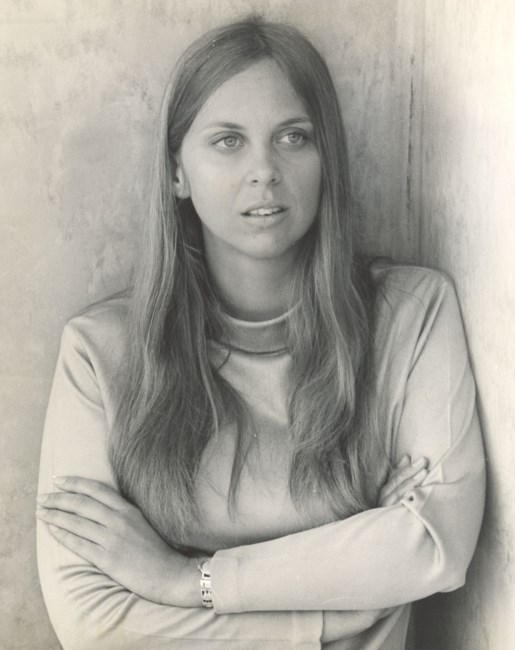
Deanna Jean Nichols passed away October 10, 2017 at The Villages of Jackson Creek, in Independence, MO, after a one-year struggle with cancer. Deanna was born on June 29, 1942, in Kansas City, MO, to Horace Agustus Nichols and Mary Ellen Robbinett. She was raised in Avondale, MO and graduated from North Kansas City High School, in 1960. She then attended Southwest Missouri State University, in Springfield, MO for two years. In 1965, she received her BFA from Kansas City Art Institute, and in 1967 received her MFA from Claremont Graduate University, in Claremont, CA. Deanna was a very talented and admired potter, artist, and gardener. She was also a great cook. For the majority of her career, she owned and operated Nichols Pottery, in Avondale, MO. Deanna was a founding member of the Kansas City Clay Guild. The joy in her creative life came when people appreciated a piece enough to purchase it. The real payoff, however, would come when a select few of her customers and friends with an artistic eye showed up right after a firing. When these people would naturally gravitate to a piece or two that Deanna thought were the best in the firing....that was her affirmation. Central to Deanna's life and happiness were her Australian Shepherd dogs: Scobie, Lacy, Tangle, Shine, Julio and Jostles. She constructed Jostles name by using the first letter in the names of the five previous dogs. She was preceded in death by her father Horace Nichols. Deanna is survived by her life partner Kent Davis, of Sugar Creek, MO, her mother Mary (Jane) Nichols, of Pleasant Valley, MO, her brother John Nichols, of Kansas City, MO, her nephews, Matthew Nichols, of San Marcos, TX, Todd Nichols, of Smithville, MO, and Keenan Nichols, of Kansas City, MO. A quote from Deanna: "I never wanted center stage in my own life"....but, she was certainly "center stage" to those who knew and loved her, and she will be missed dearly. A Celebration of Life will be held at White Chapel Funeral Home, Saturday, October 28, 2017 from 2 to 4pm. Nichols Pottery/ A Brief History of the Career of Deanna Nichols Early Years: My pottery career really began at the Kansas City Art Institute in my senior year when the only way to take a class was to switch my minor field from drawing to pottery. That decision coincided with the arrival at the institute of a new dynamic pottery instructor, Kenneth Ferguson. I loved clay and the wheel and soon spent all available extra hours in the pottery studio. The basics for my future career were put in place in that brief year and the influence of Ken Ferguson has followed me throughout. Ken arranged for me to spend the summer working in the studio of his close friend Henry Mead in Castle Rock, CO and Henry and his wife Nicky found me a part time job working at a tea house, The Golden Dobbin. I learned so much from both of these associations: how to fire kilns, marketing, studio organization, materials, and glazes from Henry and cooking and business from Anne McConnell at the Dobbin. I treasured the time I had with these people in that wonderful place. Pottery was, however, only my minor field and the BFA earned in 1965 was in painting. I applied to graduate schools and accepted a scholarship offered to me by Claremont Graduate University in Claremont, CA. The MFA earned there in 1967 was also in painting. I had tried to minor in pottery while there but found it exhausting as the two facilities were at opposite ends of a very large campus. Also, the renowned Paul Soldner was not there as head of the ceramic program that year. After graduating I took a job at Sullins College in Bristol, VA where I taught a variety of basic art classes for the next two years. I was able to dabble in pottery a bit in the studio of potter Lee Magdanz as the college had no facility. By this time I knew teaching was not to be a major part of my life while pottery would be; but painting was still preeminent. The summer of ’68 I spent in Europe combing through all the major art museums seeing firsthand art works that I had experienced only in books or slides. I visited Italy’s pottery museum in Faenza and hunted for examples of medieval English pottery in London. That fall I moved to Castle Rock, CO where I once again worked at the Mead studio and taught pottery and painting classes at the University of Colorado’s campus in Colorado Springs. In ’69 I married and moved to San Diego where I taught part time at Southwestern College in Chula Vista, CA, 1970 brought a move to Norfolk, VA which was propitious for my future as a potter. Once again I was able to pick up a part time teaching job but this one was at The Chrysler Museum School, a very small pottery school located in one of the lovely old homes on the Elizabeth River in the heart of the city. For the first time I set up a partial studio for myself in the basement of our rented home. Glazing and firing were available at the school, and they had a salt kiln. It was a fertile place to have landed both in terms of people and facilities. I found good friends among those involved with the school, was able to begin selling enough of my work to think of myself as a full time professional potter, and thoroughly enjoyed Norfolk and access to the East Coast. Learning about salt firing was icing on the cake. It was there that I finally made the decision to pursue pottery and let go of painting. Up to this point my pottery had been signed with a handwritten cursive Nichols (from 1964-1970 or ’71). It became confusing to be known by two different names so I began signing both my maiden and my married name using a type set stamp. All of my work from 1971 through 1979 was stamped “Nichols Ferenbach”. Middle Years/Arizona There have been phases in my career in which I explored and used certain techniques that were distinct to that time period but all of them have stayed with me in some way often resurfacing years later. At the Museum School I worked in porcelain for a year simply because it was the clay of which they had a surplus. I never really loved it and handled it more like stoneware but did enjoy the whiteness and got into using colored slips often in bands and sometimes over one another with incised drawing or textural patterns scratched through the layers. Those pieces were the antecedents of the thicker, textured slip decoration used in the latter part of my career. I continued to used porcelain some but primarily used stoneware through the middle years. In 1972, free of the military, we headed west and bought a house on three acres with a small separate building actually built by a potter as a studio in the small town of Yarnell, AZ. This town is situated at the top of a 2500’ climb into the Weaver Mountains out of the Sonoran Desert where it levels out at 4800’. My studio there featured a floor to ceiling window looking out onto an enormous grey granite boulder. It was dramatic as was the whole area which was strewn with these huge, gently rounded rocks. With a gas kiln and a salt kiln duly constructed and remarkably good clay procured from California, I was in business. Situated between Wickenburg and Prescott markets in the form of good galleries were readily available and true to my pattern I picked up a part time teaching job at Yavapai College in Prescott. I began selling through a fine arts gallery in Prescott by the name of Cob Web Hall and later a western art gallery, The Wickenburg Gallery, as well as The Gathering, a crafts gallery, in Phoenix. Others along the way were in Sedona, Palm Springs, and the last couple of years that I was there a wonderfully successful venture right in my own tiny town called The Tea Pot Shoppe. I have always been grateful to the people who ran these shops and galleries for the support they gave me over the nine years that I spent there. While there I investigated pinch pottery (the vestiges of which remain in my work today in fountain floats and planters) moving from small hand held forms to larger pieces begun on the wheel and fired without glaze or salt fired. This is also when I began making fountains which had been on my mind since student days—had to wait for skills to catch up to my ideas. The whales first appeared as theme there in the desert on oil lamps, wall hanging platters and fountains but they were definitely echoes from the years spent on both coasts. Utilitarian functional ware has always been my primary focus, thinly thrown, light weight and hopefully well designed. While in Arizona it was usually decorated with underglaze banded slip or overlapping glazes. In the last year there I purchased an airbrush not knowing for sure how I would use it but hoping to connect to my painting past. Kansas City/Avondale Years In the fall of 1981, once again a single person, I returned to Kansas City buying the old drugstore building at 2615 N. Bell in Avondale which I knew would make a great studio with its upstairs apartment, proximity to my family, and its general ambience. The whole building needed work and it was fortunate that my brother John was able to do it. Soon I was ready to work and to open my front door to business with a small inventory brought from Arizona. My first glaze firing in the new kiln was unloaded on January 24, 1982. The ware made from 1979 on has been signed with a stamped “NICHOLS” or “Nichols” and sometimes on larger pieces “DEANNA NICHOLS”. I continued with techniques used in Arizona and became very involved with the new airbrush, cutting stencils and spraying negative and positive with oxides on top of glazes to create images, space and pattern. This technique dominated my work yielding the undulating ribbon patterns as well as plant motifs and others for a number of years. Briefly there was even a salt kiln her in KC but it never fired efficiently and though I loved the process and some of the pieces from it I tore it down after only a few firings. The next, and last, major shift in technique occurred after going to a Chris Staley workshop. He used thick slip for decoration and it was just what I needed to marry my past slip work with the airbrush overspray of coloring oxides. The slip served to loosen my tight controlled throwing style and I loved the addition of surface texture to my ware. This was probably around 1992 and it was at this time that I changed my stamped signature by adding my first initial to most of the pieces, “D.Nichols”. Large pieces still had my full name if space permitted. While in KC I dealt with various galleries around the city and elsewhere but for the past 16 years I considered myself fortunate to have been associated with Bluestem Missouri Crafts in Columbia, MO. They are simply the best I’ve encountered anywhere. It was also about that long ago that I acquired the lot on the west side of my building and began turning it into a garden, installing a sliding door in my throwing area that opened out to it with access and view. This enhanced my life tremendously and linked naturally to the pottery with many customers combining a pottery shop visit with a walk through the garden. Conclusion I always knew that I would be faced with a major upheaval when it was time to wind down. That process has begun a little earlier than I had hoped but, as most of you know, hand issues have forced me to stop working with clay. Sometime in the future I hope I will have sufficient stability and dexterity to at least dabble in clay. Meanwhile I hope to be creative in one way or another: continue gardening and enjoying my digital camera are two examples of which I am certain. My purpose in doing this brief history is to provide those who have collected my work some documentation that can be passed on with the ware. Having my door open and selling my own work has not left as much of a trail as many potters leave. I feel it is important it be known that the way my pieces are signed is a clue as to when and where they were made. In summary, the things that drew me to clay originally remained as the backbone of the entire 44 years. I fell under the spell of the wheel, loving the physical beauty of the moves required to form clay and the sense of peace that came from throwing. Function has always been the thing that made it work for me. That and the people who take the pieces into their lives and make it all relevant. Should this lump of clay become a vessel and Should it dry without crack, Fire without flaw and Serve without breaking, Then may it claim For its maker A tiny bit of immortality. 12-10-2008
Muestre su apoyo
Comparta Un Recuerdo
Comparta
Un Obituario
Obtenga actualizaciones
Servicios
COMPARTA UN OBITUARIOCOMPARTA
- RECIBIR RECORDATORIOS
v.1.18.0