
OBITUARIO
Howard Charles Tankersley
10 marzo, 1934 – 29 noviembre, 2015
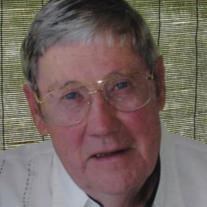
Howard was born in Gooding, ID following the Doctor’s diagnosis that his mother was “growing a tumor”. He resided in Dietrich, ID until about age 4, when his family moved to Jerome, ID. Here he spent his days doing chores, playing Cowboys and Indians / Cops and Robbers, shooting marbles, and playing neighborhood baseball and soccer. At age 9 he started working in his parents’ gas station/grocery store, and later on the acreage they bought, where he and his 2 brothers grew pasture and livestock, and a big garden. Even though he and his friends sometimes skipped out of school for more exciting pursuits, he somehow managed to graduate from Jerome High School in 1952.
While working on a local farm the summer after he graduated, he met a fellow who was already attending college at the University of Idaho, “up north” in Moscow. This new friend convinced Howard that he should come to college with him that fall, where there were “lots of girls” and it would be a good place to “spend the winter”. Howard’s first “class” was learning that a University was made up of many different “schools” of various subject matter, and that he had to choose one in which to enroll. Since he was very familiar with the meaning of Agriculture, he chose to enroll in that school of study. In the following summer he decided he might as well return in the fall, and before he knew it he was graduating with a BS in Agricultural Education, in June, 1956.
Home from college for the Christmas vacation of 1953, Howard’s cousin persuaded him to accept a blind date with the sister of the cousin’s friends, who also attended the University of Idaho, studying Music Education. The three couples would attend, as a group, the annual New Year’s Eve dance at the Glenns Ferry, ID American Legion Hall, along with Howard’s older brother and wife. Although he was “a greenhorn to be taken advantage of” by his cousin’s friends at the dance, and made a poor impression on the blind date, Howard later convinced the girl to forgive him, and give him another chance. They became engaged back at school in Nov. 1954, and he married Cherrie Wood on June 12, 1955. She also finished college at the University after Summer School of 1956, and they both accepted employment as teachers of Vocational Agriculture and part-time English, respectively, at Shoshone Idaho’s High School in the fall.
Halfway through that first year of teaching, Howard received his draft papers to enter the U.S. Army, along with his next-door buddy and fellow teacher. After the Superintendent of Schools rebelled against losing two teachers in mid-term, the two draft boards postponed their Army entrance until the summer of 1957. Howard reported for duty to the Army Training Command at Fort Ord, CA in late July and upon completing his Basic Training, was assigned to the Headquarters Company of the Training Command at Fort Ord because he knew how to type.
Howard’s Army adventure expanded when he was sent by “rush” orders to the personnel section of the Fourth Logistical Headquarters Command, located in Verdun, France. He traveled there on the “General Butler”, a liberty ship built as a cargo ship in WWII. It was a slow boat to anywhere with a top speed of 9 knots, and he wondered where the “rush” part of his orders came into play? He and the other military personnel were in France as “guests of the French government” and, therefore, confined to a compound built by Napoleon as a training center for his commissioned officers. When not on duty, he busied himself in the compound’s craft shop with making and repairing small desks and other furniture for the barracks.
An army buddy who had been assigned to assist the chaplain of their local units had been an Eagle Scout back home in the states, and decided it would be fun to start a Boy Scout troop for the children of Army personnel in the area. After getting the backing of the chaplain, he asked Howard to be his Assistant Leader. As word spread, the higher local officers decided there should be Scout Troops throughout the command, so the two PFC leaders were sent to a gathering of officers in Birchesgarten, Germany (Hitler’s former Officer’s Retreat) to train other units “how to start and operate Boy Scout Troops”. Consequently, the two “teachers” stayed in the General’s quarters during the training meetings, and then traveled around to areas of their choosing for the rest of their “unheard of” ten-day pass! The Scout troops made several excursions throughout France, Germany, and Belgium during the Spring and Summer, including a trip to the World’s Faim in Brussels, Belgium and a visit to the many tulip fields in the Netherlands. The two buddies teamed up with a third one (who had a car) to travel around, and met many friendly French natives on their weekend passes.
During this time the Russians had developed Sputnik, and President Kennedy was trying to advance education in the United States in science and math. One day while looking up something else in the Army rule book (which was his job), Howard came across some surprising information: If an army personnel had a job lined up back home to teach Science or Math, he/she could get an honorable discharge and go home to teach. With a BS degree in Agricultural Education and a minor in Science, Howard was eligible! He immediately notified Cherrie back in Idaho, she secured a job for him in the Twin Falls, ID School District, where she had just been hired as an elementary music teacher, and Howard was on his way home. Looking back upon his thirteen month Army “career,” Howard was surprised to realize that all his European experiences had taken place within a seven-month period!
Howard arrived home on August 11, 1958, and moved with Cherrie and their 11-month- old daughter to Twin Falls to begin his new civilian life. After he taught six sessions of 7th grade science every school day for nine months, he decided that Junior High age level students didn’t match his personality, so he went to work for a local seed company, convincing southern Idaho farmers to contract with his company to grow seed for crops, then helping them to do so.
Upon realizing that upward mobility was limited in small companies, and that teachers pay would never be able to fully support his family, Howard decided to improve his prospects. When a job opening appeared in the USDA Agriculture Extension Service, Howard applied for it and was hired as a County Agent in Power County Idaho. He moved his family to American Falls, ID and began his thirty-five year career as a civil servant.
An Extension employee was covered by the Federal Civil Service Retirement System, and could be promoted up the line from County staff to State staff to National staff, while maintaining continuity of pay and benefits, and having continuing education opportunities (all things that Howard valued for himself and his family). As the years went by, he did indeed experience upward mobility, ranging from service as a County Agent in Southern Idaho, to the State of Idaho Extension Office in Boise (Rural Development), to an Assistant Professor position at the University of Idaho in Moscow, to the National Extension office in Washington, DC. Along the way he attended the University of Oregon in Eugene to earn his MS in Public Administration, and completed several other educational courses in various related to his ever-changing job assignments. In 1980, he transferred into another branch of USDA, the Soil Conservation Service. This area offered a wider range of opportunities to develop his abilities in solving problems, and in setting up new programs to address the needed issues.
It is the Civil Servant who provides the continuity of government over a period of years, as the majority parties in Congress change, as the person serving as U.S. President changes, as the economy changes, as political philosophies change. Being a Civil Servant demands a deep knowledge of the laws authorizing the specific agency and its programs in order to deliver the program benefits to citizens, and to hold those program operations accountable. Civil servants are employees of the Administrative Branch of Government, and work closely with Congressional and Judicial Staff members to develop legislation to solve problems, develop rules for the administration of programs, and to deal with problems that arise in the operation of those programs.
Such was Howard’s career of 35 years as a Civil Servant (including his one-year Army service), working on various projects and programs. These ranged from improving lives of farmers and ranchers by improving quantity and quality of various agricultural products (plants and animals), and educating them on the effect of radiation from nuclear weapons; to improving economic situations in rural communities struggling to survive the US highway development system that bypassed their communities; to helping solve flood and erosion problems in the country’s inland waterways and coastal plains; to identifying/researching new crops for agricultural land, including Kenaf (Kuh-naf) used to make high quality papers, Jojoba (Ho-ho’-buh), a plant that produces oil used in cosmetics, and Guayule (Y-oo’-lee), a plant that produces rubber.
When Howard and family moved into their home in Vienna, VA, outside Washington, DC, in September 1973, he and Cherrie had celebrated their 18th wedding anniversary in June, and this home was their 18th apartment or house since they’d been married. After living there for nearly 20 years, Howard’s then-current Soil Conservation Unit was transferred to Ft. Collins, CO, the town highest on their list of possible retirement communities. Two years after arriving in mid-February, 1992, the higher USDA powers decided the position Howard held needed to be moved back to Washington, D.C. They could do this because Howard had been promoted to a level called The Senior Executive Service, where members agreed to move when requested within 15 days.
With this knowledge, Howard compared his years of service with the required years needed for fully-covered retirement benefits, and found he met all requirements. Two days later he walked out of his office doors for the last time. He had finally entered the phase of his life that he had been looking forward to since he started working at 9 years of age. He was at last a Retiree!
Howard spent the next 21 years experiencing ever-increasing health problems, but between bouts of them he and Cherrie were able to do some traveling to visit their children and other family and friends throughout the west and mid-west. His favorite activity was golfing, which gave him enjoyment of activity, of the beautiful outdoor environment in Colorado, of meeting many friendly people, and of becoming “part of the family” of the golf course owners/operators. He also greatly enjoyed the new wonderful friends that live in Colorado, especially in Ft. Collins. He often remarked on the fact that the best crew he ever worked with was right here, and many of them remained his close, supportive friends to the last.
Over the last ten years Howard added a new circle of friends: all the medical caregivers that kept his body and spirit going forward until the end. He felt very blessed to live in Ft. Collins (with its good health care) during his retirement years. However, his progressively worsening health, especially the COPD and heart problems, finally overcame his determination to stay alive for his family. He passed away in the early evening of Sunday, November 29, 2015, in his favorite recliner in his own living room, with most of his family lovingly around him. What a blessed way to go!
Howard leaves behind his wife of 60 years; Cherrie (Wood) Tankersley, daughter and son-in-law (Leslie and Don Black, Boise, ID), daughter (Laurie Seiler, Fort Collins, CO), son & daughter-in-law (David and Patti Tankersley, Glendale, AZ); seven granddaughters: Krista (Travis Whitmer), Nikki, and Kortney Tankersley, Ruth (Deton Bearden), Sharon Seiler, and Katie and Christina Black. He also leaves behind three great grandsons: Mason, Jacob and Jackson Whitmer, siblings Ruth (Del) Thrall, Dale (Kathryn) Tankersley, and sister-in-law Genette Tankersley; and many nieces, nephews, cousins, and friends around the world.
He is preceded in death by his parents CC (Charlie) and Stella (Yowell) Tankersley, his brother, Lloyd Tankersley, and a nephew, Paul Tankersley.
There are many family members and friends who hold much admiration and love for him, who will greatly miss his earthly presence in their lives. However, there are many others who are “welcoming him home” on the other side.
Muestre su apoyo
Comparta Un Recuerdo
Comparta
Un Obituario
Obtenga actualizaciones
Servicios
COMPARTA UN OBITUARIOCOMPARTA
- RECIBIR RECORDATORIOS
v.1.18.0