OBITUARIO
William Edgar Marlatt
5 junio, 1931 – 2 junio, 2016
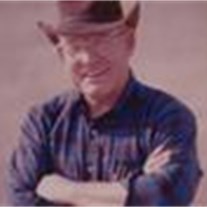
William Edgar “Bill” Marlatt went home to be with his Lord on June 2nd, 2016, just four days after celebrating 60 years of marriage to his wife Patricia, and just three days before his 85th birthday. While he had been struggling for several months with a heart blockage and failing kidneys, he went into the hospital with an expectation of recovery, and his passing came as something of a surprise to his family. But while we grieve his passing from this life, we rejoice in his new life in heaven, free from the all the pains and cares of this world, and we celebrate with him the memories of his life here.
Bill was born in Kearney, Nebraska, on June 5th, 1931, the second of six brothers and one sister, and grew up a Nebraska farm boy working on his parents’ dairy farm. Although he had never been out of the state of Nebraska until graduation from Odessa High School, the world opened its doors to him. At the time of his passing, his research, teaching, and general wanderlust had led him to almost a hundred countries, on six of the Earth’s continents. He was instrumental in starting four new academic programs at three universities on two continents, he had worked with, met or advised world leaders from Indira Gandhi to Edward Teller, and he not only earned a PhD but also received an honorary doctorate. But at his heart he always remained a Nebraska farm boy.
Following service in the US Navy during the Korean War, Bill graduated from Nebraska State College in Kearney in 1956, with a Bachelor of Arts in Physical Sciences and Mathematics. Following graduate school at Rutgers University in New Jersey, he joined Colorado State University 1961, as an inaugural member of the just-formed Department of Atmospheric Sciences. In 1970, following a year of sabbatical in Texas, Bill left the Atmospheric Sciences Dept. to create the Watershed Sciences Department (later becoming the Dept. of Environmental Sciences), where he served as its first Department Head. During the early 1980s, he helped to start the Department of Environmental Sciences and Engineering Ecology at the Colorado School of Mines, and in 1986 he help to develop a graduate program in Environmental Engineering at the Caufield Institute of Technology in Melbourne, Australia.
He taught at CSU from 1961 to 1992. If you asked him what he taught, he would inevitably answer, with that irrepressible twinkle in his eye, “students.” But much of his curriculum revolved around various aspects of climatology, meteorology, and environmental sciences. One of his most popular and successful courses was “Analysis of Environmental Impact,” a multi-disciplinary class which taught students how to measure the probable effects of a hypothetical development project on the environment. The ‘final exam’ for this course was a mock public hearing, usually in a courtroom with a sitting judge. Bill loved to take the role as an industrial developer, often appearing with a fat cigar and attitude to match.
Bill met the love of his life, Patricia Joanne Olson, while at Nebraska State College and they were married in May of 1956. Pat was very much the glue that held his multifaceted life together and the grace that warmed their home. Her close walk with God did much to strengthen Bill’s faith. While she joined Bill on many of his adventures, traveling with him to all corners of the world and living with him during their year in Kunming China, her passion was the hospitality of their home. Bill loved the bustle of company, and their house was often ‘Grand Central Station,” where as often as not a Thanksgiving or Christmas dinner might include guests from Russia or China or Australia or Canada – or from several of these places all at once! The various holiday traditions were probably puzzling to many of our foreign visitors, but one was surely incomprehensible. Bill loved to joke and laugh, and it was almost a rule that if you left the table, your plate or glass or silverware (and sometimes your whole place setting and chair) would be hidden when you returned! Bill would maintain an innocent face while his eyes laughed, and after a suitably long time, the missing items would be returned.
Bill and Pat have two children, Stuart and Valerie – both born in New Jersey but raised in Colorado. At their home southeast of Ft. Collins, his farmboy roots found expression raising horses and calves, a large garden, and even for a few years, a number of bee hives. His love of the outdoors, of tending plants and animals, is reflected in his children. He raised farm kids, albeit not exactly on a full-fledged farm. He especially enjoyed trail riding, and explored many mountain trails on horseback with his family.
During Bill’s time in graduate school at Rutgers, Russia launched its Sputnik satellite and the space age began. Bill recalls that he watched the gleam of reflected sunlight as Sputnik passed over New Jersey and said to Pat, “That satellite will have a bigger influence on my life than anything you can imagine.” And indeed it did. Much of Bill’s early research involved remote sensing collaborations with NASA, with low altitude flights in small aircraft over the eastern plains of Colorado, the oceans off Barbados and Christmas Island, and the Death Valley desert, taking aerial readings while weather satellites far overhead and teams on the ground took similar measurements. His work with NASA perhaps culminated as a principle scientist for a major experiment on the Skylab flights in early 1970s. Bill was a pilot but didn’t ever fly as an astronaut - but he would have liked to had he had the chance!
Teaching, research, and environmental consulting took him to locations throughout the world. Over the course of his life, he visited 97 countries on six continents, from Barbados in the Caribbean to Christmas Island in the mid-Pacific, from Surinam on the northern coast of South America to Siberia in northern Russia, from Botswana in South Africa to Kunming in southwest China – not to mention India, Australia, Peru, Venezuela, Brazil, many countries throughout Europe, and every state in the USA. He spent extended periods abroad; he and Pat lived in Kunming, China for the better part of a year, and much of another year in Melbourne, Australia.
Bill had myriad stories which he loved to relate from his storied life and it would take far too much space to relate them here. He had the opportunity to teach at many universities and to present lectures at innumerable conferences, academies, institutes around the world, but perhaps his most cherished presentation was on a topic somewhat outside his professional scope and in the most unlikely of places.
During the late 1980s, Bill was part of a technical exchange with Soviet Union, before the fall of the Berlin wall. One Sunday morning following a trip to Russia, Bill had been asked to talk about his experiences to his Sunday School class. When he came home he found that they had a visitor from Russia, and he was reading Bill’s notes for his Sunday School lecture. As it turned out, this visitor was a member of the USSR Academy of Sciences – and after a long afternoon’s conversation, Dr. Piontkowski invited Bill back to Moscow to give a series of lectures to the Soviet Academy of Sciences. At his request, the final lecture was on “Christian Stewardship of the World.” When you consider that this was before the fall of the USSR, in one of the most prestigious scientific settings in an officially atheistic, communist country – this was a thrilling and humbling experience for a Nebraska farm boy.
Throughout his life, Bill was an avid outdoorsman. He dearly loved to fish, and spent many fine hours trolling behind his canoe, usually to the purr of a small outboard engine. He hunted duck and pheasant, deer and elk with gun and bow; during the latter portion of his life he particularly enjoyed joining his brothers to hunt whitetail deer from tree stands along the Platte River, not far from the site of his family farm. Following retirement, he and Pat purchased a fifth-wheel camper, and traveled throughout the western US – including a long road trip to Alaska, and several extended snowbird trips to Texas and Arizona. He and Pat continued their travels, often joined by Bill’s brothers or Pat’s sister. Again, their curiosity took them around the world, including a cruise up the Yangtze River, a boat trip on cancels across Ireland, cruises in the Caribbean and Mediterranean, and trips to New Zealand, Australian, and Europe.
How does one summarize a life? So many adventures remain unsaid - the week canoeing the Minnesota Boundary Waters, the ascent of Mount Kilimanjaro in Tanzania, the January in Siberia, the weeks in the high peaks of Peru, the camps in National Parks throughout the US. But I’m sure that as Bill considered his life, he would think first of his family and friends. Bill loved people, and loved to be with people. His stories of his travels around the world always focused on the people met and relationships created. His bonds with his family, and with Pat’s brothers and sisters, were an integral part of his life – most vacations included one or more families joining their travels. And he had many strong, enduring friendships, several stretching back to their first days in Fort Collins, as well as some made more recently but no less dear to him. One of the highlights of his last several years was getting together with friends for coffee and donuts.
But at the center of who Bill was, was (and is) his faith in God and his love of Jesus. He never wavered in his belief that God loved him, and that he could live in Christ’s forgiveness. That faith is especially reflected in his last few years. Whenever he traveled, Bill would study to become familiar with his destination. For months before each trip, he would read histories and geographies, poring over albums and maps to learn all he could about the new country he would be visiting. So it was appropriate that for the past few years Bill had been reading almost everything he could about heaven. Even though he had planted a garden this spring and was making travel plans for the summer, it is clear that he knew that he was soon to be making another, final trip, and he was preparing for that journey.
Bill collected many of his myriad stories into a book which he entitled “Adventures of A Nebraska Farm Boy: A Compendium of Memories” (which you should beg, borrow or steal!). He finished the book in 2008, almost a decade before he finished this life, and well before he ran out of adventures. I will let Bill conclude this brief obituary in his own words, from the final pages of his memoirs:
“…the greatest adventure is yet to come – when the Lord says, ‘Welcome!’”
Muestre su apoyo
Comparta Un Recuerdo
Comparta
Un Obituario
Obtenga actualizaciones
Servicios
COMPARTA UN OBITUARIOCOMPARTA
- RECIBIR RECORDATORIOS
v.1.18.0