
OBITUARIO
Catherine Shevlin Pierce
23 junio, 1942 – 21 septiembre, 2024
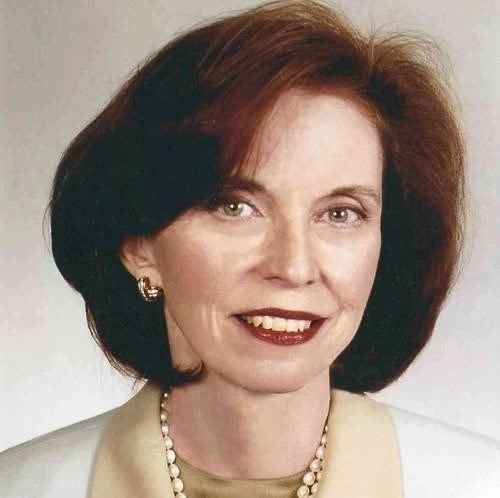
Trained as a historian and a demographer, she spent most of her career at the World Bank and the United Nations Population Fund (UNFPA). During a career that spanned four decades, she helped improve the lives of countless women and children around the world.
She joined the Bank in the mid-1970s, as a researcher and program analyst at the then-new population division, at a time when the organization had few women in professional roles. She took part in missions to Morocco, Tunisia, Algeria, Indonesia, and South Korea. What she learned on those trips contributed to the 1977 book she co-authored with her colleague Roberto Cuca, Experiments in Family Planning: Lessons from the Developing World.
In 1980, following her husband's transfer to New York, she joined UNFPA. She served as special assistant to Dr. Nafis Sadik, who became the Fund's Executive Director. Pierce's travels continued, particularly after she became the chief of the bilateral and multilateral assistance branch, which coordinated contributions from donor countries and foundations. She took part in the UN conference on population in Mexico City in 1984 and, in 1994, helped organize the landmark UN International Conference on Population and Development in Cairo. Over 11,000 people from governments, international organizations, and non-governmental groups participated in the Cairo conference, which shifted the focus of population-related programs to reproductive rights and gender equity. As the manager of UNFPA's global training program in population and development, she visited universities in India, Chile, Botswana, Egypt, and (again) Morocco.
While she loved New York and was comfortable at UN headquarters, she most enjoyed visiting UN projects in the field. In 2000, she took an assignment as the head of UNFPA's regional technical services team for the Pacific, which was based in Fiji. Shortly after she arrived, a coup d'état upended the political situation on the island, but she moved through the chaos with her usual verve.
After retiring in 2003, she and her husband moved to New York City. She consulted in international development and taught in the global affairs program at New York University. In 2005 she received an honorary doctor of letters degree from Purdue University.
There was little in her background to suggest an international career. She was born in New York City to James Shevlin, a policeman, and Anna McGill Shevlin, a nurse at Lenox Hill Hospital. She attended Marymount College in Tarrytown, NY, where she majored in history and was active in the International Studies club. After graduating magna cum laude, she went to Purdue, where she received a master's degree in history. On a trip back to New York, she met her future husband, a computer scientist They married in 1966 and moved to Philadelphia, where she taught at Temple University. In 1968, while living in Palo Alto, Calif., they had a son, Todd.
It was in the early 1970s, after her husband had been transferred to the Washington, DC area, that she pivoted to demography. She enrolled in the graduate program at Georgetown University, where her thesis advisor was the famous scholar Dorothy Swaine Thomas, the first woman to be president of the American Sociology Association. Dr. Thomas urged her to apply for a job at the World Bank.
Known outside the office as "Kay," she also loved to cook, garden, and read. She had an excellent eye for jewelry and fashion and would tell people what Mad Men got right and wrong about the look of her contemporaries, those Silent Generation women who entered offices dominated by men and fought to succeed. She was confident and forthright: the Coral Gables priest whose retrograde sermon had annoyed her received an earful on the church steps. In no particular order, she loved black olives, the song "Moon River," Chicken Marbella, Rear Window, the novels of Thomas Mann, and the silks of Jim Thompson. She loved to talk to people and exchange stories, whether they were the tailor down the street from Todd's apartment in Athens or Queen Noor or the undergrad doing Latin American Studies.
She understood how much she had benefited from the mentorship of others and repaid that debt. She would guide new staff, junior program officers, and summer interns in the ways of international organizations. For many years she coached recent Purdue graduates as they began to make their way in the world.
She loved the beach, never letting her Irish skin get in the way of miles-long walks in Amagansett, where she and her husband bought a house in 2004. Clad in huge sunglasses and an even bigger hat, she would scan the horizon, looking out to sea, wondering what was going on out there, and what she'd do once she arrived.
She is survived by her husband and son.
A memorial service will be announced. Those wishing to make a donation in her name may do so to the Alzheimer's Association.
Muestre su apoyo
Comparta Un Recuerdo
Comparta
Un Obituario
Obtenga actualizaciones
Servicios
COMPARTA UN OBITUARIOCOMPARTA
- RECIBIR RECORDATORIOS
v.1.18.0