OBITUARIO
Kenneth Post
20 julio, 1947 – 18 diciembre, 2024
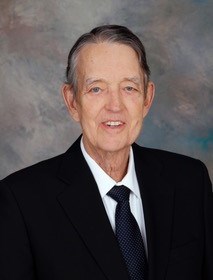
It is with sorrow and love that we mourn the death of Kenneth Post of Hamilton, Ontario. He passed away peacefully, at home, on December 18, holding the hand of his beloved wife of 54 years, Rebecca Dale Post. He had been diagnosed with advanced-stage prostate cancer in 2022.
Kenneth met Rebecca while attending Middlebury College in Vermont. They married in 1970. Having declined a Peace Corps offer to become dairy farmers in India, Kenneth accepted admission into a PhD program in the religious studies department at McMaster University. They both lived in India for a year, in 1974, while Kenneth conducted research in comparative religious studies. Kenneth taught at McMaster University and worked in the university administration. He was politically active in the right to life movement.
In 1990, he went back to school and obtained a law degree from the University of Toronto. He practiced commercial civil litigation in Hamilton, until he retired in 2007 due to kidney disease. He received a kidney transplant in 2010. His family and friends are forever grateful for the extra time they were able to spend with him as a result. He was able to enjoy playing weekly tennis, skiing and travelling.
Kenneth’s life revolved around two things: love of his family and his academic study and writings concerning the Biblical and classical sources of political order. On the former: Kenneth is survived by his devoted and loving wife, Rebecca; their eldest son, Isaac, his wife, Hayley, and their children, Edwina and Hamish; his daughter, Julia den Hartog, her husband, Jonathan, and their children, Josie and Jonah; and their youngest son, Ethan, his wife, Holly, and their son, Henry. He is also survived by his loving sister, Linda Wheeler, her husband Arnold, and their son, Tom. On the latter: He is the author of four books concerning the interpretation of the books of Genesis, Job and Plato’s Republic, and of the meaning and artistic significance of the stained-glass windows at MacNab St. Presbyterian Church in Hamilton, Ontario. His final book, written after being stricken with cancer, concerns his meditations on the recurring concepts of suffering and eternity in the Old and New Testaments. Kenneth was a devoted member of MacNab, which he attended for over forty years. He spear-headed the fundraising, and oversaw the construction work, for a major renovation project so that the beautiful church building could continue as a house of worship.
-Gone From My Sight-
I am standing upon the seashore. A ship, at my side,
spreads her white sails to the moving breeze and starts
for the blue ocean. She is an object of beauty and strength.
I stand and watch her until, at length, she hangs like a speck
of white cloud just where the sea and sky come to mingle with each other.
Then, someone at my side says, "There, she is gone."
Gone where?
Gone from my sight. That is all. She is just as large in mast,
hull and spar as she was when she left my side.
And, she is just as able to bear her load of living freight to her destined port.
Her diminished size is in me -- not in her.
And, just at the moment when someone says, "There, she is gone,"
there are other eyes watching her coming, and other voices
ready to take up the glad shout, "Here she comes!"
And that is dying...
________________________________________________
Memories of my husband by Rebecca Post
What can I say about the man who was the love of my life for 57 years? We were so young when we met and our youth is full of silly yet fond memories: Ken asking me on a date by writing the question on the side of his pencil which he repeatedly rolled off his desk and which I repeatedly picked up and returned to him, never looking to see if there was a message written on it; Ken finally asking me on a date. It was to go to the Montreal Expo the day before a major biology exam. I decided to blow off the exam in favor of our first date--an excellent decision as it turned out! Ken inviting me on a camping trip to climb Mt. Mansfield. He borrowed a friend's motorcycle and ground cloth. We set out too late, broke the mirror on the motorcycle while laying it down at the bottom of the trail, only made it halfway up the mountain before darkness fell, and slid into our campfire during the night, setting the borrowed ground cloth on fire.
That was my sophomore year of college, and we were inseparable from our first date on. But I was a French major and had already applied to spend my junior year in France. So we parted the following August and I went off to France. We missed each other terribly, and Ken concocted a winter research project that had nothing to do with France, but that would allow him to be off campus. He came over after Christmas and we spent a month together. My very understanding French family let us stay in an eighth floor tiny garret room which they owned. We bought a $3.00 wedding band at a curiosity shop so we could travel a bit more easily. (I eventually was married with that ring and wore it until the gold color wore off and it turned green.) During this time I realized that I did not want to be separated again from Ken, and arranged to drop out of the program so that I could return with him. I remember how supportive the young director of the program was as she said to me "Vive l'amour!" My parents were not so supportive. I had to make up some credits due to my impulsive decision, which meant staying at Middlebury for the summer taking extra classes. Ken remained there with me. We stayed together in a flea infested fraternity room and were completely happy.
The next year brought more separation. I had to finish college and Ken started graduate school in Hamilton. We visited one another as often as possible, and decided to get married soon after I graduated.
The next few years provided many adventures. We lived in Connecticut where Ken did alternative military service and I got a teaching degree and job. We went to India for a year which was a life changing experience. In search of an "authentic" experience Ken accepted a root of some kind from a "holy" man sitting under a tree. He dutifully chewed upon it, got a serious case of dysentery, and lost 30 pounds. I looked after Ken, and we became great friends with the doctor who treated him. Dr. Bharucha and his family took us to interesting places in Maharashtra, providing us with healthier authentic experiences. During this time I studied the local language so that I could better communicate with the maid who came with our apartment. We became quite close to Fulabai, and she showed us parts of India that were off the beaten path and unavailable to tourists.
After returning from India I became seriously ill which delayed our ability to start a family. We finally were able to begin family life in 1978 with the birth of our son, Isaac. We bought a wreck of a house that came full of junk and even had excrement in the floor vents. Ken immediately cleaned, painted and installed an air conditioner in a small bedroom where I, pregnant and nauseous, could hibernate while he cleaned and renovated the whole house. He even tore out the only bathroom when I went to the hospital, but managed to finish redoing it before I came home with Isaac. It was fortunate that the hospital allowed me to stay for 9 days while Isaac was under the lights with some jaundice. Those were different times!
Julia came along a couple of years later, and then Ethan. Ken talked about how he fell powerfully in love with each baby. He was a wonderful father, helping with every aspect of childcare. But his loving care giving did not end with our children. We discovered on a trip to visit Ken's mother that she showed signs of dementia. After speaking with her doctor he made the decision to bring her to live with us. He looked after her in our home for three years until she passed away. It was difficult for everyone. It was a very small house and she took over the very small family room. Ken never complained, and took part in every aspect of her care as her dementia worsened. Our children were wonderfully understanding of the situation, and I think they benefitted from seeing the way their father cared for his mother.
We frequently noted to each other how incredibly blessed we were with our family. Our children brought us such happiness and pride! We had some wonderful trips over the years--skiing, Europe, Disneyworld, the Jersey seashore, Hawaii. After the children left home for their own careers and families Ken and I took many memorable trips together. We went on cruises, visited Ethan numerous times in California, visited the Grand Canyon, Alaska, the Maritimes, and had many wonderful visits to see our children and grandchildren. While doing all of this Ken managed to have successful careers in education and law, produce a pro-life film called "Feel the Heartbeat," and publish four books.
Ken was always encouraging and completely supportive of me. When I retired from teaching I decided to pursue my interest in music. What began as an evening adult piano course at Mohawk College ended with my pursuit of a jazz piano diploma in the regular daytime music program. Ken participated in my courses vicariously and enthusiastically, listening to the new and unfamiliar pieces I was learning, discussing musical concepts with me, and welcoming some new young friends I made into our home for dinners, conversation and jam sessions. He often said how happy he was that I had decided to do the Mohawk jazz piano program. It reminded me of the time in college when I took a course on "The Marriage of Figaro." He used to say that it was the best course he never took. We listened to the opera on tapes in the car all the time, and he took me to see three productions of it. After graduating from Mohawk I looked for ways to apply what I had learned and started making song lists to use for sing-a-longs in nursing homes. This progressed into a solo playlist as well to use in hospitals and senior residences. Ken was my best audience, telling me that he loved hearing me play and could listen for hours, and encouraging my desire to play for other people. Without this encouragement I would never have built up my repertoire and gained the comfort to play in public. This activity is what now sustains me. It is a gift that Ken gave me--he provided me with a way to move on.
Ken was so open to learning new things and sharing new experiences. He was kind, thoughtful and generous. He was the smartest and most loving person I have ever known. I miss him and will always treasure the love we had.
________________________________________________
Eulogy for Kenneth Post
(December 28, 2024)
My name Isaac Post. I am the eldest son of Kenneth and Rebecca Post.
Yesterday, I read every page of Dad’s short book that he wrote after his cancer diagnosis, called “Eternity and Suffering: Thoughts on Christianity.” I cried as I read it. I knew I would – even though it is not supposed to be either sentimental or personal. It is a work of literary analysis. Yet, so many aspects of Dad’s personality and humanity are present on every page. And it made me think.
My Dad was always a very thoughtful person – meaning that he thought about, and then acted in ways, to help others. And he did this with industrious and indefatigable effort. A funny memory from childhood. I think it was in fifth grade that we did a study unit on the Middle Ages. The project assigned was about castles. And the mission – should we choose to accept it – was to build a castle and then talk about it. I showed Dad a picture of the castle I liked. No problem he said. He got various pieces of Styrofoam from a hardware store and a hobby shop, cut the pieces nice and straight with a saw to form the walls and towers. He basically designed and built this model castle. I think I painted it. We did a great job. Then, a couple years later, my sister, Julia (I believe) also encountered this same assignment. Dad was right there, again, to help. But her castle required a replica of two mounds of earth, upon which the castle was located. So Dad got a 6x3 foot plywood board for the base, mixed up a large quantity of plaster of Paris and formed two large mounds for the castle. It seemed to take all weekend to build. It was pretty awesome – and weighed about 40 pounds, which he and I helped carry into the school. But devoting that much time and effort to help my sister or me was in no way atypical. And I know many of you have been touched by his thoughtfulness in similar ways.
My Dad loved beauty, especially as it was found in music. Although he played the drums when he was young – and resumed playing when the kids were long out of the house – his love for music was more appreciative than performative. And he loved classical music, opera, jazz and blues. I have a memory of a brief episode during our family trip to Europe. I was fifteen. This was in Paris, France one night. Dad and I went out to a jazz club. I don’t remember the music. But it was just the two of us. And it was beautiful. And I miss him.
My Dad was a very careful reader. A sophisticated writer chooses his words with great particularity. Dad wanted to understand what the writer truly meant. This extended to works of philosophy and, the Bible, of course, but really to any text or verbal conversation. So if a particular topic of conversation arose at the dinner table, or during a long car trip, Dad would pose questions about what was being asserted and would probe the meaning of the various statements made. I remember coming back from university one year. I was studying economics and was trying my best to explain what I had learned and was using the term “value” – a widely-used term in economics – in my discussion. I assumed that my understanding of the meaning of that term was complete. Dad was not so sure. So the conversation veered back and forth between my constrained understanding of the term ‘value’ and Dad’s expansive understanding of the term, informed by his longstanding interest in the work of the philosopher Plato.
You see, at one point in his great work, The Republic, Plato developed an allegory in which prisoners were chained in a cave such that they could only see the shadows on a wall in front of them from things passing in front of a fire that was behind them. These shadows were their reality. Philosophy, according to Plato, is the quest to break free of the chains and leave the cave so that one can perceive the true nature of things as opposed to mere shadowy representations.
More than anyone else I’ve known, and throughout his entire life up until the very end, Dad courageously and consistently sought to leave the cave – and to help others do the same. As he said in his discussion of the Lord’s Prayer in his last book: “We constantly measure what we do by truth and by the promotion of goodness… Truth guides us.”
Dad found that truth primarily in love. He loved his own parents and siblings. He loved his grandkids, his daughters and son-in-law. I know he loved Rebecca, my mother, so very, very much. And I know he loved me, my sister and my brother. I miss him so much, my Dad, and I love him.
________________________________________________
Dad’s Eulogy
By Julia
If you knew my dad, you know that he enjoyed talking. And I take after him in a lot of ways, so forgive me if this is little long. We both loved talking and one of the things I loved to do most with my dad was having conversations. Dad was always thinking and he was like an encyclopedia in his knowledge. Throughout my life I could ask him virtually any question about historic events, famous places, current events, or anything and he would give me a full explanation, leading to a thoughtful discussion and at least one or two lessons. But he also just loved to tell stories. Stories about growing up on a farm in Ithaca New York and the sheep they had as kids, stories about grade school and how much they all loved dancing to new music on the radio, stories from traveling like when mom went to France for a year in college and he eventually made up an academic reason to go too after because he just missed her so much. (Yes, they have basically been inseparable since he got up the nerve to ask her out in college.) But I sometimes questioned the authenticity of his stories. When I was little I was afraid that something was under my bed at night and I’d ask him to check for monsters and instead of telling me that there were no monsters every night he would tell me silly stories about what all the friendly little monsters were doing – monsters playing poker and smoking cigars, a mommy monster and her little baby monster.
His love of storytelling may have had something to do with his love of movies. He absolutely loved watching movies and talking about movies. I think everyone in my family has a memory related to movies and my dad. I think his favorite movie was Lawrence of Arabia and he watched it with my son many times. He loved Sergio Leone westerns, which he watched with Isaac mostly. But don’t think he only enjoyed fine cinema because he also loved watching a good action flick, he loved laughing with a ridiculous comedy and I can’t tell you how many times he brought up the movie Drumline – which if you haven’t seen it, and you probably haven’t, apparently has amazing drumming though maybe not an amazing plotline. He would recognize what was special in a film, whether it an epic piece of cinematography filmed gloriously in a desert, or a high school drama that didn’t have as much going for it but was worth watching because of a musician’s skill on display.
Dad was a musician. He was an excellent drummer and he played in his high school marching band, played in a community orchestra, and a college rock band. He played jazz with my mom with her on the piano. He instilled in all of his kids an appreciation for music of all kinds and he always wanted to learn about what the kids were listening to. When I think back to being at services in this church I mostly think of me and him standing together, singing the hymns but instead of singing the main melody we would try to sing the various harmonies that are printed in the hymnal. It was a like a musical puzzle that we would do quietly so hopefully no one else would notice or be disturbed.
My dad cared deeply about churches, and he care deeply about this church with its unusually beautiful stained glass windows. He studied the Bible extremely thoroughly, mostly the book of Genesis, Job and the Psalms, and he studied them for decades. He thought about them in relation to Plato’s Republic and ancient Indian religious texts.. It seemed to me like a very academic way to think about the Bible, and maybe even too academic at times. But the lessons that he felt were important in the Bible he felt deeply, he taught them to us, and he tried to live them. He wanted us to always ask questions and never simply accept what was presented as established fact without questioning it and thinking about what made sense or what could be beneath the surface. He wanted us to look at the world and people deeply and to care about what’s inside of everyone, never the superficial. And if there was something worth fighting for, or something that was hard but needed to happen for the good of a family member like his mom and brother when he took care of them at the ends of their lives, or for the good of a church, then it was worth working for and taking some risks. He also believed in God’s steadfast love and eternity.
In the last two years of his life he thought a lot about the concept of eternity and the last book that he finished and published a month ago was trying to explain eternity. . Eternity, dad told me, is different than endless time. Eternity exists outside of time. My dad wrote in this last book “God is outside of time because he created everything that is bound by time.” And God created man in his image, so humans are both corporeal creatures subject to the march of time, but we also have the ability to perceive time and feel eternity. I remember looking at a childhood picture of me with him. I was commenting on how adorable I looked back then and he agreed, but said that it was an odd thing - although he remembered that I looked like that, the picture to him didn’t look like me. He thought it was because a photo has no soul. This conversation was decades before he started talking about eternity, but I think he would have said that the photo is a representation of a person, and is the corporeal, timed representation, but it misses the timeless quality of each of us, and that is the Godly part, which we call the soul. The photo misses eternity. We get a glimpse of eternity, of the timeless, when we feel a perfect rhythm, when we revel in the beauty of the sun shining through stained glass windows, when our heart is moved by a beautiful voice singing hymns, and most importantly and most timeless of all, when we experience love for those around us.
My dad loved the people in this sanctuary so very much. He adored his grandchildren more than they could imagine. And if there’s one thing he would want me to say right now it’s telling his wonderful grandchildren that he loves you. The love that we feel for our families and our friends, is a love for their soul. It’s why we can catch up with a friend after years of being away and feel like no time has passed – because that love is timeless and our souls are the Godly part of us that exist outside of time.
The last movie we watched together was on December 15, 3 days before he passed away. I was trying to find something that he would enjoy watching and he suddenly said, “I’d like to watch The Alamo”, which is a John Wayne movie about the battle at the Alamo. This isn’t a movie we ever watched as a kid. I couldn’t even name a John Wayne movie, and we talked about old movies a lot in our house. So I had no idea why he chose this movie but of course we watched it. In the movie the main characters, including Davey Crockett, are leading a few different groups of Texan armies and militias who are tasked with battling the Mexican forces at the Alamo in 1836 in Texas during the Texan Revolution. The Texans are totally outnumbered, and they know it, and as the well-organized and well-armed Mexican forces approach from the south, the main characters become increasingly aware of their dire situation. Our heroes initially think reinforcements are coming but they soon find out there won’t be any more soldiers to help them and they know they can’t possibly win. But the battle still matters because they need to slow down the Mexican forces enough so that the Texans further north will have time to put together a bigger army to fight back more effectively and win the larger war. Davy Crockett and the Texan army fight their losing battle, and hold on for as long as they can. In the end they all die in the battle, though history shows that they did end up succeeding in helping win the bigger war.
I didn’t understand why my dad would want to watch such a tragic movie with me at that moment. But as I was writing this eulogy I realized that it was his final lesson for me. He was fighting his own battle at the Alamo and he had known what Davy Crockett knew for a long time – that it was a losing battle. But he had held on as long as he could - long enough to spend time with his family and watch his grandchildren grow up a little more, long enough to say good bye, long enough to make sure my mom knew everything she needed to know to continue on without him, and long enough to finish his last book so we all understood eternity. Because it’s in eternity that our love and our souls exist, outside of the limited time that our bodies have on this earth. Our souls continue to love one another in eternity, forever and always.
________________________________________________
Dad eulogy - Ethan
12/28/2024
Hello everyone, for those who don't know me, I'm Ethan Post. Ken was my father. I'm the youngest of his 3 children.
I'd like to share a couple things about my dad that have been important to me and have shaped me. I think that those who knew and loved him might like to hear these things. They might resonate with some of you and maybe some of my memories of my father will continue to live through you in some way.
The first thing I wanted to share was his love of deep thought and discourse. My dad loved to talk about religious, historical, and philosophical topics. He really liked to dig in the minutia and question all aspects of whatever topic, and he had practically an endless endurance for doing that. I definitely take after him with my enjoyment of deep conversations and digging into the details to the Nth degree. I could always count on him to dig deep into these topics and he never got tired of my questions. He had a rare gift for that. When I was younger, I didn't really appreciate my dad's long discourses about history and political philosophy. At the time, they seemed like strange obscure lectures that I couldn't follow. But as I got older, these turned into great conversations and became some of the most enjoyable times we had together.
The second thing I wanted to share about my father was his love for his family. There are a couple anecdotes that come to mind that highlight this. When I was about 6 years old my dad's mother moved in with us. She was in her 80s, and she developed Alzheimer's disease and eventually became unable to take care of herself. In her final years, she couldn't stand, or use the bathroom, or feed herself. It was tough for me as a child to see my grandmother decline like that. It was also hard for me to imagine needing to care for a parent like that. It seemed so unpleasant and difficult to me, as selfish as that might sound. But my dad was completely devoted to her well-being and helped her with everything she needed. I was so impressed with my father and respected him so much for his dedication to his mother. That really stuck with me and made me want to live up to his example whenever the time would come for me to do something similar.
Another small but significant example I'll always remember was a sort of a catch phrase of my father's. Whenever my dad would drop me off at school or sports practice or a music lesson he would always end his goodbye with the phrase, "and don't forget that I love you". He always said the same phrase "and don't forget that I love you" the same way each time, almost with a sing-song quality, so that it had a memorable ring to it. It seemed almost a little silly to me at the time how he would say "and don't forget that I love you" so predictably but I also liked it and it really is a fond memory. And I never forgot it.
Thank you all, for being here today, and for listening.
Muestre su apoyo
Comparta Un Recuerdo
Comparta
Un Obituario
Obtenga actualizaciones
Servicios
COMPARTA UN OBITUARIOCOMPARTA
- RECIBIR RECORDATORIOS
v.1.18.0