OBITUARIO
Anna Menko Wlodarczyk
10 octubre, 1938 – 22 julio, 2025
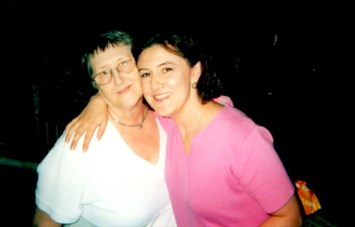
"My Mom, Anna, and her siblings were born before the beginning of World War II. Their parents were Petronela and Roman. Mom had sisters Emilia, Maria, Elzbieta (Elizabeth) and brother Jaroslaw. They lived in a little village in eastern Poland. Their house was bombarded and the only thing left were the steps to the no longer existing front door. Thankfully, they found another place to live nearby. Mom often had nightmares about the war. She never forgot running away from German soldiers into the grain fields late at night. Germans were coming for her father. He was eventually captured, starved and beaten to death. The village itself was completely destroyed and was never rebuilt. It was swallowed by a forest.
As a little child, Mom had to sing on the streets to get some bread. She was about 8 years old, when she had to take the cow to the pasture and back. The cow was kicking and poking everyone with her horns ..... except for Mom. She let Mom hug & pet her, and touch her horns. Mom always loved animals; I think the animals felt it. Eventually, Grandma put all her children in the orphanages, hoping it would be better for them. The siblings were split based on age. Mom & Elizabeth ended up in the nearest little town of Lubaczow, in the orphanage run by catholic nuns. Some of the nuns were mean and physically abusive. When Mom was 9 or 10 years old, her sister, Elizabeth, was beaten on the head with a ring full of large heavy keys; Mom could never erase a horrible picture of blood running over her little sister's blond hair. Mom pushed the nun away and in some shock ran out of the building crying and was blindly running down the little street. She did not remember how she ended up in the little police station. Maybe someone stopped her and took her there. Poland was under communist regime after the war. Police and church were at odds. Mom remembered that a policeman carried her back to the orphanage and then had a long talk with the chief nun. Since then, nuns never hit Mom and her sister. Still they suffered hunger, did not have warm clothes for winter and wore cardboard shoes. Mom was a reliable and responsible child, so nuns were sending her every morning before 5 AM to the bakery for bread for the whole orphanage. She had a cart on wheels that she pulled, but it was very heavy after the bread was loaded. I don't understand how they could send such a young child by herself onto the dark street and do such a heavy job. Mom remembered how happy she was when all the children were given one apple for Christmas. She talked about its wonderful aroma and how she kept it under her pillow for a few more days to look at it and smell it again and again. She said that it was the best apple she ever had. Mom was moved to the orphanage for older children in the town of Przemysl, when she turned 14. She was a good singer and nuns put her in the children's choir in the orphanage. I will never forget how beautifully she sang Polish Carols each Christmas. I have a picture of Mom and my daughter Ania (Little Anna in Polish) singing Christmas Carols together. I will miss it.Christmas will never be the same. Mom was a good student and athlete. Her schoolmates were fighting to have her on their team in dodgeball, volleyball, and other team sports. She was also good at climbing the fence and the fruit trees in the nuns garden. Children were not allowed in the garden, but hunger can make you break the rules. Mom was throwing ripe fruit to her helpers under the tree. She was also good at badminton and swimming. Later in life, she loved hiking in the mountains and kayaking. In 1956, Mom was 18 years old and just finished high school. For the "orphanage kids" that meant leaving the orphanage and starting an "adult life"..... with absolutely nothing except for their humble clothes. They had no help in finding place to live either. Thankfully, Mom's friend from the orphanage, Basia (Little Barbara in Polish), left one year earlier and took her in. They lived in a village in southwestern Poland, close to the Karkonosze Mountains. These girls shared not only one room, but everything in it. Regardless of the conditions, they were happy there. Mom eventually ended up in Warsaw, where she worked in the kindergarten. She loved children and they loved her back. Mom was very intelligent, loving, sensitive and intuitive. These qualities landed her better paying job in the kindergarten for children with special needs. She truly was the right person for this job. Children and their parents loved her. It lasted until she met and married my father. My father was 16 years older than Mom. He was 13 when war started. He fought in the Polish underground. After being captured by Germans, he was sent to Germany as a slave laborer, which was a normal thing during the war. Polish men and women were captured/ taken from the streets and sent to German factories and farms to work. They were forced to work very hard over extremely long hours, with minimal food portions. Many died of hunger and hard working conditions. Women were raped, men were killed by their "owners" just because. The trains from the occupied countries were bringing the new supply of slaves. I can honestly say that I am a daughter of a former slave. My father escaped and ended up in the underground resistance in France. He often cooked French meals for Mom, his favorite was the onion soup. Mom and dad were often kayaking on the Vistula river in Warsaw and traveled to the lakes region to enjoy paddle boats. Mom had a few happy years. Things changed and she had to learn how to be a single Mom. She worked in an office during the day, then took care of me. After putting me to sleep, she worked her "3rd shift" to earn extra money. She was typewriting in our kitchen late at night. Mom took excellent care of me. Ahead of her time, she prepared only healthy & nutritious meals for me, often not eating herself. She played with me in spite of being tired. She smartly sneaked in education into our play time. She wisely used the playtime to teach me how to be kind & sensitive to others, how to think for myself, be fair & honest. She took away my "little child" fears by preparing me for the doctors, dentists and other interactions. I often heard doctors and nurses telling Mom that I was the only child who was calm and did not cry or scream from fear. She gave me the love for books and arts. Even in my early age, Mom introduced me to the theater, operetta, art galleries and museums. I know she sacrificed her own needs to afford these. Mom was also corky and funny. She was very liked and respected at work. She had an open heart for people, always ready to help and give. Mom adored my daughter, who is named after her. Mom took care of Ania with the same selfless love. Regardless of the circumstances, she never lost her faith. She loved Jesus. Her faith was sincere, emotional, and beautiful.
Mom - Thank you for everything. I love you."
Anna is mourned by daughter Magdalena with her husband David, her beloved granddaughter Ania, and family in Poland, especially her wonderful niece, Stella.
Muestre su apoyo
Comparta Un Recuerdo
Comparta
Un Obituario
Obtenga actualizaciones
Servicios
COMPARTA UN OBITUARIOCOMPARTA
- RECIBIR RECORDATORIOS
v.1.18.0