OBITUARIO
Francis "Dutch" Norman Scholtz
12 abril, 1922 – 14 mayo, 2017
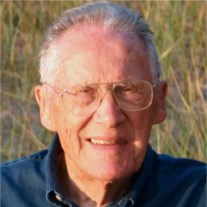
Dutch was born on April 12, 1922, in Iron Mountain, MI, to Norman and Evelyn (née Moreau) Scholtz. He grew up in nearby Aurora, WI, with his sisters Winifred and Shirley Ann. His father was a sawyer in the Ford lumber mill in Kingsford, MI, who farmed a few acres and kept some livestock on the side. This meant that “Sonny,” as his family called their oldest child, had to milk the cows and clean out the barn every morning before walking to his one-room school. His parents also made sure he practiced piano every day after he began taking lessons in second grade. At age twelve, he began playing the organ at the local Catholic church, eventually directing the adult choir while still in high school.
After graduating from Kingsford High School (MI), he spent one undistinguished semester at St. Norbert College in De Pere, WI, before transferring to Lawrence College Conservatory of Music in Appleton as a piano major. On November 6, 1940, at the age of eighteen, he enlisted in the US Army Air Corps and soon found himself stationed at Wheeler Field on the Hawaiian island of Oahu, leading a somewhat idyllic life. That ended abruptly on December 7, 1941, when he was awakened by exploding bombs and machine-gun fire. A radio operator, Dutch spent the next four years in the Pacific moving with his unit from island to island, eventually covering over 17,000 miles before ending up at Guadalcanal. Dutch would entertain officers and fellow enlisted men by playing the popular music of the day on a Gulbransen piano he had won in a poker game and contrived to have shipped along with him in a box labeled “communications equipment.” He also served as a chaplain’s assistant, helping set up for Mass and accompanying hymns on piano or organ. Because his religious duties gave him an aura of sanctity in the eyes of his fellow soldiers, they sarcastically nicknamed him “Dutch,” after the notorious gangster with the same last name.
Honorably discharged in May 1945 at the rank of staff sergeant, he reenrolled at Lawrence after a short stint playing piano in clubs near Atlantic City. During his senior year he met the love of his life, Barbara Lucas, then a first-year student in the conservatory, when she joined the choir he was directing at St. Joseph’s parish in Appleton. They married on June 23, 1951. After graduating from Lawrence and earning a master’s degree in music education from Northwestern University (IL), Dutch convinced the Capuchin friars at St. Joseph’s to hire him to play the organ for all the masses (four a day), direct the church choirs, teach classroom music, and create a band program. When Xavier High School opened in 1959, Dutch instituted the band program there as well. And he continued to play weekend dance jobs with various local bands to support his family, which now included son Gregory (born 1952) and daughter Clare Ann (1954).
In the early 1960s, when St. Joseph’s began to suffer severe financial problems, Dutch and his friends decided to educate parishioners about tithing. Because of their efforts, the parish’s income doubled after three months. They also commissioned a study by Marquette University of the city’s Catholic schools, which made recommendations—not well received by the local pastors or the diocesan superintendent of schools—for more efficient operations and higher salaries for teachers. Dutch was also an early promoter of lay school boards. He wrote about improving Catholic schools, stewardship, and lay involvement in an anonymous column published in the weekly diocesan newspaper.
These activities eventually led to Dutch’s being hired in 1968 as superintendent of schools for the Diocese of Sioux Falls. With many diocesan schools on the verge of closing, Dutch and others established “Taxpayers for Freedom in Education” to promote private schools (not only Catholic, but Lutheran, Christian Reformed, and others) and obtain state funds for textbooks and transportation. Dutch was the group’s president and drove to the state capital every week during the legislative session to lobby the legislators. Eventually, they passed laws supporting busing and free textbooks for private school students.
In 1974 he became director of education for the Archdiocese of Minneapolis and St. Paul. As in South Dakota, parishes in the archdiocese were finding it difficult to finance their schools, so, drawing on his Appleton experience, Dutch decided to promote tithing in the archdiocese. A meeting with Monsignor Joseph Champlin proved decisive, and a videotape of his workshop on “sacrificial giving” produced by the archdiocesan education office became highly popular. Because of perceived conflicts with the archdiocesan development office, however, Dutch was asked to cease promoting sacrificial giving in his role as director, even though the early efforts of Dutch and others had dramatically increased offertory and appeal income in sixty parishes.
So Dutch and Barbara began their own national stewardship ministry, producing additional videotapes on tithing with Monsignor Champlin and speaking at parishes around the country. They were soon coordinating a national network of some fifty couples willing to travel to speak at parishes about sacrificial giving, reimbursed only for expenses. In the meantime, Dutch told the monsignor to let him know if he heard of any diocese that was looking for someone to promote stewardship.
When Hal Coyle, the administrator of the Diocese of St. Augustine, asked Monsignor Champlin if he knew someone he could recommend to establish a diocesan development office, the monsignor recommended Dutch. Of the eight people who interviewed him for the position, Dutch felt that Bob Shircliff, who was to become a dear friend and close associate in subsequent stewardship efforts, best understood his stewardship vision. Following some negotiation over his title, which Dutch insisted should be director of stewardship, rather than development, he was ready to accept the position—but not before Barbara had a chance to meet and approve of Bishop John Snyder, Dutch’s prospective boss. The meeting took place, Barbara gave a thumbs up, and the Scholtzes moved to Florida in July 1986.
Once in Jacksonville, Dutch and Barbara redoubled their sacrificial-giving efforts, with Barbara taking over the management of the stewardship speakers program, whose volunteers eventually brought their message to over 550 parishes. The Scholtzes also gave many presentations themselves at parishes, diocesan stewardship days, and national conferences. In 1991, they received the Christian Stewardship Award from the National Catholic Stewardship Conference.
In August 2001, at the instigation of Bishop Snyder, he and Barbara each received the Pro Ecclesia Et Pontifice award from Pope John Paul II in recognition of their contribution to the life of the church, especially through their stewardship efforts.
When Bishop Snyder retired in 2001, Dutch decided to follow suit, retiring that same year at the age of 80. In retirement, he and Barbara pursued their stewardship activities for several more years. By the early 2000s, they had personally delivered the stewardship message to more than 350 parishes.
During the remainder of his long life, Dutch and Barbara derived much joy from their many friendships, their deep love for each other, and their children and grandchildren, whom they visited often and who, in the last five years, often visited them. Until a few weeks ago, Dutch played piano for an hour every afternoon, always ending with “Don’t Blame Me,” his signature tune.
He is survived by Barbara, his wife of 65 years; son Gregory Scholtz and his wife Elizabeth Fulford; daughter Clare Ann Scholtz and husband Cameron Walter; grandchildren Peter Scholtz, Rebecca Scholtz (fiancé Chang Lau), Anna Scholtz Hepsø (husband Audun Hepsø), Paul Scholtz (wife Marie Palmquist), Caitlin Walter, and Alec Walter; great-grandson Henrik Hepsø; sister Winifred Brown; and numerous nieces and nephews. He is predeceased by his sister Shirley Ann Johns.
A funeral mass will be celebrated at 1 p.m. Saturday, May 20, at San José Catholic Church, 3619 Toledo Road. Donations may be made to San José Catholic School or Community Hospice of Northeast Florida.
Muestre su apoyo
Comparta Un Recuerdo
Comparta
Un Obituario
Obtenga actualizaciones
Servicios
COMPARTA UN OBITUARIOCOMPARTA
- RECIBIR RECORDATORIOS
v.1.18.0