
OBITUARIO
Ira Joseph Wells
17 noviembre, 1924 – 22 junio, 2017
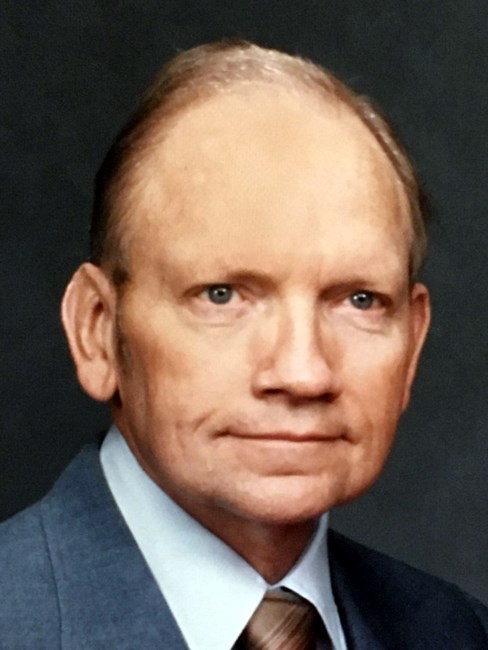
Ira Joseph Wells – November 17, 1924 – June 22, 2017
Joe Wells, 92, a long-time resident of Las Vegas passed away peacefully on June 22, 2017 after a lengthy illness. He is survived by his best friend and amazing wife of 72 years, Alberta, as well as their five offspring, Diana Pease of Blythe, CA, Sylvia Smith of Pahrump, NV, Janet Jewell of Denver, CO, Barbara Stern of San Diego, CA and Stephen Wells of Pahrump, NV. A beloved young son, Dean, was lost to all in a 1973 accident.
Joe Wells was born on November 17, 1924, in Indianapolis, Indiana to Ira Augustine and Gertrude Wells. His father quit a career there as a professional photographer and moved his family to his parent’s farm a few miles South of Madison, Indiana where he farmed corn and tobacco. Joe had a happy childhood there along with his siblings Margaret, Mary Lou and Donnie. Joe told stories about helping his father work the fields. He did not enjoy the hot, hard, tedious labor of planting, weeding and harvesting, and this self-discovery may have contributed to his early respect for education as a means of finding a different future. The importance of reading and the power from doing it was also demonstrated by a self-taught father whose self-help library likely reinforced Joe’s early realization that knowledge comes from books and study. Joe became an excellent student in school and a voracious reader.
By 1943, when Joe was a 17-year-old kid, ready to graduate from Hanover High School, the world was aflame everywhere in the WWII conflict. Boys his age everywhere were itching to fight, and he was one of them. With his dad’s permission paperwork in hand, he travelled to Louisville, Kentucky and enlisted in the US Army Air Corps. Before Joe could walk through his high school graduation commencement, he was shipped for basic training to Miami, Florida. During the next two years he fledged from being a boy to becoming a man. From basic training he went to Slippery Rock, PA for technical training that emphasized mathematics and geography, subjects in which he excelled. In Nashville, TN he was selected by the Air Corps. for pilot training which he received in Cape Girardeau and Malden, MO. In San Antonio, TX he learned how to be a flight instructor and then was sent to Montgomery, AL to share his new found aviation knowledge with new recruits. His next stop was Amarillo, TX where he received B-29 flight engineer training, and then he was stationed for further assignment in Alamogordo, NM. In late 1944, he was sent briefly to Denver, CO for his final B-29 training at Lowry Air Force Base.
On New Year’s Eve, 1944, 2nd Lieutenant Ira Joseph Wells left Lowry with some GI buddies and went exploring the downtown streets of Denver. Alberta Vinot, a beautiful young woman was out on the town with a girlfriend. Fate crossed their paths that night, and the encounter was one of mutual attraction. After a few dates the two decided to marry in Las Cruces, New Mexico. On May 6, 1945, with his father’s permission slip in hand, the 20-year-old pilot married the girl of his dreams.
After their marriage, Joe left Alberta with her folks, Albert and Dena Vinot, who at that time were living in Taos, New Mexico. While Alberta helped with the family’s dairy operation, Joe flew overseas to Saipan and then Guam in the Pacific theatre. As a B-29 pilot/flight engineer he participated in several bomb drops over Japanese targets. After the Japanese surrendered, the U.S. Japanese mission changed. What had been a war mission turned into a humanitarian one. Along with his crew, Joe dropped hundreds of barrels containing food, clothing and medicine over Japanese internment camps that were still holding thousands of suffering American soldiers.
After the war, Joe and Alberta were reunited in Taos, New Mexico where they stayed for the next four years. They worked hard trying to make the Vinot dairy a successful one but found it to be unsustainable. In 1949, Joe took his growing family back to Indiana where he worked at a dairy in Seymour. His attitude toward milking cows was dim as had been his opinion of farming as a kid. There had to be something better! In 1950, taking financial assistance from the GI bill, he entered Hanover College where he excelled in all of his classes. In 1954, he graduated with honors with a B.S. in mathematics and minor in geology. He was immediately offered an AEC Health Physics fellowship to study radiological physics at Vanderbilt University in Nashville, TN where he was prepared to become a health physicist. Once again, his life was a whirlwind. He studied for nine months at Vanderbilt and then did his 3-month internship at the Oakridge National Laboratory in Oakridge, TN.
His first career opportunity was in Southeastern Idaho at what was then known as the National Reactor Testing Station. He accepted a job with Phillips Petroleum, one of the lab’s subcontractors. In 1955, he moved his family to Arco, Idaho, a tiny agricultural town near the national lab’s western boundary. In November 1958, the Lockheed Corporation drew him away from Idaho to the crowded, hot, muggy city of Baltimore, Maryland. In 1959, he relocated the entire family there. The move was an unfortunate one. Joe detested wearing a white starched shirt and tie to work every day, and worse than that he disliked Maryland. By September 1959, he arranged new employment at NTRS and returned his family to Arco. During the NTRS years, Joe worked in Health and Safety. He monitored worker’s safety badges and did statistical computations regarding exposures and spills. He was there in 1961 when the first atomic reactor failure took the lives of three workers. He wrote the developing safety protocols and manuals that were used for years after he left Idaho. It was in the later Idaho years that he became a certified nuclear health physicist.
In 1965, Joe accepted a job with REECO, a subcontractor providing services at the Nevada Test site. He moved his family to Las Vegas, Nevada where many of them and their extended families remain today. For the next twenty seven years Joe continued to work as a highly regarded certified health physicist before retiring in 1992 to enjoy a quiet life among family and books.
Joe was never a highly social or adventurous man. He maintained contact for years with the men with whom he had flown B-29s during the war. He had many professional friends whose respect he earned, but only a few became social friends who occasionally dropped by. He was a very quiet, private man. He was an intellect. He much preferred being indoors to being outside. A four walled room and ceiling were better than any lofty forest panorama or crimson sunrise. He preferred being in his own mind than being anywhere. A quiet spot in a reading chair was superior to any physical activity. Thinking, philosophizing and imagining the inner worlds of books were his favorite landscapes. The family could count on seeing their steadfast Joe outlined under the haloed light of a lamp with his curious nose in a book. His interests found him studying the dark recesses of the cosmos, tracing back U.S. and world histories, and tackling the ideas of the most current thinkers of economics and politics. Because he read so much he was a good conversationalist. He remembered what he read and was more than willing to share his discoveries.
Joe loved music. He could whistle beautifully and had a nice voice. He also could play tunes on a harmonica. Music was a very important way that he related to his family. It was the noisiest expression of him. Joe passed this love of music to all of his children. Just as his literary interests were diverse, so was his ear for music. In 1962, a Heath Kit package arrived at the house. For several weeks he wired, soldered and screwed tiny pieces together that eventually led to the wonderful sounds of Beethoven, Glenn Miller, Elvis Presley, the Tijuana Brass and other performer’s voices and soundtracks. Infusions of music added to the day- to-day noise in the Wells household. When Joe’s illness made him unable to walk and when he struggled to speak, he could still manage to roll his wheelchair to a stop in front of the stereo. It was his favorite spot where he could still shuffle through his favorites and maneuver a selected CD into its slot. Despite a failing body on so many levels one could watch his feet begin to tap. On his last morning, his beloved music was turned on. The notes of his favorites were all around him – soothing him – giving him joy and taking him home.
Joe was deeply loved by his children and grandchildren. One grandchild changed the family forever by giving Joe a new name, a name that he loved. When Casey Coles, the 2nd born Wells grandchild was living in his grandparent’s household, he was about three years old. He was challenged in trying to understand that he had two different grandpas and that he needed to keep them straight. He was further confused when he heard his Grandmother Wells calling his Grandfather Wells, “Joe.” Little Casey figured out a simple solution to the overload on familial relationships. He gave his Grandfather Wells an awesome and fitting name. He renamed him Grand Joe, and the name stuck hard and true! Every subsequent grandchild adopted the tag, and eventually even his own wife and others in the family began referring to him as such. Grand Joe is survived by ten grandchildren, sixteen great-grandchildren, and two great great grandchildren (with two imminently on the way). He is also survived by one sister, Mary Lou Sams of Effingham, Illinois as well as numerous nieces and nephews.
Joe was not the kind of dad or grandfather who came to watch a track meet or listen to a school concert. He was not the kind of husband to willingly plan a trip to the mountains, a picnic at the lake or a vacation to sites unknown. He was simply the man, the solid guy who provided a great home for his wife and children. He was the quintessential man of integrity who taught each of his kids that character was their most important asset. He was the calm guy who could be found at home, always observant and quietly, in his own way, enjoying the chaos of his children and grandchildren. He was like a mighty oak tree – solid – ever-present – always taller and wiser than all of us – always leafed out with a protective canopy under which we felt safe and secure. He was a very good man to all - a good father - a good husband - and our one and only “Grand Joe.” His family was so proud of him and blessed to have him for so many years. He will forever present a vacant chair and will be woefully missed.
Muestre su apoyo
Comparta Un Recuerdo
Comparta
Un Obituario
Obtenga actualizaciones
Servicios
COMPARTA UN OBITUARIOCOMPARTA
- RECIBIR RECORDATORIOS
v.1.18.0