
OBITUARIO
Robert Max ter Horst
15 julio, 1929 – 2 noviembre, 2025
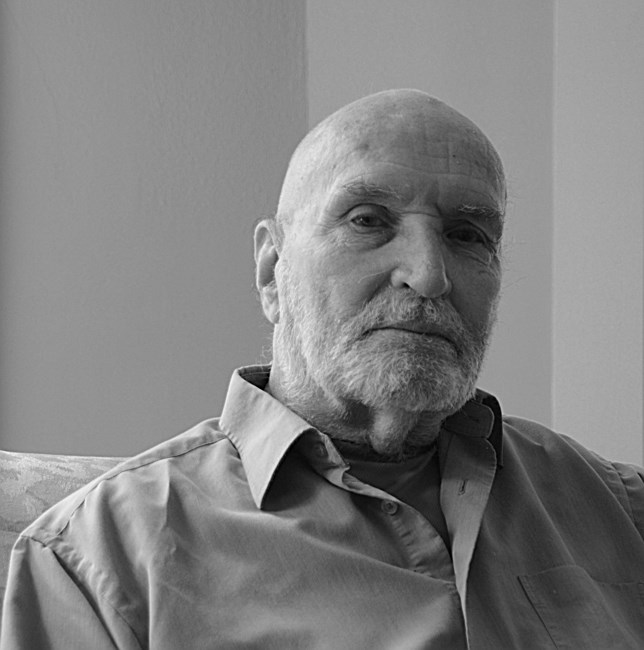
Robert Max ter Horst died on November 2, 2025, at the age of 96, following a brief illness. He lived a multifaceted life, collecting around him a diverse set of friends and acquaintances, and pursuing a wide variety of personal and scholarly interests. In the long years between his first entrance and his final exit, he indeed played many parts, and some who knew one aspect of his personality would perhaps be puzzled by the others; however, all who knew him would recognize certain traits: his hospitality and love of cooking for friends and family, his imaginative and witty conversation, his generosity in sharing his time and knowledge, and his open-minded curiosity about other people and about the world. Devoted to learning, he possessed a large personal library and stored in his memory an even larger wealth of knowledge, which he poured into his scholarly writing and shared with his students, friends, and colleagues. He took great pleasure in classical music, attending concerts and live performances whenever possible. He also enjoyed various forms of exercise: long distance running in midlife and, later, intense gym workouts. He was still working out with a physical therapist until a few days before he was hospitalized. Animals were a source of joy for him, and he also loved interacting with babies and young children.
Born in Paterson, New Jersey, to an immigrant father of Dutch extraction and a mother from Virginia, he was the middle child, with a younger and an older sister. He attended Princeton University as an undergraduate, where he studied French and German, and participated in a theater group. After graduation, he served as an officer in the US Navy for four years. His Navy service was a formative experience for him, and he maintained lifelong friendships with members of his squadron.
As a graduate student at Johns Hopkins University, he earned his M.A. in French and his Ph.D. in Spanish Language and Literature. There, he met his wife, Eleanor, also a Ph.D. student. They raised two daughters together and, although they later divorced, remained close friends, drawn together by a love of literature, a similar sense of humor, and many shared experiences.
His first job as a professor was at the University of Wisconsin-Madison, followed by positions at Duke University and the University of Rochester. In 1969, he moved with his family to the University of Arizona in Tucson, where he taught for nineteen years, with a one-year stint at the National Humanities Center and another as an exchange faculty member at the Université de Lille in France. In 1988, he returned to the University of Rochester and the colder climes of upstate New York, where he taught until his retirement. In Rochester, he explored new social avenues and was involved in community organizations such as the 19th Ward Community Association, the Gay Alliance of the Genesee Valley (now the Rochester Rainbow Union) and the Cosmo Caucus, a group renowned for their mutual support, friendship, and Friday night social events.
During the course of a long and fruitful academic career, he published two books—Calderón: The Secular Plays, and The Fortunes of the Novel: A Study in the Transposition of a Genre—and numerous articles on a wide range of topics. As a teacher, he was known to be demanding, erudite, kind, and helpful. His graduate students, in particular, remember his expert guidance and generous mentoring. In recognition of his legacy, some of his former students and colleagues, along with his daughter, contributed to a volume, Studies in Honor of Robert ter Horst, which was published in 2017. His colleagues also remember him as the co-founder of the Society for Renaissance and Baroque Hispanic Poetry; his scholarly legacy was a topic of discussion at their most recent conference.
During the last ten years of his life, he resided in Mobile, Alabama, continuing to work on scholarly projects, enjoying the musical and culinary offerings of Mobile, and spending time with his daughter and daughter-in-law. Although his physical and mental capacities declined in his last years, he continued to observe the world around him with keen understanding and historical perspective, and to enjoy his physical surroundings: a sunny courtyard, the antics of birds and squirrels.
He was preceded in death by his parents, William P. and Louise Sylvester ter Horst; his sisters, Betty Swift and Lucille Jenkins; and by numerous other family members and friends.
He is survived by his daughters, Eleanor ter Horst (Karen Smith) and Catherine Blalock; by his four grandchildren and five great-grandchildren; by his nieces and nephews; and by many friends, particularly those from his Rochester days.
In lieu of flowers, please consider a donation to a cause that resonates with his values and is also meaningful to you, such as a food bank (e.g., Feeding the Gulf Coast), a civil rights organization (e.g., ACLU), or a cultural organization (e.g., Mobile Symphony Orchestra, Mobile Chamber Music).
A Memorial Visitation and Celebration of Robert's Life will be celebrated at Radney Funeral Home - Mobile, on Saturday, December 13, 2025 starting at 11:30 A.M.
Muestre su apoyo
Comparta Un Recuerdo
Comparta
Un Obituario
Obtenga actualizaciones
FAMILIA
He was preceded in death by his parents, William P. and Louise Sylvester ter Horst; his sisters, Betty Swift and Lucille Jenkins; and by numerous other family members and friends. He is survived by his daughters, Eleanor ter Horst (Karen Smith) and Catherine Blalock; by his four grandchildren and five great-grandchildren; by his nieces and nephews; and by many friends, particularly those from his Rochester days.
Servicios
COMPARTA UN OBITUARIOCOMPARTA
- RECIBIR RECORDATORIOS
v.1.18.0