
OBITUARIO
Jerome Skolnick
21 marzo, 1931 – 22 febrero, 2024
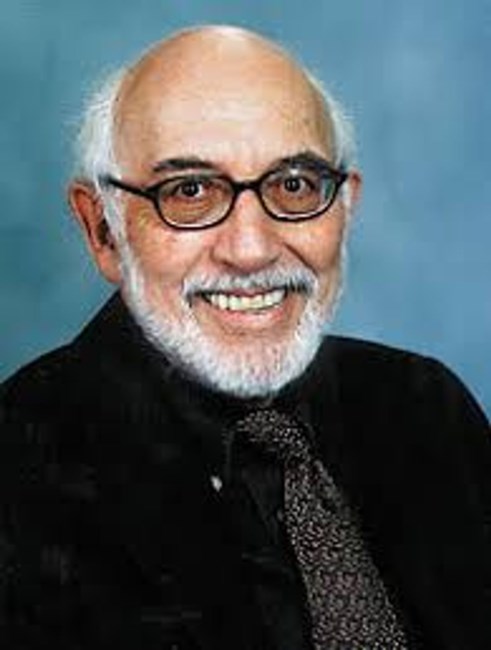
Jerome “Jerry” Skolnick passed away on February 22, 2024 in Manhattan, a month before his ninety-third birthday. Jerry was born on March 21st, 1931 and raised near Sheepshead Bay, Brooklyn. He received his BA from The City College of New York, and a PhD in Sociology from Yale University. As a Yale Law School professor, Jerry was among the youngest (if not the youngest) to ever hold the position.
In the late 1950s, while on faculty at Yale, he was drafted into the Army, where he served at Ft. Sam Houston in San Antonio. He returned to Yale to resume teaching, fulfilling his Reserve duty on campus with Army Intelligence, which gave him an early, behind-the-scenes look at the still simmering, oncoming conflict in Vietnam. This instilled in him a strong antiwar sentiment, a generation ahead of the late 1960s protest movement (which he’d have a covert impact on through his policy research).
Jerry’s unintentional glimpse into the rampant military industrial complex was a likely catalyst for him to be drawn to the country’s most prominent city of left-leaning thought: Berkeley, California. It was here that he and his wife Arlene, a fellow Yale doctoral graduate who’d met Jerry through mutual friends, set up roots and would live for several decades before returning to New York.
At UC Berkeley, he became a longtime tenured professor with high profile roles at the School of Criminology and later, Jurisprudence and Social Policy (JSP). He was integral to the creation of Berkeley’s interdisciplinary research hub, the Center for the Study of Law and Society (CCSL). After retiring from Berkeley in 1994, Jerry joined the faculty at NYU Law School where he remained from the mid 1990s until his retirement in 2011. In between his stints at Yale and Berkeley, he taught at UC San Diego and the University of Chicago. He was a visiting fellow at Oxford in 1980.
He was the author of many important books. His multi-award-winning breakthrough, Justice without Trial (1966), was built on his experience observing the process and conduct of police up close, long before such methodology was common. The Politics of Protest (1969) tackled the emerging problem of crowd control balanced with freedom of speech. It was presented as a report to a US Government Commission during the era of student riots, Black Panthers and Vietnam, yet remains relevant with the abundance of civic protests during the 21st Century. Other books of his include an influential study of the casino gambling industry, House of Cards (1978) as well as further research on policing, including The New Blue Line (1986, with David Bayley), and Above the Law (1993, with police officer turned academic James P. Fyfe). He also was the co-author of numerous textbooks, a contributor to scores of scholastic journals and an expert witness in several consequential cases and hearings.
Jerry received widespread recognition in the United States and abroad throughout his long career, including Carnegie, Guggenheim and National Science Foundation fellowships as well as prizes for distinguished scholarship from the American Society of Criminology, the Academy of Criminal Justice Sciences and the Western Society of Criminology. He became an official consultant to the NYPD Police Commissioner as well as president of the American Society of Criminology.
In addition to law, sociology and public affairs, Jerry’s passions included food and wine, skiing, cycling and professional sports (especially Baseball). He was the only son of William Skolnick (who’d arrived on these shores as a Polish/Jewish immigrant), and Gladys Skolnick (née Wechsler). He will be greatly missed by his beloved wife of seventy years, Arlene (née Silberstein, whom he married in 1954 and who was a researcher at Berkeley, a writer of several books herself and an occasional co-author with Jerry), his older son Michael, his younger son Alex Skolnick (a professional guitarist), his cousin Allen Hyman (who was like a brother), niece Hope (who lived at the Skolnick home during her Columbia Law university days) and numerous other relatives, friends, former students, peers and colleagues. The family is especially grateful to Maddy SJ, and to Mark H and Jean B for their kindness as well as to the Silbersteins, the Hymans and Anne for their support during the final chapter of Jerry’s life.
Jerry’s memorial service takes place on what would have been his ninety-third birthday.
Muestre su apoyo
Comparta Un Recuerdo
Comparta
Un Obituario
Obtenga actualizaciones
Servicios
COMPARTA UN OBITUARIOCOMPARTA
- RECIBIR RECORDATORIOS
v.1.18.0