
OBITUARY
David A. Dixon
December 3, 1949 – January 2, 2026
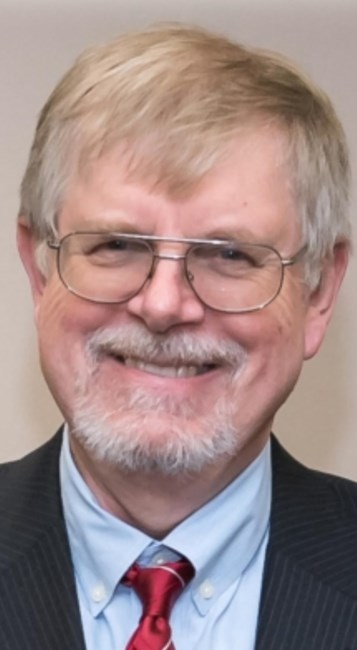
Dr. David A. Dixon was an internationally respected chemist, an extraordinary mentor, a dutiful family man, and a deeply kind and generous person whose passing leaves a significant void in both the scientific community and the lives of those who knew and loved him. He was born in Houston, Texas, but spent a large portion of his childhood traveling due to his father’s work as a CIA officer. As such, he was exposed early to different cultures and ways of life, experiences that helped shape his curiosity, independence, and adaptability. Dr. Dixon was an undergraduate at the California Institute of Technology, where he conducted research in X-ray crystallography and ion cyclotron resonance spectroscopy. He also played football as a defensive end for Caltech until 1968. He graduated from Caltech with honors in 1971 and began graduate school at Harvard University, where he trained under Nobel Laureate Professors William Lipscomb and Dudley Herschbach. He earned his Ph.D. in physical chemistry from Harvard University in 1976 with dissertations in both experimental and theoretical chemistry.
In January 2004, Dr. Dixon joined the faculty at the University of Alabama, holding the Robert Ramsay Chair in the Department of Chemistry and Biochemistry until his passing. Prior to his time at Alabama, he taught at the University of Minnesota from 1977-1983. He met the love of his life, Christine Powless-Dixon (Chris), while teaching at Minnesota, beginning a partnership that would define the rest of his life. He then spent more than a decade at DuPont’s Central Research and Development in Delaware. His contributions at DuPont supported the development of alternatives for ozone-depleting chlorofluorocarbons, helping to protect and restore the stratospheric ozone layer. He later served as Associate Director for Theory, Modeling, and Simulation at the Pacific Northwest National Laboratory in Washington, where he led several interdisciplinary initiatives that helped guide the development of foundational computational chemistry software used worldwide. In every role he held, Dr. Dixon was known for his discipline, thoroughness, and an unwavering commitment to collaboration, bringing together scientists from diverse disciplines and institutions to address complex scientific challenges.
Over the course of his career, Dr. Dixon authored/co-authored more than 950 publications. Of those publications, more than 800 were peer-reviewed, including over 100 publications in Science, Nature, Journal of the American Chemical Society, Chemical Reviews, and Angewandte Chemie. His research spanned computational electronic structure theory, catalysis, nuclear energy and environmental chemistry, fluorine chemistry, heavy-element chemistry, hydrogen storage, rocket fuels, and geochemistry. His work influenced both fundamental science and real-world applications across multiple disciplines. He received numerous prestigious honors, including the Leo Hendrik Baekeland Award of the American Chemical Society, multiple federal research awards, the University of Alabama Burnum Award, the SEC Faculty Achievement Award, the Blackmon-Moody Award, and was most recently recognized as an Endowed Shelby Distinguished Professor. Dr. Dixon was also selected as a Fellow of the American Chemical Society, American Physical Society, American Association for the Advancement of Science, and European Academy of Sciences. Despite these and many other accolades, he remained focused on the work itself and on supporting the people around him rather than on personal recognition. This focus and dedication are among the reasons he is regarded as one of the most accomplished theoretical chemists of his time.
As impressive as his many accomplishments were, however, Dr. Dixon would likely say that his greatest achievements were the people he mentored. He cared deeply about the success and well-being of his students and dedicated himself fully to their growth and development. Over the course of his career, he mentored hundreds of undergraduate students, graduate students, and postdoctoral researchers, many of whom have gone on to distinguished careers in academia, industry, medicine, and other professions. Few mentors could match the depth of his commitment to his students’ success. He invested extraordinary time and energy in helping them build confidence, independence, and a strong work ethic. He cared about people as much as he cared about chemistry, and that balance defined his life as an educator. His influence lives on through the many scientists, educators, and professionals who carry forward both his knowledge and his values.
In his personal life, Dr. Dixon was a dedicated University of Alabama football fan, attending as many games as possible both home and away. He followed the sport with much of the same passion that he brought to chemistry. In 2025, he served on the Intercollegiate Athletic Committee, reflecting his ongoing commitment to student success beyond the classroom. Dr. Dixon was also an avid musician, spending much of his free time playing guitar and attending concerts. For him, football and music were more than hobbies. They were ways to connect, share joy, and create memories with family, colleagues, and friends. Whether simplifying complex chemistry, owning music trivia, or debating the key plays of an AP Top 25 matchup, he was approachable, relatable, and wonderfully human to all who knew him.
In his later years, Dr. Dixon returned to a lifelong love of travel with his wife, Chris. Together, they explored the world, visiting numerous countries across Europe, Asia, and Africa. Each journey reflected his boundless curiosity, appreciation for different cultures, and love of learning beyond the laboratory. Travel was a source of joy and connection for them, offering cherished time together amid a full professional life. Friends and family knew how much these experiences meant to him, and how deeply he treasured the memories they created together.
Dr. Dixon is survived by his wife, Chris; his daughters Michelle (Matthew) Doyle, Nicole, and Jessica; and his grandchildren Trent, Cole, Levi, and Ellis. If there is anything you should remember about Dr. Dixon, remember that he was a loving husband, a devoted father, and a proud grandfather. Family was the real center of his life. And to those beyond his family, he was a wonderful friend, a steady presence, and a man of unwavering kindness and decency. He was, quite simply, a genuinely good person who maintained perspective despite remarkable success, and whose kindness and generosity left a lasting impression on countless lives. The world is a darker place without him, but it is far better for having had him in it. He will be truly and deeply missed.
A memorial service will be held on February 19, 2026, at the University of Alabama, Shelby Hall, Room 1093 from 11am to 12pm. The service will celebrate Dr. Dixon’s life, legacy, and lasting impact on science and those he loved. Friends, colleagues, former students, and family are welcome to attend. In lieu of flowers, donations may be made in Dr. Dixon’s name to Defenders of Wildlife, St. Joseph’s Indian School, and Nick’s Kids Foundation. These contributions will honor his lifelong commitment to education, science, and service.
Show your support
Add a Memory
Share Obituary
Get Reminders
Services
SHARE OBITUARYSHARE
- GET REMINDERS
v.1.18.0