
OBITUARIO
Barbara Franziska Tam
11 octubre, 1936 – 7 mayo, 2023
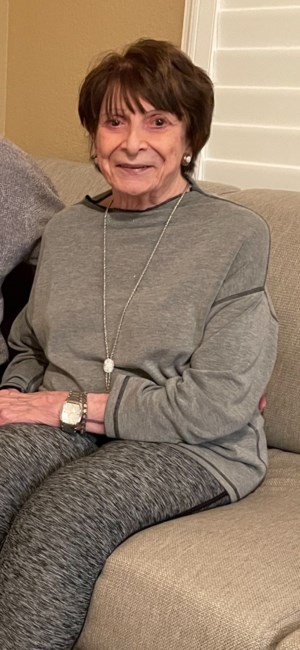
In remembrance of my mom’s life, I thought it would be nice to share part of her story in her own
words. It's from her autobiography that she wrote in the form of a letter to my daughter.
LETTER TO KEIRA:
This is your Oma's story; my life, my family, my experiences, and my country. I want you to know
where some of your ancestors come from. The best way to start I think is with my family. My
father, Ernst Hoeppe was born 2-4-1886 in a forestry called Tafterwald, county of Braunsberg,
East Prussia, Germany. He was from a large family of ten children. Only five reached maturity;
four boys and one girl. Three boys became foresters, like their father. One of them went to
Africa and perished there. The sister became the first nurse to serve in a field hospital during
World War I. My father was trained to be a gardener. He joined the military during WW I, later
became a policeman and served in Silesia.
My mother, Luise Hoeppe, née Meyer, was born in 1899 on March 6. She was born on the
opposite side of the country, close to the French border. The village is called Scherzheim,
county of Kehl, Baden Germany. She had four brothers. She was a twin; her mother died at her
birth. My grandmother's name was Franziska. She came from the Black Forest. I have her name
as a middle name. My brother has our grandfather's name, Gottfried, as his middle name.
Mutti's twin died at age 5.
My maternal grandfather was a farmer. He also made Schnaps of plums and cherries. His life
was very tragic, but he must have been a very nice man. I have talked to people who knew him.
Whenever I think of him my heart aches; I dearly would like to have known him.
Mutti was my father's second wife. His first wife died at 37 and he was left with two girls Erika,
born 1921, and Gerda, born 1922.
Upon becoming an orphan, Mutti worked as a domestic servant until she was old enough to
enter nursing school at age 21. She told me that her fellow students, all of them city girls, made
fun of her dialect, her fresh color, and sturdy build. She graduated first in her class. During her
career she was in charge of a ward of 300 beds, was an assistant at surgeries, and was an
X-ray technician. In 1930 she came to Saalberg in Silesia to run a recovery sanatorium for
young women who had tuberculosis. Germany has had universal health care since 1889. They
would stay for four weeks of rest and rehabilitation. Then Mutti would take them back to Berlin
and return with the next group. Each month for two days she had a chance to enjoy the cultural
life of Germany's capital.
Oma’s Journey to West Germany after World war II
Thueringen (Turingia) Saxony Mecklenburg, as well as the surrounding area of
Berlin became the German Democratic Republic (DDR). The rest of Germany was
divided into three zones (French, English, American). Also, the Allies received part of
Berlin, the capital, in exchange for the territories west of the Elbe River.
It was our bad luck that, after all our running to get away from the Russians, we
ended up in their clutches. My two half sisters ended up in West Germany. Situations
such as this happened to many families; some members were in the West, others in the
East.
By 1949 Germany had two different governments and two different currencies. In
the East we had a Communist leadership, consisting of men who had fled to Russia when
Hitler took office. The West had Dr. Adenauer as chancellor. The little town of Treffurt
where we were living when the Iron Curtain came down was an isolated outpost of the
East in Western Germany. The river Werra was the border. To travel to Treffurt by train
one had to pass through the West for a few kilometers. Pretty soon the trains would slow
down while traveling in the West and many people desiring to leave our communist
‘paradise' just jumped off. Pretty soon the Russians caught on to this and from then on
the trains traveled with armed Russian soldiers who shot anyone who jumped. Quite a
few injured people showed up at night to get medical help.
Now to get back to our little family. Upon our occupation by the Soviets food
shortages became severe. During the fall and early winter of 1945, my father and I would
often cross the river into the West in hopes of getting food. Vati had my
mother's tobacco ration to barter with. Sometimes he made me beg. We usually ended up with a
few potatoes and a few slices of bread. One time we were lucky. The owner of a pub
gave us several heads of cabbage and a small empty beer barrel. Dreaming of sauerkraut,
we went back to our river crossing. My father first took the backpacks holding the
cabbages, and the barrel, across. He then came back to carry me to the other side. When
we arrived, there were two Russian soldiers standing next to the 'loot'. They picked up
the backpacks and the barrel and threw them into the river. There was nothing to be done
since they had the guns.
On the way back to Treffurt my father cut all the phones wires that were strung on
and trees and posts along the river. I was horrified knowing very well what fate would
await him if he was caught. The Russians terrified me anyway.
We never found out how the Russians knew that my father was a policeman.
Twice during the last month of 1945 they came to arrest him during the night. He would
disappear for two weeks or so; we had no idea where to. He always came back. Being in
the Police, as well as being a member of the Partei, excluded him from finding work. It
must have been difficult for him-- no chance of work, recipient of the lowest amount of
food by ration card, the loss of home. He became a very difficult man, and my brother
and I were often afraid of him.
My brother Hubertus was finally released from the hospital isolation ward in
Muehlhausen. The doctors informed my father that he was a hopeless case and might as
well die at home. The train trip back to Treffurt took four hours because the trains,
fueled with brown coal, could not make it up the hills and kept rolling back. All this
time Vati held on to the outside of the train compartment with one hand while holding
my brother with the other. There was little my parents could do for Hubertus. Vati
stayed all day with him; and Mutti at night. In order to keep him from slipping away
They gave him strong coffee which had to be smuggled from the West. He did survive,
recovering slowly and finally started first grade at age eight. He never became a healthy
man.
We moved to Dachrieden, closer to the county seat of Muehlhausen. There my
mother was the nurse for three villages in addition to Dachrieden. They were three, four,
and seven kilometers distant. She visited each village at least twice a week on foot. There
there were no nursing homes and bedridden people were kept at home. They often were alone
all day since the healthy family members were working in the fields. A doctor held a
clinic every two weeks. In the meantime anything that happened from baby deliveries to
Taking care of the dying was Mutti's job. She was so busy we hardly saw her.
The winters of 1946, 1947, and 1948 were extremely harsh. We had very little in
the way of heating materials. There were layers of ice on the windows and outside walls.
Our blankets sometimes had sheets of ice on top when we awoke in the mornings.
Everyone lost weight and many people suffered from huge boils or abscesses
caused by malnutrition. I didn't get any boils but had cracked skin on my hands and
arms. At one point I lost most of my hair. The farmers were better off than the rest of
us. They were allowed (most of the time) to keep a pig and chickens. All other stock
was taken away by our liberators who arrived often with trucks. We refugees had very
little; no food, clothes, furniture.
Also many of us were depressed by our circumstances. The natives were not
exactly pleased to have to give up part of their home to those folks who were often
dirty and bedraggled after months in refugee camps..
In Dachrieden I started school again. I was promoted to the fourth grade without
having attended the third. The school had two classrooms; for grades 1 to 4 downstairs,
and for grades 5 to 8 upstairs. The teachers were a father-daughter team, also from
Silesia. I loved school. Even though all books were banned because of the Nazi
influence, our teachers were the best.
At one point I found a whole stash of old school books in the school's attic. I was
in heaven. I think reading became an escape. Eventually I became pretty integrated into
the Village, even though I was a dirty refugee. In our class there were 12 girls and 5 boys.
Most of us played together, even though all children had to help out at home, including
myself. I was in charge of my brother and his homework, and cleaning whatever
miserable place we lived in. Also, when they were available it was my job to clean
vegetables and peel potatoes. Since we had neither fat nor meat in our diet, we
consumed huge amounts of vegetables. I told my father that I would never get married
because I hated peeling potatoes for everybody.
Clothes were also a problem, especially shoes. Once a patient of my mother gave
use her an old pair of dancing shoes. With a pair of socks on to make them fit, I hobbled off
to school. Nobody paid attention, since all our attire was ill-fitting and full of patches.
My mother cautioned me not to go sledding with those heels; but of course by late
afternoon with all the kids out there having a good time, I could not resist. As she had
predicted, one heel broke off. I didn't even notice the loss until later when it was dark.
Armed with candles, my brother and I scoured the hillside and actually found it. The
next morning I limped out to school with one heel. It was re-attached before my parents
found out.
In 1949 all school children became members of the Communist Youth
organization. We were issued blue scarves to be worn on 'special occasions'. Also by
that time several hours a day were spent on trying to indoctrinate us. We were only
taught Russian history, starting with 1917 when the Russian revolution took place. The
other students just let the teacher talk, not listening; but I could not keep my mouth shut.
I argued until finally the poor teacher, who, I'm sure, didn't believe that stuff himself,
called my mother in. She in turn told me to keep quiet. In spite of that, I was made
leader of the village Youth Organization. I had to go to Muehlhausen and listen to
endless sessions of glorification of the Soviet Union and its leader, father Stalin. They
did give us a uniform with a pair of real leather shoes.
Starting about 1948 my mother's health started to fail. She was 49 years old, and
the combination of too much work and too little food started taking its toll. She was
hospitalized several times. We tried to get medication from the West to bring down her
blood pressure. It was frightening to see her purple face and swollen limbs.
My father managed to rent a piece of land a farmer found useless. The three of
us cleared the rocks and started planting. Also we had four chickens and several rabbits.
It was big help. Eventually we acquired bees as well. Honey was a great bartering item,
since sugar was rationed and in particularly high demand.
One older woman who had a goat told me to come by every evening for a cup of
milk. I had learned to eat almost everything, but milk I just could not drink. My brother
and the cat enjoyed it though. One farmer's son in my class exchanged sandwiches with
me sometimes. I definitely came out ahead; I got home-baked bread with butter and
with the famous Thueringer cold cuts-what a treat it was! He got a piece of truly awful
bread with nothing on it in return. When I saw and recognized him after 39 years, my
first thought was of those fine sandwiches. He did not remember.
The anti-American propaganda was relentless. We (the whole school) were sent
out to find potato bugs supposedly dropped overnight by the Imperialists. We never
found many, but the first apples were ripe and we did enjoy those. A huge gong was
erected on top of a hill. Older women had to stand in front for shifts of six hours. The
purpose of that particular bright idea was to warn the populace of oncoming American
imperialists
In 1950 my mother retired because of ill health. My father, having reached the
age of 65, left for the West. At that age people were permitted to leave the workers
paradise, so then they did not have to be paid a pension. He stayed for a year with my
sisters until his West pension came through. As soon as I heard that, I made plans. We were
going to join him in West Germany no matter what!
In late fall of 1950 my mother was forced to retire due to ill health. She was
considered a "workers hero", a title usually reserved for steel and mine workers. It
qualified her for a small pension.
Upon her retirement when she became reacquainted with Hubertus and me I guess
she was quite shocked. We had no manners, stole food without the slightest sense of
guilt, and were quite used to the "everybody for himself" way of life. We had a difficult
time for a while. She also was ill and I believe deeply depressed. She seemed to have
given up on life.
I, on the other hand, was full of plans. Not only had my father received his
pension; he had moved to the small town of Meisenheim, where he hoped to find an
apartment since it had not been bombed.
I found a so-called "Grenzgaenger"-- a person who, for a fee, helped people who
wanted to go to the West. He made us a map, and told us what to do. On May 11, 1951,
my brother, age 13, and I, age 14 1⁄2, departed Dachrieden very early in the morning. We
walked along the railroad tracks, rather than on the streets, in order not to be noticed. For
the first time ever I thought Dachrieden was a very pretty village as I looked down for the
last time (I hoped) and saw the river and the green hills. We took the train to
Heiligenstadt. There we got off to avoid the controls and then started walking. We had
to make the 32 kilometer walk before noon. Soon my brother started complaining of
tiredness. We were both small and not very strong. I had no problem though I was full
of nervous energy. We made it to the border in time. Twice, when we heard voices, we
hid behind shrubs. Would-be escapees were brought back, escorted by Russians and
destined for prison.
Once we were close to the border crossing, we waited for a change of guards. In
1951 the wall had not yet been built. There were wooden guard towers and four strands
of barbed wire. When the guards came down from the tower and chatted to their ever of
replacements, we took off at a run. We held the wire apart for each other and slipped
through. Then we ran some more. Eventually we arrived at Duderstadt. There we
retrieved our money, which was inside the soles of our shoes. We changed it into West
marks. I believe the exchange rate was 1 to 10. Then we bought railway tickets to
Frankfurt/Main. The next step was sending a telegram to Vati announcing our arrival.
With the last money we bought a large bottle of milk for Hubertus. Throughout our long
walk I had told him that we would do that. As soon as we boarded the train he fell
asleep. I, on the other hand, was too happy. I was in the West! No more having to keep
my mouth shut, no more looking over ones shoulder, plenty of food and clothes. The big
worry of course, was whether Mother would make it.
Upon our arrival in Frankfurt, there was no Vati. We sat on a bench, hoping he
would show up. When it became dark, a policeman came and took us to the Catholic
shelter. When we walked in, one of the nuns said: Are you the Hoeppe children? I took
offense at that: children! I thought I had behaved like a responsible adult that day! It
turned out that my father had called, asking them to take us in, because he could not
make it that day. We were taken to a big room where many people were sleeping on ugly
army cots under army blankets. I asked if they were all travelers. No, the nun said, they
are homeless citizens of Frankfurt.
The next morning my father arrived. He was wearing new clothes, carrying the
inevitable backpack. He brought out a huge salami. Cutting off chunks he said: 'Here
children, eat!' Together we traveled further west to Meisenheim. At Mainz we crossed
the Rhine River. That was a wonderful moment. My mother came from the Rhine
region. I knew all the Rhine songs. It is Germany's 'Schicksalstrom' (roughly: river of
fate); and I had never until that moment believed I would ever see it. To this day, when
visiting Germany, it is the same; when I see the Rhine I know I'm home.
—--------------------------------------------------------------------------------------------------------------
My mom’s remains will be buried in a small private service next to my brother in
San Jose. In lieu of flowers, please donate to UNICEF as they helped my mom
and her family in their journey as war refugees to West Germany
Muestre su apoyo
Comparta Un Recuerdo
Comparta
Un Obituario
Obtenga actualizaciones
Servicios
COMPARTA UN OBITUARIOCOMPARTA
- RECIBIR RECORDATORIOS
v.1.18.0