OBITUARY
James Albert Gardner
July 22, 1943 – May 23, 2026
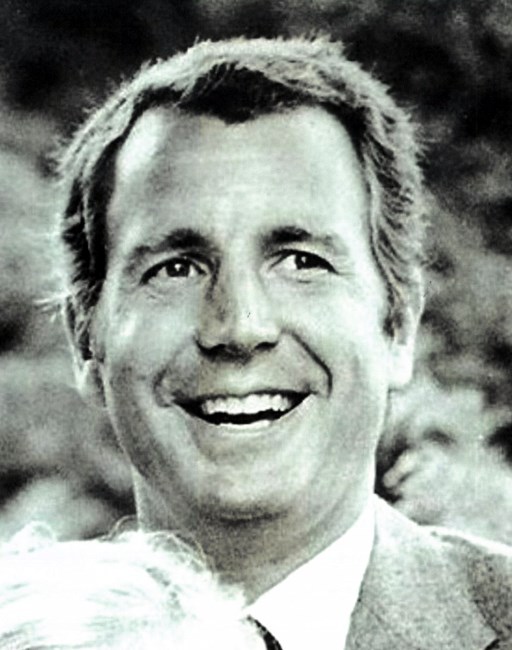
James Albert Gardner — beloved father and grandfather, former President of Lewis & Clark College, author, historian, athlete, and developer of landmark Central Oregon projects — passed away peacefully in his sleep on the morning of Saturday, May 23, 2026, with his son Jay by his side, and all his family at home with him.
Jim was born on July 22, 1943, in Athens, Ohio, to George Albert Gardner and Vernah Merrie Stewart Gardner, and grew up in nearby Amesville with his older brother Chuck, with whom he shared many adventures. He loved his parents and brother deeply throughout his life, and spoke especially often and admiringly of his mother, whose warmth, intelligence, and force of character left a lasting imprint on him.
Some of the most formative experiences of his childhood came during summers spent in Yellowstone National Park, where his father worked as a seasonal park ranger. Those summers shaped him profoundly. The grandeur of the American West, the scale of wilderness, the feeling that life should be lived outdoors and fully engaged with the world — these became part of him permanently. He carried that sense of wonder and majesty with him throughout his life.
Jim was, from the beginning, a person of enormous energy and ambition. Athletic, bright, charismatic, restless, and deeply curious, he became an All-American football player in high school, earning First Team All-Ohio honors and later playing in Ohio's North-South All-Star Game, while also serving as co-captain of a league-champion basketball team. He went on to Harvard College, where his football career ended after a back injury — a disappointment that ultimately redirected his attention toward academics and intellectual life. He graduated in 1965 and attended Yale Law School, graduating in 1968.
It was during those years that he met Carol Wik Lentz while on vacation in Hawaii. They later married in Jackson Hole, Wyoming, beginning a deep and lifelong partnership that would shape both of their lives for decades to come, through both highs and lows.
Upon graduating from Yale, Jim returned briefly to Harvard as Assistant Director of Admissions and a Lecturer in Law and Society, but ultimately accepted a position with the Ford Foundation in Brazil.
At the Ford Foundation he began an extraordinary early career focused largely on Latin America. He worked first in Brazil, then in New York on Latin American programs, later directed the Foundation’s Caribbean program, and eventually returned to Brazil as the Foundation’s director there. His work reflected both his optimism and his belief that institutions, ideas, and public policy could genuinely improve human lives. He helped support programs related to public health, democracy, civil society, women’s health and political representation, and legal reform throughout the region.
During those years he also developed close relationships with many emerging Brazilian intellectuals and public leaders, including Fernando Henrique Cardoso, then a sociologist and public intellectual who would later become President of Brazil. Jim’s experiences in Latin America ultimately led him to write Legal Imperialism: American Lawyers and Foreign Aid in Latin America, published in 1980, an influential and deeply nuanced examination of the successes, failures, contradictions, and unintended consequences of American legal-aid efforts abroad.
Their son, James “Jay” Morgan Gardner, was born in Brazil in 1979. Though Jim’s life would ultimately include law, academia, public policy, development, ranching, history, preservation, finance, photography, writing, and community-building, his favorite role in life was being a dad.
A former camp counselor and perpetual kid at heart, Jim loved creating worlds of adventure and imagination for his son. He was endlessly playful, affectionate, kind, and full of ideas. There was always a new trip, a new fishing expedition, a new story, a new project, a new place to explore. He was never without a kind word, a loving touch, or some mischievous scheme to make life feel larger and more alive.
In 1981, Jim and his family returned to the United States when he became President of Lewis & Clark College in Portland, Oregon, where Carol had grown up. At Lewis & Clark, he recruited an internationally renowned board of scholars and public intellectuals and expanded the school’s focus on international relations and global exchange. During the height of the Cold War, he helped foster ties and dialogue with key leaders from the Soviet Union and advocated strongly for cross-cultural understanding at a moment when such efforts felt especially urgent.
He also pushed internally for reforms that reflected his instinctive sympathy for students and his belief that institutions should remain open, dynamic, and self-critical, including supporting some of the college’s first formal systems for student-led faculty evaluations.
Jim loved Oregon immediately and intensely. He and Carol explored the state constantly with Jay: fishing, hiking, camping, road-tripping, wandering small towns and back roads, and spending long stretches outdoors. In the early 1980s he joined the Deschutes Club and became a familiar sight on the river during steelhead season, usually fishing with his favorite fly, a green-butt skunk. He and Carol hosted annual steelhead fishing trips with longtime friends, including former U.S. Attorney General Elliot Richardson.
The family also spent summers at their home in Eleuthera in the Bahamas. Jim and Jay spent endless days in the water diving for grouper and lobster, exploring reefs, and returning home hungry and exhausted to grilled lobster and key lime pie made by Carol. Those summers became some of the happiest and most enduring memories of their lives.
Jim left Lewis & Clark in 1989 after a series of vigorous and challenging years characterized by both successes and significant conflicts over his ambitious attempts to reshape core aspects of the institution. After eight years as president, he moved on to pursue a longstanding dream: building communities in the remarkable landscapes of the American West.
But if there was a defining quality to Jim, it was that he never stopped building, and never stopped pursuing what he believed was right, regardless of the obstacles or personal cost.
Even through adversity he believed deeply that life was meant to be lived expansively and courageously. He took big bites out of the world. Again and again, he threw himself into building things: institutions, communities, stories, landscapes, experiences, friendships, and ideas. Some succeeded spectacularly, others imperfectly, and many evolved in ways he never originally imagined. But he never lost the instinct to dream ambitiously, to fight for ideas he believed in, or to try to reshape the world around him into something more beautiful, meaningful, and alive.
There was in him something best described by the Aristotelian idea of entelechy: the striving toward fullest realization of one’s essential nature and possibilities. Jim did not move gently through life. He charged through it with urgency, imagination, appetite, conviction, friction, and enormous force of personality.
After leaving academia, he began a new chapter as the principal of Gardner Associates, where he pioneered what he thought of as a “preservation ranch” model: low-density communities organized around conservation, historic preservation, beauty, and connection to the land.
His first major project was Vandevert Ranch, where he and his family lived through much of the late 1980s and 1990s. Jim again threw himself in, and became deeply immersed in the history of the ranch and of Central Oregon itself. He restored and rebuilt the old Vandevert homestead and schoolhouse, contributed key historical materials to the Deschutes County Historical Society, and eventually wrote Dreamer on Horseback: The Story of Kathryn Grace Vandevert, a self-published book about one of the ranch family’s most fascinating, eloquent, and tragic figures. Vandevert Ranch itself remains a thriving and vibrant community, and the values of generosity, history, and conservation remain guiding principles.
After his success at Vandevert Ranch, Jim developed Ranch at the Canyons in Terrebonne, Oregon. Originally conceived as a much larger destination resort, the project drew state-level attention and controversy in the 1990s because of its proximity to Smith Rock State Park. After years of vigorous debate, litigation, redesign, and negotiation, the development ultimately evolved into a lower-impact preservation-ranch model reflecting many of the same principles Jim had pursued at Vandevert.
The result is widely regarded as one of the most beautiful locations and communities in Oregon, with sweeping conservation easements and a design philosophy centered on preserving and integrating with the dramatic landscape around it. The ranch and surrounding area became filming locations for several Hollywood movies, including Even Cowgirls Get the Blues — in which Jim himself appeared — as well as Swordfish and The Postman.
Jim poured an enormous amount of his creative energy, imagination, and life into Ranch at the Canyons. He cared deeply about the relationship between landscape, history, architecture, memory, and community. During these years, he became deeply interested in the geology and Indigenous history of Central Oregon, particularly the history and traditions of the Northern Paiute people. He developed a close friendship with Northern Paiute elder Wilson Wewa and helped preserve and edit a collection of oral histories and legends ultimately published as Legends of the Northern Paiute by Oregon State University Press in 2017.
But that work represented only part of his engagement with the history of the region. Much of his later intellectual life became devoted to understanding and documenting the violence, displacement, and genocidal campaigns carried out against the Northern Paiute and other Native peoples of the interior West. He maintained close relationships within the Northern Paiute community and regularly attended celebrations and gatherings on the Warm Springs reservation as a welcomed elder guest and friend.
He also served as a visiting scholar at the University of Oregon Honors College in the last decade, where he co-directed a course on the history of the Northern Paiute and Native peoples of Central Oregon. He particularly loved working with students on independent historical research projects and helping them discover the depth and complexity of Oregon history.
Alongside all of this, Jim remained deeply involved in Oregon civic life. He served for many years as chairman of the board of the Aquila Tax-Free Trust of Oregon, where he took great pride in careful stewardship of investments of ordinary Oregonians saving for retirement and the future. He made lifelong friends among his many fellow board members, and retired from that role in 2023 during a period of consolidation among state-level bond funds.
Though less publicly recognized, Jim was also an avid artist throughout his life. He drew, painted, designed, photographed, collected, restored, and curated beauty wherever he found it. Despite not knowing the first thing about an F-stop, he won multiple statewide photography competitions, including having one of his photographs selected for the cover of the 2007–2008 Oregon Blue Book.
He also remained connected to his Ohio roots, and close friends throughout life with some of his high school basketball and football teammates, and in 2015 he was honored to be inducted into the Athens High School Hall of Fame.
Despite all these varied efforts, in his later years his greatest happiness came from spending time with Jay and his family, especially his grandsons Morgan and Griffin Gardner and daughter-in-law Helen. Jim remained wonderfully childish in the best possible ways. Nothing delighted him more than making the boys laugh, and he could spend hours being goofy, mischievous, ornery, theatrical, or ridiculous simply to hear their peals of laughter.
Although Jim and Carol eventually divorced, they later reconciled and became close friends again, spending many holidays, vacations, and family gatherings together over the years. In one of the great acts of generosity and grace of his life — and hers — Carol later moved Jim back into her home in Portland as he developed dementia and increasing physical and cognitive decline, helping coordinate the intensive and often difficult care he required during the final year of his life.
Even during this challenging final chapter, the essential core of Jim’s personality remained astonishingly intact. When many of his other faculties had faded, what remained was sweetness, humor, gentleness, playfulness, kindness, and an almost bottomless well of love for his family.
He received extraordinary care at home through the end of his life, surrounded constantly by family, with his grandsons climbing on him, playing at his feet, and filling the house with noise and energy. Even a month before his passing, he was still getting up and dancing with them joyously, absurdly, and with the kind of reckless abandon that gave his caregivers deep anxiety.
The end of his life was not easy, though perhaps it rarely is. But it was filled with love, family, laughter, forgiveness, storytelling, mischief, and joy. His legacy lives on in many ways, but perhaps most tangibly in the kind of person and the kind of dad he showed others how to be, right up to the end.
Jim is survived by his lifelong partner and former wife, Carol Gardner; his son James “Jay” Morgan Gardner; his daughter-in-law Helen Theung; and his grandsons Morgan Maxwell Gardner and Griffin Khveng Gardner.
Services will be held on June 27, 2026, at 11:00 a.m. at Skyline Memorial Gardens in Portland, Oregon.
In lieu of flowers, donations may be made to the High Desert Museum, in honor of Jim’s lifelong love of Oregon, the American West, Indigenous history and cultural preservation, and the landscapes and stories that shaped his life.
Show your support
Add a Memory
Share Obituary
Get Reminders
DONATIONS
High Desert Museum59800 US-97 , Bend, Oregon 97702
Services
SHARE OBITUARYSHARE
- GET REMINDERS
v.1.18.0