
OBITUARIO
Irving Newton (Eric) Ennis
24 julio, 1932 – 28 julio, 2019
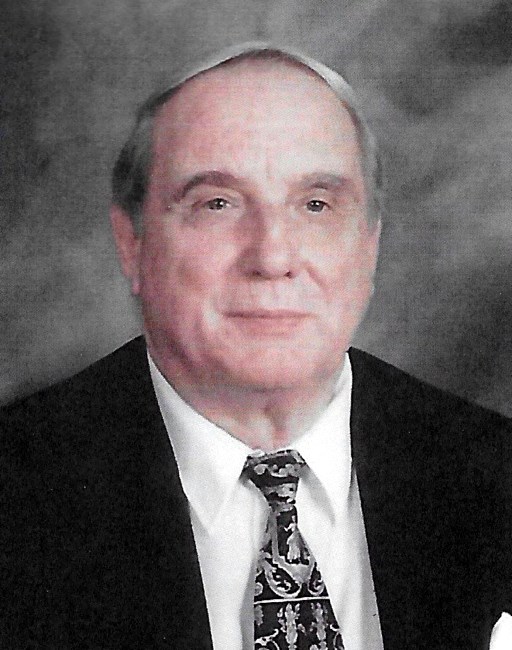
On July 24, 87 years ago Irving Newton Ennis was born to Lonnie R. Ennis and Annie Lancaster Ennis in Elizabethtown NC. He was schooled and grew up in Goldsboro with brothers, Charles and Myron(Moon) and sister, Grace.
He attained a degree in music from ECU, and his masters in voice and opera at The Univ. of Mich.
Drafted by the Army, he landed a position in the US Army Chorus. That was the bridge between the Lost Colony and the Big Apple. In NYC he became an accidental fashion designer and took his new-found calling to the capital of NC in 1966.
His fledgling career touched brides,11 Miss North Carolinas, 5 Miss Americas, and countless socialites across the city and state, simultaneously directing the choir at the Church of the Good Shepherd for 28 years.
After closing his shop, he became librarian for the NC Symphony. When that ended, he put his talent and creativity to work in producing beaded works of art, which he continued through the past year.
Through all of his endeavors and travels he “COLLECTED”... Art, glass, videos, china, furniture, you-name-it.
But, most of all he collected friends. He loved them…and they loved him in return.
God rest his cheerful soul!...
Irving (as he was called by family) was pre-deceased by his mother and father, Annie and Reverend Lonnie R. Ennis; and by his brothers Charles and Myron, and sister Grace Ennis Allen.
He is survived by his sister-in-law Jo Ann Ennis (wife of Myron) of Morehead City and her three children: Clay, David (Teresa), Ronald (Debbie) and by four grandchildren and four great-grandchildren.
Also, on his mother’s side, he was survived by close cousins from Clayton, NC; Josephine Medlin Norris, mother of Robbie (Rita) and Jennifer; and Margaret Medlin Gardner, mother of Gigi Gardner.
Surviving also were nephew Rev. Don Allen and wife Carol of Shelby, NC.
Eric (to his later friends) wished that anyone desiring to make a gift in his memory do so to:
The Church of the Good Shepherd, Music Ministry, 121 Hillsborough St. Raleigh, NC 27603.
A funeral service will be held Saturday, August 3, 2019 at Church of the Good Shepherd, 125 Hillsborough Street, Raleigh, North Carolina 27603. A reception in Shepherd's Hall will follow. Graveside services will be held, following the reception, at Willowdale Cemetery, 306 Elm Street, Goldsboro, North Carolina 27530.
Arrangements by Brown-Wynne, 300 Saint Mary's Street, Raleigh.
For additional information on Eric and his career, you may enjoy the link and the interview below:
OAKWOOD ORAL HISTORY PROJECT TRANSCRIPT
Eric Ennis (moved into Oakwood in 1971) Interviewed by Peter Rumsey and Liisa Ogburn on September 2, 2011 in Eric’s home in the Martindale subdivision at 4511 Edward’s Mill Rd. in Raleigh, NC.
Eric Ennis: Just reading the newsletter, and now with this, you know the things that have come about. We never dreamed of anything like this. We never dreamed.
Peter: Liisa, is it on?
Liisa: It’s on.
Eric Ennis: Oh, it’s on? Oh.
Peter: This is September 2nd, 2011. I am Peter Rumsey joined by Liisa Ogburn, interviewing Eric Ennis, who is being interviewed for a second time. The first time was January 8, 2011. The interview that we’ll be doing today is not intended to replace that earlier interview, but rather to fill some gaps, expand on some things, to include whatever else you may, in the intervening time, have thought about that you’d like to add to what was done before. We’re at Eric Ennis’s personal residence, which is at 4511 Edwards Mill Road, Apartment C in the Unit C. It is a condo in the Martindale subdivision located near Crabtree Valley in Raleigh. Eric has been here, I believe since 1992. Prior to that time, he had lived in four houses in the Oakwood neighborhood and served the Oakwood organization as either the second or third chair.
Eric Ennis: The third chair.
Peter: Eric, my first question to you would be sort of an open-ended question. In the aftermath of that initial interview, is there anything that you wished you had spoken about that you did not in that interview?
Eric Ennis: Yes, there were. But I didn’t write them down, and I don’t remember what they were! (Laughter) That’s helpful.
Liisa: Well, Eric, I remember from the [earlier] edited piece that I heard you talking about the organizing against the highway coming in. And two weeks ago, I had the pleasure of sitting down with Betsy Buford and Ronnie Ellis and Ronnie Ellis started to paint kind of a visual picture of Oakwood at that point and I’m wondering if you can also tell us about Oakwood right when you moved in. You’re a visual person, obviously from your surroundings.
Eric Ennis: We had been there about a year or so before the highway was announced and up until that time there were new people moving in and each new person moved in and the good thing was not everybody in one area. There was scattering all over Oakwood. And that was good. And I’ve been asked about the attitude of the residents who were living there. They were excited about what was going on. They were so happy. Some of
these dear old ladies that had given up. Here was a neighborhood practically in ruins, and houses condemned, and they remembered it from the good days. And with us coming in, and fresh paint going on the houses, and everything. They were so excited about it and so accepting and really as warm as they could be and encouraging. They would love to come over and tell you stories about your house. Someone came and told me- my first house was at 400 Polk Street- and they told me, it has this little closed in back porch, and someone said, ‘oh that used to be open with white lattice all against the side, and there was a staircase that went upstairs that had been taken out.’ One of my goals was always to put that staircase back, so I don’t know if anyone has ever done that or not. But the attitude of the people, and the excitement of the neighborhood…
The day that -Sunday morning, it came out of the paper- and it just hit like a bomb. We all gathered at one house, and everybody was upset and that’s when, I think I’m correct, we decided to officially form the society. We hadn’t done so, we had talked about it, but then we decided to do that. And then we elected a president and then it was during my reign that it came before the city council. And we went there and we were successful in getting it done away with.
Liisa: Now, was your house on that Christmas tour?
Eric Ennis: Yes, I was on the first Christmas tour. I was not chairman, but I was on that first tour, and I’ve never forgotten. I had the hallway painted. My house was in five apartments, and I had knocked out partitions and turned it into what I called a one family. And I painted the living room and dining room and had remodeled the kitchen with wallpaper and cabinets and appliances and everything and then the hallway. What I called the den, or the library, I didn’t have finished, and someone said, “well, you just better close the door so people don’t see that.” And I said, “no, this is all about restoration,” so I pulled in some stepladders and I set buckets of paint around and paint brushes and wallpaper books and things like that to show that this is a restoration in progress. And that was one of the rooms that most people commented on because they could see what was going to happen.
Liisa: And how much you had done.
Eric Ennis: Yes, and then what I had done. But there was one society lady, I never forgot this, she walked into the hallway there and she was so uppity anyway. Course, didn’t live in Oakwood. And she came, and I never forgot, and she looked at me and she said “Is this it?” (Laughs) And I just about fell on the floor and laughed right in her face. I said, “well it’s progress in the process and it just takes time.”
Peter: Something that would be helpful is if you, in a few sentences, could put together in a good little timeline, the creation of the society, the first athletic club, the first candlelight tour, and the street closure.
Eric Ennis: Oh gosh, well, I never really thought about that. Well, if I moved there in ‘71, Bill Calagary and Ames Christopher were the first of the new influx. They moved in
December of ‘70. I moved in, in the spring, I think, of ‘71. And probably, I can’t remember when, the thing about the road, wasn’t that about ‘74? ‘73? ‘74? Somewhere in there, the association was formed and then the road. I think it was about ‘74. ‘73 or ‘74. And that really brought the neighborhood together because I think the entire neighborhood was at the City Council meeting that day. ‘Cause my house would have been gone. It would have come down Bloodworth Street, the Stronach house would have been gone, it would have swept down that whole- from Hwy - it would have come straight through and it would have taken that, you know down Bloodworth and half of each block. ‘Cause it would have been four lanes. And then you have to figure other property. And it would have just wiped that neighborhood completely out. But by the time that plan came in, property values had started going up, because of the new people moving in, and all the improvements. And it just put a value on [the neighborhood]. When the [original] survey had been taken, there was so many condemned properties over there. And so they saw that it would be price prohibitive [to purchase the property]. I don’t know where [the highway] would have ended. I know it came through [Oakwood] and headed downtown, and I don’t know from there where it would have gone. But it would have shot Raleigh just completely wide open.
Peter: You mentioned the Baptist minister and the...
Eric Ennis: Bashford, if I remember. I can’t remember if his church was actually in Mordecai. I don’t think so. But he lived over in the Mordecai section. And they banded in with us, too. It was Oakwood and then the Mordecai section. Some of us had never even heard of Mordecai and then that brought that neighborhood in with us and gave us more people to protest the road.
Peter: You had mentioned his quotation, “where will my people go…”
Eric Ennis: That’s something I’ll never forget as long as I live because we were in the City Council [meeting], and it got very heated. People were crying and some of the old ladies got very emotional. I’m not that strong a speaker and I [had] asked Mr. Bashford to represent the neighborhoods. And he stood up and started to sing about the road and the destruction and throwing people out of their homes and all of the stuff that would result from it. And his final statement was, and he raised his hand, just like a good ol’ Baptist preacher, and said, “And where will my people go?” (Laughs) And the city council just fell apart. That was it right there. (Laughs) It was a wonderful moment and he was a sweet old man and everybody just praised him and everybody stood up and screamed and hollered and all that stuff. It was quite emotional.
Peter: You mentioned, Mrs. Crumper, I think it is.
Eric Ennis: Yes, she was a lady that lived in the house that I lived in on Polk Street, 400 Polk. She had raised her family, I think three or four children, in what was the equivalent of the living room/dining room/kitchen of that house. It was broken into five apartments, and she raised her family in that apartment. And she managed, and there was some lady- I can’t remember her name, from out of town, course I never met her- who owned that
house and about three or four others. She had bought the properties and they were just rental apartments. And she got as many apartments out of each house as she possibly could. And Mrs. Crumper managed those properties, collected the rent and sent it to the lady. And she was a wonderful lady and of course I evicted her. (Laughs) And she moved right across the street, the house right on the corner but facing Bloodworth Street. So she moved there. Well, her specialty was what she called ‘Chicken Slick,’ which I called in my family, ‘Chicken Pastry.’ It’s the dough with the chicken fat and all that stuff, like a soup. And she would make that and invite half the neighborhood over. And it would be just like a holiday when Mrs. Crumper was cooking! And she’d invite everybody over and we’d sit at her kitchen table just tickled to death to be there, and her husband was in a wheelchair and it was just a wonderful bond. I still see some of her grandchildren around town or run into them and they always speak to me, you know. And one of them came one time, came up to see the house, and she came in and she said, “Oh, you’ve ruined it!” (Laughs) And I said, “What?” “Well it’s not what it used to be!” I said, “Well, it was in five apartments! This is a one family deal now!” It was so funny. But she was a matriarch, really. Everybody loved her, and boy that chicken pastry she made. And at one point the News & Observer did an article on her in the newspaper and had the recipe and had a picture of her. I still have it somewhere.
Peter: How would you describe the tenants that she brought together in these various houses that she managed?
Eric Ennis: Well, I honestly never got to know any of those. They were probably very low wage earners, people that would live in a one or two room; there were two bathrooms in the house- one upstairs, one downstairs. And whoever lived in that house had to use either one of those two bathrooms. And I imagine most of the house were laboring people. I really don’t know. I never really got to know any of the renters. I watched a stabbing one night out of my upstairs bedroom at a house catty corner. The Crews later bought that house. I heard this loud commotion, this man came running up, a man behind him, and got him on the ground and was stabbing him. And I said, “oh lord, where have I moved?” During that transition time there were nice houses, beautiful houses being done, but there was still the other side of it. The others gradually were disappearing.
Liisa: This year, they are having the 40th anniversary of the tour, the candlelight tour. So any stories that you might have about the first one, or getting ready for it, or the audacity of proposing that?
Eric Ennis: Well, we proposed it and we decided to do it, I honestly think it was Bill Makepeace’s idea. And we went along with it. And there were maybe four or five houses on that first tour, I don’t remember. And we were completely overwhelmed by the turnout. We didn’t know what we were doing back in those days and we just moved in, fixed up our houses, and opened them at Christmas tour. What does that mean? Well, you opened it up and let people walk through. Well, I didn’t let them go upstairs. I probably let them go back to the kitchen and then circle around back through the hallway. And we were just knocked over by the turnout; it was so large and there were so many people and the excitement. It was just more than we ever anticipated. And then I had
moved up to Person Street, catty corner from the Krispy Kreme, and then my house was on tour there one time. The house down on Oakwood Avenue… I never did put on tour. And that was because the year they were doing the tour, it was all in other parts of the neighborhood and it would have been way out of the way. They tried at that time to do houses close together to handle the crowds.
Liisa: You said only one other person had moved in in 1970 and you had moved in in ‘71? Why did you move in?
Eric Ennis: Well, actually, Bill Makepeace and Bob Hoagley lived on Centenary [?] Street - he was a decorator- and I had bought something from him at the store, and he invited me over for drinks. And I went, and Bill and Ames were there and Ronnie Ellis was there, and Earl, I think. Yes. That’s where I met Earl the first time. And we had cocktails and Bill started talking about how he had moved into this new area and a lot of the houses were condemned and Ames, being from Virginia, was used to old houses and then it had a possibility of a wonderful garden, which he later developed. And so we talked about it and they said, “why don’t you move over there?” And so I said, “Well, let me look at it.” So maybe the next day, I went to ride over there, and I rode through the neighborhood and I said, “Mmm, I don’t think I could live over here.” ‘Cause at that time I was living on White Oak Road, behind Hayes Barton Church. And I just said, “no.” But I had grown up in Goldsboro in a big house, very similar to the one that I ended up buying, and I sort of looked at that house and went on, and maybe a few days later or something, I went back over and looked again. And looked at the neighborhood and picked out that house. And then called the real estate person and asked to see that house. And it was funny because, I don’t know if you know the house, but you walk in the front door and there’s this long entrance as big as this room. And then there’s the hallway. Well, that hallway was blocked off because that was the kitchen for one of the other apartments, with no ventilation, no outside anything. So I walked in and I looked, and I got home and I started figuring and figuring and I went back again and asked Mrs. Crumper if I could see the house again, and she was getting irritated by that time. And I said to myself, “there’s got to be more, there’s something missing here.” I think what they were using as the kitchen was actually the old butler’s pantry in between the dining room and the kitchen, and that was their, smaller than what I have, little kitchen. And houses like that didn’t have small kitchens like that. So I went back, and she says, well there’s another apartment back in the back. (Laughs) And so, I finally got to see the entire house and sat back and talked about it and thought about it and went ahead and ended up getting a loan and buying the house.
Peter: Do you know why she was selling that house at the time?
Eric Ennis: I don’t really remember. I think that she had already sold one, or something. And this one. And then later, the house of Bill Makepeace, that was her house, too. So there were several of those. Maybe she knew about the road and we didn’t, you know? I don’t know. But I think it was just because the neighborhood had deteriorated so much, and I never knew the woman. And I don’t remember her name. But she lived out of Raleigh and I don’t know if it was out of state or what.
Peter: One of the interesting things that you talked about in your earlier interview was going off to New York City and then coming back and living in Raleigh and then following the dressmaking that you had begun in New York City. Jim Stronach, who lived behind you had gone off to New York City as well, and my interest in this in part is, I had a uncle who from Toledo, Ohio, in the ‘30s, ran off to New York City, became a hat maker, a photographer, and lastly a maitre’d. And was very much a part of the gay community in New York. I’m interested in how...did you and Jim Stronach ever share war stories?
Eric Ennis: No, I didn’t know Jimmy until I moved to Raleigh, I mean moved to Oakwood, really. Didn’t know him at all. And I didn’t really know enough about the history of his family. But my New York thing, my training was in music, and I had a master’s degree from the University of Michigan in voice and opera and then I graduated from grad school. I got a notice that I was to be drafted. And I would have gone to Korea. And there was a friend of mine from Michigan in the Army Chorus, and so I contacted him and went and auditioned, was accepted, and then after my basic training, I had a letter from the Secretary of the Army instructing me to be sent to Washington to sing with the United States Army Chorus, which they were just starting the Chorus at the time. It was a division of the famous Army band. And so I sang, my enlistment was for three years. And after three years, I got out.
Eric Ennis: After I got out, several of the guys started reenlisting and ended up making careers in the Army, twenty to twenty five years, singing for the Army or the government (Laughs) No one said anything about that when my time came up, or the people before me. The whole idea of the Army Chorus was really changing and then after I got out of the Army Chorus, I won an audition and travel for a year with an opera company. After that, I decided to go to New York for the great career and found it much more difficult than I had anticipated. I was too interested in having a nice apartment and having nice furniture and having part time jobs in church and synagogue. I sang for all religions. (Laugh) Russian Orthodox, I sang for it all.
As a child, my mother was a seamstress. She made my sister’s clothes and her clothes. To keep me out of mischief she taught me how to use a sewing machine. In college I would sew up anything that got ripped. When I was in the Army I made some curtains and a bed spread. Some of the other guys, would say make that for me too. I started making curtains and bed spreads for everybody in the chorus. When I got into New York, my lady, who had been the leading lady with the opera company, had gotten a gig. She was to sing at Carnegie Hall, she said, “I don’t know what I am going to wear” and I told her I was going to make her a dress. I had no idea; I had never made a dress. We bought a pattern. We went down to Delancy Street and bought a few yards of fabric, brocade and I cut out this dress and then I said I couldn’t understand these directions, so I threw them aside and I just figured out how to put it together. The biggest thing was getting the sleeves, so the sleeves would be on the outside and not on the inside. (Laughs) I worked that out and she wore the dress on stage and the next day I had three customers. People had called her and asked where she had gotten that gown and of course the prices were dirt cheap at that point. I started making gowns and eventually got to the point that I quit my part time job and devoted all my time to sewing.
Living in New York at that time was pretty rough. You constantly had to look around, because it wasn’t safe. There was a lot of crime. I lived up on the West side in the ‘70s. The Lincoln Center had not been built at that point. It was sort of a crummy neighborhood. There were wonderful buildings. Marvelous old buildings. I made the dress for her and gradually began to get customers. I began to be less and less enchanted with New York. I wasn’t singing and I thought if I wasn’t singing then why stay in New York? There was a lady in Raleigh, Mrs. Sedale [?], I forget her first name. She was a photographer. I had known her in college because she had also been a singer. I called Mrs. Sedale and posed the problem. Then she elaborately painted the picture. “The debutantes and the legislature wives and all the society in Raleigh. You will just make a fortune,” she told me. “Come on down.” (Laughs) I came down and picked out a house and it happened to be on White Oak Rd. just at Five Points. I moved down. My next door neighbor told some people at her beauty shop. I gave her some cards and I got my first customer. (Laughs) It was funny with the first dress that I made… it was a black dress. Going to a cocktail party in a black, of course. The lady called the next day in tears. I was humiliated. I said, “What?” She said everybody kept asking me who died in my family. I said, “Honey, I can only make dresses. I am not in an education program. If they are that ignorant, there is nothing I can do about that part of it.”
It just started as word of mouth, and then some newspaper articles and things like that. Business grew and I did it until the late 70s. About ‘78 I retired from that. In the meantime I had become choir director of the Church of Good Shepherd. I was a choir director there for 28 years. I met some people who became customers. I never pushed friends or people at church or anything like that, to come and be a customer. If they chose to do that, it was on their own. When I was in Oakwood, in the big house I would have parties and fashion shows and things like that at the house. By that time, I was working heavily in the beauty queen circuit. I would have contestants or winners from the various pageants be my models. I would do fashion shows at North Hill mall. I would have the girls bring their crowns. (Laughing) “Put on an evening gown that was out of stock and sling that crown on your head and march down the runway,” I’d say. They were quite popular and it was good publicity.
Peter: Tell us about running your dress shop in Oakwood.
Eric Ennis: In Oakwood, I did all of my cutting there. In each of my houses I did the cutting. The first house on Polk Street, I didn’t do much interviewing or taking orders there. Mainly I had the room upstairs that was the work room. By that time I had the store in North Hills and I did all of that there. By the time I moved on Oakwood Ave., the fourth house, I was working, doing my fittings, and everything in that house.
Peter: I first met you when you lived on Person St. You had a sign out in front of your house on Person St. I had never taken French and I couldn’t pronounce.
Eric Ennis: “Couture-re-a,” it comes from the word couture, which means dress. One of my customers in New York gave me the name. It means the home of the male dress maker. “La Couture re a,” they said “la cooter”, and all these various pronunciations. It was funny. I went along with it. “How can a man be a dress maker?” they said. Gradually I got a seamstress. I would do the fitting and the cutting and the seamstress with my instruction would do the finishing. I never did have anyone that I could turn it over to. I wanted to over see the whole thing.
Peter: We are talking about the possibility of next spring or summer, celebrating the defeat of the proposed highway and the fortieth year of the founding of the Oakwood Organization. Closing Polk St, in front of your old house...
Eric Ennis: We did that once.
Peter: Tell us about it.
Eric Ennis: We did that once. We had a street fair. They closed off the street; the yard next to the house at that time was just an empty lot. They had torn that house down. It was originally on the corner, and they had moved it next door and it was there when I first moved in. Later on it was torn down. We did this fair and I don’t remember the date. They blocked off the street. They had artists invited that sat there and sold their wares. I think Elm St was closed. That was in cooperation with the Junior League. It was [to raise money] for the carousel at Pullen Park, to restore the figures on the carousel. There were fashion shows, at Bill and Aime’s house. They put a runway out his back porch and had a fashion show. We had several Miss Americans, and some of the beauty queens. I did a fashion show. We had furs from Hurtsburg Fur Company. It was a big, big thing. We raised some good money for the carousel. It was fun and it was just a wonderful thing. I imagine there were some food vendors along the way. It was very successful.
Peter: Do you have any pictures from that period? From that celebration?
Eric Ennis: I have some pictures of the fashion show, naturally. (Laughs) I have some small pictures; yes I can dig through those for you.
Peter: I think this covers the variety of things I wanted to pull out of the prior interview. Have you thought of anything else?
Eric Ennis: There is one story, I don’t know if I put it in that first recording or not. It is a story that I think is just fabulous as far as restoration. It was on Polk St. When I moved there, there was a hallway as big as a room, then it narrowed into this long narrow hallway. We knocked down the partitions. There was a kitchen there, but still it bothered me. You would look around and you would see this aging dark molding all around the ceiling and all around the doors and there was a door from the hallway into the living room, just this narrow door. The molding didn’t match. There was something wrong here. I kept looking and I began to notice some cracks on each side. I plotted this whole thing; I had a bunch over one night. We all got plopped. We had lots of wine. I said we are going to do something. I had already by that time, painted the living room. I had a nice oriental rug in there. It was white walls. I painted the blue door blue. I said, “alright, let’s line up in a single line, side by side put your arms on each other’s shoulder. We are gong to take three steps and kick.” Someone said you are going to hit the wall and I said that is the point. We were looped up enough that we tried it a couple of times and it didn’t work. Finally I said, “alright, we know what we are doing. Lets do it for business now.” We took our three steps and kicked and this whole wall just collapsed into the living room. Inside the wall were sliding wooden [pocket] doors. They had taken the doors and just pushed them back into the wall and built this new wall and made a small little doorway. Of course the dust was flying all over the place. (Laughing) It was a mess.
How did I know that? I thought if you really look architecturally, that door way did not match the other door ways. I just knew it had to be [built later]; of course I had no idea about sliding doors. I had a carpenter come and clean up the deal and then we enjoyed our double doors. (Laughing)
Eric Ennis: That house was one I really had to do the most work on. I had to refinish the floors, paint the walls, tear out the apartments, the partitions that had been put in there, rip all that out. Then modernize the kitchen and put gutters and everything. The roof was alright. I did a lot of work. I didn’t have to do that much to the rest. The last house, the one on Oakwood Ave., there was some work that I had to do, but not as much as the first house.
Peter: As you think of other stories, give me a call. We will be back here in a heartbeat to collect them.
Eric Ennis: Alright
Peter: This has been marvelous.
Eric Ennis: I have enjoyed doing it, I love Oakwood. It was a wonderful neighborhood. I have never gotten over the shock of leaving there; my heart has always been there. I grew up in a big house and that house on Polk St. was very similar to the one I had grown up in. It felt like home. The various ones I moved in, in four different houses, for various reasons, they all felt like home. I have missed it so much, living in a condo. The outside is so sterile. It was a wonderful neighborhood. I have just been so proud to think how Oakwood has grown, where it has come from. We didn’t have any idea, we just moved in. We just never had any idea that one thing would lead to another and I said, the main thing that pulled the neighborhood together was the road. Oh, I can rattle on forever and ever. Listen, thank you.
Muestre su apoyo
Comparta Un Recuerdo
Comparta
Un Obituario
Obtenga actualizaciones
DONACIONES
The Church of the Good Shepherd, Music Ministry121 Hillsborough St., Raleigh, North Carolina 27603
Servicios
COMPARTA UN OBITUARIOCOMPARTA
- RECIBIR RECORDATORIOS
v.1.18.0