
OBITUARIO
Anna Sandor
4 marzo, 1949 – 1 noviembre, 2025
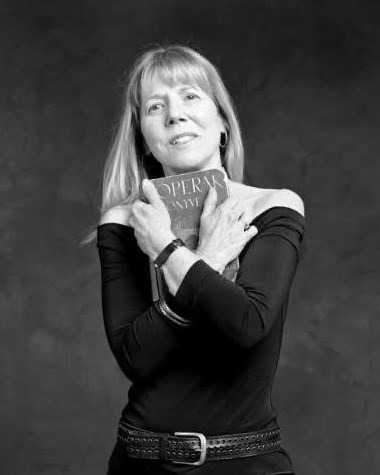
Anna Sandor, a WGA-winning and Emmy-nominated screenwriter of film and television projects including Charlie Grant’s War, Molly: An American Girl on the Home Front, and the Emmy-winning television movie Miss Rose White, whose turbulent childhood inspired a love for storytelling, died Nov. 1, 2025 at Scripps Green Hospital in La Jolla, CA, of complications from melanoma. She was 76.
Her daughter Rachel Sandor Stone and her son-in-law Adam Stone were with her as she passed away peacefully.
“She was spunky, and she was sharp,” Sandor Stone said of her mother. “She was strong-willed; warm and kind, but unfiltered. And she was selfless. One of the last things she said to the palliative care team before she passed was that everyone has a story, the VP of a bank and a homeless person, both have stories worth learning.”
Sandor was born in Budapest, Hungary on March 4, 1949, to Agnes and Paul Sandor, both Holocaust survivors; Paul Sandor died when she was five. Her family fled the country with her mother, aunt, and cousin in 1956 as the Soviet Union violently suppressed the Hungarian Revolution. Before escaping, Sandor and her mother witnessed neighbors being shot by Soviet troops; in one particularly harrowing moment, they hid in a building the troops had set on fire in order to remain undetected.
Entering Austria using forged documents, Agnes and Anna Sandor briefly lived in Switzerland, France, and England, where they first learned English. They eventually emigrated to Toronto — a common destination for Hungarian refugees — where Agnes Sandor eventually managed a bridal store and wrote a regular newspaper column sharing Hungarian recipes. But her experiences — and those of her parents — left a deep impression on Anna.
“I lived with the specter of what my parents had gone through, of my mother escaping a camp,” she told the Los Angeles Times in a 1992 interview. “I was only eight when I left, but the memories were strong. In Canada, I began to feel Jewish. I began to make discoveries about myself and my background.” Sandor immediately took to the popular culture of the day — she was a voracious reader and regular attendant of theaters and movie houses (Montgomery Clift was a particular favorite), which inspired her to use her own imagination to create elaborate stories and fantasy worlds.
“I did not struggle the way you’re supposed to with writing,” she said in a 1980 interview with the Canadian Press. “Now I know I’ve always been a writer. Even as a kid I had serials running around in my head.”
Enrolling in Harvard Collegiate Institute for high school, Sandor took drama classes with the ambition of becoming a stage actor. She was accepted to University of Windsor, where she was in the first class of the university’s School of Dramatic Art (SODA), graduating in 1971 with a Bachelor of Fine Arts degree.
Sandor acted in productions around Ontario and taught theater workshops for children. Backstage, she wrote poetry to pass the time. In 1975, her compositions caught the attention of actor and screenwriter Louis Del Grande, who convinced Sandor her talents were better utilized in the writer’s room than on the stage. She quickly discovered he was right.
“I’m a very active person,” she told the Windsor Star in 1986. “I just go nuts when I can’t make things happen. Acting in a way is a very passive profession. In writing you can generate your own stuff.”
Del Grande was hired to be the head writer for The King of Kensington, a CBC sitcom about a shopkeeper who acts as a fixer for the residents of the multicultural neighborhood in Toronto, and brought Sandor to the writing staff. The show was a hit, running from 1975 until 1980 and featuring early onscreen performances from Eugene Levy, John Candy, and a very young Mike Myers. For her part, influential Windsor Star critic Sid Aidlman called her writing “snappy.”
Sandor met William Gough when he hired her to write the script for an episode of the CBC docudrama series For the Record, which he was producing. They married in 1982, and subsequently collaborated on several scripts — most notably, an episode of the comedy/mystery series Seeing Things, which was nominated for an ACTRA (Alliance of Canadian Cinema, Television and Radio Artists) Award for Best Writing, Television Drama. They also contributed a short story — “An Evening at the Opera” — to Fingerprints, an anthology of Canadian crime writing.
“Beyond form there is another realm,” wrote the Canadian film magazine Playback in 1996. “One that Anna Sandor and William Gough seem to have the capacity to plumb with some measure of ease.”
Their daughter Rachel was born in 1984. Their marriage ended in divorce in 1996, but they remained on friendly terms.
Her screenwriting career now firmly established, Sandor took a giant leap forward with Hangin’ In. A dramedy starring Lally Cadeau as a social worker counseling teenagers dealing with personal problems, Hangin’ In was a rarity: a TV series co-created by a woman (Sandor shared creator credit with Jack Humphrey and Joe Partington). Hangin’ In received mixed reviews upon its release (though Hamilton Spectator critic David Wesley wrote that the show “has excellent acting and enough good writing to make it genuinely funny and poignant”), but it was a hit with audiences, running for seven seasons and earning retrospective praise from Comic Book Resources, who called it “majorly underrated.” It also boasted the first onscreen credit for a young actor named Keanu Reeves.
By the mid-1980s, Sandor moved away from the series format in favor of TV movies. Her first movie script, Charlie Grant’s War, was particularly personal to her; she spent months researching the true story of a Vancouver diamond broker who forged paperwork to help Jews escape Nazi-occupied Vienna. The resulting work was a huge hit with critics, audiences, and ACTRA voters.
“Charlie Grant’s War packs an emotional wallop that will stay with you for some time,” wrote Jim Bawden of the Toronto Star. “It’s the best Canadian TV drama in some time, an almost perfectly realized blend of fine script, direction and skilled acting.” Charlie Grant’s War was nominated for six ACTRA awards and won two: Best Television Program and, for Best Writing, Anna Sandor.
Sandor was particularly hopeful the film would act as a reminder of the horrors of the Holocaust as it before it slipped from living memory. “It’s the young people I worry about,” she told the Star in an interview.
Sandor continued to write TV movies in Canada before being lured to Hollywood in 1989; she and Gough wrote the script for Tarzan in Manhattan, a TV film directed by Michael Schultz (of Cooley High and Car Wash fame) that put a modern-day spin on the classic Edgar Rice Burroughs character. However, perhaps the highlight of her work in Hollywood was 1992’s Miss Rose White, a tale of two sisters reckoning with their divergent experiences during World War II, starring Kyra Sedgewick and Amanda Plummer. John Koch of the Boston Globe praised Sandor’s “deft screen adaptation,” and wrote, “Out of pain and guilt and thorny evasions, Miss Rose White weaves something true, deeply felt, and touching.”
Miss Rose White won four Emmys, including Outstanding Made for Television Movie, and was nominated for nine more, including a Sandor nom for Outstanding Individual Achievement in Writing in a Miniseries or a Special. She was also nominated for a Writers Guild of America award; perhaps most notably, she won a Humanitas Prize for her work on the film. According to its mission statement, “Humanitas honors and empowers film and television writers whose work explores the human condition in a nuanced, meaningful way.” Sandor would eventually win two more, for the children’s films My Louisiana Sky and Molly: An American Girl on the Home Front. Among her favorite scripts was 2008’s Accidental Friendship, a Hallmark Channel movie starring Chandra Wilson as an unhoused woman who forms a tentative bond with a police officer; Variety Critic Laura Fries wrote, “With a thoughtful script by Anna Sandor, [Accidental Friendship] tells a simple, meaningful story.”
Sandor moved to Colorado in 1995 before returning to Los Angeles in 2003, eventually relocating to San Diego in 2017 to be closer to her daughter’s family. Reconnecting with her first showbiz experiences, Sandor returned to stage acting, performing at the Point Loma Playhouse and the OnStage Playhouse in Chula Vista, CA. In addition to drawing positive notices for her acting, she also wrote Knock Loudly!, the story of a lonely former movie star, which debuted at OnStage in April of 2025.
Away from work, Sandor was an avid walker, and enjoyed attending the theater and watching game shows and British television. She loved to spend time with her daughter Rachel Sandor Stone; her son-in-law Adam Stone; and her granddaughters Dani and Gabi Sandor Stone. and Teddy, her Bichon Maltese mix. She enjoyed regular Shabbat dinners with her daughter’s in-laws, Ken Stone and Julia Ramirez-Stone.
“She had her own vibrant life, but her family was her world,” said Rachel Sandor Stone.
Anna Sandor’s Celebration of Life will be held on Dec. 6, 2025 in San Diego. In lieu of flowers, Sandor’s family asks to donate to OnStage Playhouse (https://onstageplayhouse.org/become-sponsor/).
By Tim Ryan
Muestre su apoyo
Comparta Un Recuerdo
Comparta
Un Obituario
Obtenga actualizaciones
DONACIONES
Servicios
COMPARTA UN OBITUARIOCOMPARTA
- RECIBIR RECORDATORIOS
v.1.18.0