
OBITUARIO
Mr. William M Foster
27 noviembre, 1923 – 31 mayo, 2020
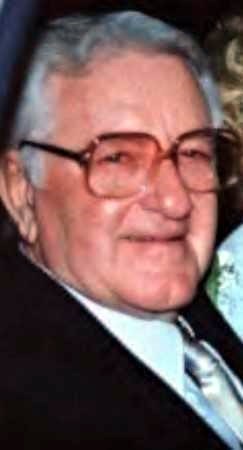
William M. “Bill” Foster was born in Chattanooga. TN. He was the son of Clara Irene Smith and Karl Henry Kordell. Bill was also the adopted son of Carl Lundelius Foster.
Bill’s family moved to Miami, Florida when he was two years old, and they remained there for twelve years (from 1925 to 1937). Even though it was during the time of Prohibition and the Great Depression, Bill fondly remembered his growing-up years in the young and laid-back city of Miami.
No one had to tell Bill that during tough times he needed to make sacrifices and work hard. Ever since he could remember, his mother and father had worked long hours to provide for him, his sister Betty, and his stepbrother, Carl, Jr. On any given day, Bill’s father was out working plumbing jobs, and his mother was at the shop taking care of paperwork for the plumbing business owned by her father, Jeremiah. Business had slowed to a crawl after the Stock Market Crash in 1929.
Young Bill often peddled around town on his bicycle along Flagler Avenue, the main thoroughfare in 1930s-Miami. One day, he stopped at Jones Bakery and asked if he could do some work “to help his family,” he told the proprietor. The owner allowed Bill to come to the shop in the afternoons after school, where Bill would sweep and clean up in exchange for day-olds to share with his family.
Times were hard for everyone, even for the bootleggers. Bill knew who they were. A couple of them lived on the route to and from Jones Bakery. Bill was quite the resourceful young man. Not only did he work-for-food at the bakery, he also built up quite a business with the bootleggers. As he carried a small brown bag filled with bakery items for the family, Bill looked for discarded liquor bottles and brought them to the bootleggers, who gave Bill two cents per bottle.
With his brown bag in one hand, and some coins in his pocket, Bill whistled as he peddled home, the ocean breeze in his face as he rounded the corner into the driveway of his home. He used his earnings from time to time; but mostly, he saved it. When times were the hardest, Bill offered some of his savings to his mother. Depression and economic devastation lasted for most of the 1930s, and from his experiences, Bill took his willingness to work hard and take good care of his loved ones with him for the rest of his life.
Around 1937, when Bill was fourteen, the Foster’s moved to Flat Rock, NC. His parents purchased a large structure on the side of a mountain between Greenville, S.C. and Flat Rock. The building consisted of a large restaurant and kitchen, as well as a three-bedroom living area. The family built a thriving business called Foster’s Stone Tavern. Folks from every hill and dale in the mountains came around to the Stone Tavern to enjoy home cooked meals. The Tavern even offered cabin and curbside service, delivered by Bill and his siblings.
During 1939 and 1940, World War II broke out and Europe was devasted. The U.S. tried to stay out of it. In late 1940, seventeen-year-old Bill Foster wanted to join the Navy. His parents had to sign their consent to allow their underage son to take the “Kiddy Cruise,” which is what joining the Navy while a minor was dubbed. Bill enlisted in January 1941, while the war “over there” was raging.
Eleven months later, America was forced into the war when the Japanese bombed the Naval Shipyard in Pearl Harbor on December 7, 1941. The Foster family was impacted like everyone in the country. Bill was on an aircraft carrier off the coast of Maine when he heard about the bombing over one of the ship’s speakers. Somehow, America did not fall apart. The hardships of the 1930s had toughened Americans, and they stood together, united with strength and determination to fight back.
Bill soon went to training in Norfolk, VA, to become a plane captain. His mother Clara joined the Guardettes, a group of ladies who protected the atomic bomb factory in Oak Ridge, Tennessee. While Bill was stationed at Norfolk, he joined some of his Navy pals in exploring the town. One night, he attended a night of dancing put on by the USO, an organization that entertained and supported the military. It was a chance to make merry and flirt with the ladies before being shipped out. Across a crowded dance floor filled with men in uniforms and young ladies in swirling skirts, the tall, good-looking, Bill Foster, saw an auburn-haired beauty that drew his attention. The young woman was Pat Gill, who would soon become his life-long mate. Pat was hesitant at first, and when Bill asked for a dance, she turned him down. He did not give up. He grabbed her hand and led her to the dance floor, where love bloomed in the midst of music and gaiety.
It was a whirlwind courtship. During the war, when love was found and couples faced the possibility of never seeing one another again, they often rushed to the local courthouse and married. Such was the case for Bill and Pat. They quickly married and two months later Bill sailed off to the South Pacific. Soon, Pat realized she was pregnant. She went to stay with her sister, Nancy, who was also alone and pregnant while her husband, Bob, was fighting in the war with the U.S. Army.
Bill’s first child, a son they named William Patrick, was born in his absence. The wait for father and son to meet was just one of the sacrifices Bill and his wife made during World War II. After the war’s end, Bill stayed in the Navy through the Korean and Vietnam wars. He traveled across America with Pat, adding four more children over the years: Barbara Lee, John Wayne, Janet RoseLynne, and Debra Rene.
In late 1953, Bill was stationed in Sanford, FL, at the Sanford Naval Air Station (NAS). The couple fell in love with the small, lakefront community and wanted to make it their permanent home. They bought a house in a new subdivision called Pinecrest, and through the years, the family enjoyed outings to places like Big Tree Park, Wekiva Springs, and the Navy Base pool. Bill and Pat made many good friends and created happy memories with picnics at Lake Golden, holiday get-togethers, weekend jaunts to New Smyrna Beach, events at the Civic Center, and downtown parades.
When the NAS closed in the late 1960s, Bill chose to retire from the military and remain in Sanford. He took a job with Martin Marietta (now Lockheed) in Orlando. He made the trek down I-4 for two decades, eventually retiring to enjoy his favorite pastimes: fishing with his buddies (the Pumphouse Pimps), and spending time with Pat.
Bill and Pat remained in their Pinecrest home for 65 years. Even into old age, Bill would take his airboat out and sail the tranquil waterways around Sanford. At times, he would take Pat, the woman he loved for 77 years; and somewhere along the alligator-laden banks of the St. Johns River, they would share a peaceful interlude and a picnic lunch.
Bill’s wife, Pat, passed away in March of this year, after a lengthy illness. Not long after her death, Bill was diagnosed with cancer. He fought like he had always done, with bravery, optimism, and without complaint; he followed Pat into eternity eight weeks after her death. He leaves behind his five children, Bill (Carol), Barbara (Tom), John (Sharon), Janet, and Debra (Roger), along with many grandchildren, great-grandchildren, and extended family members, who are scattered across Florida and beyond. Bill Foster’s devotion and commitment to his family, community, and country, together with his unbreakable bond with Pat, is part of his tremendous legacy.
Muestre su apoyo
Comparta Un Recuerdo
Comparta
Un Obituario
Obtenga actualizaciones
Servicios
COMPARTA UN OBITUARIOCOMPARTA
- RECIBIR RECORDATORIOS
v.1.18.0