OBITUARY
Anthony C. Jackson
June 23, 1952 – October 19, 2025
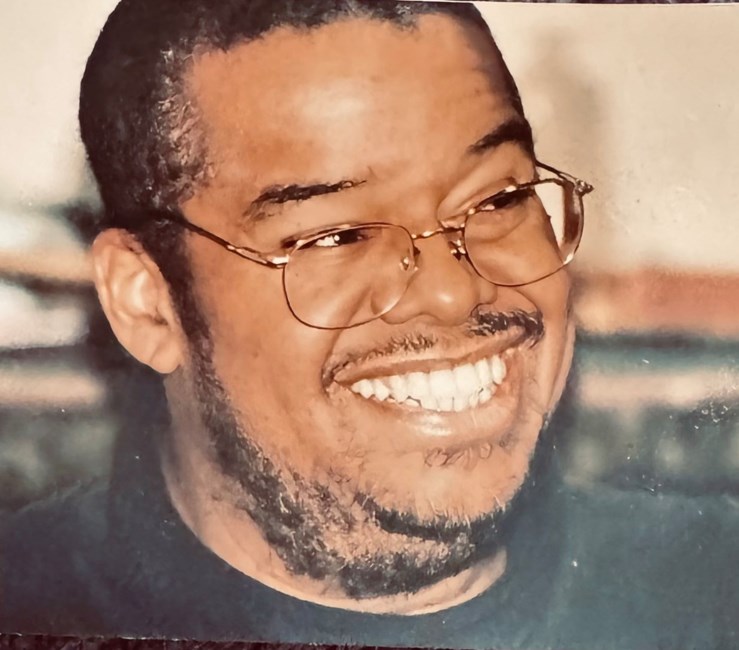
June 23rd, 1952- October 19th, 2025
Anthony Jackson, the consummate accompanist and architect of the contrabass guitar who is widely considered one of the greatest musicians of the 20th century, passed away peacefully on October 19th, 2025. He was 73.
His death at a senior facility in New York City was confirmed by his longtime friend and manager, Danette Albetta. Jackson is also survived by his cousins, Valerie Smith, Wayne Claiborne, and Jonathan Claiborne. An only child, Jackson was preceded in death by his father, Hawthorne Jackson, and his mother, Marian Claiborne Jackson. He had no children.
His musical journey began early. Anthony Claiborne Jackson was born on June 23rd, 1952, in New York City and raised on Manhattan’s Upper West Side. By age 12, his early love for Stravinsky’s The Rite of Spring and the orchestral music he heard in films and cartoons had evolved into a desire to play guitar; a year later, his mother bought him his first bass, a nameless medium-scale single-pickup model. Jackson began playing guitar in local clubs in 1966, and by 1968, he had moved to bass, principally inspired by Motown icon James Jamerson, Jefferson Airplane’s Jack Casady, and French modernist composer Olivier Messiaen. Four years after switching to 4-string, he joined Billy Paul’s band, earning his first gold record for the hit “Me and Mrs. Jones.” Further work with Philadelphia based production team Gamble & Huff led to a 1973 session with the O’Jays, and the approach he took on “For the Love of Money”—a simple but powerful part played with a pick and processed with a phase-shifter—resulted in a writing credit, an immediate reputation, and more work.
Back in New York, a demo date for arranger Leon Pendarvis led to a session for Roberta Flack, and word of Jackson’s bold, sophisticated style spread quickly through Gotham’s studio scene. He gained additional exposure through live stints with Flack, and on a Buddy Rich gig, he met guitarist Jack Wilkins, whose decision to stay seated while playing inspired Jackson to do the same. Soon, a steady stream of pop and jingle calls, as well as seminal fusion sides with the likes of Chick Corea (including the song “Night Sprite”), John Scofield, Al DiMeola, and Michael Urbaniak began to keep him in town.
Jackson entered a pivotal period from the late-’70s to the mid-’80s that led to new technical and creative developments captured on now-classic albums. These include DiMeola’s Electric Rendezvous, Steely Dan’s Gaucho, Donald Fagen’s The Nightfly, Harvey Mason’s Funk in a Mason Jar, Lee Ritenour’s Captain Fingers, Dave Grusin’s N.Y./L.A. Dream Band, and several heady adventures with Steve Khan’s Eyewitness. Jackson was just as comfortable playing technically demanding fusion as he was laying down pop bass on Paul Simon’s Hearts and Bones and Greatest Hits, Etc., Quincy Jones’ Sounds … and Stuff Like That!! and The Wiz, Diana Ross’ The Boss, Luther Vandross’ “A House Is Not a Home,” Madonna’s “Borderline,” Teena Marie’s “Playboy,” and hundreds of other collaborations. A highlight of this fertile phase was a triptych of Chaka Khan classics. Chaka, Naughty, and What Cha’ Gonna Do for Me? found Jackson tuning down “Career Girl”—his 1975 Fender Jazz Bass with a ’73 Precision neck—two whole steps to deliver thunderous low notes. As a teenager, Jackson had dreamt of expanding his range with a 6-string bass guitar tuned (low to high) BEADGC, and in 1975, Jackson convinced luthier Carl Thompson to build him a prototype. Successive iterations with luthier/bassist Ken Smith led to improved design and playability, and in 1982, Jackson retired Career Girl and began to play contrabass guitar exclusively, thus launching the widespread popularity of extended-range basses.
Two years later, he co-designed the first of a dozen groundbreaking, signature instruments with Vinny Fodera and Joey Lauricella of Fodera Guitars in Brooklyn; they unveiled their ultimate collaboration, the Fodera Signature Series Anthony Jackson Presentation II, in 2013. Jackson’s encyclopedic knowledge of all things music and his extremely precise control of every element of his sound—from his setup, tone, technique, and note length to his pick, strings, cables, effects, and amplification—sometimes gave him the aura of an intense professor. A short-lived series of Bass Player columns in the early ’90s certainly proved that he could articulate his passionate opinions both on and off the bandstand. But despite his notoriety as a fiery and uncompromising renegade, friends and bandmates knew “A.J.” as warm, funny, thoughtful, and encouraging, and his singular combination of supremely sensitive listening, take-no-prisoners fearlessness, and impossibly perfect execution of cliché-free ideas made Jackson a giant among musicians.
As the session scene slowed down in the late 1980s and ’90s, Jackson turned his focus to jazz and Latin jazz with such artists as Tania Maria, Jorge Dalto, Nancy Wilson, Pat Metheny, Stanley Jordan, Michael Camilo, Akiko Yano, Arturo Sandoval, Al Jarreau, and the Michel Petrucciani Trio with longtime rhythm-mate Steve Gadd. In those ensembles, he developed his thumb-and palm mute technique to approximate both acoustic bass and Ampeg Baby Bass, raised the bar for big-band bass guitar with Camilo on One More Once and Caribe, and issued landmark solos on “Calle 54” with Camilo and “Water Ways Flow Backward Again” with Yano. Besides contributing extensively to the Jamerson tribute Standing in the Shadows of Motown, Jackson also played on a slew of contemporary R&B sides by Anita Baker, Freddie Jackson, Vanessa Williams, Martha Wash, Phil Perry, and Jeffrey Osborne; dove into adventurous projects with Ned Rothenberg, John Clark, and Paranoise; and brought his unique flavor to the Bee Gees and the original cast recording of Rent.
By 2000, Jackson had become a world traveler. He found the perfect musical foil in Hiromi, appearing on five of her records and touring globally in her trio with Simon Phillips. He also met Greek composer/bassist Yiorgos Fakanas, leading to his lone solo album, the dazzling Interspirit, in 2010. Back home, he received a Lifetime Achievement Award from Bass Player magazine, played in the ultimate word-of-mouth trio of Wayne Krantz (with Keith Carlock on drums), gigged in New York and abroad with Mike Stern, and recorded with artists as dissimilar as Ernest Ranglin and Fahir Atakoglu.
While on tour with Hiromi in 2017, Jackson suffered a series of strokes that brought his touring career to a close. He continued practicing his beloved contrabass at home and did a few local gigs and recordings, but Parkinson’s and several falls put him in frail shape. On February 27th, 2025, Jackson attended a five-hour celebration in his honor at Shape Shifter Lab in Brooklyn. “For the Love of Anthony” featured performances and moving tributes from peers like DiMeola, Phillips, Ron Carter, Stanley Clarke, Victor Wooten, Steve Bailey, James Genus, Kenny Davis, Lincoln Goines, Dennis Chambers, Omar Hakim, Gene Lake, Nat Adderley Jr., Cliff Almond, Matt Garrison, and many more. It was to be an emotional, final farewell.
Jackson’s unwavering commitment to excellence, his towering technique, his vast repertoire, and his deep musicality will forever place him in the highest echelon of musicians who play electric bass. Early in his career, when the prevailing sentiment was that the “Fender bass” was inferior to the upright, Jackson set out to uphold the highest standards on his chosen instrument. He succeeded magnificently, blazing a path that will undoubtedly continue to inspire future generations.
Show your support
Add a Memory
Share Obituary
Get Reminders
Services
SHARE OBITUARYSHARE
- GET REMINDERS
v.1.18.0