
OBITUARIO
Lotte Ilse Finke
3 agosto, 1925 – 2 mayo, 2018
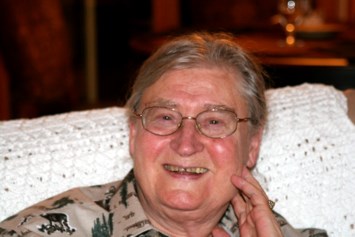
Lotte Ilse (Eigendorf) Finke, born August 3, 1925 passed away May 2, 2018 of causes associated with advanced dementia, she was 92. Lotte was born in Wurzen, Germany, the middle daughter of three. Her father, the second son of a baker was Karl Otto Eigendorf, a plumber by trade who rode the train from their small village to work in Leipzig each day. Her mother, Frieda Anna Meissner was a housewife. Growing up, her family lived in a very modest home in the Wurzener “Siedlung”. Fond memories of her childhood home included tales of the bountiful garden, canning, butchering chickens and the need to pump water from the well as there was no indoor plumbing. In her family, Lotte was known as both “the smart one” good with numbers and a quick learner, as well as, “the good looking one” with her hazel green eyes and auburn blonde hair. She was confirmed Lutheran at 14 and a spent the following year carrying out her Hitler era “Flichtjahr” (Duty Year) on a farm in the nearby countryside. It was a happy time that she enjoyed immensely, milking and feeding the cows and goat and living with a family where food was not in short supply as it was in the cities during the war years. After that she was employed by the Deutsche Post and trained to become a telephone operator, the classic job with the headphones and the cables, connecting local area phone calls. She told stories of how she and her colleagues would listen in to the most interesting of calls, illicit affairs and such. In her early teens she unknowingly met her future husband, Alexander Finke. The story goes that while in line at the library to check out her books, she coquettishly hid her library card from his view when she realized he was peeking over her shoulder to get learn her name. She was notable in her small town for her style. In the free time of her teenage and young adult years she could be found sunning and swimming at the Goldenes Talshcen, a small swimming lake in nearby Dehnitz. And her evenings were spent dancing, as was popular at the time, to big band music. She often boasted that she was a good a dancer, having mastered the fox trot, waltz, polka, etc. and that her dance card was always full. Toward the end of the war, life in her idyllic little town changed dramatically. She and her family survived through occupation first by French, then American and finally Russian Military Forces which proved to me more horrific than prison camp for detained German soldiers. Food was scarce, rationing and foraging was part of daily life, personal safety and freedoms were gone.
When Alex escaped POW camp in Italy and made his way back home to Wurzen, the two reunited and joined forces to scrape out a living trading on the black market. Stories of harrowing situations, sneaking goods out of the “Ost Zone” Russian Sector to trade for coffee, cigarettes, silk stockings, canned herring, or even bicycle tires from the West were often told and retold. The two were a strong business team, sneaking through dark forests in the dead of night avoiding Russian border guards at what would eventually become the iron curtain; the border between east and west. At the time it was patrolled but not fenced or walled. Lotte’s nerves were often tested, surely not a choice she would have made without Alex’s coaxing, the stakes were high but the spoils were great and so worth her risk.
Lotte married Alex on April 14, 1949 in a civil service at the Wurzener Rathouse (City Hall). Nothing fancy, times were tough. They eventually left the Russian Sector completely, leaving behind their homes, family and everything else they couldn’t carry. It was illegal to move away, but if you brought nearly nothing with you, it was possible to slip out, hundreds of thousands of refugees did in those years. Together they settled in West Germany in Neustadt an der Weinstrasse where again she worked as a telephone operator and supported her husband while he studied textile weaving, a complicated and advanced engineering field at the time. In 1952 they sailed across the Atlantic first Alex, then later Lotte and immigrated to Eastern Canada, settling in a small town called Gault, (now Cambridge) where many other World War II refugees settled as well. They lived there for four years. Lotte worked as an Accounts Receivable Clerk, while they waited for US Customs and Immigration to admit them in the United States. On weekends, to earn a little extra money, she would work the local tobacco fields topping blooms and suckering the leaves, row after row. In 1955 they moved to New York City, residing in Queens and working in Manhattan and Brooklyn. Then eventually, seeking the outdoors and an escape from the big city, they relocated to Portland, Oregon where she started all over again, this time at 33 years old.
Jobs were scarce in Portland at the time, the town was small and foreigners not really welcome. Lotte worked as Bookkeeping Clerk at The Johnson-Leber Company, once again supporting her family while Alex studied, through a correspondence course, how to build homes. Around 1960, they began what became a thriving home building business; Lotte handling the bookkeeping with great skill and attention to detail. She quickly built a reputation, her strong work ethic shined, having lost everything in earlier years, she was very driven. She contributed her labor at the jobsites, usually painting the interior walls of the homes they sold and apartments units they built. Once, famously crossing a picket line, in her 1966 stick shift white VW van, during the Painter’s Union strike in SE Portland on 127th and Powell Blvd when they built Peyton Plaza. This was in the mid 1960’s when women were not supposed to be so bold. When they protested, she irreverently told them to go to hell, these apartments were her property and she dared them to block her.
Summer weekends the whole family retreated to the Swift Lake Cabin. Even on vacations, Lotte could find a way to be industrious. She would sand and stain doors and hundreds of board feet of trim molding that my Dad would set up on sawhorses out on the balcony. There in the summer sun and light breeze, she’d sand and stain and then all the finished materials would all be transported back to Portland to be installed at the job sites. Sometimes she would bring her ledgers books and Alex would run the generator so she could use her electric adding machine to ten key, catching up on the bookkeeping there at the cabin dining table. Back in those days, cabinet makers would build the raw cabinets in place and she took it upon herself to hand sand and stain them at their building projects, in an effort to save on job costs. The count must have been some 80 kitchens over the years. She was a worker, laziness was not in her vocabulary. When she did sit down, it was usually to read a book. She was a big reader and enjoyed her Reader’s Digest Condensed Books, subscribing to the mail order delivery for years. During car trips, she often read aloud to our whole family or quizzed us all from the “Increase your Word Power” vocabulary tests printed in the Reader’s Digest Magazine.
In the kitchen, Lotte was extremely skilled. She was known for her tasty soups and delicious meals. She could whip up something amazing from almost nothing. She knew how to bake rye bread using ancient starter and German Blueberry and Plum Kuchen were special summer treats. In the mornings at the cabin she would make Blinsen (German Pancakes) one at a time and occasionally we were permitted to invite our friends over for a special German breakfast. Wild huckleberry picking and long walks were her favored outdoor past times. Her deviled eggs were a notable contribution to the annual cabin pot luck, she would carefully fill each egg half and would always add a caper for décor.
The cabin was by far her favorite place, peace and quiet, nature and the lake. Lotte water skied occasionally but was a hero among the cabin community when she would do her annual swim across the lake. Breast stroking, Alex would accompany her by boat, in case she needed any assistance. She would, without fail, steadily breast stroke it to the opposite shore nearly a half mile away, all the while keeping her hair dry and her face out of the water.
Lotte suffered her share of medical setbacks as well. A strong body and will; she overcame much that others could not. As a teenager Alex rushed her to the hospital twice on a bicycle. Once when she ate poisonous mushrooms and another when she had appendicitis. In 1972, during a visit to Germany, she started showing symptoms of peritonitis but being known for her stubbornness, she endured it for over two weeks before she would agree to go to the hospital. She was quite near death when she finally got the medical attention she needed. During that hospital stay a nurse administered an injection improperly and she suffered terribly as a large area of tissue on her hip died and turned to gangrene. The area had to be excised and she endured a painful 4-5” hole to her hip that Alex would clean and dress twice daily, it took months to heal and must have been incomprehensibly painful. She had a C-Section and once took a bad spill on at Mt. Hood meadows, breaking her ribs. Later, in her 80’s she suffered from gallstones, but apparently had built up a high pain tolerance. Her surgeon infamously declared that the stones her removed from Lotte were the largest he’d ever seen. She eventually endured years of memory loss, keeping the depth of her suffering to herself. In the ten or so years preceding her death she often said her brain wasn’t working any more. We didn’t quite understand what she meant. A strong fighter she refused to give up her work until it was simply no longer possible. Although never fully diagnosed, it seems she did not have Altzheimer’s disease as she continued to recognize her family, but over time she lost her ability to think, reason and eventually even to speak. She died peacefully in her room with her husband holding her hand.
Lotte will be remembered for her strong work ethic, her strength under the most daunting of situations and her irreverence in many areas, looking out for herself she was a survivor to the core. She preferred simple things and found joy in small wonders. She loved the sunshine and tanning by the lake, she loved high heeled shoes and well- tailored skirts. She loved adding columns and balancing books to the penny. She believed in a clean house and fiercely enforced cleaning routines in the family home. She was frugal to a fault and could stretch a dollar far further than seemed possible. She did not need a lot of luxuries or new things. She enjoyed her novels and music, like Doris Day’s “Que Sera, Sera” which will forever serve as a theme song of her life. She had a sarcastic sense of humor and loved to laugh, although work and its stresses often snuffed out time for much of that. May she find in heaven that which she was searching for all along.
Muestre su apoyo
Comparta Un Recuerdo
Comparta
Un Obituario
Obtenga actualizaciones
Servicios
COMPARTA UN OBITUARIOCOMPARTA
- RECIBIR RECORDATORIOS
v.1.18.0