
OBITUARIO
Frederic Fred Benjamin Brost
24 julio, 1940 – 9 septiembre, 2020
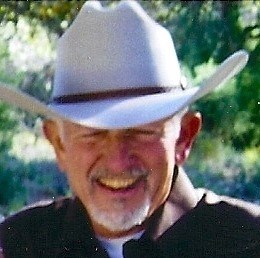
Fredric Benjamin Brost was born July 24, 1940, in Kansas City, Missouri. He died September 9, 2020, in Tucson, Arizona. His family moved to Wickenburg, Arizona in 1949, where Fred attended grade school and high school. Fred loved the desert, and developed a keen interest in rocks, minerals and mining.
He attended the Missouri School of Mines, graduating in 1963 with a degree in mining engineering and an Army commission as a Second Lieutenant. He married Gretchen Carmichael in 1962, who joined him for his final year at Missouri Mines.
Fred began Army service at Aberdeen Proving Ground, MD. He volunteered for explosive ordnance disposal (EOD) and underwent training at the Naval EOD School. In 1964, Fred was assigned to command an EOD team supporting anti-aircraft missile sites surrounding Pittsburgh, Pennsylvania, and aiding local authorities in dealing with incidents involving explosives. Son Strom joined the family in 1964.
In 1966, Fred was assigned to Kwajalein Test Site, an atoll in the central Pacific, to provide EOD support at the Army’s anti-ballistic missile program. His team was also responsible for recovery and disposal of World War II US and Japanese ordnance. Gretchen and Strom accompanied Fred on this assignment.
Fred left the Army with rank of Captain in 1968 to pursue his mining career. He was accepted at the University of the Witwatersrand in Johannesburg, South Africa, and completed a master’s degree in mining engineering. His thesis dealt with problems of blasting under high rock stress in the world’s deepest mines. Rand Mines took an interest in Fred’s research and provided a scholarship, a house and access to the company’s mines. For a young mining engineer, it was a dream come true to live and work on the historic mines of the Witwatersrand. Fred’s research culminated in blasting experiments at a depth of 11,280 feet in the world’s deepest mine. Daughter Kimberly joined the family in South Africa.
He was hired by Bougainville Copper in 1970 as a mining engineer. He moved the family to the island of Bougainville in Papua New Guinea, where he held a variety of engineering and operating positions. Fred enjoyed the challenges of a new mine in a difficult location, working with people of many nationalities. The family enjoyed the camaraderie of mine town and the physical beauty of the island. They reluctantly left after three years, primarily because of tropical diseases.
In 1973, Fred joined Ethyl Corporation in Baton Rouge, Louisiana. Ethyl was developing sources of aluminum for its aluminum extrusion plants, and other resources for its chemical industry. During his employment with Ethyl, Fred travelled to Brazil, Greece, Canada and several US states to evaluate mining projects.
When Ethyl closed most of its mining ventures in 1976, Fred joined Anamax Mining Company at Twin Buttes, south of Tucson, as manager of the new Eisenhower Project. He then became manager of the Central Engineering Department at Twin Buttes, where he directed in-house engineers and projects including a uranium plant, a 120,000 ton per day tailings disposal system, and many improvements to mine facilities.
When Twin Buttes closed in 1985, Fred joined Cable Belt Conveyors, Ltd., a British company, to oversee a 12-mile overland conveyor project in Texas. When that project was complete, he was sent to India to commission a similar conveyor for the National Aluminum Company of India.
Leaving Cable Belt in 1987, Fred founded Mining & Environmental Consultants in Phoenix. One of his first projects was to design and construct a 500,000 gallon per day mine wastewater treatment plant in the Colorado Rockies. His company focused on project management and environmental permitting, working on projects in the US, Mexico, Chile, Turkey and Yemen.
During this period, Fred also became a partner in Liximin, Inc., based in Tucson, specializing in leachable metals deposits. Liximin was responsible for the early exploration and development of the Piedras Verdes copper project in Sonora as well as smaller projects in Mexico and Chile. Fred closed his consulting practice in 1995 to concentrate on Liximin’s projects.
Fred left Liximin and restarted his consulting business in 2001, providing engineering and permitting services for many small to medium sized mining companies. He retired in 2015 to be full-time caregiver for Gretchen, who suffered with multiple sclerosis.
Fred and Gretchen were founding members of the Green Valley Baptist Church and the Tubac Baptist Church. They supported Christian work in India, with Fred returning to India a number of times to assist in the development of a children’s home that opened in 2003. Fred and Gretchen were members of the Catalina Foothills Church in Tucson at the time of his death.
He was very proud of his wife Gretchen, who struggled against multiple sclerosis for many years while remaining a cheerful and encouraging partner. He was also proud of his son, Strom, a West Point graduate, Army officer and IT engineer, his daughter Kimberly, a special education teacher, and three exceptional grandchildren.
In 2013, Fred appointed himself Poet Laureate of the Maricopa Section of SME, founding a mining limerick contest. He wrote many limericks for meetings but his favorite was:
Deep miners on the Witwatersrand
Are not a partic’ly fearless band,
For if the back falls on your head
You are surely just as dead,
At ten feet as at ten thousand.
Muestre su apoyo
Comparta Un Recuerdo
Comparta
Un Obituario
Obtenga actualizaciones
Servicios
COMPARTA UN OBITUARIOCOMPARTA
- RECIBIR RECORDATORIOS
v.1.18.0