
OBITUARY
Dr. Louis Philip Carter
February 26, 1939 – July 6, 2010
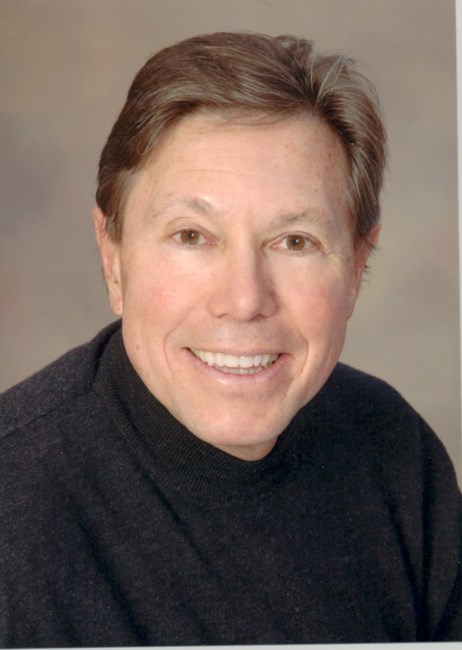
L. Philip Carter, MD Surgical Medical Director of University Medical Center Perioperative Services and former Chief of the Division of Neurosurgery in the University of Arizona Department of Surgery, died Tuesday, July 6, 2010 after a long and courageous battle with cancer. He was 71. Dr. Carter served as the Chief of the UA Division of Neurosurgery from 1988-93. Dr. Carter was born in St. Louis, MO to parents, Dorothy and Russell Carter. His family moved to Des Moines, Iowa in 1955, where he attended high school and was co-captain of the football and basketball teams. He graduated in 1957, and entered the University of Iowa for pre-medical studies. He was elected to honorary fraternities Phi Eta Sigma and Omicron Delta Kappa, and was accepted to Washington University (St. Louis) School of Medicine. He graduated in 1964 and took a rotating internship at Harbor View Hospital in Seattle. In 1965, he enlisted in the U.S. Air Force, serving as captain and general medical officer at Otis Air Force Base in Massachusetts, where he was in charge of medical education. In 1967, he was a resident in general surgery at St. Luke's Hospital in New York City, where he developed an interest in vascular surgery. In 1968, Dr. Carter became a neurosurgical resident at the newly formed Barrow Neurological Institute (BNI) in Phoenix, under the direction of John R. Green, MD. During his first year of neurosurgical residency, Dr. Carter was greatly influenced by James R. Atkinson, MD, and worked in the neurosurgical laboratory on a technique to continuously measure cortical blood flow. Upon completing his residency, he obtained an International College of Surgeons Fellowship to neurosurgery departments in Europe and Canada. Following this experience, he returned to BNI in 1973, where he developed the microsurgery research laboratory. Using thermal techniques, he defined the time limits of reversible ischemia and obtained a patent on modifications of thermal diffusion flowmetry. From 1982 to 1987, Dr. Carter served as Chief of Cerebrovascular Surgery at BNI working closely with BNI Chairman Robert F. Spetzler, MD. He helped establish a stroke unit and published seminal papers on intraoperative cerebral blood-flow measurements. He edited the book Neurovascular Surgery with Drs. Robert F. Spetzler and Mark G. Hamilton. In 1988, he accepted the position as Professor and Chief of Neurosurgery at the UA College of Medicine. The first fully trained neurovascular surgeon in Tucson, Dr. Carter standardized certain neurosurgical monitoring in trauma and vascular neurosurgery in the intensive care unit. He also helped pioneer a joint study on interstitial brachytherapy for tumors. He was instrumental in creating the partnership with BNI to train UA neurosurgery residents. In 1993, Dr. Carter accepted the position of Professor and Chairman of the Department of Neurosurgery and Residency Program Director at the University of Oklahoma School of Medicine. While at Oklahoma, he helped supervise triage and care for the victims of the Oklahoma City bombing. In 1997, he resigned his position at Oklahoma and returned to Tucson to join Western Neurosurgery. In 2005, he was appointed Surgical Medical Director of Perioperative Services at UMC and again appointed Professor in the Division of Neurosurgery, where he continued to be involved in teaching medical students and neurosurgical residents. The UA Department of Surgery recently honored Dr. Carter at the inaugural dinner of the L. Philip Carter, MD, Neurosurgical Alumni Society. More than 150 friends and colleagues from throughout the country gathered to recognize Dr. Carter's significant contributions to the field of neurosurgery, to surgical education and to the UA College of Medicine. Dr. Carter was named president of the Western Neurosurgical Society earlier this year, one of the most senior and prestigious leadership positions in clinical neurosurgery. Throughout his career, Dr. Carter authored two books and more than 100 book chapters and scientific articles. He has given numerous lectures and presentations at national and international neurosurgical meetings. He held two patents on neurosurgical instrumentation. Dr. Carter is survived by his wife of 20 years, Colleen Carter; and children, Kristin Carter Pesqueira, M.D. (Victor), Melinda Albert (Gary), Chad Carter (Candice); his stepchildren, Shauna Gliss (Jochen), and Christopher O'Brien (Katherine); his grandchildren, Chloe and Lindsey Pesqueira, Zachary and Ella Albert, Tony Ermeri, and Abby and Michael Gliss; his brother, John Carter M.D.; brothers-in-law, William Harrington, Judge Charles Harrington and Timothy Harrington; and sister-in-law, Maureen Harrington Britton. A Memorial Service will be held Sunday, July 18, 2010 2:00 p.m., at EAST LAWN PALMS MORTUARY CHAPEL, 5801 E. Grant Road, in Tucson. An additional Memorial Service will be held at University Medical Center at a date to be announced. In lieu of flowers, the family suggests that gifts be made in Dr. Carter's memory to the L. Philip Carter M.D. Neurosurgical Alumni Society, Neurosurgery Education Fund, University of Arizona Foundation, 1111 N. Cherry Avenue, P.O. Box 210109, Tucson, AZ 85721.
Arrangements under the direction of East Lawn Palms Mortuary, Tucson, AZ.
Show your support
Add a Memory
Share Obituary
Get Reminders
Services
SHARE OBITUARYSHARE
- GET REMINDERS
v.1.18.0