
OBITUARIO
Marvin D Ebbert
9 julio, 1951 – 18 noviembre, 2018
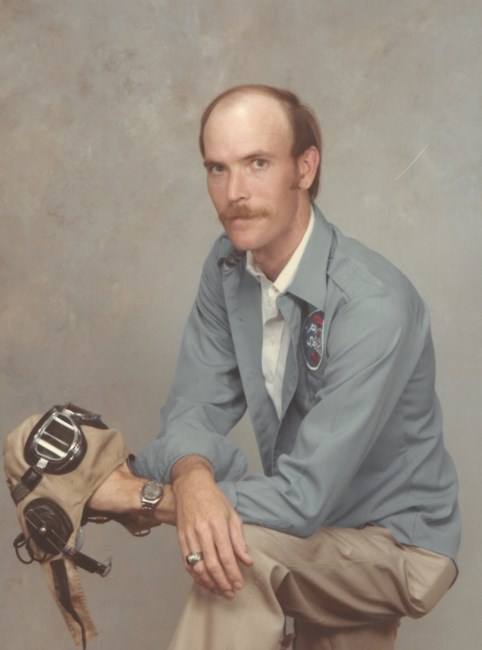
Marvin was born in Colorado Springs on July 9, 1951 to A. Clarence and Verna S. Ebbert. He passed away on November 18, 2018 surrounded by a family who cherished him. Marvin was preceded in death by his father, A. Clarence Ebbert. He is survived by; wife, Diana Jean Ebbert, Tucson, mother, Verna S. Ebbert, Hattiesburg, MS, brother Eddie Ebbert, Pensacola, FL, sister Jeanie Vaughn (Robert), Bountiful, UT, sisters-in-law Nancy Murray, Tucson and Linda Murray, San Diego, several nieces, nephews and friends around the world. Marvin completed B.S. degrees in Business and Aerospace Engineering Sciences at the University of Colorado, Boulder in 1974. He obtained his M.S. in Aerospace Systems from West Coast University in 1991.
After a remarkable career, Marvin revived his artistic talents and worked in pencil, pen and pastels to sketch things that either had special meaning to, or simply intrigued him. He spent hours creating baby blankets to be used by infants in the local NICU and as gifts to friends. He was adept with sleight of hand magic tricks and spent hours entertaining. His time was spent in service to others whenever possible.
The following paragraphs are his own words regarding his life and are inscribed at the Smithsonian National Air and Space Museum’s Wall of Honor.
Marvin’s early fascination with flight developed watching the B36 Bombers operating out of Peterson Field. By the age of 11, he could sketch both the P51 and F86 to scale from memory and had spent many hours with his Dad building model airplanes and hanging them from the ceiling in his room. Although polio in 1952 threatened to prohibit piloting, by the age of 18 Marvin had his private pilot license. At the University of Colorado, while achieving a B.S. Aerospace Engineering and B.S. Business Management, flight mechanics and dynamics studies led to an interest in aerobatics. At the age of 28 Marvin purchased his Pitts Special aircraft and for many years enjoyed local aerobatic competitions.
Marvin’s contributions to commercial and military flight vehicles are numerous. He began his career as a design analyst on the Space Shuttle aft fuselage. His skills were next applied to the design of the engine nacelles and thrust reversers for the DC9-80 and the Boeing 757. In the early 1980’s he accepted responsibility for the development of Tomahawk Cruise Missile subsystems. While in San Diego Marvin earned his M.S. in Aerospace Systems. Elevated to the role of Chief Systems Engineer he made significant contributions to the Advanced Cruise Missile, Ring Wing UAV, and Tri-Service Standoff Attack Cruise Missile (recovery), Land Attack Standard Missile, and the Unmanned Combat Air Vehicle. Marvin became the Senior Director for Advanced Strike Systems (at Raytheon Missile Systems) and completed his career with responsibility for successful programs including EGBU-15, Enhanced Paveway II for the U.K., Paveway IV for the U.K., Miniature Air Launched Decoy, and the Griffin Missile System. In cooperation with the Air Armament Center’s PEO Weapons, Marvin led several National Defense Industrial Association (NDIA) industry expert panels to solve major issues for the USAF. At the annual Air Armament Symposium, he presented revolutionary concepts such as Universal Armament Interface (UAI), Close Air Support for Urban and Complex Terrain, and Systems Engineering Deficiencies and Corrections for Air Launched Tactical Weapons. He was also a guest lecturer at the Air Force Institute of Technology, and is the inventor of record on two UAV design patents.
Semi-retired, Marvin served on the Board of Directors of aerospace technology companies and continued creating new concepts in manned and unmanned flight vehicle systems.
Marvin’s family extends heartfelt thanks to the many members of his healthcare team who took such good care of him and us.
Muestre su apoyo
Comparta Un Recuerdo
Comparta
Un Obituario
Obtenga actualizaciones
Servicios
COMPARTA UN OBITUARIOCOMPARTA
- RECIBIR RECORDATORIOS
v.1.18.0