OBITUARIO
Hau Foo Low 劉厚富
12 marzo, 1930 – 24 abril, 2018
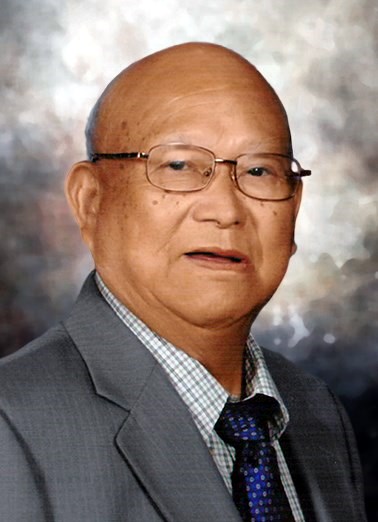
born in Toisan, China on March 12, 1930, passed away peacefully
at the age of 88, surrounded by his family. He will always be lovingly
remembered by his wife, Lai Kuen, six children, Rose, Connie (Greg), Jenney
(Raymond), Wendy (Gianluigi), Nancy, and David (Leven), five grandchildren,
Lauren, Matthew, Kathryn, Michelle, and Ashley, and many nieces and nephews.
Visitation was held at Glenhaven Memorial Chapel, 1835 East Hastings
Street, Vancouver, BC on Tuesday, May 1, 2018 from 6:00-8:00 pm. Funeral
Service was held at Glenhaven Memorial Chapel on Wednesday, May 2, 2018
at 1:00 pm. Burial Service to follow at Forest Lawn Memorial Park, 3789
Royal Oak Avenue, Burnaby, BC. Fond memories and expressions of sympathy may
be shared below for the Low Family.
Sharing of special words:
Dear Family and Friends
We are here today to honour the memory of Low Hau Foo, or Foo Bak as I knew him.
My name is Evelyn Eng, and I am very honoured to be part of the memorial for Foo Bak today.
Foo Bak was born March 12, 1930 in Shuibo, Toisan, Guangdong Province, China, the eldest of six children. He came to Canada alone in 1953, leaving his young bride in China, to establish himself before sending for her in 1958. He raised a beautiful family of 5 daughters: Rose, Connie, Jenney, Wendy and Nancy and a son, David. He had 5 grandchildren, Connie & Greg’s daughters Lauren and Kathryn
Jenney & Raymond’s son Matthew and daughter Michelle and David & Leven’s daughter Ashley.
Later in the service, David will speak more about Foo Bak’s wonderful life journey.
I would like to share a little about how I knew Foo Bak. I am one of the Low Cousins as we call ourselves.
My dad, Man Hing Low, my uncle Donald Lowe and Foo Bak were what I refer to as village Uncles: all Low’s and from the same village. Since their early days in Canada – in Vancouver – our families spent a lot of time together and most weekends on family outings – mainly car trips and picnics: going to Bridgman Park, Lynn Valley canyon, clam digging in Deep Cove, gathering watercress – are all fond memories. My two sisters and little brother and I grew up playing with Rose, Connie, Jenney, Wendy, Nancy and David and with Uncle Donald’s daughter, cousin Betty. To this day, us Low Cousins enjoy the same camaraderie enjoyed by our parents. We were so lucky to have been able to spend so much time growing up together. My dad and Uncle Donald are gone now, but the Low Cousins all know they greeted Foo Bak and are having a happy reunion and good talks together over coffee.
by Evelyn Ng
My name is Steve Choy. We gather here today to say goodbye to a dear friend of mine, Mr. Hau Foo Low, Foo Bak. We crossed paths some 48 years ago. I met Foo Bak and his family when I came to Canada in early 1970. I met them through my Aunt and Uncle who were already friends with the Low family for many years then. Right away Foo Bak and his family welcomed me with open arms. They made my adjustments to settle in my new adopted land a lot easier. Foo Bak even hired me to work with him part-time in his home renovation business so that I could finance my college education. Many years later, when my mother moved to Canada, Foo Bak and his family showed the same hospitality to her as they afforded me. We were invited to their family outings and festivity celebrations. We went for picnics in parks and dug geoduck clams at Boundary Bay. They treated us like we were their extended family.
While working with Foo Bak, he did not just teach me job skills, he instilled in me strong work ethic. He insisted that when you took on a job, you must carry it out to the best of your ability, do not cut corners and produce high quality work with integrity. His teaching proved to be invaluable throughout my career.
Foo Bak had a very positive attitude towards life. He always smiled. When you were with him, you couldn’t help but be happy. Foo Bak was a very hard worker and a good provider to his family. With his busy schedule, he always found time to share the parenting responsibility with Foo Mo. The fact that all their loving children are successful and productive members of the society is testament to their excellent parenting. Foo Bak was a remarkably thoughtful and hardworking person. He was a person of great devotion and integrity. Above all, Foo Bak believed in family. He always said “family is the most important thing in life.” … his wife and 6 children as well as the family that he left behind in China. He worked very hard to sponsor his brother and his family and Foo Mo’s sister and her family to Canada while he continued to send money home to his mother in Toisan. Foo Bak is so proud of the successes of his nieces and nephews and their children. His family is his legacy. Foo Bak is leaving us today to continue on to the next chapter of his journey. Foo Bak, thank you for being part of our lives. We are going to miss you. You will always be remembered and you will always be with us in our hearts.
by Steven Choy
I usually called my father-in-law by one of his nicknames, either SIR or The Gungster. One sounds ultra-distinguished and respectful, and the other like a fun loving high school kid. Hau Foo Low had both the dignity and the joy in his heart to own both those names.
Since his passing, in my bereavement, I’ve looked back on our 36 year relationship as father and son in law. Connie and I started going out in 1982 and I met her Dad and family sometime later – once Connie determined the time was right for a new face at the dinner table! Soon I was honoured with acceptance into his loving family and for that I am forever grateful. By now I can understand how important his example is to the man I’ve become. I would like to share some of those learnings now.
He was a positive and optimistic man despite the hardships he’d had in life. He didn’t concern himself about things he couldn’t control. Sometimes when I need perspective I can hear him saying “It doesn’t matter” like he often did when his kids and grandkids were over anxious about something. He had experienced the horrors of war and its deprivations as a youngster in China. Perhaps this experience facing life and death gave him that perspective. I admire his guts and determination to make a better life in Canada, because without his strength I would not have married his lovely daughter and have this beautiful family.
He was the eldest son of five brothers and one sister. He sent money to his mother in Toi San to sustain his family there while raising his own family here in Canada. It was not easy and he worked so hard he did not return to visit his family in China for 25 years. Gungster’s life was dedicated to his family. He always did his duty as the number one son.
He sponsored his brother and his family, his sister-in law and her family and his niece to immigrate to Canada. He built a suite in the basement of his house on 14th Ave where they could live until they got on their feet. I know there are many here today who are grateful for that.
Gungster was a contractor and a carpenter and I learned much working with him and David on our home improvement jobs. We tackled porches, floors, kitchens, bathrooms, and a big swing set for the kids when we lived in Powell River. On the job he was always the boss and always patient and considerate of his not so handy son-in -law! These times working together meant a lot to Connie and me – it really was a family affair with lots of help from everyone in the family. Of course he helped all of kids and extended family with his talent and generosity. Gung Gung had a BIG HEART. He was an excellent craftsman and we still use and treasure the bedroom and Dining room suites he built for us many years ago.
Although we didn’t converse too much we always said what needed to be said. It was his actions that spoke to me more clearly than just words could. He worked hard at his business and supported his family here and in Toi San as best he could. He was a man we all relied upon and he was always there for us.
He enjoyed Family gatherings more than anything I think. When I say Family that’s Family with a capital F including all the relatives, cousins, and friends. You can see in the photos that his biggest smiles were for the children - and they loved him right back. In my early days the hubbub of Low family gatherings took some getting used to. I watched Gungster handle all the action and marveled at how cool he’d stay – he was the clam eye of a wonderful storm and he enjoyed it all.
Gungster gave generously of himself and he never asked for anything. He most loved any gift or drawing he got from the grandkids and he was most satisfied with his family around him. We have a long tradition of coming to Popo’s for dinner on most Saturdays. I know he was very happy to see the family and Grandkids together so often.
In the beginning I used to simply admire the sacrifices he made for our families, and in later years I have come to see his example more clearly. I’ve learned that all his hard work and support were not sacrifices at all. They were acts of love. Good bye Gunster – We love you too.
by Greg Sabo
My Yeh Yeh
By: Ashley Low
About 80 years ago, when the Japanese invaded China, a six-year-old little boy who lived in a tiny village in Tai San, in the province of Canton, China, grabbed a bag of rice and fled for his life. Life was not easy in the village during the war. There was no stability. Not only did the people’s subsistence depend on hard work and a good harvest, but they were also worried about their safety because of the dangerous war time. This six-year-old boy was responsible for many things. He had to look after the cattle and other animals at his family farm. When he was 7 or 8 years old, he began working in the fields of the farm. He could only remember going to school for about three or four years when he was growing up in China. By the age of 14, he learned the valuable skills of carpentry. This little boy is my grandfather, Hau Foo Low.
My grandfather married my grandmother when he was only 21 years old and she was only 16 years old. The marriage was arranged by the family, which means they met each other for the very first time on their wedding day. My grandfather wanted to have a better life for himself and for his family. As food was scarce, there wasn’t enough to go around in the village. Being the eldest son, he had the huge responsibility of providing for his family. Working hard in the village was not enough, so he made a decision that changed his life.
At the age of 23, he decided to come to Canada by himself in search of a better life and to be able to provide for his family back home in China. He heard that Canada was the land of opportunities. He wanted to make a difference in his life.
When he first came to Canada, he was very scared and he did not speak any English. He was very lonely, as he was in a place where he did not know anyone, except one uncle. He also missed my grandmother, his wife, very much who he had left back home in the village.
My grandfather worked and lived on a potato and spinach farm during his first 5 years in Canada. Rain or shine, he would have to work outside in the fields. Farm work was very labour intensive and my grandfather worked very long hours. Every day he would work 18 hours from 6 o’clock in the morning to 12 o’clock midnight. He would start his day working in the greenhouse. Then, he would go out to the fields to plough, plant and harvest vegetables. At night, he would prepare and package the vegetables to be sold the next day. He only made $150 a month and much of this money was sent home to support my grandmother and his family back in China.
He came to the realization that he was still not making enough money to change his life. That was when he made another big decision of starting his own business. As he already gained his carpentry skills back in China, it became obvious to him that he should work as a carpenter. He was able to find jobs mainly within the Chinese community, but he also had the occasional western customer. As his business grew, he was eventually able to hire his own employees to help him work on home renovation and construction projects.
Moving to Canada was difficult with all the long hours of hard work and dedication. However, my grandfather was much better off than the days of hard work in China with no light at the end of the tunnel. Coming to Canada came with its obstacles. In his early years in Canada, my grandfather faced racial discrimination, as did much of the Chinese community. It did not help that he did not speak much English. Over the years, his English improved through working and dealing with his customers and suppliers. As the Chinese community grew bigger, the amount of discrimination declined.
He was isolated and far away from the rest of his family. Being the oldest of his 6 siblings, he had to take care of them as well as his mother. Much of the money that he earned was sent back home to his mom, who would divide up the money among the siblings as she saw fit. The biggest obstacle was the great distance between my grandfather and his wife. He was lonely and missed her very much. He worked so hard to save money. After 5 years in Canada, he had saved enough money to bring his wife to Canada to be reunited.
My grandfather says that coming to Canada was the right decision for him. He has no regrets as he had achieved his goals. He succeeded in starting his own successful business and was able to send money back home to China to support his family. He finds his biggest success is having a big loving family, his wife, his 6 children and many grandchildren. Thanks to my grandfather, all his family and descendants have a stable and happy life in Canada. I have a real appreciation for my grandfather and the sacrifices he made for our family, especially when I see the wrinkles on his face, the calluses in his hands, and the fatigue in his eyes. I have great admiration and respect for my grandfather. He changed his life for the better and took care of his entire family.
我的爺爺
作者: Ashley Low劉慧婷
大約80年前,當日本人侵入中國時,一名居住在中國廣州省台山小村莊的六歲小男孩抓起了一袋米,為了生命而逃亡。 戰爭期間村里的生活並不容易。 沒有穩定性。 人民的生存不僅取決於辛勤工作和豐收,而且由於戰爭的危險,他們也擔心自己的安全。 這個六歲的男孩责任重大。 他必須照顧他家庭農場的牛和其他動物。 當他7歲或8歲時,他開始在農場的田野工作。 他只能記得他在中國長大的時候上學只有三或四年。 到14歲時,他學習了木工的寶貴技能。 這個小男孩是我的祖父Hau Foo Low。
我的祖父在21歲時和我的祖母結婚,她只是16歲。 婚姻是由家人安排的,這表示他們在婚禮當天才第一次見面。 我的祖父想為自己和家人過上更好的生活。 由於糧食稀缺,村里沒有足夠的糧食供應。 作為長子,他承擔著為家人提供的巨大責任。 在村里努力工作還不夠,所以他做出了一個決定改變了他的一生。
23歲時,他決定親自前往加拿大尋找更好的生活,並能夠支持在中國的家庭。 他聽說加拿大是有機會發展之地。 他想在他的人生中有所作為。
當他第一次來到加拿大時,他非常害怕,他不會說英語。 他非常孤獨,因為他在一個陌生的地方,他只認識一個叔叔。 他還非常想念我的祖母,他的妻子,留在中國。
在加拿大的第一至第五年 我的祖父住在和工作在一個馬鈴薯和菠菜農場。 風雨無阻,他必須在田野外工作。 農場工作非常耗費體力,我的祖父工作時間很長。 他每天工作18小時, 從早晨6點到午夜12點。 每天, 他會在種植溫室裡開始他的工作。 然後,他會出去耕種,種植和收成蔬菜。 晚上,他會準備和包裝第二天出售的蔬菜。 他每月只賺150元,大部分都送回家在中國幫助我的祖母和他的家人。
明白自己仍然沒有賺足夠的錢去提高他的生活。他決定開始自己的事業。 由於他已經在中國獲得了木工技能,很明顯他會開一個木匠業務。隨著他的業務發展,他能夠僱用員工來幫助他。
雖然在加拿大工作很艱苦,但還是比在中國好。 但來到加拿大也有障礙。 起初在加拿大,祖父面臨種族歧視,尤其是他不會說很多英語。 這些年來,他的英語改善 和華人社區的擴大,歧視的數量也下降了。
在加拿大他遠離家人。他是6個孩子中年齡最大的一個,他必須照顧他母親和兄弟姐妹。 他賺到的大部分錢都是送回家給媽媽去支持家庭。我的祖父和他的妻子相隔很遠。 他感到孤獨,很想念她。 他非常努力地省錢。 在加拿大工作了5年之後,他節省了足夠錢, 他能申請將他的妻子帶到加拿大團圓。
我的祖父說來加拿大是好的決定。 他沒有後悔。 他創辦了自己的成功企業,並能夠將錢寄回中國以支持他的家人。 他認為他最大的成就是擁有一個充滿愛的家庭,他的妻子,他的六個孩子和許多孫子。 感謝我的祖父,他的所有家人和後代在加拿大都過著平穩和幸福的生活。 我真的很欣賞我的祖父和他為我們家人所做的犧牲,尤其是當我看到他臉上的皺紋,手上的老繭和眼睛裡的疲勞時。 我非常欽佩和尊重我的祖父。 他改善了自己的生活並照顧他的整個家庭。
Shared by David Low
Muestre su apoyo
Comparta Un Recuerdo
Comparta
Un Obituario
Obtenga actualizaciones
Servicios
COMPARTA UN OBITUARIOCOMPARTA
- RECIBIR RECORDATORIOS
v.1.18.0