
OBITUARIO
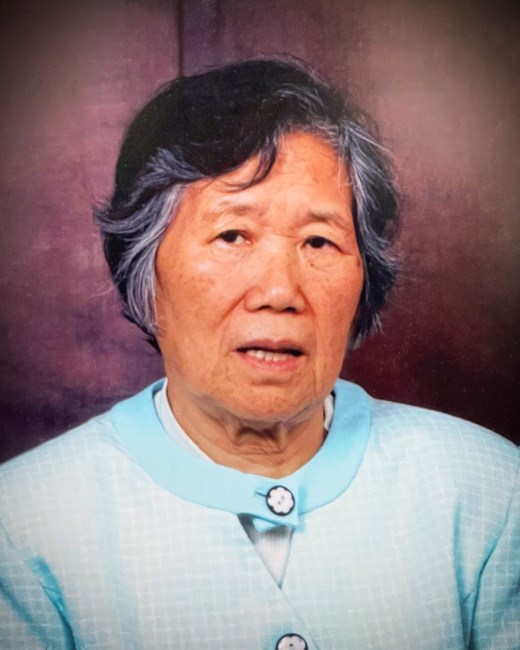
李心敏 Xin Min LI
3 enero, 1936 – 12 mayo, 2025
这句白居易的诗词成了我的父母一生的写照。
李心敏于1936年1月3日农历腊月初九出生在四川省自贡市李家湾。父母育有九个子女,只有四个长大成人,她排行老二,一生都照顾着弟妹,从参加工作有工资起,每月都拿出一部分寄回家里,尤其是ㄠ弟,从四川农村带到江西再带到广东,在当年拖家带口跨省移居非常不容易,但是她做到了。
她的童年是愉快的,她的父母都接受了新文化,在李家湾拥有二十亩田地和大片果园,她时常和我们谈起那片应有尽有的果园,有橘子、柚子、李子、桃子、枇杷、核桃和葡萄等。她的父亲经常带着她去镇上喝茶,听唱戏。家中有保姆,还有四到五个长工。她还记得去私塾读书是坐在背篓里长工背着她去上学。她还有众多的表兄姐弟妹,她小时候很讨人喜欢,头发自然卷,一直和表亲们亲密无间保持联系,到老了他们还会叫她ㄠ妹。再大一点她去了威远读高铜小学,她并不喜欢读书,还经常因为没人叫她起床而迟到挨先生板子,学校功课也仅及格。直到1949年解放时土改,瞬间家徒四壁,那时她才初中二年级,家中弟妹还小,靠着老师的帮助和接济,她得以继续读书,她开始发奋图强,在她心目中只有上大学才能有工资,她坚韧不拔的性格也从此开始。
1956年她考取了成都地质学院,学习的同时还热爱体育,短跑100米拿过奖牌,获得二级运动员称号。她还邂逅了未来的丈夫张子伉,他是来自长江流域规划办公室的进修生,一个热情上进的广东仔。毕业后追随丈夫分配到长江流域规划办公室第三勘测队任勘测技术员,主要进行长江流域水利发电站可行性的基础地质勘探。地质勘探工作艰辛且流动性大,跟随长办三队先后去过江西省万安县,湖北省蒲圻、宜昌、三峡、平善坝、太平溪和清江,四川省宜宾、偏育子、广元、宝珠寺、宣汉和澎水等地。在工作的同时,还要养育三个子女,大儿子万平和二女儿绮梅在江西万安出生,小女儿绮珍在四川澎水出生。她工作出色,翻山越岭,巾帼不让须眉。最终在七十年代江西省万安水电站确定了坝址,长办三队开启了水电站的前期建设工作,她和丈夫还有孩子这才稳定下来。
1978年高考恢复,国家急需高校老师,她和丈夫带着一家被借调到江西省南昌市水利水电学校,培育新一代水利水电人才,他们的许多学生后来成为了江西省各地市的水利局的中流砥柱。
1984年她和丈夫带着全家又回到了江西万安,再次投入到万安水电站的建设当中,时隔几年大坝已初具规模,当时突发面临石料开采严重不足,影响工期,如果转去异地开发将耗费大量资金,她和丈夫手握第一手勘探图纸,力排众议坚持按照图纸开采,最终有足够石料筑建大坝,帮国家节省了大量资金,获上级赞赏,双双破格提升为高级工程师。
1987年她和丈夫决定举家搬回丈夫的故乡广东省开平县。当时开平人很多都听不懂普通话,而她也不会广东话,在这样的环境下她先在土木工程公司任高级工程师,再调往建筑安装公司任总工程师。在以男性为主的建筑行业,她的能力倍受赞赏,成为当地人人尊敬,谁人不识的女强人。
1996年她退休之后随丈夫移民到加拿大温哥华,在陌生的国度里,她扶持丈夫,帮助子女成家和抚育孙子和外孙女。有几个孙辈都是从襁褓开始带起,同时大一点孙子还要上下学,她有时一拖三带着出门,风雨无阻,全年无休。七十岁时她被诊断出早期帕金森病,她仍然看护着孙辈,行动不便时依然生活自理,直到丈夫过世才入住养老院。
她的一生都勤勤恳恳,善待他人,严以律己,自强不息。少时离开家乡,从北到南再到国外,四海为家。真正应了那句“我生本无乡,心安是归处”。
我们永远不会忘记我们亲爱的妈妈,点点滴滴永记在心!愿您在天堂和父亲相聚,安守无扰!一路走好!
_________
"I was born without a hometown, but my heart is at peace."
This poem by Bai Juyi has become a portrayal of our parents' lives.
Li Xinmin was born on January 3, 1936, the ninth day of the twelfth lunar month, in Lijiawan, Zigong City, Sichuan Province. Her parents had nine children, only four of whom grew up. She was the second child and cared for her younger siblings all her life. Since she started working and had a salary, she sent a portion of it back home every month, especially to her youngest brother, who was brought from the rural area of Sichuan to Jiangxi and then to Guangdong. It was not easy to move across provinces with a family at that time, but she did it.
She had a happy childhood. Her parents accepted their new lifestyle under China’s new ruling and owned 20 acres of land and a large orchard in Lijiawan. She often talked to us about the orchard, including oranges, grapefruits, plums, peaches, loquats, walnuts and grapes. Her father often took her to the town to drink tea and listen to the opera. There was a nanny and four or five long-term workers at home. She still remembers that when she went to private school, she sat in a backpack and was carried to school by a worker for her family.
She also had many cousins. She was very likable when she was young, with naturally curly hair. She always kept in close contact with her cousins, and they still call her "little sister" when she was old. When she was a little older, she went to Weiyuan to study at Gaotong Primary School. She did not like studying and she was often late to school because no one woke her up, so she was beaten by the teacher. Her schoolwork was only passing at best. It was not until the land reform during the liberation in 1949 that the family was suddenly penniless. At that time, she was only in the second grade of junior high school. Her brothers and sisters were still young. With the help and assistance of the teacher, she was able to continue her studies. She began to work hard. In her mind, only by going to college could she get a salary. Her tenacious character began from then on.
In 1956, she was admitted to Chengdu Institute of Geology. While studying, she also loved sports. She won a medal in the 100-meter sprint and was awarded the title of second-level athlete. She also met her future husband, Zhang Zikang, a trainee from the Yangtze River Basin Planning Office, a passionate and motivated Cantonese man. After graduation, she followed her husband and was assigned to the third survey team of the Yangtze River Basin Planning Office as a survey technician, mainly conducting basic geological exploration for the feasibility of hydropower stations in the Yangtze River Basin. Geological exploration work is arduous and highly mobile. She followed the third team of the Yangtze River Basin Planning Office to Wan'an County, Jiangxi Province, Puqi, Yichang, Three Gorges, Pingshanba, Taipingxi and Qingjiang in Hubei Province, Yibin, Pianyuzi, Guangyuan, Baozhu Temple, Xuanhan and Pengshui in Sichuan Province. While working, she also had to raise three children. The eldest son Wanping and the second daughter Qimei was born in Wan'an, Jiangxi, and the youngest daughter, Qizhen was born in Pengshui, Sichuan. She worked well, crossed mountains and ridges, and was as good as a man. Finally, in the 1970s, the dam site of the Wan'an Hydropower Station in Jiangxi Province was determined, and the third team of the Yangtze River Basin Planning Office started the preliminary construction work of the hydropower station. Only then did she and her husband and children settle down.
In 1978, the college entrance examination was resumed and the country was in urgent need of college teachers. She and her husband were assigned to the Water Conservancy and Hydropower School in Nanchang, Jiangxi Province, to cultivate a new generation of water conservancy and hydropower talents. Many of their students later became the backbone of the water conservancy bureaus in various cities in Jiangxi Province.
In 1984, she and her husband returned to Wan'an, Jiangxi with their family and once again invested in the construction of Wan'an Hydropower Station. After a few years, the dam had taken shape. At that time, there was a serious shortage of stone mining, which affected the construction period. If it was transferred to another place for development, it would cost a lot of money. She and her husband had exploration drawings and insisted on mining according to the drawings. In the end, there were enough stones to build the dam, which helped the country save a lot of money. They were praised by their superiors and both were promoted to senior engineers.
In 1987, she and her husband decided to move their family back to Kaiping County, Guangdong Province, her husband's hometown. At that time, many people in Kaiping could not understand Mandarin, and she did not speak Cantonese. In such an environment, she first worked as a senior engineer in a civil engineering company and then transferred to a construction and installation company as chief engineer. In the male-dominated construction industry, her abilities were highly appreciated, and she became a strong woman respected by everyone in the local area.
After she retired in 1996, she immigrated to Vancouver, Canada with her husband. In a new country, she supported her husband, helped her children to start a family, and raised her grandchildren. She took care of several grandchildren from the cradle, and the older grandchildren had to go to school. Sometimes she took three of them out, rain or shine, all year round. When she was 70 years old, she was diagnosed with early Parkinson's disease. She still took care of her grandchildren and took care of herself when she was unable to move. She didn't move into a nursing home until her husband passed away.
She worked diligently all her life, treated others well, was strict with herself, and worked hard to improve herself. She left her hometown when she was young, and moved from the north to the south and then abroad, making the world her home. It really fulfilled the saying "I have no hometown in my life, but my heart is where I return".
We will never forget our dear mother, and we will always remember every detail in our hearts! May you be with your father in heaven, safe and sound! Have a nice journey!
_____
Eulogy - Samantha Chow
Xi Min Li was truly an amazing grandmother and caregiver. Today, I will be sharing memories and appreciation from all of her grandchildren.
Right from the get go, our grandma has shown us all endless love. She has taken care of all 6 of us at different times throughout our lives, and we share an abundance of cherished memories with her. Some of our happiest times were when she would be watching several of us at once, and bring us to the nearby parks. We would run ahead of her then circle back, and grab onto her hand when we were tired, or sometimes even be carried on her back. Upon return from our outings, she would always make sure we were well fed with delicious food be it her handmade wontons or noodles.
During meal times, she would also share stories about our parents when they were kids, and they would always make the whole table laugh. I bet there were stories about our parents that even they themselves weren’t aware of. Thinking about these moments together always brings a smile to our faces.
Grandma was also very patient. I remember for myself, that I was a very slow eater. I ate very little, but she never rushed me. She would always be ready with a spoonful of food, and would patiently sit as I fumbled about as a young toddler. On ocassion, she would spend the day at my house. We live on a hill where the park was at the bottom of the hill. I would say to her, “take me to the park, take me to the park!” And after tiring myself out at the park, I would say that I was too tired to walk back home. I would say, “po po, po-po.” She would piggy back me up the hill all the way home. Her embrace was always warm, always comforting.
Her love and patience wasn’t only shared with us grandchildren, but also with other kids. Another memory, from Mandy, includes adventures to the mall, where she would let her go on the merry-go-round ride, and she would want to start the ride right away. But grandma was so kind, she would look around and invite other kids on to join in before starting. Afterwards, they’d stop at a spot to watch the skytrains go by before finally heading home.
As I grew older, I noticed her taking medicine. Wanting to give back to her in any way I could as a kid, I would always enjoy feeding her her medicine - opening her pill box, climbing onto her lap handing her a glass of water, and then plopping it into her mouth like I was using a spoon to feed a child, just as she did with me and food. I think we all share this same sentiment in that, now that we are all adults, we want to return the love and care that she gave us. When she moved into the senior home, we got to return the favor and help her eat during our visits, but with her giving nature, she would always offer to share her food with us saying, “You’re still growing.”
We hope that she continues to share her kind heart everywhere she goes, and that she and grandpa are safe and happy. She will forever remain in our hearts.
Muestre su apoyo
Comparta Un Recuerdo
Comparta
Un Obituario
Obtenga actualizaciones
Servicios
COMPARTA UN OBITUARIOCOMPARTA
- RECIBIR RECORDATORIOS
v.1.18.0