
OBITUARIO
Frances June Zastrow
2 junio, 1926 – 29 julio, 2020
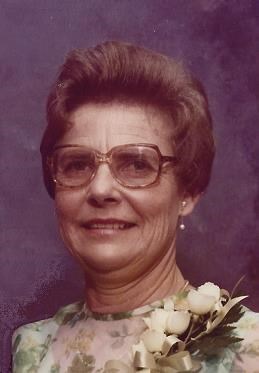
couldn't be in heaven at the feet of the Lord, she would spend her days in service to the people
around her. June lived up to those words in a remarkable way.
Her oldest grandson, Russell, put it this way, “Grandma June was a servant. She epitomized laying
her life down for others.” Russell and I were not the only ones to feel this impact from Grandma
Zastrow, as we called her as children, or Grandma June as she came to be known to her greatgrandchildren
in her last chapter of her life.
To know June in different eras was to know a completely different woman. Always, though, a
thread of her true character showed through. As a fifteen-year-old riveting bomber wings for the
war effort, or an empty-nester canning dozens of jars of her own garden produce to feed the
hungry in her community, June saw a need, and she stepped in. When things looked too hard, she
simply rolled up her sleeves and got to work. When people were in need, be it orphaned children
in another country, or her own country during the war, she never hesitated to give what she had.
Much of this she learned at home as a young girl--cooking, cleaning, and childrearing were all part
of her life in Arkansas. She was fond of reminding her brother Marvin that she changed his first
diaper. She told us fascinating stories of her childhood, with strangers who knew her family’s
home was a safe place to stop for the night, the challenges of a party-line telephone, and the way
she found her place in her family as her mother’s helper.
In 2012, Marvin and his wife Lynette welcomed June back to Arkansas with a tour of the place that
shaped her and a chance to reconnect with people she’d grown up alongside, or helped raise, in
some cases. Their packed itinerary and the details in Lynette’s retelling of the trip are a testament
to the importance of these connections to June and her family. There are no notes about the food
they ate or tourist attractions, but plenty of notes about a cousin’s illness or a family’s loss.
Growing up, it was a treat to get Grandma to tell her stories of leaving home at 15 to join the war
effort as a riveter and welder. It never ceased to amaze me that the five foot tall woman wearing
an apron and placidly pulling a cookie sheet out of the oven used to volunteer to climb to the top of
a Navy ship’s mast when the man assigned the welding job was intimidated by the height. She
was small enough to squeeze into airplane wing tips, as well, and I have no doubt she took on
these duties without a complaint, just as she would for the rest of her life. She was known for
being “five feet nothing of steel backbone.”
More than her bravery, however, I was always struck by the impression that she viewed this
service as no more or less heroic than the work that would fill most of the rest of her life--feeding,
clothing, and caring for people.
Not only did June love the work of a homemaker, she made sacrifices to spread that same loving
service beyond her family, into the community, and even around the world. She was particularly
drawn to the plight of children, even though, or perhaps because, she had no biological children of
her own. Both of her adopted sons recognized the sacrifice and patience with which she met their
difficult cases plagued with intense health issues in infancy, and the irrational rage of a confused
child who has had his already-tumultuous life turned upside down. The Zastrows believed in strong
discipline, but also an unwavering commitment to their children.
Her love of children extended beyond the doors of her own house, and even beyond her own
country. Her visits to the Door of Faith Orphanage in Ensenada, Mexico, came up often, and made
an impression on 15-year-old Russell:
I can remember going down to the orphanage and watching her help some of the ladies
make salsa for a big reunion. They cut up all of the ingredients, and then - having no large
spoons - stirred the salsa with their hands. Even Grandma’s tough hands were affected by
the jalapeno oil, and she ended up being in quite a bit of pain and unable to sleep through
the night because of the burning in her skin. But she didn't let that stop her, she was up the
next day and not complaining (as usual).
Much of what we remember about Grandma is this quiet sacrifice and service. My dad looks back
in baffled appreciation at the fact that she delivered him a hot dinner every night at his first job at
the sporting goods store—an act of service he admits completely overlooking at the time. Russell
and his mother, Karen, both recall hours of Grandma massaging their legs when they were
plagued with growing pains, and Karen recalled June getting up before dawn in order to put
homemade cinnamon rolls on the table for breakfast.
The cinnamon rolls loom large in my memory as well. I have her recipe, but what I remember most
about Grandma’s cinnamon rolls is not the ingredients in the icing, but the way it felt to have her
tell me, with her actions, that I was special enough to rate this inconvenience for my favorite
breakfast. Cooking as care and love, and an act of service. When I came to her as a burned-out
college student, unsure of my direction, she met me with dough to knead, the canning tongs, and
her sewing machine. She gave me permission to care about these things when I’d been raised in a
society that told me girls could be anything they wanted to be, as long as it was an astronaut. I
didn’t exactly choose to follow in her footsteps, but her model of what it meant to be a woman
undoubtedly shaped my own.
There were elements of June's service that made her not exactly a role model. Even if I had a
daughter whose dearest wish was to be a homemaker, I don't know that I would wish her into
Grandma's shoes. She would willingly exhaust herself, ignored her own needs to the detriment of
her health and well-being at times, and consistently yielded her own ambitions to the ambitions of
men (she once related a story of working in a lab, perhaps during the Korean war, but when the
men came home they made her clean toilets, so she quit). But she was an icon of service, of living
by faith and values, and a model of homemaker femininity that was less about how beautiful her
home was (though she kept a neat home) and far more about how her home could be leveraged
for the comfort and elevation of others.
The true test of this commitment to service and the centrality of her work ethic might just be the
fact that these are the traits that remained even as she deteriorated later in life. Russell says,
“When she came to live with me and my family, she would repeatedly let us know that she
didn't want to be a burden. She wanted to work. So she would iron (and iron, and iron)
and fold clothes, and if she felt really energetic (and even sometimes when she didn't),
she'd work herself to exhaustion pulling weeds in the yard (I've got a picture to prove this).
She once said to my younger daughter Jessi, after what I'm sure was about an hour without
work: "What can I do, to help you - get ME some ironing?!"
While caring for a deteriorating elder is no small commitment, I count Russell’s girls lucky that they
got to have Grandma June as a part of their childhood. What will I tell my boys about her? I will tell
them that there are people in the world who never let a challenge stop them from doing what they
believe is right. That their heritage includes a woman who knew the value of small acts of love, and
large ones. I will tell my boys that a woman’s place is where she wants to be, where she feels the
most capable, the most herself, and that for women like their great-grandma, that was wherever
her service could do the most good. I will teach them the special magic of being served your
favorite food made by someone who loves you, and I will teach them to make each other’s
favorites. I will teach them that heroes come in many shapes and sizes, and with many powers and
weapons—a welding torch, a wooden spoon, a hymnal. I will tell them her story and hope to leave
a fraction of her mark on the lives of the people I touch.
But I share Russell’s realization that there is more than sadness in her passing. He says,
I rejoice in knowing that she is with her Savior, Jesus Christ. And the Lord let her go in the
way she frequently told us she'd like to go - in her sleep ("not to be morbid or anything,” she
would always add). I look forward to seeing her again, in her right mind, with her strong
body. Until then, I'll strive to have her attitude, her work ethic, and her affection towards
others. Thank you for being a great example, Grandma.
In crafting this remembrance, every effort was made to collect stories from as many people as
possible. If you weren't able to share a memory, or your favorite recollections of Grandma/June
aren't captured here, we encourage you to use the comments section to add your thoughts.
Sharing our memories will keep her alive in our hearts and minds, and help us feel her presence
when we need her most.
Muestre su apoyo
Comparta Un Recuerdo
Comparta
Un Obituario
Obtenga actualizaciones
Servicios
COMPARTA UN OBITUARIOCOMPARTA
- RECIBIR RECORDATORIOS
v.1.18.0