
OBITUARIO
Charles Charlie H. DeGrandpre
3 marzo, 1927 – 18 febrero, 2016
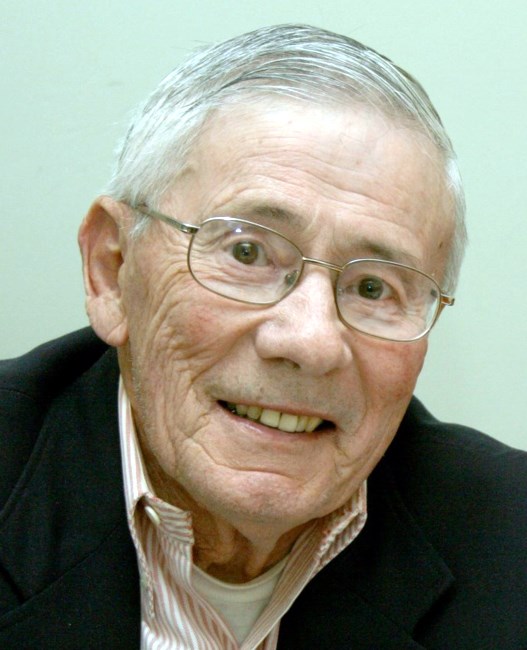
Charles DeGrandpre, farm manager at Wolfe’s Neck Farm in Freeport for decades, and a pioneer in organic agriculture
grew up on a farm in Ipswich, Massachusetts, with seven sisters and one brother. His father died young, when Charlie was 13. He went to Essex County Agricultural School in Danvers, Massachusetts, before enlisting in the Navy. After the Navy, his first job was at Saracen Farm in Ipswich, Massachusetts, which set him on a pioneering path in what is today known as sustainable agriculture beginning in the 1940s.
The farm was owned by Barclay H. Warburton, III, from a family associated with the Wanamakers and the Vanderbilts who had the resources to experiment with his interest in organic agriculture. The recent graduate of Harvard, and DeGrandpre with his farming experience, both young men, experimented together with methods that have only recently become recognized by the current sustainable agriculture movement. Warburton was inspired and influenced by an early leader in organic agriculture in Wiltshire, England, Friend Sykes, who began in the 1930s to promote the use of manure and cover crops turned under instead of chemical fertilizers to enrich the soil. He was working closely with Lady Eve Balfour, now considered a founder of the movement, who in 1939 began the first
scientific comparison of farming with organic and chemical-based methods. DeGrandpre met both when they visited Saracen Farm; some of the seeds for their experiments with forage and cover crops came from Sykes in England.
After ten years at Saracen Farm, in 1958 he went to Alfalfa Farm in Topsfield, Massachusetts, familiar to many drivers on I-95 by its iconic twin blue silos with white lettering. DeGrandpre was recruited in 1968 by Lawrence M.C. and Eleanor Houston Smith, founders of Wolfe’s Neck Farm in Freeport, Maine. The Smiths had begun pioneering work in organic agriculture about the same time as Warburton in the 1950s, well before the publication of Silent Spring by
Rachael Carson in 1962 that sounded the first serious alarm about the harm caused by chemical fertilizers. The Smiths and DeGrandpre continued to experiment with organic methods in Freeport, with DeGrandpre paying particular attention to developing healthy soils and nutrient-rich grasses. The 300-head of organic beef, mostly Black Angus, raised at Wolfe’s Neck Farm were grass-fed with very few grains, an approach just recently gaining popularity with those looking to consume the most healthy foods. DeGrandpre, known to most as simply Charlie, took special pride in the forage crops he developed and his fields rich in clover. The cattle’s diet made for healthy animals. A 1984 issue of Maine Organic Farmer & Gardener quotes DeGrandpre as saying that even with 300 head of cattle, “there’s some years I haven’t paid more than $100” in vet bills. There was never any medication in the feed.
“Charlie was very early in promoting sustainable farming techniques back in the 1970s, “said Tom Settlemire, a retired biochemist at Bowdoin College who is now a leader in the local food movement in Maine. Settlemire worked with DeGrandpre on a USDA Soil & Water Conservation project back then, when DeGrandpre was also a key figure in the creation of the Maine Beef Breeders Association. “He was a very special person.” He remembered that many
people came to him for information and advice. DeGrandpre was honored by the Maine Beef Producers, as well as several other local and
national organizations to recognize his innovations and contributions to organic and sustainable agriculture. Farmers and others interested in organic farming methods came to visit DeGrandpre to learn. Among the innovations at the farm was the first round hay bailer in the state.
DeGrandpre’s four sons all worked on the farm when they were growing up, enlisting many of their peers from Freeport High School, as well as their cousins to help out. Charlie had a work ethic which was renowned, and still continues as part of his legacy with many of the young men and women who worked for him. Today, two of his sons, and his grandson still work at the farm, continuing his work and dedication to the land. Charlie became a pillar in the community over the years, giving back to neighbors and the town of Freeport, he was known to everyone on Wolfe's Neck; character traits he passed down to his sons, one of whom was chair of the town council, one who was chair of the school committee, and one who was the fire chief in Freeport.
Charlie retired from the farm in 1992, and with his beloved wife Claire, they moved to a house adjacent to the farm property, which allowed him to continue enjoying the land and the neighborhood he had become so familiar with. During their retirement years, Charlie and Claire spent much of their winters traveling their favorite route through Las Vegas, and the west, as well as spending time in Florida with family and close friends.
Charlie is predeceased by his wife, Claire, in 2009, and his son, David in 1991. He is survived by his son Richard and his wife Judy of Freeport, Maine, and their two daughters Johannah of Yarmouth, Maine, and Laura Loiselle, of North Andover, Massachusetts; his daughter-in-law Gloria Fogg DeGrandpre, wife of David, and their two daughters, Karen of Freeport, and her daughter Madeline Claire, and Kathy of South Portland; his son James of Freeport, Maine, and
his children Michael of Providence, Rhode Island, Sarah of Washington, DC, Elizabeth of Sheridan, Wyoming, and Matthew of Freeport, Maine; and his son Chuck and his wife Cheryl of Freeport, Maine.
There will be visiting hours to remember Charlie at Lindquist Funeral Home, One Mayberry Lane, Yarmouth, Maine from 2–4 and 6–8 p.m. on Sunday, February 21, 2016. A funeral service will be held at St. Jude's Church, 134 Main Street, Freeport, at 11 a.m., on Monday, February 22, with a reception
to follow. In lieu of flowers, donations may be made in memory of Charlie DeGrandpre to The Parish of the Holy Eucharist, 266 Foreside Road, Falmouth, Maine 04105.
Muestre su apoyo
Comparta Un Recuerdo
Comparta
Un Obituario
Obtenga actualizaciones
Servicios
COMPARTA UN OBITUARIOCOMPARTA
- RECIBIR RECORDATORIOS
v.1.18.0