AVIS DE DÉCÈS
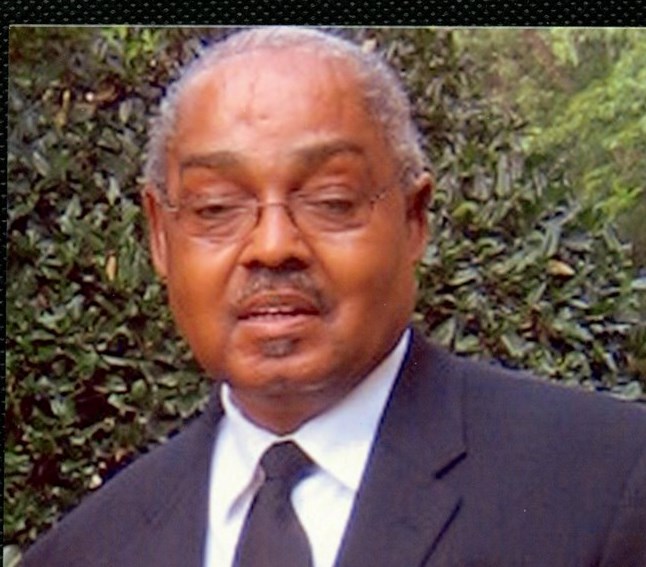
Eugene Henry Sherrod Jr.
20 septembre 1942 – 17 mars 2024
In Memorium
Eugene Henry Sherrod, Jr. passed away suddenly and peacefully of natural causes at the age of 81 years old on March 17, 2024, in Alexandria, Virginia. He was born on September 20, 1942, in Portsmouth, Virginia. He was the son of the late Reverend Dr. Eugene Henry Sherrod, Sr., and the late Nannie Mae Ruff Sherrod. He was predeceased by his siblings Ethel Mae, Magdeleine, and Jimmie. Eugene is survived by his wife Vashti Valma Sanders Sherrod and his children Eugenia, Ginger, Gaye Renee, Thomas, family members and a host of friends.
On March 25, 2024, all of Eugene’s wishes were honored and fulfilled at a private service at Demaine Funeral Home followed by a Christian burial at Mount Comfort Cemetery in Alexandria, Virginia. The Reverend Michael R. Youngblood of Westover Baptist Church, Arlington, Virginia, officiated. Eugene was committed to God.
Eugene was an honor student and graduated from I.C. Norcom High School in Portsmouth, Virginia. He attended Norfolk State College. He left Portsmouth and attended the University of Maryland, College Park and received a Bachelor of Science degree from the School of Education. He later began work on a Masters of Degree in Education. He studied Vocational Education and Architectural Drafting to build expertise in the materials, codes, dimensions, and procedures followed by building contractors. His drafting table and tools were some of his prized possessions.
For several years, Eugene was a high school teacher and taught in Upper Marlboro, Maryland. His passion was teaching vocational education to young adults who did not desire to go to college but to learn a trade.
Eugene loved to build and began to develop his craft in construction at an early age. He learned from, and worked with, his grandfather, John Sherrod, who had a construction company building houses in Hobgood, North Carolina, and Portsmouth, Virginia.
In the 1960’s Eugene left teaching and became a proud member of the United Brotherhood of Carpenters and Joiners of America. As a member of the Local Carpenters Union, he worked as a draftsman for the Architect of the Capitol at the U.S. Capitol in Washington, D.C. Eugene further crafted his master builder skills as a contractor building shopping malls in Maryland such as Iverson and Landover mall. Most notably, he was a contractor to build the Watergate Hotel in DC, now famous for the political scandal involving a U.S. President.
Eugene loved the Washington Redskins and football. When an opportunity to bid on a DC contract to paint the entire Robert F. Kennedy Stadium, the home of the Redskins, Eugene won the bid and the contract award for the project. His outstanding performance led to many opportunities to engage in contract bidding wars. His reputation for quality, timeliness, and cost effectiveness provided winning proposals that awarded general contractor or subcontractor roles and responsibilities.
During the civil rights movement, the Reverend Dr. Martin Luther King laid out his vision for a major protest in Washington DC called the “Poor People’s Campaign.” It was not a one-day march, but a trek to the nation’s capital by suffering and outraged citizens who would stay and live in the city until some definite and positive action was taken to provide housing, jobs, and income for the poor.
A committee led by Ralph Abernathy sought Eugene’s expertise to design and build “Resurrection City” on the grounds of the National Mall. Contractors built three thousand temporary wooden structures that protestors lived in for 42 days bringing attention to poverty in America. Sadly, the assassination of Dr. King occurred two months before Resurrection City opened; but Ralph Abernathy continued the vision. Eugene held this experience close to his heart as he continued to use his talents to help improve the quality of living conditions of poor people.
In 1970, Eugene decided to become an entrepreneur and started his own construction company. Later, he partnered with his childhood friend, George Holmes from Portsmouth, Virginia, and formed George Holmes and Sherrod Industries. George focused on administration and Eugene was the hands-on builder and master, gifted carpenter. Eventually the company became E.H. Sherrod Construction Company, Inc. The company had many investors from the DC and Maryland region who purchased stock in his business to help it grow and develop into a successful business.
Over the years, E. H. Sherrod Construction Company became a leading construction company which the District government awarded contracts to rehabilitate and renovate parts of DC. Eugene was proud to win the prized Emerald Street Project contract, located in NE DC, to renovate more than forty-two homes for middle-income working-class African Americans. He worked closely with the DC government and the late Honorable Mayor of the District of Columbia, Marion S. Barry. Eugene’s company would later win a DC government contract for the Bates Street Project in NW DC to build single family homes for middle income families. Eugene’s work still stands in the vibrant communities of Bloomingdale’s, LeDroit Park, Shaw and others.
Eugene took special pride in purchasing and renovating a Victorian home built in 1888 in Bloomingdale, DC. He renovated the entire four-level, 5,000 square foot home inside and outside, customizing one-of-a-kind features throughout. It became a central hub for entertaining DC Mayors, public officials, community events, and members of the Congressional Black Caucus.
Eugene, a community activist, was very involved in the Bloomingdale Civic Association. Everyone knew him and his beautiful, renovated home that was located at 47 Bryant Street, NW. In June 2000, Eugene was asked by the Bloomingdale Civic Association to show his home. Hundreds of people from DC and the local area participated in the “Victorian Neighborhood Walk” to tour his home. People came from far and near lining up to view it. Their remarks were outstanding!
Eugene loved to travel with his family and close circle of friends. He travelled often in the private plane of the late DC entrepreneur and developer Theodore “Ted” Hagans (who developed Fort Lincoln in NE Washington, DC), and with many of the DC elites to professional meetings, conferences, and events. His favorite trips were to Bermuda, the Bahamas, Puerto Rico, Mexico, and Canada.
Eugene’s last personal project was building his dream home in Annapolis on the water in a quiet beach community known for residents who were entrepreneurs, teachers, medical professionals, and government leaders. The most famous resident was the late Frederick Douglas who owned a summer home on the beach, which is a historical tourist attraction.
Eugene designed, customized, and modeled his dream home after The White House in DC. Because of its tall, white stately all brick structure with Romanesque crown columns, and wrap-around porches, the house could be viewed from many neighboring beach front communities. It was a special favorite attraction of the community.
His final construction project occurred in his beloved city of Annapolis, Maryland. In 2017, Hurricane Harvey took its toll in the area destroying and flooding much of downtown Annapolis, and the surrounding piers. Eugene partnered a local major Annapolis land and business owner to repair and rebuild the downtown and surrounding piers. It was a project that brought great joy to Eugene because it brought him back to his ‘water roots’ from Portsmouth, Virginia. But what brought him greater joy was that he could employ his late brother Jimmie to help with the effort.
Eugene’s community involvement included volunteering, participating on Boards, and community activism. Eugene was a member of, and on the boards of: The National Board of Home Builders Association, the DC Democratic Party, the DC Chamber of Commerce, Industrial Bank of Washington DC (the first African American owned bank in DC), the Bloomingdale’s Association, the Orange Hats Neighborhood Committee, and the DC Local Carpenters Union.
Among his most prized earthly awards was receiving from Mayor Marion S. Barry and Dwight D. Cropp an Appreciation Award for his sincere and developed effort to the DC Voting Rights Campaign. He received the 1977 Small Business Award for Exemplary Leadership and Business Achievement from the Greater Washington Business Association. In 1981 he received the DC Public Schools Award for Outstanding Contributions and Support for the DC Foundation for Vocational Training and Division of Career Development Programs. In 1983 he received the Businessman of the Year award presented by author and historian Alex Haley.
Eugene was a Minister’s son. His father, Reverend Sherrod, was affectionately referred to as “Bud” and his son, Eugene, as “Little Bud.” His family referred to him as ‘Little Bud’ his entire life. The values of being a preacher’s son stayed with “Little Bud” always. His grandfather John Sherrod baptized him when he was ten years old. Growing up in the church meant always attending church, singing in the choir, bible study, church activities, and especially travelling with his Father where he preached at churches in Southern Virginia.
As a Christian, Eugene lived those tenants everyday by deeply loving his wife dearly, children, family, and life-long dear friends. Upon moving to DC, Eugene became a member of First Baptist Church of Washington, DC He sang in that choir for 15 years. Later, he joined Zion Baptist Church in DC, and Alfred Baptist Street Church in Alexandria, Virginia.
In closing, Eugene always reminded us that “to be absent from the body is to be present with the Lord; and that the spirit will return to God who gave it. Please have joy and be happy because this is only temporary.”
Our love for you endures from your family and all others forever!
Montrez votre soutien
Envoyez Vos
Condoléances
Partager
L'avis De Décès
Obtenir les mises à jour
Prestations de Service
Partager l'avis de décèsPARTAGER
- RECEVOIR DES RAPPELS
v.1.18.0