
OBITUARY
Frederick Samuel Hoffman
December 26, 1922 – June 24, 2023
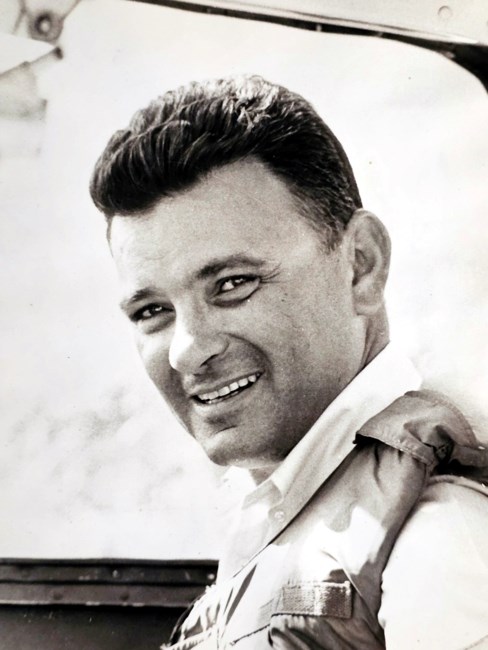
An irascible, straight-shooting soul, Fred always marveled at his lifelong good luck and left at peace, with no regrets.
With unerring good judgment and smart choices, Fred set his standards high and met them. He made his own path and hewed to it, a man supremely comfortable in his own skin.
“Fred was a pillar,” said Lou Boccardi, former AP president and CEO.
Fred began his nearly 40-year news career as a Boston radio reporter covering box-ing matches from the front row, dodging flying droplets of blood.
Thirty-six of those years were as an AP reporter, where he chronicled seven admin-istrations; Congress, the Vietnam War from start to end; the Cuban Missile Crisis from Guantanamo; the Mercury 7 space flights from Cape Canaveral; a catastrophic Alaska earthquake and a snowy plane crash into DC’s 14th St. bridge..
To this day, he is considered one of the toughest, most enterprising, ethical and tire-less reporters to have ever covered the Pentagon, his beat for nearly 24 years.
“Because of his long experience at the Pentagon and, most importantly, because of his untiring efforts to explore all facets of complex issues, he is one of the most knowledgeable people anywhere in the United States on national security,” Former Defense Secretary Melvin Laird said in 1980.
Bill Greener, deputy press secretary to President Gerald Ford during the high-tension 1975 Mayaguez incident, recalled that Fred filed his story on the seizing of the ship “faster than we could get the information to the president of the United States.” And Fred got the story right.
Though Fred was well-known for his honesty and law-abiding nature, few know that he secretly and illegally volunteered with the Haganah, the underground Zionist paramilitary organization, to help smuggle arms to Palestine during the perilous period around the birth of Israel. Fred’s duty was to recruit ships willing to run guns to Israel's defenders.
Along with AP’s Hugh Mulligan, Fred was named a Pulitzer Prize finalist for their in-vestigation of the black market in Vietnam. Among his other awards were commendations from the Overseas Press Club; the National Headliners Club; the VFW’s first Gold Medal for national security reporting; and the Department of Defense medal for Distinguished Public Service.
At 61, Fred entered public service, becoming Principal Deputy Assistant Secretary of Defense for Public Affairs. He served as chief spokesman and a policy adviser to Defense Secretary Caspar Weinberger for four years.
After Pentagon foul-ups prevented the press from covering the start of the 1989 US invasion of Panama to remove dictator Noriega, Fred spearheaded reforms of the press pool system to ensure journalists’ could reach the front lines fast in future conflicts.
Fred’s own story began on Dec. 26, 1922 in Dorchester, Mass. His mother, Rachel Gold, had fled antisemitic pogroms in Poland, arriving in America alone in steerage at 13, with her mother’s Sabbath candlesticks and little else in her carpet bag. His father, Louis, an artist and dreamer at heart, made a living as a paper hanger.
Until World War II interrupted, Fred studied journalism for three years at Boston University but never graduated. To pay the $300 yearly tuition, he worked as a shoe salesman, restaurant bus boy, ice-cream vendor and mental hospital janitor. He served as a WWII Army reservist until medically discharged under protest.
It was in Boston where Fred’s greatest good fortune began, when Norma Simons flirted with him across a city street. In time, she turned down an invitation to dance on Broadway -recruited by Ethel Merman- to follow him to Washington, D.C., where he was hired as a radio reporter and editor. So began a 72-year marriage, an epic of undimmed devotion. Norma, his bashert, died in 2017.
From that union came adored daughter Lisa Hoffman, herself a three-decade news reporter and editor, who shared Fred’s joy at the privilege of witnessing history be made.
When off-duty, Fred fed his passion for Civil War and other history, hiked the entire 185-mile C&O canal twice, traveled to 25 countries, and was happiest on a deserted beach at sunset with Norma and their beloved dog, Creech.
In his last days, though nearly blinded by macular degeneration, Fred was riveted by news of the war in Ukraine and the Trump investigations, fascinated by more history unfolding before him.
He also had the privilege to thank a parade of loved ones and friends for sharing his life. To those he missed -- especially all he growled at or worse -- please know he wished you fair winds and following seas.
Roger and out, Fred. We have the watch.
Survivors include daughter, Lisa Hoffman; step-grandchildren Aida and Mirza De-dajic; nieces Lori Frank and Robin Kesslen; nephews Gene and Monte Kroner; grandnephew and -nieces Joshua Frank; Alexis and Lindsay Kesslen; Bailey Kroner; Rachel Hanselman; “Chosen” kin Greg Martin (Fred’s surrogate son),, Laura Zabriskie, Carolyn Gamble, and the Gastrell family; his Huntley Meadows Park and Lodestone Court families; and caregiver NaNa Darkwah. His brother, Morris Hoffman, died in 1928 and sister, Doris Kroner, in 2003.
Instead of flowers, those so moved may consider a contribution to Friends of Huntley Meadows Park, http://www.friendsofhuntleymeadows.org/ for the Norma Hoffman Fund, 3701 Lockheed Blvd. Alexandria, Va. 22306; American Jewish Congress, ajcongress.org; or a charity of your choice.
Inurnment will occur at a later date at Arlington National Cemetery. Online condolences may be shared at www.dignitymemorial.com and legacy.com.
Show your support
Add a Memory
Share Obituary
Get Reminders
Services
SHARE OBITUARYSHARE
- GET REMINDERS
v.1.18.0