
AVIS DE DÉCÈS
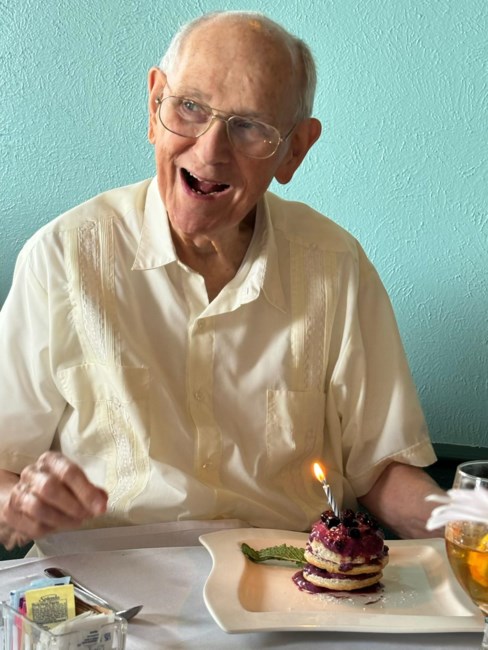
Frank Cloud Cooksey
3 juin 1933 – 15 décembre 2025
Childhood
Frank was born on June 3, 1933 in Ashland, KY. He was the first child born to his parents, Herman Hanna Cooksey and Virginia Rowe Cooksey. They selected his name from the middle name of his maternal grandfather, Bedford Frank Rowe and the maiden name of his maternal grandmother, Mabel Cloud Rowe.
The first seven years of his life were spent in Grayson, KY where his father owned a department store. In 1940 he moved to Austin, TX with his parents and sister, Sylvia Jean.
Education
Frank attended Pease Elementary, University Jr. High, and Austin High School, obtaining a fine public education from dedicated teachers for whom he expressed gratitude throughout his life. A “Loyal Forever” member of the Austin High Class of 1951, he was inducted into the Austin High School Hall of Honor in 2001.
Frank attended the University of Texas and Baylor University as an undergraduate, obtaining his BA in Psychology from the University of Texas in 1955. He then took two years of graduate work in the Dept. of Government at UT from 1955-57.
Frank interrupted his studies at UT to attend Union Theological Seminary in New York on a Rockefeller Brothers Theological Fellowship for one year before discerning that his life of ministry would not be served as a member of the clergy. He returned to the University of Texas and studied law, graduating with an LLB in 1962.
During his studies at the University of Texas, Frank was elected President of the Students’ Association serving as student body president. He received recognition as an Outstanding Student, member and Abbott of the Friar Society, member and President of Silver Spurs, member and President of the Student Christian Association, and member of the Phi Alpha Delta legal honorary. He was also a member of the Tejas Club social fraternity, where he enjoyed fellowship and a rich social life with his fellow “braves”, including roommates Harley Clark and Dave Welborn.
Frank worked his way through the University of Texas. As a result, he was always sensitive to the needs of working students.
Marriage and Family
In a chance encounter in a science laboratory, a mutual friend introduced Frank to Lynn Cornelius of Pampa, TX. Though smitten, he gave up on dating her when he learned she was “pinned” to someone else. In a chance encounter two years later in a parking lot, he remembered Lynn. Later that day, wanting to ask her out but only having a vague sense of her last name, he poured over the UT student directory trying to find her full name and number. When telling this story, he often commented that it was lucky for him that her maiden name started with a “C”. They began dating and married on September 6, 1958.
Frank and Lynn were blessed with two children: Kathryn Christine (1959) and Franklin Carlyle (1962). Frank and Lynn were part of the first generation of couples challenged to raise their children while both passionately working in significant careers, and Frank took his responsibility to coparent seriously. Frank dearly loved his family and encouraged activities in recreation (especially swimming at Barton Springs), learning, and worship, fostered an appreciation for the arts and music, and modeled the healthy stewardship of time and money.
Love of Music
A music lover, Frank sang in church choirs for over fifty years, soloing in choirs at the First Baptist Church of Austin, First Baptist Church of Washington, D.C. and Covenant Baptist Church of Houston. He also sang in the Houston Symphony Chorale, the Cantata Singers of Houston, Christ Church Cathedral Choir of Houston, and the Austin Choral Union. But his first foray into public singing was as a youth--singing duets with his sister, Sylvia, as the entertainment for religious or professional organizations, sometimes accompanied on the piano by their mother.
During his career, Frank represented several musicians, including Stevie Ray Vaughan (whom he once accompanied to the Montreux Jazz Festival), and Austin fiddler Alvin Crow.
Frank was an avid listener of music also, frequenting Austin venues such as the Armadillo World Headquarters and Antone’s. He especially loved the music of Jerry Jeff Walker, Marcia Ball, Angela Strehli, Judy Collins and the Beatles. During his later years, he came to love jazz, especially the work of Pamela Hart and Tina Marsh and the Creative Opportunity Orchestra.
Love of Food
Frank was an enthusiastic sampler of foods. He claimed that as a youth he could eat six tacos in one sitting! In his many travels, finding good restaurants and sampling new dishes was a key objective.
After retirement, to the delight of his family and friends, Frank taught himself to cook a variety of dishes, specializing in Southern cuisine. In recent days, at the urging of his son, he experimented with more heart-healthy food choices.
Legal Career
Frank had a long and varied legal career. After a brief stint in private practice in Austin, he joined the Civil Rights Division of the Dept. of Justice in Washington, D.C. where he was totally dedicated to equal justice under the law. Initially, he worked on protecting voting rights enforcing provisions of the public accommodations section of the Civil Rights Act of 1964. After being appointed Asst. US Attorney in the Southern District of Texas, he prosecuted criminal cases and acquired land for public purposes. He was especially proud of his role in acquiring land near Port Isabel used for the Padre Island National Seashore.
He entered private practice for a time and then returned to public service as a Special Assistant to TX Attorney General John Hill, representing Texas in litigation in the Federal Court System and authoring the affirmative action program of the TX Attorney General’s office.
Returning to private practice, he represented many clients, from huge corporate entities to downtrodden individuals. He valued representing citizens seeking to exercise their civil rights and advised many persons on matters involving their right to equal justice under the law. The last sixteen years of his active practice were spent with the Hilgers and Watkins law firm, from which he retired.
Term as Mayor of Austin
During this time, he was elected to and served one three-year term as Mayor of Austin, TX (1985-1988). His approach to city planning balanced the short-term and long-term impacts of change. Though widely regarded as a liberal due to his progressive social stances, many of his positions were conservative in that they provided for the conservation and protection of our environment and quality of life.
During his term, the Comprehensive Watershed Ordinance was passed to protect the Edwards Aquifer and Barton Springs. Also, bonds were passed to build a new airport, with the stipulation that the former airport site, Mueller, not be used as an airport in the future.
In addition to these two major achievements, he was proud to be associated with the Parkland Dedication Ordinance, the Art in Public Places Ordinance, the financing and building of the South Austin sewage plant, the planning of the City Convention Center, and many land use decisions, including the rules governing development on Town Lake and the zoning of lands along North Lamar and in the Oak Hill area.
During his term, Sematech, a consortium of computer chip research and manufacturing companies, selected Austin as its location after a cooperative proposal effort between the City of Austin, the University of Texas at Austin, and the Austin Chamber of Commerce, with federal cooperation facilitated by J.J. “Jake” Pickle.
Retirement Initiatives
Upon his retirement, Frank refocused his attention on international projects. He monitored the municipal elections in Bosnia in 1997, two years after the war there ended. In 1999, he served as a Rule of Law liaison in Moldova as part of an American Bar Association project. In 2000, he moved to Prague as the Interim Executive Director of the Central Eastern European Legal Initiative, supervising courses of study for judges from eight Eastern European nations from the former Soviet bloc.
Returning home, he volunteered extensively and selflessly to improve the lives of others. In a pro bono capacity, he represented refugees who were being detained, working to get them asylum and to arrange for their safe passage to a new life. He fundraised for organizations that improved the quality of life for Austinites, passionately advocating for public education, affordable housing and childcare, and environment conservation organizations. He wrote letters to officials of every stripe and at every level informing them of issues, his position on those issues, and suggestions for ways in which successful outcomes might be achieved.
Frank believed that the United States, at its best, was a nation whose Constitution guarantees equality before the law and prohibits unreasonable discrimination while welcoming those seeking a better life. He dedicated his time, expertise and treasure to the election of compassionate and competent officials in our national, state, and local governments. As a student, he was student Co-Chair of the Kennedy/Johnson campaign. Throughout his life he campaigned vigorously for those he supported and assisted in fundraising on their behalf and discussed politics frequently at the dinner table, in the office, and, in later years, in well-researched, heartfelt posts on Facebook.
After retirement, he traveled to swing states to campaign for presidential candidates, including Al Gore, John Kerry and Barack Obama, often for months on end. He was respectful of the positions of “reasonable” Republicans, but strongly opposed radical policies promoted by extremists.
Guiding Beliefs
Frank conducted himself as a world citizen and believed in being a person of good will, with compassion and caring for others. Indeed, calling someone “a person of good will” was his highest compliment. He was heavily influenced by the teachings and writings of his pastor, Carlyle Marney, and his professor at Union Theological Seminary, Reinhold Niebuhr. Yet he resisted all attempts to reduce human beings to narrow confines of fundamentalist religious or ideologically rigid political approaches to life. He did not seek wealth above all else, and regretted the selfish excesses of materialism, no matter where they might be found. He enjoyed the diversity of cultural and religious traditions found in all countries around the world.
Memorial Service
A memorial service will be held at First Baptist Church of Austin, 901 E. Trinity, Austin, TX on January 4, 2026 at 2p. In lieu of flowers, please consider gifts to Foundation Communities, The Zilker Botanical Garden Conservancy, Interfaith Action of Central Texas (iAct), or First Baptist Church of Austin.
Frank is survived by his wife of 67 years, Lynn Cornelius Cooksey; sister, Sylvia Jean Newsom, and her husband, Rollo; son, Franklin Cooksey; daughter, Kathryn Cooksey Pew, and her husband, Paul Pew; grandson, Michael Lozano, and his wife, M.J. Lozano; granddaughter, Rachel Long; niece, Sara Satornino, and her husband, George Satornino; nephew, Leigh Newsom; nephew, Scott Newsom, and his wife, Teri Cole Newsom; and nephew, Greg McElreath.
His final years were saddened by the passing of so many friends and family who preceded him in death, but were made more joyful and richer by his circle of friends, including those of The First Baptist Church Symposium Sunday School Class, The Conversation Group, the Pro and Con Group, and his fellow Friar, Bill Harrison, and his wife Ann.
Montrez votre soutien
Envoyez Vos
Condoléances
Partager
L'avis De Décès
Obtenir les mises à jour
Prestations de Service
Partager l'avis de décèsPARTAGER
- RECEVOIR DES RAPPELS
v.1.18.0