
AVIS DE DÉCÈS
Thomas George Betz
24 octobre 1944 – 15 mai 2023
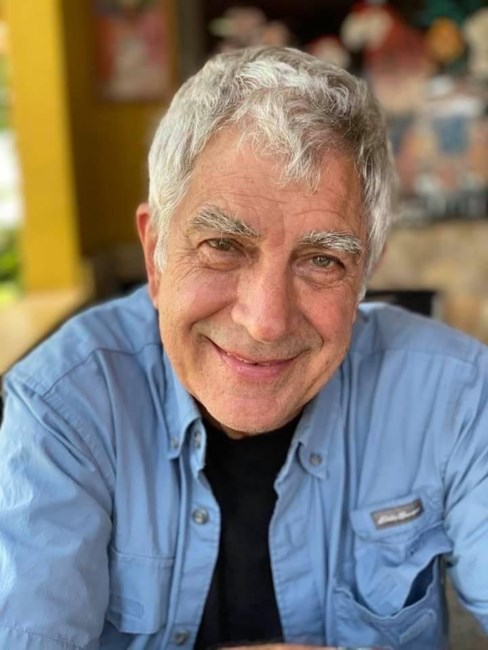
Dr. Thomas Betz passed away peacefully in Austin, Texas on May 15, 2023, with those he loved near his side, playing some of his favorite music. His professional contributions to public health, epidemiology, tropical medicine and global infectious disease prevention were remarkable. But he considered his family his greatest accomplishment, loving each of them deeply and unconditionally – his wife Kay; his son Michael Betz and grandsons, Jonah and Sammy; his son Austin Betz; his stepdaughter Kiah and her husband Evan Morgan. He also cherished his Betz family – brothers Dave and Jim, sisters Sue and Jo Ann, and all their families. And he became a beloved “add-on” to Kay’s family, the Kronkes.
Tom devoted his life to making the world a better place and helping those in need. As an undergraduate at the University of Michigan, he completed an internship in Herpetology in Guatemala, where he discovered an unclassified frog that was named after him – Leptodeira Betzei. He graduated with an M.D. from the University of Michigan Medical School, following in his father’s footsteps. He was board certified in public health and general preventive medicine, a fellow in the American College of Preventive Medicine, and received a Master’s in Public Health from the University of Texas School of Public Health.
He completed a fellowship in the Department of Tropical Medicine and Medical Parasitology through the Louisiana State University School of Medicine in Costa Rica and Venezuela, where he was Professor of Microbiology and Parasitology. He often fondly recalled water skiing on the Orinoco River in Cuidad Bolivar, Venezuela, while piranhas swam around him. While completing a residency in Family and Community Medicine with an emphasis on tropical medicine at the University of Arizona Health Sciences Center, Tom also taught in the Medical School and managed drug rehabilitation and public health clinics, providing medical care to barrio residents as part of a Model Cities project. He worked with Cesar Chavez and the United Farm Workers labor union to assure civil rights. He fell in love with the Grand Canyon, hiking from rim to rim many times with his friend Delmar. He traveled the world, including to Australia, where he learned to make and throw boomerangs; he continued this throughout his life, often giving them away to children and adults, as well as teaching them how to use them.
Tom was chosen to become a “Disease Detective,” part of the elite Epidemic Intelligence Service (EIS Officer) of the Centers for Disease Control (CDC). He became Medical Director of the Parasitology Unit of the CDC San Juan Labs in Puerto Rico. In 1982 he moved to Texas and began his long tenure at the Texas Department of Health, where he served in several management and leadership positions in the Infectious Disease Epidemiology Division, Bureau of Communicable Disease Control and Epidemiology, infectious Disease Epidemiology and Surveillance Division, and as State Epidemiologist. During this period, he created the Cancer Registry, Environmental Epidemiology Division, and Injury Control Program, leading the initiative to create and pass legislation for child passenger safety seats, seat belts, bicycle and motorcycle helmets, as well as the reporting of occupational diseases. He was a strong advocate for the state’s AIDS/HIV related programs and activities. Tom had special leadership abilities, teaching, mentoring and inspiring several generations of public health staff. He created an ad-hoc motivational program to reward achievements, utilizing second-hand fishing trophies. His Bass Trophies are still treasured by many who received them.
He met his second wife, Kay Franklin, while attending one of her classes on Managing Change and Organizational Development; he wrote an article for “Personnel Management” on some of the hazards he believed were inherent in Human Resource practices. He thought of it as a love letter; Kay did not see it that way. They honeymooned in Puerto Rico, where Kay contracted dengue fever; he never quite understood why she wouldn’t let him photograph the “best dengue skin rash” he had ever seen for his extensive slide collection of diseases, while she was in the bathtub suffering from “Breakbone Fever.”
Kay and Tom moved to Lima, Peru when Tom accepted a challenge from CDC and the US Agency for International Development to create a Field Epidemiology Training Program for Physicians within the Ministry of Health. He was the only CDC employee to receive Danger Pay while there. Despite Peru’s staggering economic and terrorism problems, the program flourished as a sustainable model that became a benchmark for field epidemiology programs around the world.
Tom also worked for the Austin/Travis County Health Department as Medical Director of the Communicable Disease Prevention Services. He returned to TDH and retired as the Regional Director of Region 7 in Temple, Texas, responsible for the public health of 4.5 million Texans in 31 counties.
He continued to do consulting through his business Epi-Tex for CDC, USAID, the Pan American Health Organization PAHO), pharmaceutical companies, law firms, and other organizations throughout his beloved South America. Kay and Tom spent time over three years in Belize as part of a PAHO field epidemiology project. He loved diving and snorkeling with sharks and turtles off the cayes there. Over the years, he taught hundreds of students in infectious and communicable diseases, nursing and preventive medicine, lecturing at the University of Texas at Austin until his death, telling compelling tales of outbreak investigations for cholera and rabies in tropical jungles. He was also an investigator, researcher and writer in many fields, including schistosomiasis, dengue, Chagas’ disease, leprosy, Ehrlichia, drug abuse, typhus, typhoid fever, tuberculosis, vaccine preventable diseases and disease outbreak investigation.
When Kay retired from UT-Austin and he retired from TDH, they moved to Rockport, Texas, where he enjoyed fishing, kayaking, bird watching, and boating. They traveled the world, but especially enjoyed road trips in Texas. He also volunteered with the History Center for Aransas County, instituting new audio-visual and computer programming and promoting the validation of the local Vietnamese community’s story, and for the Rockport Cultural Arts District, where he contributed to restoring the San Antonio-Aransas Pass Railroad Depot and creating a museum. He was an integral part of the research for a Texas A&M University Press book, “The Story of the Rockport-Fulton Art Colony,” co-written by Kay and Vickie Merchant, videotaping over 50 oral histories of noted artists. After Hurricane Harvey, Kay and Tom moved back to Wimberley, Texas, to be closer to family.
Tom loved running in 90+-degree temperatures, music of all kinds, vinyl and turntables, reading, gardening, playing softball and golf, working on his cars, eating barbeque, sausage and pasta, being with young people and having fun. He lived an adventurous, purposeful and happy life. As one friend noted on his passing, the world now has a little less sparkle.
Celebrations of his life will be held this summer in Michigan, Wimberley, and Rockport. A Dr. Tom Betz Memorial Scholarship has been created at Coastal Bend College in Beeville. The founder of the Rockport-Fulton Art Colony, Simon Michael, taught art there to hundreds of students from 1968-1984, and Tom admired their mission to promote art in South Texas and help students in need. Donations can be made at the Coastal Bend College (CBC) Foundation site:
Fond memories and expressions of sympathy may be shared at www.wcfishnorth.com for the Betz family.
Montrez votre soutien
Envoyez Vos
Condoléances
Partager
L'avis De Décès
Obtenir les mises à jour
Prestations de Service
Partager l'avis de décèsPARTAGER
- RECEVOIR DES RAPPELS
v.1.18.0