
AVIS DE DÉCÈS
Raymond "Skipper" G. Post Jr., FAIA
3 novembre 1939 – 14 mars 2025
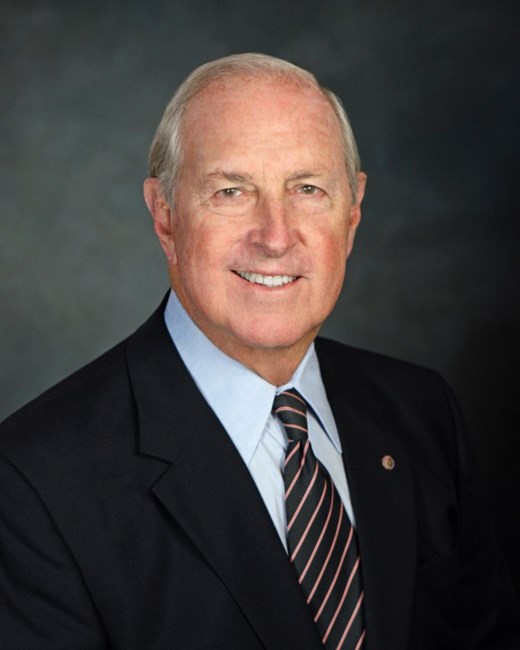
Raymond G. “Skipper” Post Jr., FAIA was born in Baton Rouge on November 3, 1939, and passed away on March 14, 2025 due to complications from Pulmonary Fibrosis. A visionary architect, devoted husband, father, grandfather, mentor, and community leader, Skipper left an indelible mark on the city he loved.
He was preceded in death by his mother, Ernestine Jordan Post, and his father, Raymond G. Post (originally “Pustejovsky,” a proud descendant of Czechoslovakian immigrants). He is survived by Bryan (née Simmons), his beloved wife of 61 years, his son Raymond G. Post III (Jenny), his daughter Wendy Martin (Patrick), and his cherished grandchildren, Raymond O. Post (Gaby), Mia Martin, Jordan Post, and Andrew Post. His sister, Antoinette “Toni” Post, also mourns his passing.
A Life Built on Passion and Purpose:
An architect by profession and a dreamer by nature, Skipper was not just a designer of buildings—he was a builder of legacies. His greatest masterpiece was not a building but his family. At the heart of his world were his wife Bryan and their children, Ray and Wendy. As their families grew, he took on the role of guiding hand, steadfast supporter, and proud grandfather, deeply invested in the lives of his grandchildren.
Skipper was a man of many passions, each pursued with unwavering dedication. His love for aviation led him to become a certified pilot, fulfilling a childhood dream. On the water, his skill as a mariner was legendary, culminating in his cherished ownership of Outpost III, a 42-foot Grand Banks trawler. Some of his happiest moments were spent aboard, cruising through the waterways of the Gulf region, always with family by his side, docking every evening to watch the sunset and listen to his favorite music.
A Legacy in Architecture:
Skipper’s journey as an architect began in 1963, a year that shaped the course of his life. In that pivotal year, he graduated from Texas A&M, married Bryan, and tragically lost his father in a car accident. Inspired by both his father’s architectural legacy and his mother’s civic engagement, he went on to build a distinguished career marked by excellence, leadership, and service.
At the national level, he reached the pinnacle of his profession, serving as the 72nd president of the American Institute of Architects (AIA) in 1996. His decades of dedication culminated in his inauguration as Chancellor of the AIA College of Fellows in 2018. Over the years, he held numerous leadership roles, including chairing committees on minority scholarships, continuing education, and building codes, as well as serving on the Board of Regents of the American Architectural Foundation. Honored internationally, he was named an honorary fellow or member of the Royal Architectural Institute of Canada, the Japan Institute of Architects, and the Federation of Architects of the Republic of Mexico. Skipper took great pride in being chosen by the AIA Council of Former Presidents to serve as their chair for a decade. During his tenure, he played a pivotal role in fostering unity and strengthening relationships across the Institute, guiding former presidents in re-engaging with and enhancing the organization as a whole.
On the state level, Skipper was instrumental in reshaping the way architects were selected for public projects, spearheading the creation of the Louisiana Architects Selection Board. His leadership as President of the Louisiana Board of Architectural Examiners and AIA Louisiana (1976) further solidified his influence in the field.
Locally, Skipper played a key role in shaping the skyline and civic landscape of Baton Rouge. He helped master plan the Louisiana Capitol Complex, influenced the revitalization of downtown through Plan Baton Rouge, and led efforts to improve the City’s built environment. His firm, alongside notable collaborators, contributed to more than 1,000 master planning and architectural projects, including the LSU College of Coast and Environment, the Galvez State Office Building, phases of the River Center, Mid City Gardens, and the 19th Judicial District Courthouse. His final civic contribution was leading the Rotary Club of Baton Rouge’s Rotary Centennial Sculpture project, celebrating the city’s 100th anniversary in 2018.
Mentor, Educator, and Advocate:
Skipper believed in nurturing the next generation of architects. Named the Texas A&M College of Architecture’s Outstanding Alumnus in 2002, he endowed a scholarship at his alma mater and served on advisory boards for the architecture schools at Texas A&M, LSU, and Southern University. He frequently participated as a juror, mentor, and panelist, ensuring that the profession’s future remained strong. His commitment to education extended to his high school alma mater, Catholic High School in Baton Rouge, where he established another scholarship.
Throughout his career, he was supported by an exceptional team of architects, designers, and collaborators, many of whom have gone on to make significant contributions of their own. His longtime assistant, Dianne, worked by his side for 44 years, a testament to the loyalty and respect he inspired.
A Champion for His Community:
Skipper’s contributions extended far beyond architecture. He was a founding board member and president of the Arts and Humanities Council/Community Fund for the Arts, as well as president of the Louisiana Arts & Science Center and the Baton Rouge Speech and Hearing Foundation. He also served as president of the Salvation Army Board and was a longtime supporter of the Greater Baton Rouge Food Bank. His influence reached the medical community as well, serving on the boards of Our Lady of the Lake Regional Medical Center, Mary Bird Perkins Cancer Center, and the Pennington Medical Center.
A proud Rotarian, he served as president of the Rotary Club of Baton Rouge in 1999, followed by his role as chair of the Baton Rouge Chamber of Commerce in 2000. Recognized for his leadership, he was named Businessperson of the Year by the Greater Baton Rouge Business Report in 2002.
A Man of Resilience and Reflection:
Skipper deeply valued the brilliant medical professionals who cared for him in his final years, including Doctors Rolfsen, Deumite, Wampold, Petite, and McCarthy. His dear friend Bob Earhart provided not only medical guidance but also steadfast friendship.
Although not outwardly religious, Skipper had a profound belief in God. In his final days, he found solace in silent conversations with Christ, seeking the strength to endure his suffering with grace. He admired St. Francis of Assisi and embraced the saint’s words: “While we have time, let us do good.”
A Dreamer Who Dared to Do More:
Skipper was often called a dreamer, but those who truly knew him understood that his dreams were rooted in action. He saw problems and sought solutions. He saw potential and worked tirelessly to realize it.
For all his achievements, Skipper’s proudest legacy remains his family—a family he built with love, wisdom, and unwavering dedication. He will be remembered not only for the structures he designed but for the lives he touched, the communities he strengthened, and the example he set for all who had the privilege of knowing him.
Skipper leaves behind a city transformed by his vision, a profession elevated by his leadership, and a family forever shaped by his boundless love.
O Lord, make me an instrument of Thy peace…
Visitation will be Thursday, March 20 from 3:00pm to 7:00pm at Rabenhorst Funeral Home, 825 Government Street and Friday, March 21 from 8am to 9:30 am at St. Joseph’s Cathedral, with a funeral mass immediately following. Burial will follow at Greenoaks Memorial Park.
In lieu of flowers, please consider a donation to Hospice of Baton Rouge or Texas A&M Corps of Cadets or College of Architecture.
Montrez votre soutien
Envoyez Vos
Condoléances
Partager
L'avis De Décès
Obtenir les mises à jour
Prestations de Service
Partager l'avis de décèsPARTAGER
- RECEVOIR DES RAPPELS
v.1.18.0