
OBITUARY
Ariana Lynn Ehrenthal
April 22, 2008 – March 15, 2026
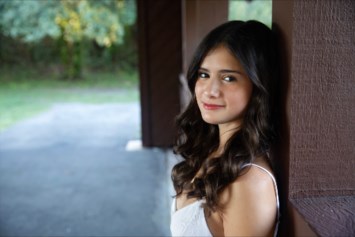
April 22, 2008 – March 15, 2026
How do you capture a life that was still in the middle of being lived? You don’t. You just hold up the pieces and hope they catch the light.
Ariana Ehrenthal was seventeen years old.
By every account of everyone who knew her, she was the definition of a good person. The definition. For Ariana, lying, cheating or hurting others was completely foreign — she did not work at telling the truth because lying simply wasn’t necessary. She looked you in the eye and told you things that were hard, because softening them never occurred to her. She found the good in every single person she met, not because she practiced it, but because she was built that way.
If you didn’t know her, you might read this and think it cannot be true. That no one is this good, this purely constructed for kindness. But the people who knew her are not exaggerating. They are simply failing, as everyone fails, to capture her fully. She was not destined to be a CEO or a name the world would remember. She was destined for something quieter and possibly harder: to help people survive the same challenges that lived in her own body. To be the one who understood because she had been there. To be a nurse. To hold a hand. To see you.
That was her ambition. That was her future. That was her.
She was stunningly beautiful in a way that made people stop — eyelashes the world was jealous of, a face that could have been on any magazine cover — but she never seemed to notice. In four years of high school, four years of pictures and games and concerts and every moment a teenage girl is supposed to care about how she looks, she wore makeup only a handful of times, for the very special events. The rest of the time, she was just Ariana. Because that was enough.
She lived with dyslexia and dyscalculia, and she was brilliant at history anyway. The disabilities were obstacles, never roadblocks — she just found another way, and then another, until she arrived exactly where she wanted to be. She loved true crime and lost herself in books. She was a bit of a loner in the most comfortable way — happiest in her room with her music and her books and the people she loved — but when she came out, she was fully present. Really there.
She loved music the way some people breathe — deeply, without thinking about it. Taylor Swift. Birdy. All the women who sang like they meant every word. She went to concerts and felt them completely, music washing through her the way light comes through a window. If there is a comfort in any of this, it is that she got to feel that. She got to be in rooms full of music she loved, surrounded by voices that understood her. She got to live inside sound. And sound doesn’t end. It just keeps playing.
But the illness took other things. Sometimes it took her.
There were days she would retreat to her room and stay there too long. Days she would block out the world because she knew — knew what her body was doing, knew where it was heading, knew in a way that seventeen-year-olds should never have to know. She could be the life of the party, up all night, present and glowing and fully there. And she could also disappear into herself for days, walls up, music on, the world shut out. Not because she didn’t love you. Because she did. Because loving people when you know you might leave them is its own kind of exhaustion.
She was both: introvert and extrovert, social and solitary, here and already somewhere else long before she left.
And every morning, school started at 7:30. Ariana lived with extreme insomnia, with energy that came and went, with a body that made no promises. But no one ever had to wake her. She got up on her own. Even if it meant collapsing on her desk. Even if it meant spending more time with the nurse than probably any other student in that school — measuring vitals, ensuring breathing treatments, or being sent home when she was too sick to finish the day. But ninety-five percent of the time, she finished the day. She would still be at cheer practice. She would still be out with her friends. She would still be Ariana.
We do not know how. No one who witnessed her life could fully understand her fortitude.
She had lived with extreme insomnia since birth — not teenage sleeplessness, but something deeper and harder, a body that simply would not rest the way other bodies rested. And when the sleepless days stacked into sleepless nights and back into days again, there came a price. After three or four days of absolutely zero sleep, her brain would misfire. She would seize — actually seize — just trying to be normal. Just trying to show up. Just trying to live the life everyone else lived without thinking.
Her body was at war with her. And she kept fighting anyway.
Every teenager rebels. It’s practically the law. Ariana rebelled by helping. By being a role model to her younger sister Maggie, and to her brother Zachary too. By being a lovable punching bag to both of them — until she wasn’t. Because there was a line, and when you crossed it, she gave worse than she got. That slow boil, that release, was the only anger she ever showed. And then, in the very same moment, she could shift back. Role model again. Loving again. Present again.
It was a maturity that seemed to arrive with her at birth. The kind that only chronic illness can give you — the knowledge that life is short and precious and not worth staying angry about. She never held onto it. She just let it out and let it go.
The most remarkable thing about that household — the thing people might not believe — is that there were no arguments that lasted. Not because they were hiding anything, but because they loved each other exactly as they were. Just acceptance. Just love. Just five people who got to be themselves and were celebrated for it. That was the gift she grew up in. That was the gift she gave back every day.
She wanted to be a nurse. The same path her older sister Rebeka had walked, a sister she admired deeply. She volunteered at Bethesda West hospital and never missed a day. She was accepted to Sacred Heart University while she was already sick — accepted because she had earned it, because she had fought for it, because she was already walking toward a future that made perfect sense. Of course she wanted to spend her life taking care of people. Who else would?
The love of her life was Franco and by every measure that matters, extraordinary. When Ariana got sick, Franco showed up in the way that reveals character. He stayed as often as he could and was by her side, holding her hand until they asked him to leave. He was with her through the worst of it — the kind of moments that would send most nineteen-year-olds out the door — and he never flinched. He held her hand when she was frightened. He held her hand when she was in pain. He held her hand through things no young person should have to witness, and he did not look away.
To know her was to carry her with you. She is held forever by her mother Melissa and her father Alex; her sister Rebeka and her fiancé Dylan, their daughter Taytum; her brother Zachary; her sister Maggie; her grandparents Walter and Gloria, Michael and Gabrielle; and Franco, who loved her the way she deserved to be loved, and stayed until the very end. She was also held close by her Aunt Caroline and Caroline’s two beautiful children Chloe and Owen – who know something of loss themselves, having lost their father Jeremy far too soon.
Between Ariana and each member of her family there was something that does not have a name — quiet, deep, unshakeable bonds that each of them felt in their own private way. She adored every one of them.
Behind the girl who showed up every day was a mother who made sure she could. Melissa was there for every doctor's appointment, every concert, every hard morning and every small victory. She was Ariana's advocate, her companion, and the person who knew her most completely. What Ariana gave the world, Melissa helped make possible.
She had lungs that had never fully cooperated — fluid in her chest since childhood, a disease her body had been quietly fighting for years — and she joined the cheer team anyway. When they tried to work around her, she refused to be worked around. She stayed. She showed up, even through her final year, even as she got sicker. She was not going to be the one to quit, and she was not going to let them quietly exclude her. They were simply going to have to see her. And they did.
She was a senior at Olympic Heights High School. She was accepted to college while she was sick. She wanted to spend her life taking care of people. She found the good in everyone. She told the truth even when it was hard. She was stunningly beautiful and spent almost none of her life thinking about it. She had better things to do. She grew up in a house without fighting and loved everyone in it exactly as they were. She was a role model to her sister, a lovable punching bag to her brother, and switched between them in a breath. She seized just trying to be normal. And she kept fighting anyway.
Most people will never understand what it costs to do ordinary things with a body at war with itself. To set an alarm knowing your lungs may not cooperate. To show up to school already exhausted in ways nobody can see. To seize — actually seize — because you pushed too hard just to be normal.
She understood. She paid that cost every day. And she kept going not because it was easy, not because she had no choice, but because she refused to let the disease be the loudest thing about her life.
It wasn’t. She was.
She was seventeen years old. She was not done.
Show your support
Add a Memory
Share Obituary
Get Reminders
Services
SHARE OBITUARYSHARE
- GET REMINDERS
v.1.18.0