
AVIS DE DÉCÈS
Alicia H. Burnham
12 mai 1922 – 20 avril 2012
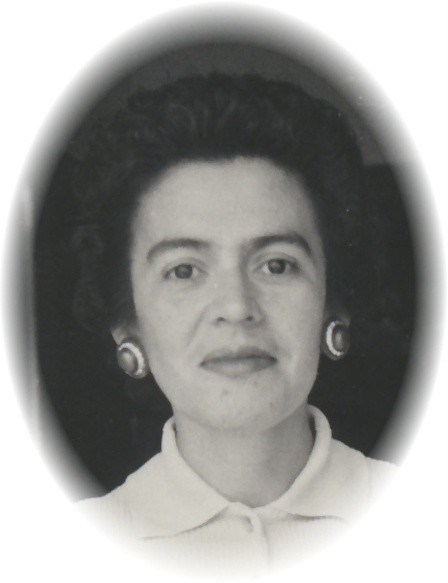
Alicia Horcasitas was born in the town of Frontera, Tabasco on May 12, 1922 where she lived for the first few years of her life. Her family left for Veracruz where she lived happily ever after for the next 15 years or so until she married at age 18, almost 19.
She was thin and perhaps a bit sickly at times which made her mother a strict enforcer of food and health if only to ensure she was a survivor in those terrible times following the civil war. She was looked after, fed and pampered and adored. She was an only child for seven years until her brother Horacio was born.
She was brought up rather richly though her parents were actually ever struggling to make ends meet. She dressed well, took piano lessons and took English classes with a Welsh teacher. Her father settled in a good position in a company selling tools and hardware in general for the industry and for agricultural purposes. It was a respectable trade which he understood very well. He was upright, intensely proud and bitter at having being robbed of his business back in Tabasco. He loved his daughter intensely and she loved and revered her dad. Her mother’s family was of even richer background but lost everything during the Revolution of 1910 - 1920. Her mother was never bitter – she had a naturally sunny attitude, always positive in good and bad times and with an iron will for survival together with a thorough willingness to sacrifice without regret for her loved ones.
Her beloved town of Veracruz was the inner section of the city, the “old” quarter where the “good” people lived. They had their own newspaper, El Dictamen, own radio station, theaters and social clubs of many types. The people lived well and without being really aware of the fact; it was a happy town living in peace and in relative plenty.
Alicia studied piano and after high school studied secretarial skills such as shorthand, typing and related stuff. Her longhand writing was superb – an old fashioned English script- performed with a firm pulse, a natural sense for balance and spacing combined with the love of a neat page. It reflected her personality.
She was the first of her well-to-do friend to work, setting forth an example which some of her friends soon followed. She found work at the US Consulate in her town of Veracruz. Her nanny walked her to work, and back, because she had to remain blameless and beyond suspicion in the culture of those days. But make no mistake, she had many friends, went to many a party and was liked by most and loved by many. Played the piano ‘live’ at the local radio station because her teacher insisted so, invited friends home in spite of some reluctance, because her mother was sociable and enjoyed people. She would have been less outgoing on her own.
Once, a young man from California visiting Mexico took the wrong train and arrived in Veracruz. There he went to the US Consulate to mind his mail. Alicia met him there for the first time and it was love at first sight. His name was Kellogg Burnham. After about one year of writing letters and dreaming of each other, he returned to Veracruz to marry her. They married and remained a loving couple for the rest of her life. They lived together for 71 years until her unexpected death a few days ago at the age 89 and 350 days.
The newlyweds settled in Los Angeles, California After about two years the Japanese bombed Pearl Harbor and Kellogg was drafted into the army. She stayed in California for a time and then went home where she gave birth to her first daughter, Mary Alice. She then returned to Los Angeles to be with him the few days he was on leave, and to show him their infant daughter for the first time. She finally went back to Veracruz when Kellogg was deployed in the Pacific theater of the war. Also because her mother in law had an iron will which did not suit Alicia well. It seems a rigid and austere wartime family program would have forced unwanted duties on her and would have lost all sense of independence. Loss of dignity was not for her, so she shelved her shyness, broke with her mother in law and went home to Veracruz again.
After the war the couple settled in Mexico City. They had more children, Kellogg jr., Herbert and Cynthia. Kellogg Sr. left his job at the US Embassy and went into mining and a life of business, progress, ups and downs and of all those hurdles and problems encountered when Wealth hides just beyond the next horizon. If wealth is not all, they had a good life in the dignity of the middle class, nice homes and a rather pleasant and healthy life. She remained a housekeeper after a stint at the Embassy because she wanted to, and could afford to mind her children.
Thirty four years passed in this relative bliss when financial disaster struck the family. Some small time family enterprises went awry and Kellogg’s distant marble quarries in Oaxaca were taken over with the tacit approval of the State Authority. Kellogg and Alicia left their beloved Mexico for a new life in California where the prospect of recovery and eventual prosperity beaconed. Not all promises are kept in full, but they found a way to survive. Kellogg initiated a new business venture in 1985 which prospered greatly and eventually brought the family together, bringing Herbert and then Kellogg Jr into the operation. Mary Alice had already resettled in California by then and so had Cynthia. The family was together again.
Alicia loved music intensely. She loved order, peace and justice and a good family life. Wisely, she loved her husband most of all and all her children as only a mother knows how to. She is survived by brother, husband, children and grandchildren and oh, how deeply her absence is felt.
Montrez votre soutien
Envoyez Vos
Condoléances
Partager
L'avis De Décès
Obtenir les mises à jour
Prestations de Service
Partager l'avis de décèsPARTAGER
- RECEVOIR DES RAPPELS
v.1.18.0