
OBITUARY
Rosalina "Sally" Vejerano Idos
March 18, 1944 – March 16, 2026
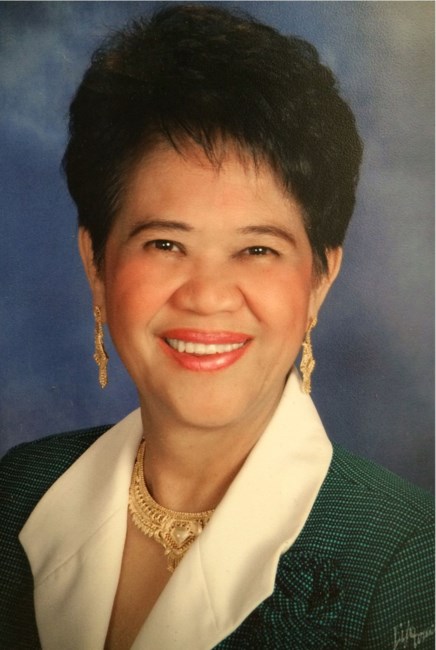
BIOGRAPHY OF ROSALINA VEJERANO IDOS
Part I: Childhood, Family, and Becoming an Educator
Rosalina Vejerano Idos, fondly called “Sally” or “Saling” by friends and relatives, was born on March 18, 1944 in Ligao City, Albay, Philippines. She was the youngest of six children born to Fulgencio Vejerano, Chief of Police of Ligao, and Beatriz Quinto Vejerano., a housewife. Sally had a very difficult childhood due to the rigors of World War II and postwar life. She was orphaned at the age of six, with both of her parents passing away due to illness. At the time, her five siblings were not old enough to work to support the family. Taking pity on Sally as the youngest child, her relatives took turns raising her in different households. Despite these early challenges and being known as “napagiwanan” (meaning “orphan” in Filipino), Sally persevered, and was also known as “matali” (meaning “intelligent” in Bicol). She managed to reach the top of her class, graduating as the valedictorian in both her elementary school and high school. Her diligence and resilience were evident at a young age, qualities she retained and continued to exhibit throughout adulthood.
Two parental figures made an indelible mark on Sally’s life: her older sister, Leonila (“Mama Oning”), a science teacher; and brother-in-law, Don Jose Madarieta (“Papa Joe”), a kindhearted and successful proprietor. They instilled the importance of education, moral values, ethics, and positive actions toward humankind. Their generosity allowed Sally to attend college and complete a Bachelor’s degree in English language and literature, with a minor in history, at the University of the East (UE) in Manila. Sally graduated magna cum laude in 1965, was on the Dean’s List, and was the sole recipient (among thousands of students) of a distinguished commendation for exemplary citizenship. She not only achieved academic excellence, but also served as a leader and role model among her peers, serving in various student leadership roles.
After graduation, Sally taught English and history for two years at her alma mater, Mayon High School, in Ligao. In 1967, she returned to UE, her college alma mater, as a supervising teacher in English and social studies. That is where she met the love of her life, Salvador S. Idos (“Ador”), who was also a supervising teacher in UE’s College of Education. Sally became a professor in 1969, and taught English at UE for a total of 20 years. She also completed graduate level courses in Filipino/Tagalog language and literature at Ateneo de Manila University.
Sally and Ador were married on December 21, 1969 at San Vicente de Paul Catholic Church in Ermita, Manila. They are blessed with three children: Nathaniel, Rey, and Lady Lou, who were all born in Sampaloc, Manila. Sally and Ador became deeply involved in the Marriage Encounter Movement, which hosted Catholic retreats designed to strengthen marital relationships between spouses. The program aimed to improve communication skills by expressing love through words and actions, deepen emotional and spiritual connections, and reaffirm their commitments to one another. Participating in this movement became a transformative experience for both Sally and Ador, who later became organizers to support other couples in the program.
Sally believed in human rights, civil rights, and free and fair elections, supporting the EDSA People Power Revolution against tyranny in 1986. UE, where Sally and Ador taught, was located only a few blocks from Malacañang Palace (the official residence of the Philippine President), where many student protests occurred. Sally made her classroom a refuge for student demonstrators, stocking extra t-shirts for those who were escaping violence and teargas. At one point, one of her students revealed himself as a student spy of the Kabataang Barangay network, and sternly warned her against supporting student activists. While Sally was stunned by his reprimand, she remained vigilant and undeterred, and continued to support causes for justice.
Part II: Pioneering Achievements and Community Impact
Sally and her family immigrated to San Diego, California in June 1987, where she started work as a teacher’s assistant at Morse High School. In less than a year, in 1988, Sally passed the CBEST credentialing exam in English and social studies, and Morse soon hired her to teach U.S. government and economics.
Sally is best known for starting the first units-based Filipino language course and program at the high school level in San Diego (and potentially the first of its kind in the United States). As of 1988, Bell Jr. High School (a feeder school to Morse) already offered a Filipino language class in the San Diego District. It was taught by Sally’s colleague and good friend, Evangeline (“Lina”) Lopez-Delute. However, students who were transitioning out of Bell could not continue learning Filipino at Morse because it was not offered, despite the two-year foreign language requirement for high school. Consequently, parents, students, and community activists mounted a campaign urging the San Diego District Board to approve a Filipino language class at Morse. The board conceded, but with skepticism. While the initial Filipino class at Morse was approved, it was assigned at 0 period starting at 6:30 am—demonstrating the board’s lack of support and faith that the program would actually succeed.
Undaunted, Sally accepted the challenge of an early class start, and launched the new pilot course in 1989. She managed to convince her teenage students to attend class at 0 period, demonstrating community interest and ensuring the program’s success. Sally even arranged cultural dances on campus to spread awareness and generate growing support for the new Filipino class offering. Against all odds, a small but mighty group of students (less than 10) persevered and completed the class by the end of the school year, proving their commitment to learning the language and culture. Following the successful completion of the pilot program, Sally was finally granted approval to teach two classes of Filipino in 1990, the first of its kind in San Diego high schools. In the meantime, Sally obtained her California credential to teach Filipino, which made her the only credentialed teacher in Filipino language in the United States!
During that time, deep cultural tensions and misunderstandings existed between students born in the Philippines and those born in the U.S., as well as between U.S.-born students and their immigrant parents. With students from both countries enrolling in Filipino language classes, Sally cultivated a community of belonging both in the classroom and through cultural performances (i.e., culture nights). She worked tirelessly to ease animosity by promoting a stronger appreciation of their shared heritage. Sally also established the Filipino-American Parents Association (FILAMPA) to help address and resolve family conflicts, and establish a better understanding of cultural and social differences between immigrant parents and their U.S.-born children. Sally facilitated several dialogues grounded in respect and cordiality between students and parents—efforts that were featured in The San Diego Union-Tribune.
By the mid-1990s, enrollment in Filipino language classes at Morse High School continued to grow by leaps and bounds. In order meet the high demand, Sally asked her husband Ador, a mathematics teacher, to help teach in the program and obtain his own language credential. They both taught Filipino full-time at Morse, offering 10 classes of Filipino (including a wait list!). She was known to her students as “Ginang” (or Mrs.) Idos. The Filipino student population at Morse has remained around 45% since that time, with many eager to learn about their heritage.
In 2000, Sally earned her Master’s degree in education at National University, where she focused on curriculum development. She became a curriculum writer at Morse and developed a four-year Filipino language program, including two new courses: Filipino for Native Speakers, and an Honors Program in Filipino.
Prior to the launching of the Filipino language program at Morse, high schools primarily offered the “Big Three” major language electives: Spanish, French, and German. Thanks to Sally, Filipino was one of the first “Less Commonly Taught Languages” (LCTL) offered at Morse. In the State of California, 19 LCTLs have since followed suit after Filipino, including Vietnamese, Somali, Arabic, Hmong, Lao, and Korean. According to Dr. Duarte Silva, Executive Director of the California World Language Project at Stanford University, Sally’s Filipino language program and curriculum was “the model for the less commonly taught languages in California.”
In 2005, Sally organized and led a delegation of educators, students, and parents to Sacramento to lobby for the passage of a new law to formalize the instruction of LCTLs in California. Her testimony before the California State Legislature emphasized the importance of Filipino language classes, amplifying the successes of the program in San Diego. Sally’s efforts helped to pass California Assembly Bill (AB) 420, requiring the California Commission on Teacher Credentialing (CTC) to develop a subject matter examination in the Filipino Language, and ensure the preservation of Filipino language instruction in California K-12 public schools.
Once the law was passed, Sally chaired a select group of teachers who created and authored the California Subject Matter Examination (CSET) for Filipino, a credentialing instrument for all prospective teachers in Filipino statewide. Since 2006, the CSET Filipino exam has been a part of the standard world language authorization process for competency certification by the CTC, thanks to Sally’s leadership.
Part III: Recognitions and Legacy
In 2007, the California Language Teachers Association (CLTA) honored Sally with a prestigious statewide recognition: the “California Outstanding Teacher Award.” The year prior, her alma mater, the University of the East, honored her with the “Alumni Achiever Award”. In continuing her service to the community, Sally also served as a three-term President of the Council for Teaching Filipino Language and Culture (CTFLC) from 2006 to 2011. In 2010, during her incumbency, CTFLC hosted the 2nd International Conference on Filipino as a Global Language in San Diego. It was a highly successful event, attracting hundreds of Filipinos from around the world. With a Filipino diaspora of approximately 10 million people, preserving the language and culture remains of utmost importance.
Sally is one of the authors of the San Diego School District’s Standards for Foreign Language Teaching. She worked for the Language Acquisition Resource Center (LARC) at San Diego State University to create the Filipino Online Placement Test. Sally partnered with the University of California San Diego (UCSD), University of California Los Angeles (UCLA), and University of California Berkeley (UCB) to draft curricula for online Filipino heritage learners, as well as with Alliant University to develop the Filipino Credentialing Program for teachers. Sally was also a Teacher Trainer for the Leadership Team of the Southern Area International Languages Network (SAILN), which trains professionals to become effective teachers of their own native languages. Professionals who completed this program became Fellows of the Languages in California. Through this program, Sally became close friends with many colleagues from different cultures.
In 2014, Sally and Ador were invited by founder and entrepreneur, Tony Olaes, to help conceptualize The Filipino School (TFS), the first of its kind in San Diego. TFS seeks to educate and empower the Filipino diaspora through learning, awareness, and a celebration of heritage, culture, and history. As one of the founding instructors at TFS, Sally was a major developer of its initial curriculum, lesson plans, and school structure. TFS also promoted educational tours to the Philippines, appealing to young Filipino-American professionals and university students who had never visited their homeland. Since the time of Sally’s involvement, TFS has now expanded to reach a global audience through educational YouTube videos (under “The Filipino Story”), reaching countless Filipinos across the diaspora.
Sally continued to be recognized for her achievements, including several Awards of Recognition from the California State Assembly; the “Outstanding Teacher Award” from the Foreign Language Council of San Diego (FLCSD); “Educator of the Decade” from FILAMEDA; and the “Special Achievement Award” from Morse High School. Sally’s name appears on the Wall of Tolerance in the Civil Rights Memorial Center in Montgomery, Alabama, as a pledge to instill justice and tolerance among her students and community. Sally has also been recognized in the Who’s Who Among America’s Teachers and Who’s Who Among American Women.
Today, in 2026, the Filipino language program that Sally championed and established continues to thrive. There are now almost 2,000 students enrolled in Filipino language classes in San Diego, second only to Spanish. Filipino language instruction is now well-established in all levels of K-12 in the county, and continues to expand in other cities across the nation.
Sally accepted these achievements and recognitions with deep humility. She derived immense pride and joy from seeing her former students and colleagues succeed, who served as living examples of her plaques of recognition.
Her greatest joy, however, was her family: a family united in love. Ador and Sally’s love story of 56 years is one for the ages. They happily celebrated their silver wedding anniversary in 1994, and their golden wedding anniversary in 2019 with their relatives, friends, and colleagues. Their three children are blessed with successful careers: Nathaniel Idos (“Niel”) is a financial broker at Charles Schwab; Rey Idos followed in Sally’s footsteps and teaches Filipino and mathematics at Eastlake High School; and Dr. Lady Lou Idos (“Lady”) is the Chief Stewardship Officer at Lawrence Berkeley National Laboratory. Ador and Sally have three wonderful daughters-in-law: Yolanda (“Yoli”), Margarita (“Marge”), and Eunice; one granddaughter, Riana; and two grandsons, Giovan and Hector. Sally also enjoyed traveling, nature, literature, and Broadway musicals.
Sally lived an incredible life full of love, joy, and laughter. It was a life well lived, a life of service, and a life fulfilled.
May she rest in the Lord’s eternal peace.
Show your support
Add a Memory
Share Obituary
Get Reminders
Services
SHARE OBITUARYSHARE
- GET REMINDERS
v.1.18.0