
AVIS DE DÉCÈS
Francis Xavier McDonough
6 août 1923 – 24 août 2021
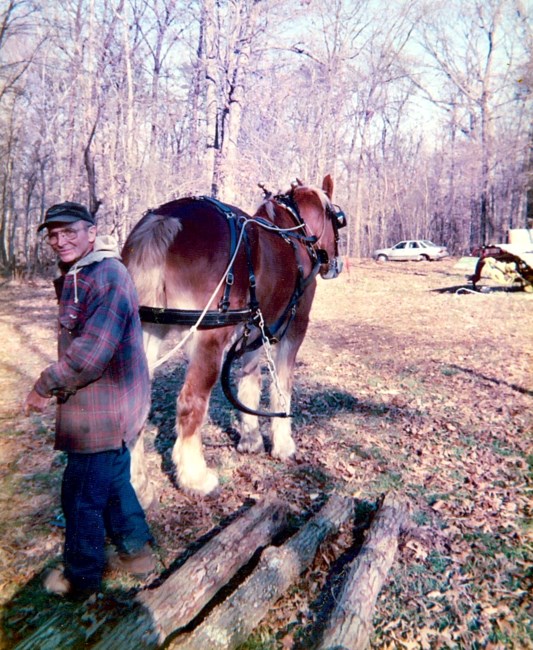
Francis Xavier McDonough of Bowie, MD passed away on Tuesday, August 24, 2021. Francis was born on August 6, 1923, to the late Joseph Michael McDonough and Rose (Hudaky) McDonough. Francis was the husband of the late Mary Louise (Kramer) McDonough, who passed away on February 4, 2008. He was the father of Patricia A. McDonough of Bowie, MD, Kathleen Whisler (Lynn) of Ormond Beach, Fl, Mary Ellen McDonough Wymetal (Ritch) of Charlotte Hall, MD, Lois Van Sickle of Bowie, MD, and Joan Bowers (Tom) of Ridgely, MD.
Francis also is survived by eight grandchildren: Lynn Whisler (Jen), Joseph, Mark (Karen), Elisabeth Garcia (Jess), Leslie Gilding (Mike), LIndsey Billings (Jon), Robert VanSickle, and Frank Fluharty. He is survived by two great-grandsons, Zachary Whisler and Joshua Garcia. His great-grandson Ryan Nathaniel Gilding, an infant strong in spirit, preceded him in death. His great-niece, Beverly Kehr Williams, always brought a big smile and dancing eyes to Frank with her regular messages and gifts. Lisa Buemi Collier and Nicole Buemi Grady were like granddaughters to him. Because Francis and his sisters and brothers were very close emotionally, his nieces and nephews and friends were absolutely treasured, as were his niece and nephews, Jenny, Jim, Johnny, Don, and John Meyer. Frank's young friend, Amber Wist of Ascension Church, brought tears of joy to him with her thoughtful cards and messages each holiday.
In his later years, Francis said that the first memory that brought him satisfaction in life was that he was able to join the US Army and do his part to help bring down Hitler. Corporal McDonough, 20, served in the first wave of D-Day assault troops who landed on hot and noisy Utah Beach, in Normandy, France, early on June 6, 1944. There were many dead American infantrymen floating face-down upon the waters approaching Utah Beach, which was periodically shrouded in gunsmoke, as landing crafts approached the beach. When the ramp of his own landing craft was lowered, Corporal McDonough and his gun-crew drove off of the ramp into the storm-tossed bay waters which splashed up high upon their water-proofed half-track vehicles. The half-tracks crossed about thirty feet of cold, churning water, moving among dead and dying soldiers under heavy enemy machine gunfire. One half-track driver was wrenching his steering wheel to the left and right, trying to avoid driving over and crushing the bodies on the beach. In anguish, that young man left his half-track in desperation, and began running up and down a part of the beach, screaming in horror. He flung himself a short distance into the chilly, heaving waves in the hope of returning to England. Then sobbing uncontrollably, the young man returned to the beach, where he ran blindly. Corporal McDonough and Sgt. Carl Zebrowski of McDonough's half-track tackled the soldier and pulled him safely out of the direct lines of enemy gunfire.
Striding on the beach was General Theodore Roosevelt, Jr., with about five of his aides, who were all directing the incoming military traffic to their pre-arranged destinations while under heavy enemy fire. Frank McDonough said that the sight of that immensely respected, popular general greatly encouraged the young men, many of whom, like himself, had never been in combat. General Roosevelt had been multiply-wounded in the First World War, and he walked with a cane, yet he had volunteered at age 57 to serve on a landing beach. The service he rendered to his troops that day was immeasurable, Francis McDonough later said. The general was posthumously awarded the Congressional Medal of Honor for his valor on Utah Beach, where the Americans were under enemy gunfire coming from so many directions that they did not know if their own returning gunfire was having any effect. Francis later said, "At the end of the day, all we wanted was a little bit of fresh water, and protection from the dark night.It was a very dark night."
In 2019, at age 96, former Corporal McDonough said, "I feel humble to have been a part of D-Day, because the US Government tried to give us everything we would need, and what they did for us was beyond our expectations. I am so thankful to have been a part of D-Day, because I think we really did something."
Upon much reflection, Mr. McDonough said that he thought it was good that modern-day visitors can go to the D-Day beaches as a part of tours, if they go with the intention of paying respect to the total sacrifices for Freedom made there by so many servicemen of many nations in a massive Allied undertaking which had implored God's blessing. Yet the former corporal's brown-green eyes suddenly flashed fire when he added with fierce passion, "But if visitors go to the D-Day beaches when they are impatient to be somewhere else, they should just stay away!"
Frank McDonough put God first in his life, and the Lord enabled him to do even more good on Earth than even his innovative mind could have imagined. He fought in five European campaigns with the US First Army, and in 1944 was inspired forevermore by members of the French Resistance, the Maquis, and in 1945 by members of the Polish Resistance, whom he saw in action, imbued with the same love of Freedom as Americans. He and his gun-crew served through the brutal Battle of the Ardennes/Battle of the Bulge in very deep snow at near zero degree F. temperatures from 16 December, 1944-end of January, 1945. His outfit was at the Remagen Bridge in March, 1945, where they and 4 other half-tracks shot down Nazi fighter planes and two ME 262 jets, although they had never seen a jet before. In April, the US First Army liberated the Nazi concentration camp of Nordhausen, Germany.
Frank McDonough and his beloved brothers, Johnny and Tommy, returned home from the war. in 1945 and 1946. Frank said, "I thank God everyday that my brothers and I came home from the war, alive and well." For the rest of his life, Frank lived his Faith through many groups at Ascension Church in Bowie, MD,where he worked to help the poor, the homeless, wayward youth, and young students. He was an active farmer and sawyer, using his farm's sawmill to cut dead trees into lumber for fences, barns, and sheds. He cut firewood for the poor, and delivered to them before coming storms. He was a master carpenter so gifted that he was almost a wizard. He built his own home, and irrigated his fields via the system he built. Horsepen Creek was the crop-saving source of water. There never seemed to be anything he could not build or repair. If he needed something, he made it. He built his meat-room and taught his young relatives how to process, cure, and smoke meats from the farm. Frank loved to teach his grandchildren how to fly kites, to decorate for Halloween and Christmas, to respect Nature, and to treat animals with respect and compassion. Horses, dogs, and children were drawn to Frank. His four large draft horses followed him lovingly.
From watching Frank McDonough in action for all of their lives, his family learned that 'Neighbor is not a geographic term. It is a moral concept,' as Rabbi Joachim Prinz once wrote. On the evening of Frank's 98th birthday on August 6, 2021, Frank said, "Thank you, Lord, for my long life. I really appreciate it!" Former Corporal McDonough died peacefully at home in his bed on August 24, 2021, upon which his family believes that he reported for Duty before his beloved Lord and Savior Jesus Christ, as he rejoined his family and friends, whom he loved as relentlessly as he loved Freedom and the United States of America. Blessed be God!
A Mass of Christian Burial will be celebrated at a later date. Interment will take place at the Crownsville Veterans Cemetery, with military honors and the accompanying American flag.
.
Montrez votre soutien
Envoyez Vos
Condoléances
Partager
L'avis De Décès
Obtenir les mises à jour
Prestations de Service
Partager l'avis de décèsPARTAGER
- RECEVOIR DES RAPPELS
v.1.18.0