
AVIS DE DÉCÈS
Paula Brown Doress-Worters
27 août 1938 – 21 février 2026
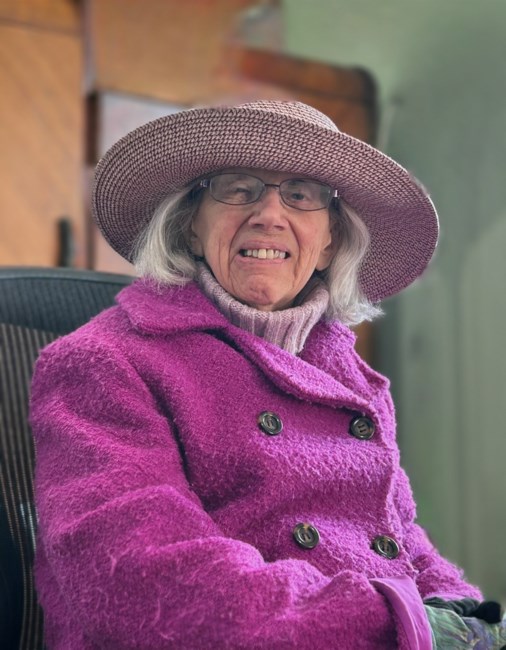
Paula Brown Doress-Worters – author, activist, public intellectual – died at age 87 on February 21, 2026 in Redwood City, California, at the home of her daughter Hannah Doress and daughter-in-law Emily Bender, after a long illness. Paula was born in what she calls in her forthcoming memoir “that terrible and wonderful year” of 1938 to Ethel and Abraham (Abie) Brown, Jewish immigrants from Poland who met in Boston’s West End. Ethel called Paula a goldeneh neshema (“golden soul”), which Paula demonstrated throughout her life as a writer, activist, mother, spouse, and friend.
Paula grew up in Boston’s redlined Jewish enclaves, Roxbury and Dorchester, and was influenced by observing the racism faced by Black classmates and neighbors integrating into the neighborhood in the 40s and 50s. Her educational journey reflects her beginnings as an American-born daughter in a working-class immigrant household. She attended both public grammar school and the Jewish Maimonides School. She graduated from Roxbury Memorial High School, and then secured an accounting degree at Bentley. Working as an accountant, she contributed to her parents’ household, and saved money to attend Suffolk University, where she first learned about nineteenth-century women’s rights advocate, abolitionist, and Jewish freethinker, Ernestine Rose. Paula earned her BA at Suffolk in 1962.
One of Paula’s first jobs out of college was working for Black Congressional candidate Noel Day, co-running a Roxbury community organizing center, where she collaborated with local residents to identify their priorities and joined them to fight for equal treatment for Black women on welfare.
In 1964, Paula married Irvin Doress, with whom she shared a life of activism, movement work and extended family. In 1966 Paula gave birth to their daughter Hannah Doress, who joined her in a backpack canvassing for Vietnam Summer and in the 1968 vigil she and Irv organized in response to the assassination of Martin Luther King Jr. In 1969 their son Ben Zion was born. After Hannah’s birth, Paula experienced serious postpartum depression, which shaped her later commitment to improving the mental and physical wellbeing of women after childbirth.
In the spring of 1969, Paula attended her friend Miriam Hawley’s workshop on “Women and the Control of Our Bodies” at the Female Liberation Conference at Emmanuel College in 1969. The women in the workshop zeroed in on childbirth, sexuality and abortion, which was illegal at that time. Thrilled by what they were learning from each other, the group met over the following summer, intending to arm themselves with the information they needed to successfully confront their male ob/gyns and other providers. Over the next few years, the group researched, taught and wrote up the papers that would become Our Bodies, Ourselves, a ground-breaking book on women’s health and sexuality. Paula joined eleven of the co-authors to found the Boston Women’s Health Book Collective (now Our Bodies Ourselves).
The Collective refined and published a groundbreaking mix of clearly worded information, astute political analysis and diverse personal experiences -- first in a newsprint edition from the socialist New England Free Press, and, ultimately, in order to reach more women, with the commercial publisher Simon and Schuster. The book became a best-seller in 1973, striking a forceful and lasting blow for women’s equality and control of their lives, which grew through ten subsequent editions and 34 adaptations worldwide. Transforming her own painful experience into lasting change, Paula co-authored the chapter on “Postpartum.” She contributed later to chapters on “Our Sexual Relationships” and “Considering Parenthood.” For the Collective’s book Ourselves and Our Children (1978), Paula wrote a chapter on society’s impact on parents, including how parents could work for feminist change.
Starting with the 1992 edition, Paula authored a new OBOS chapter called “Women Growing Older.” Her work on this chapter grew into a lifelong interest in women and aging. Decades ahead of the emergence of today’s public discussion of menopause and women’s health past child-bearing age, Paula coauthored, with Diana Laskin Siegel, another groundbreaking book, Ourselves Growing Older (OGO) (1987, 1994).
Over five decades, Paula worked in the OBOS office and served on the OBOS Board. She also served on the Founders Committee, which guided the 2025 merger/transition of OBOS to a multi-racial, multi-generational project at Suffolk University’s Center for Women’s Health and Human Rights. In earlier years, Paula enjoyed traveling for the Collective, going with Norma Swenson to represent OBOS at the World Conference of the United Nations Decade for Women in Copenhagen in July, 1980. Paula participated in many TV appearances and speaking engagements nationally, including one in which she was paired with a doctor who droned on about different versions of the birth control pill displayed in front of them. Paula knew she had to intervene. Finding a diaphragm on the table, Paula raised it like a torch into the air. With cameras flying in her direction she exclaimed, “This is a diaphragm," rapidly and passionately rattling off all the facts she knew about its effectiveness and safety.
Paula and Irv joined a group of heterosexual couples wanting to foster more egalitarian relationships. Along with half of the group, they formed a Commune on Mission Hill in 1970, hosting parties, cultural celebrations, and yoga, and where men supported each other to reinforce new habits. The following year Paula, Irv, Hannah and Ben moved to Brookline.
In 1979 Paula and Irv divorced. In 1983 , she met the love of her life, single dad Allen J. Worters. Paula and Allen married in 1986 and moved to a large old house in Newton Centre, where they hosted family dinners, musical evenings, and annual Seders celebrated by Collective members and their families (using the feminist Haggadah created by Paula, Miriam Hawley and Vilunya Diskin decades earlier). Paula and Allen each formed loving relationships with the other’s children, Paula with Allen’s daughter Susan Reel and son David Worters.
In addition to her work with Our Bodies Ourselves, Paula long pursued higher education and feminist research. At Emerson College in the 70s, she taught a women’s history course that was a forerunner in the field of Women’s Studies. One of the last living suffragists, Florence Luscomb, was a speaker in her class. She also taught Jewish studies, and had a lifelong passion for Jewish history.
In 1981, Paula completed her MA in Women’s Studies at Goddard College. She completed a Social Psychology PhD at Boston College in 1993, with a dissertation on caregiving. As a Fellow at the Brandeis Women’s Studies Research Center starting in 1998, Paula returned to her interest in the 19th-century Jewish feminist, abolitionist, and freethinker Ernestine Rose, traveling with Allen for the research. In 2008, she published Mistress of Herself (Feminist Press), an edited collection of Rose’s speeches and letters. She presented at the University of Lodz Gender Studies conference in Rose's native Poland, and spoke to city officials in Piotrkow, where Rose spent her childhood. Paula formed the international Ernestine Rose Society, raised funds to restore Rose’s sunken grave at London’s Highgate Cemetery, and assured Rose’s inclusion in lists of notable people buried there.
Paula is quoted in many books, including Jewish Radical Feminism (2018) by Joyce Antler, and The Movement: How Women’s Liberation Transformed America (2024), by Clara Bingham, and appears in the 2014 documentary She’s Beautiful When She’s Angry by filmmaker Mary Dorr. She has a listing in the encyclopedic Feminists Who Changed America 1963-1974, edited by Barbara J. Love (2006). She was interviewed for and features prominently in Rachel Louise Morgan’s book Blue: A History of Postpartum Depression in America (2024).
At the time of her death, Paula was completing a memoir, a meditation on how her humble outsider beginnings as the daughter of Jewish immigrants in Boston sharpened her sense of justice and action-orientation. Their household had stretched to embrace Aunt Tobey and Uncle Leo, who had fled Nazi-occupied Austria during the Holocaust. Their household also hosted the family of her cousin and Jewish Feminist author Frieda Forman, with whom she shared a deep peer relationship. The gentle sincerity and commitment of her parents, along with the risk-taking heroism of her aunt and uncle, fostered Paula’s loyalty, authenticity, a strong ethical core, and intermittent daring expression. The forthcoming memoir brings us through Paula’s key experiences of resistance to patriarchal injustice and identification with struggles of people of color in the US and abroad. The many, beautifully told family stories open a period of history that many of us don’t know about, and introduce us to Paula’s infectious sense of humor, her appreciation for the comedy of life.
In addition to her profound life-long commitment to women and their lived experience, both contemporary and historical, Paula continued to devote her time and energy to a broad range of social movements and progressive political endeavors. She canvassed for candidates and causes and was an avid writer of letters to the editor. She continued pushing out of her comfort zone for the causes she cared about throughout her life. The last of her countless public protests was this past October 18th, four months before her death.
As accomplished as Paula was in the public sphere, her deepest commitment and love went to her family and friends. She cared for her parents in the last years of their lives, rejoicing that her father lived long enough to witness her marriage to Allen. She kept an eye on her eccentric aunt Tobey for as long as Tobey lived. She loved preparing Shabbat dinner with her adult son Ben, and spoke with him every day in the last years of her life. With Hannah, she shared a brilliant and iconoclastic feminism, activism for peace and justice, hilarious laughter, and singing together, everything from activist anthems to schmaltzy croons. Hearing Hannah and Paula laugh together over something that cracked them up was a pleasure in itself. And if you were a friend of Paula‘s who was laid up in some way, Paula would be there with lilac blooms and a beautifully packed up lunch to share.
Paula was delighted at the transformation of Tobey and Leo’s shul, Temple Hillel B'nai Torah, where she and Allen became actively engaged in community and learning. Achieving Paula’s long denied wish for a Bat Mitzvah, they celebrated a group B'nai Mitzvah at Temple HBT. Paula also endowed the Allen J. Worters Memorial Lecture there after his death in 2005.
After a long illness, during much of which she lived in California under the faithful, loving and creative care of Hannah and her spouse, Emily Bender, Paula died peacefully at home on February 21, 2026. In addition to her children and stepchildren (mentioned above), Paula leaves her grandchildren Jayne Reel, Rowan Adams, Julia Reel, Olivia Worters, and Abraham Bender-Doress; brother and sister-in-law Mendy and Carole Brown; the surviving OBOS founder-sisters Joan Ditzion, Miriam Hawley, Judy Norsigian, Jane Pincus, Wendy Sanford, Vilunya Diskin, Elizabeth MacMahon-Herrera, Sally Whelan, Ayesha Chatterjee and Kiki Zeldes; OGO co-author- sister Diana Laskin Siegel; extended family member Kyra Zola Norsigian; and a world of colleagues and friends who miss her greatly. May her memory be for a blessing.
Paula’s Funeral Service will be held at Stanetsky Memorial Chapel, 1668 Beacon Street, Brookline, MA on Tuesday, March 3rd at 10 AM. The service will be livestreamed at https://client.tribucast.com/tcid/c26023274182081. We will celebrate Paula’s life and work in a community memorial at a future date, TBA. On Thursday, March 5th, there will be a Shiva Minyan gathering at Temple Hillel B'nai Torah, 120 Corey Street, West Roxbury, MA 02132. The shiva, a Jewish tradition that involves visiting with mourners and sharing stories about the departed, will take place from 6-8 PM, with a minyan with Mourner's Kaddish starting around 7:30pm.
The Shiva will include a zoom for those that can’t attend in person. Contact the HBT office 617-323-0486 to request the Zoom link.
Learn more about Paula and see a timeline of her life at PaulaDoressWorters.com. Her archives and the OBOS archives are held at the Harvard Radcliffe Schlesinger Library.
If you wish to donate in Paula’s memory, thank you! Keep the work she co-started going for the generations with a donation in her name to Our Bodies Ourselves (OurBodiesOurSelves.org) -https://ourbodiesourselves.org/donate and / or attend the OBOS Feminist Tea Party event at Suffolk University on March 8. https://ourbodiesourselves.org/events
Montrez votre soutien
Envoyez Vos
Condoléances
Partager
L'avis De Décès
Obtenir les mises à jour
Prestations de Service
Partager l'avis de décèsPARTAGER
- RECEVOIR DES RAPPELS
v.1.18.0