
AVIS DE DÉCÈS
Michael Robert Bristow
8 novembre 1944 – 24 novembre 2025
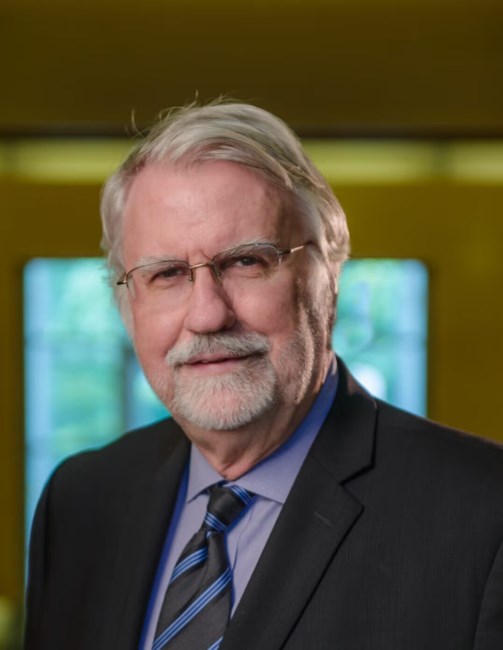
Michael Robert Bristow, 81, of Cherry Hills Village, Colorado passed away on 24 November 2025. He was a devoted husband, father, grandfather, physician, entrepreneur, and distinguished pioneer in medical research.
Born in Florida to JC and Rosemary, Michael was the eldest of five children and was raised on a farm near McLean, Illinois. From an early age, sports became his primary passion in life. He was a devoted St. Louis Cardinals fan and starred on his high school basketball and baseball teams. His first career dream was to become a sports announcer. On the farm, Michael worked with his family’s animals, winning prizes for showing his dairy cattle. He combined this experience with animals and his academic talent to become the first in his family to attend college. He then graduated with a B.S. in veterinary science from the University of Illinois.
While at the University of Illinois, Michael found his true vocation, ultimately impacting millions of future heart failure patients worldwide. Taking a part time job in a research lab, he discovered his passion for scientific discovery. He went on to complete the University of Illinois-Chicago’s inaugural MD/PhD program in pharmacology, followed by an NIH postdoctoral fellowship at Stanford University in cardiology and oncology. In 1979, he joined the Division of Cardiology faculty at Stanford, serving as a Project Leader on the Heart and Lung Transplantation Program Project Grant. In 1984, he moved to the University of Utah, where he co-founded the first multi-hospital heart transplant program in the United States. In 1991, he was recruited to the University of Colorado in Denver as Head of the Division of Cardiology, a role he held with distinction until 2004. He helped guide the division through a period of significant growth and national recognition. From 2004 until his death, he continued to advance his medical research and founded several biotechnology companies.
Driven by a tireless work ethic and a love of scientific discovery, Michael made enormous contributions to medicine. He authored more than 450 peer-reviewed scientific articles and chapters on heart failure, cardiac transplantation, pharmacogenomics, and other cardiovascular topics. Most importantly, Michael was a pioneer for the use of beta blockers to treat heart failure. As a result of Michael’s research and advocacy, beta-blockers were reclassified from being contraindicated in heart failure to becoming a first-line therapy shown to improve survival, ultimately extending millions of lives. He also founded or co-founded four biotechnology companies based on his research, developing pharmacological therapies for pulmonary arterial hypertension and atrial fibrillation in heart failure.
As a colleague, he was a friend and mentor to many. He guided dozens of fellows and junior faculty members, investing in their growth with generosity, encouragement, and extraordinary advocacy. Many of his trainees now stand as leaders in their own right — a testament to the lasting impact of Michael’s mentorship. Michael, known for his humility and loyalty, was loved and respected by his assistants, nurses, fellows, physicians, and distinguished researchers alike.
Despite these many career achievements, Michael would be the first to say his greatest accomplishment was his family. Michael met Karyn Kowalski and in 1978 they married. Together, they had three sons. Michael leaves behind his devoted wife of 47 years, his son Justin, daughter-in-law Kristin, three grandchildren, Caius, Titus, and Mila, his son Nathan, his son Jacques, and his daughter-in-law, Kara. To his family, this titan of medical science was a kind and gentle man who professed humility in all things unrelated to Colorado sports and the achievements of his children. Michael’s only impulse was to love and support those he loved, often taking his sons with him to medical conferences or later, taking the time to fly or drive from those conferences to visit them at their distant military postings and sporting events. Despite maintaining the work ethic of a professional physician until his death, Michael always took the time to walk the family dog, Gigi, every morning before work.
Though he worked rigorously, Michael experienced life to the fullest. He never abandoned his passion for sports. Even without a microphone, Michael was an almanac of sports history and could deliver professional-level real time sports analysis on any team and its players, especially for his beloved Denver Broncos, Utah Jazz, Colorado Rockies, Colorado Avalanche, University of Colorado Buffaloes, and Duke University Blue Devils. He always entertained the possibility of dessert after a meal. He loved to ski and would admire the Rocky Mountains on his morning runs on the Highline Canal Trail. He was a patriot that loved the United States. He could hold dinner conversations about medicine, business, national politics, world history, and somehow make all these subjects converge on the most profound topic— college and professional sports.
For his family, he was the unassuming yet formidable castle on the hill, the rock upon which we leaned, and the safeguard of our growth.
We all miss him dearly.
A memorial service to celebrate Michael’s life will be held at Olinger Chapel Hill Mortuary and Cemetery at 11am on Saturday, 6 December 2025, followed by a reception. If you would like the opportunity to speak about Michael during the reception, please contact Jacques Bristow at [email protected] or 303-550-8131 to coordinate speakers.
If you wish to make a donation to honor Michael and his lifelong commitment to medical research, his family asks you send your generous contributions to the Bristow Research Fund https://www.givecampus.com/campaigns/73484/donations/new?a=11575778&hide_in_memory_of=1&in_memory_of=496771
Montrez votre soutien
Envoyez Vos
Condoléances
Partager
L'avis De Décès
Obtenir les mises à jour
Prestations de Service
Partager l'avis de décèsPARTAGER
- RECEVOIR DES RAPPELS
v.1.18.0