
OBITUARY
Mildred "Millie" Fitzpatrick
December 11, 1921 – April 24, 2026
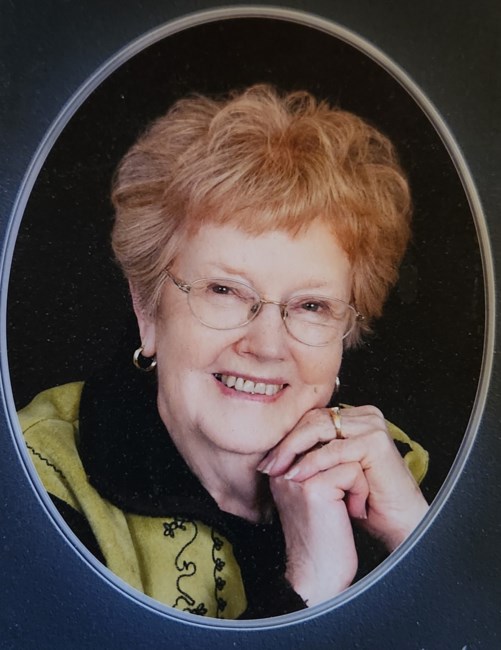
Mildred “Thoroughly Modern Millie” Frances Sturdevant Fitzpatrick was born on Sunday, December 11, 1921 to Pearl May Means Sturdevant and Lawnie Adam Sturdevant in Burlington, Colorado. She died peacefully at the age of 104 on Friday morning, April 24, 2026 at her daughter, Kathleen’s home in Black Forest, Colorado.
Chapter 1: Early Years in Burlington
Millie’s story begins in a small home in Burlington, Colorado where life was simple, structured, and full of love. Born at home, she grew up in a modest house, with two older brothers, Foster and Willard, an older sister, Cledith and a much younger brother, Philip. Her earliest memory was of her father, Lawnie, walking home from work. She would run out to meet him, and he would scoop her up, bouncing her on his shoulder the rest of the way home.
Burlington had a bandstand and one block of businesses. At age 10, Millie won a bicycle by selling the most tickets for the local theater. Already a budding businesswoman, she chose a boy’s bicycle which she rented to her older brother, Willard, for his paper route for $.25 per week. She was also a prankster. Once when she was helping her mother, Pearl, in the kitchen, she was asked by her mom for the use of her apron. “Oh, mother, you don’t want my apron,” she complained. “Mildred Frances, give me that apron!”, her mom insisted. Grudgingly, she gave her apron to her mother. “Mother, can I have what’s in the pocket?”, she asked. Pearl nearly had a heart attack when she reached in her hand and found Millie’s pet rat in the pocket!
Home life followed a rhythm in those early years—Sunday was church, Monday was laundry day, Tuesday was ironing, Wednesday was cleaning. On Monday nights the family sometimes ate dinner off of newspapers because the tablecloths were still in the wash. Meals were shared together, and each morning began with her father saying the Lord’s Prayer.
School didn’t come easily at first. On her first days, she cried and tried to go home with an “upset stomach.” But by the third day, she stayed—and everything changed. With the help of classmates and a set of dolls, she found her place and soon grew to love school. Her long red curls had the help of rags wound around her locks every night. She had a lively personality and a tendency to talk a little too much—once even earning a dunce cap for it. This outgoing trait, where every stranger she met was just a new friend for Millie, was one of her greatest assets!
Millie was close to her sister Cledith, just 16 months apart, and later welcomed her brother Phillip. As a child, she cut out paper dolls and even “picked out” her baby brother from the Montgomery Ward catalog—one of many early glimpses of her imagination and spirit.
Her childhood unfolded during the harsh years of the Dust Bowl. Dust storms would darken the sky so completely that children were sent home from school, hand in hand, with wet handkerchiefs over their mouths. She witnessed both the hardship and the resilience of her community—memories like gruesome “rabbit drives”, where neighbors gathered for both survival and shared meals. Those memories remained with her for life.
Summers brought a different kind of joy. Visits to her grandparents’ farm were filled with adventure—watermelons, just for Millie, were stored in the cool vegetable cellar, cream kept fresh in the springhouse, and wide-open land to explore. Of course, adventure sometimes meant trouble, like the time a heifer chased her because of her long, red tresses. Mad at the heifer, young Millie sicced the dog on the cow, setting off a chain of chaos involving a bull, a nearly-downed fence, a ruined flower bed, a chided grandfather and a very frustrated grandmother…. And a little redhead who never owned up to starting the whole thing!
As she grew older, Millie’s boldness and independence began to shine. In junior high, she got behind the wheel of a car before she really knew how to drive. She, with her girlfriend as passenger, drove her beau’s car around the block, because the boys were taking too long in the pool hall. The car ended up on the curb, nearly missing a tree. When the boys asked what happened, they said they “just needed some shade”. In one unforgettable moment, a mishap left her brother Phillip run over—though miraculously unharmed. The scare left a lasting impression on her and her older siblings.
In 1936, Millie’s father moved the family of seven from the eastern plains of Colorado to Boulder so that she and her siblings could all go to college if they so choose. She climbed the Flatirons, skied the early slopes of Colorado, and even started an all-girls dance band—though she admitted she preferred dancing to playing. Her young adult years were also marked by deep relationships and profound loss. She fell in love young and her first fiancé, Clifford, was killed early in World War II. Later, another love, Gene, was sent to Iwo Jima and died shortly after arriving. These experiences shaped her in ways that were both heartbreaking and enduring.
She attended the University of Colorado, where she and her sister Cledith started the first women’s intramural basketball team at CU. She would say that, “you couldn’t even get a glass of beer in the city of Boulder. You had to go up the canyon to the inn there for a cold one”. Millie graduated from CU Boulder in 1945 with a degree in Business. After college, she wanted to be a stewardess, but was 2 inches too tall. She went on to be the head statistician for Texas Oil Company (later known as Texaco). After WWII, she trained the men coming back from the war, including the gentleman who was promoted over her. When she went to upper management to complain, saying, “It’s a blow to my work”, the reply was, “you’re a good-looking redhead and soon you’ll be getting married and having children”. She emphatically replied, “you don’t know that! I’m handing in my two-week notice, right now!
Adventure called again—this time in the skies. Her life was never short on stories.
In 1947 the airlines raised their height requirement so that Millie could pursue her dream to see the world. She became a stewardess during the golden age of air travel, eventually rising to the role of Assistant Chief Stewardess for United Airlines. She took the assignment mostly because it allowed her to fly often to her favorite place, Hawaii. Her years in aviation were filled with extraordinary experiences such as attending major events and navigating the excitement and unpredictability of early commercial flight. During her flying years, she met several celebrities, including the cast of the movie, “Greatest Show on Earth” and musician Hoagy Carmichael, whom she met in a swimming pool. She frequently had Jimmy Stewart on her LA to Denver flights, as his fiancé Gloria had ties to Colorado Springs and the Broadmoor Hotel. Often those flights included exciting games of gin rummy. Actor/comedian Eddie Cantor couldn’t eat the food they had on the flight so Millie dug into the “baby kit” and heated up some baby food for him. She handled any emergency with calm and composure, from unlatched doors during takeoffs, to onboard fires and emergency landings, always prioritizing the safety of her passengers. In addition to flying and training, she did quite a bit of publicity for United - including working with MGM studios; one time she was liaison to the studio to make sure they did it right. The movie is called the Red-Carpet Flight 6534.
Millie’s red hair and good looks attracted many suitors—she dated a polo player in Beverly Hills, a gentleman whom she didn’t know was married (and was surprised one evening with the arrival of his wife and child!) and escorted actor Lon McAllister on one of her flights. She got a play-off ticket and an orchid from a Major League umpire, and had the gumption to request a trade of the flower for a signed baseball from All-Star hitter, Ted Williams and his teammates. Grandson, Christopher, still has that valuable baseball. She even went on a Washington, DC date with the only single Senator at the time - Senator Joseph McCarthy! She didn’t want to go on a second date because he drank too much!
Eventually, amid all the travel and adventure, came a turning point—a blind date that would change everything. After several years of near-misses, long-distance connections, and complicated timing, Millie connected with a handsome engineer, Gilbert Fitzpatrick. It was kind of an on and off relationship for a while, as Millie still had some fellows she wanted to get to know better. Gil was from Long Island, NY, and was an engineer working in Denver, but was transferred back to Cleveland and that meant a long-distance romance. As a very independent woman, Millie would visit from time to time, but Gil eventually became engaged to another woman. Millie was persistent so when she was flying a charter for one of the movie studios to Florida, she thought she’d like to reconnect with Gil. She sent him a note that she was going to be in Cleveland on her way home to LAX and would he be available for a drink for old times’ sake. (She never told Gil in the forty-eight years that they were married that she went out of her way to make that happen). Gil referred to her as “THE redhead” as a term of endearment. That was okay, but he knew not to ever call her just “Red” which made Millie see red! Their relationship unfolded with the same mix of independence, humor, and determination that had defined her life. And this time, the story found its lasting chapter.
Chapter 2: Life with Fitz
Before Millie became “Mrs. Fitzpatrick,” she was a young woman standing on the edge of everything—love, independence, and the unknown.
Just before meeting Gil, she traveled west to visit her brother Foster in Seattle. They continued on to Portland, where her father, Lawnie, offered one of those pieces of advice that would stay with her: he didn’t want to see her “go clear through the woods and come out with a bent stick.” It was his way of saying—choose wisely, live carefully, but live fully.
Not long after, she married Gilbert Fitzpatrick in Denver in April 1951. Millie’s wedding dress was specially-made by Robinsons in Westwood, California. The fabric was a candlelight satin that they said would get more beautiful with age. She must have been prescient, as three other family members have worn that dress; niece Bobbie Dee, daughter Kathleen and Bobbie’s daughter, Nicole. Nicole said, “Aunt Millie, there have been three great marriages associated with this dress and I would like to be the fourth!” Millie and Gil’s honeymoon at the Broadmoor in Colorado Springs was elegant and joyful, filled with golfing, swimming, and skating at the famous world arena. Little did they know that they would be back years later to see their daughter, Kathleen, win a gold medal at the Southwestern Figure Skating Championships in that same arena.
Their life together began with equal parts adventure and improvisation—fitting for two people who would spend a lifetime navigating both. They spent a lot of time outdoors. Gil was an avid hunter and fisherman so he gave Millie a shotgun as a wedding present! Gil bought a homemade trailer, hitched it to the back of his black chevy convertible, and the two set off as newlyweds. They planned to stop in Springfield, Missouri at her grandparents’ home who couldn’t make the wedding, but a wrong turn, a flat tire, and a late start turned their first night into one spent sleeping in the car. By the time they arrived the next morning, family members had already called the police, worried about the missing newlyweds. They were teased mercilessly—but it was a perfect beginning to a life that would rarely go exactly as planned.
They settled first in a modest one-bedroom apartment in Cleveland. Gil had one condition for Millie working: they would live on his salary alone. And so they did. Millie’s savings would get her the future home of her dreams. Millie returned to the airline world as a United ticket agent because the rules at the time were that stewardesses had to be single.
In Cleveland, they built a community that would shape their early years. A close-knit group of twelve couples—most of the men having known each other since high school—became lifelong friends. There were bridge games, weekend visits, New Year’s celebrations, and moments both joyful and dramatic. At one party, a jealous wife once threw a drink at Millie mid-dance. Millie, ever composed, simply carried on.
But life was not without heartbreak.
Their first child, Michael David, was born after years of hoping and waiting. He lived only seven hours. The loss was devastating—one of the deepest sorrows of Millie’s life, not even being allowed to hold this precious life before he left them. Yet even in grief, she carried on, supported by family, by Gil, and by a quiet resilience that defined her.
In time, their family grew, Linda arrived first, followed by Bill, Kathleen, and Kenneth Charles (aka Casey). They moved to Denver in 1958 after the birth of child number three. They were able to afford Millie’s dream home in the subdivision, Cherry Knolls, because her savings provided the down payment for the upgraded “show house”. The view was incredible. You could see Longs Peak to the north and Pikes peak to the south, with the snow-capped “Never-summer” range of mountains in between. Millie still has that house and lived in it for most of her 104 years! There were just 12 homes built when they moved in. Now there are over 400!
Each child brought new stories—some funny, some frightening, all unforgettable. There was Linda, who moved her potty chair to do her business outside so she could watch the workers down the street. She stuffed fuzz from a sock monkey up her nose which Gil needed to extract with his fly-tying tweezers. Bill was nearly electrocuted by an exposed cord, saved only because Millie acted instantly. (He went on to be an electrical engineer). Kathleen, who fell and embedded a pebble in her forehead—still there years later. And Casey, whose childhood seemed marked by a series of bumps and bruises and knocked out front teeth, received great care by his steady and determined mother.
Parenting for Millie was both instinct and intention. She believed in consistency—once learning from a friend that when you set a consequence, you follow through. It was a lesson she carried forward, raising children who understood both freedom and responsibility. She also believed in letting kids fight their own battles. So, opting out of a referee role, she often hid in a dry shower when they were searching for her to resolve a dispute.
Meanwhile, Gil’s career evolved. He completed his Electrical Engineering degree in addition to the Mechanical Engineer degree he already had, before the family moved back west to Denver. He joined Martin Marietta and quickly proved himself by solving a problem with a misfiring missile in a single day, a problem that had confounded other engineers for over a year. He dismissed it as simply “new eyes,” but Millie knew better…. He was a brilliant man!
Their home in Cherry Knolls became the center of a lively neighborhood filled with young families and children—thirty-seven kids on their block alone, with the Greens on one side and the Greenbergs on the other. It was a place of kids running in and out, sledding, skating, shared meals, and constant activity. Millie raised her children, sewed costumes, organized events, and somehow still found time to create joy in everyday moments. She believed that home and family were more important than keeping a spotless house. She had a needlepoint on her wall crafted by teenage Linda that said: “Altho’ you’ll find our house a mess, Come in, sit down, converse. It doesn’t always look like this, sometimes it’s even worse.” Linda worked on that project while sailing across the Pacific Ocean to Hawaii in a 32 ft ketch. The home was warm and welcoming, full of stuff and love, including a two-car garage with no room for cars.
Their life expanded beyond Colorado as well. A temporary move to Florida in 1964 for the Gemini space program brought new experiences—beach life, rocket launches, and evenings filled with bridge games and ocean air. There were adventures and mishaps alike: children tied safely to bridges while crabbing, close calls with marine wildlife, and the ever-present unpredictability of life on the move. Much to Millie’s chagrin, the temporary assignment was reclassified as permanent so Gil gave his notice to Martin Marietta. Shortly after arriving home to Colorado, he was offered a position at Samsonite, winning several awards for his design work on attaché cases and can openers.
Through it all, Millie remained the steady center. In addition to parenting, bridge and golf, Millie was an active member of Clipped Wings – a group of civic-minded retired stewardesses. She was instrumental in organizing a charity broom-ball hockey game against the Playboy-bunnies. Her Clipped Wings ladies had propellers on their helmets and the bunnies had ears on their helmets. Needless to say, the ex-stewardesses were more athletic and the bunnies spent much of the game on their “tails”.
She supported her children’s passions - the boys with athletics and music, and the girls with figure skating, where she not only cheered from the sidelines but sewed costumes, organized shows, and helped build the skating community itself. She believed in giving her children both roots and wings: responsibility matched with opportunity; discipline balanced with trust.
And then, almost without warning, the years passed.
The children grew.
The house began to quiet.
Chapter 3: Empty Nest — The Birds Will Fly
By the mid-1970s, the rhythm of Millie’s life began to shift. The house that had once been full—four children, constant motion, laughter, and the steady cadence of family life—was growing quieter. For three years, from 1971 to 1974, Gil’s mother, Ethel, lived with them, adding another layer of care and connection to the household. But one morning in 1974, Millie looked ahead and saw what was coming: four college-bound children, each stepping into their own lives.
Millie, never one to stand still for long, made a decision. It was time to begin again. What started as a simple idea—perhaps a position at a newspaper or in a travel agency—quickly turned into opportunity. She interviewed at the brand-new Hyatt Regency, and was offered a position in sales for the hotel’s new rotunda. It was a promising start, though at a reduced salary due to her lack of formal sales experience.
But fate, as it often did in Millie’s life, intervened.
On her way home, she stopped at Paradise Valley Country Club for a Clipped Wings luncheon. There, through a chance conversation, another door opened. A local travel agency owner, Adona Hipple, offered her a job on the spot. Millie, practical and confident, negotiated—if the salary matched Hyatt’s, she would accept. That’s how she joined Greenwood Travel where she would stay for 27 years.
It was more than a job—it was a calling. Millie believed that to sell travel, you had to live it. And so, she did, becoming one of Denver’s first Certified International Travel Counselors in 1981 and building a career that allowed her to explore the world she had always been drawn to.
She visited 59 countries and six continents, turning work into adventure and clients into stories. She often described her job as “a full-time paid vacation.” But it was more than that—it was an extension of who she was. Adventurous. Fearless. Curious. Always ready. And always ready for a little mischief.
Millie brought laughter wherever she went. She was known in the office for her playful spirit—practical jokes, elaborate pranks, and a knack for turning ordinary moments into unforgettable stories. On one of her many familiarization or “Fam” trips, she and her roommate found a man’s “athletic suporter” leftover in one of the hotel room drawers. They got into one of the single gal’s rooms and hung it on the bathtub. When that gal came to dinner and said, “you won’t believe what I found in my bathroom.” Millie, forever being the tease, inquired as to the size. When Millie retired, years later, she got that item back, bedazzled with sequins as a memento. Whether it was hiding surprises in hotel rooms or orchestrating harmless mischief among coworkers, she made life lighter, brighter, and more fun. Whether navigating international itineraries or orchestrating office pranks, Millie brought energy and humor into everything she did.
At home, Gil retired in 1991, but Millie kept going. She wasn’t ready to slow down—she wasn’t done living. At one of her bridge games, she met a woman named Betty. She had attended an all-girls college close to Clarkson, in upper-state New York, where Gil had attended. She got to talking about a guy she had dated named “Gilly” and that he was such a great dancer. He had said he wouldn’t take any girl out unless she had pretty legs. Millie asked, “was his name Gil Fitzpatrick?”. Betty replied, surprised, “Yea, did you know him? Millie said, “yes, I married the guy”!
Together, Millie and Gil traveled the world: Africa, Europe, Asia, Alaska, Australia, and beyond. They floated over the African Masai Mara savannah in a hot air balloon at sunrise, fished in remote Australian lakes, got lost and found their way again. They traveled across Europe on whirlwind tours, laughed through sleepless nights on buses, and navigated adventures both planned and unexpected. In Ireland, they kissed the Blarney Stone and were crowned king and queen for a day at the Bunratty Castle. In New Zealand, Millie proudly caught a trout “the size of a newspaper,” on a loaner fly made from a local fisherman’s daughter’s hair. And in countless places, they made friends, shared stories, and embraced the richness of the world around them. Gil, ever the packer, brought “everything but the kitchen sink,” while Millie, seasoned and savvy, moved through the world with simplicity, confidence and ease. Even in travel mishaps—missed connections, lost luggage, wrong turns—Millie found humor. Where others, including Gil, saw inconvenience, she saw a great story to tell.
Millie often joked that she “wasn’t ready to retire—she wanted to stay married to Gil,” implying that if they were both at home, they’d drive each other crazy. It was a reflection of both her humor and her independence. Her continued work helped support their home, funding updates and improvements while also fueling their shared love of travel.
When Gil passed away in 2000, Millie continued forward—grieving, yes, but never stopping and she didn’t retire until she turned 80. After retirement, she traveled with daughter, Linda, to Germany and Czechoslovakia. And in 2006 Millie traveled to China with Kathleen. The day they visited the Great Wall outside of Beijing was Grandparents Day. All along the great wall, were grandmothers in their colorful local dress, doing a coordinated fan dance to music. When they rested, they would sit on little stools about 6 inches off the ground. Millie could only walk so far, since she recently had two knees replaced. She told Kathleen to go on. She was standing there when one grandmother offered Millie her little stool to sit on. Millie graciously declined the offer and opened up her cane that transformed into a three-legged stool and sat down. The Chinese grandmothers were amazed. When Kathleen returned, there was a line of people waiting to get their picture taken with this amazing American “grandma”. As they departed, Millie bowed and gestured “Ni hao” to all the grandmas along the wall as if she were the empress herself.
Chapter 4: Legacy — A Life Fully Lived
Even after retiring at 80, she remained curious, engaged, and deeply connected to the people around her. Her world was no longer defined by schedules and responsibilities, but by relationships, memories, and the satisfaction of a life richly lived. In her later years, Millie did not slow so much as she shifted her pace—from raising children and building a career to savoring the life she had so carefully and joyfully created. She was still active with her church and ladies’ bible study; reading a complete Christian romance novel every week or two; playing weekly bridge games; attending Clipped Wings outings and fundraisers; and was still golfing with the Senior Ladies Swingers at age 96 when she got a new hip. She played one more “scramble” tournament and won, but quit after that because she said her new hip threw her off her balance.
Through these years, she also found companionship with John Black, a kind and thoughtful neighbor who shared her love of conversation and travel. Together, they traveled, talked daily, and built a quiet but meaningful partnership. Their relationship was one of ease and mutual respect, a reminder that love can take many forms across a lifetime. He became part of her family, just as she became part of his. It was John’s generosity that provided partial scholarships to all (but one) of Millie’s grandkids, and it was his influence and urging that got Millie’s granddaughter, Kaitlin Poss, to attend his alma mater, Worcester Polytechnic Institute. Millie’s and John’s relationship brought comfort and connection in her later years. John sadly passed in August of 2014.
Millie’s home in Cherry Knolls remained a gathering place, a “stopping-over” place. Children, grandchildren, and great-grandchildren sprinkled her days with joy, each one a continuation of the story she and Gil had begun so many years before. She delighted in their lives—their milestones, their personalities, their differences. She paid attention. She remembered details. She made each person feel seen. Even at the end of her life, she would tell her hospice nurses, “never be too busy to stop and listen to your children!” She also taught dozens of nurses a special way to tie your shoes so that they don’t come untied, until you want them to. As her fingers stiffened up, Kathleen took over teaching the many moms and caregivers this special “magic”.
Millie had always believed in giving her children “roots and wings,” and now, in her later years, she watched those wings in motion—careers, families, adventures of their own. There was pride in that, but also something deeper: a sense of fulfillment. She had done what she set out to do. And she had done it well.
Her stories became part of her legacy. She told them easily and often—stories of Burlington and dust storms, of skating competitions and neighborhood antics, of travel mishaps and improbable adventures across the globe. She had a way of telling them that made you feel like you were there, laughing alongside her, seeing the world through her eyes. She also loved reciting songs or nursery rhymes from her youth such as Wynken, Blynken and Nod, or her favorite:
“Mother’s crazy quilt is lying on my bed, reminding me of childhood days I’ve seen.
Here’s a patch of brown that’s taken from the gown that she wore when she was sweet 16.
Here’s a patch or two from the gown of blue that she wore when she and Dad were sweethearts.
There’s a story told that never will grow old in every patch of Mother’s crazy quilt.”
Even as the years advanced, Millie remained remarkably independent. She carried herself with the same determination that had defined her younger years—the same woman who negotiated her salary, who traveled the world, who raised four children with intention and strength. At 100 she still was living alone in her home in Cherry Knolls and driving her green Subaru wagon to the market and to her weekly bridge and hair appointments. She was very deliberate about staying sharp when driving. She had two “eye charts” across from where she ate her meals with rows and rows of random letters. She would practice moving her focus from one sheet to the other and back, from one letter in one row to the other sheet, same row and column. She said it helped her shift focus quickly while driving.
Just past her 100th birthday, Millie was reaching for a marshmallow for her hot cocoa. She lost her balance, fell and broke her leg. Luckily, it was only a hairline fracture. She pressed her Life-Alert and the EMTs showed up minutes later. After that episode, she and Kathleen decided to become “attached at the hip,” spending time at either Millie’s house in Cherry Knolls or at Kathleen and her husband, John’s home, FoxHaven in Black Forest, Colorado, an hour away. From that point forward, she had a constant companion. She and Kathleen shopped together, played bridge together, went to church together, went to medical appointments together, went to Clipped Wings together, and went to monthly game nights hosted by Ken and his wife, Regina. She did not dwell on what she could no longer do. She focused on what she still could. And she continued—always—to find and give joy to those she met.
There was always humor. Always positive perspective. And always a sense that life, no matter how unpredictable, was meant to be lived with openness and courage. She would say, “You know how AAA takes care of your car? Well, the 4-A’s takes care of YOU… in order:
● You need to be ACTIVE SPIRITUALLY. If you don’t have God in your life, nothing else matters.
● You need to be ACTIVE MENTALLY. If you don’t keep your mind sharp, it will stop working for you (Bridge helps with that!).
● You need to be ACTIVE PHYSICALLY. It’s better to wear out than rust out. Into her early 100’s Millie religiously completed 30 minutes of exercises before getting out of bed, EVERY morning.
● And you need to be ACTIVE SOCIALLY. When someone says, let’s go dancing, or how about a game of bridge, or let’s go have a beer, you should GO! Even if you don’t feel like it”. When Kathleen and John would ask her to go with them to the local brew pub to get a beer, she would go, often regaling the locals with her stories of her many life adventures and wisdom.
● A fifth “A” has been added to Millie's list of “A’s”: ATTITUDE! Millie had such an optimistic, joyful spirit; it was contagious!
At her passing, a friend said about Millie: You could always count on Millie to be “Up” …. AND to be “Up for anything”!
In quiet moments, her faith in Jesus Christ was her anchor. It carried her through loss, through uncertainty and through the long arc of a life that held both sorrow and extraordinary beauty. It gave her perspective, gratitude, and peace.
Those who knew Millie often spoke of her energy—her spark. But just as notable was her steadiness. She was someone you could rely on. Someone who showed up, with a “can-do attitude”. Someone who, even in the face of life’s hardest moments, kept moving forward with grace.
Through every chapter—young love, motherhood, loss, reinvention, and adventure—Millie remained constant in one way: She embraced life fully. Through it all, Millie remained who she had always been: a woman of energy, resilience, and spirit. She was a magnet for those who met her, attracting them to her sense of humor, her sense of adventure, her sense that, in life, ANYTHING is possible.
Her legacy is not just in the places she traveled or the stories she told.
It is in the lives she shaped.
In the confidence she instilled in her children.
In the laughter she sparked among friends.
In the example she set—of faith, resilience, curiosity, humor, and love.
Millie’s life was not defined by a single role or accomplishment. It was defined by how fully she embraced each chapter—daughter, sister, wife, mother, professional, traveler, friend.
She lived with intention.
She lived with spirit.
And she lived, always, with her eyes open to the world.
In the end, what remains is not just the memory of where she went, but how she lived.
With courage.
With joy.
With an unshakable belief that life was meant to be experienced, shared, and celebrated.
And in that way, her story does not end.
It continues—in every life she touched, every story retold, and every person who carries forward a piece of her remarkable spirit.
Millie is survived by her four children: Linda Louise Fitzpatrick Kimmel (Randy); William “Bill” Bruce Fitzpatrick; Kathleen Jean Fitzpatrick (John Poss); Kenneth Charles “Ken” Fitzpatrick (Regina). In addition, she leaves behind 10 grandchildren, 13 great grandchildren and 3 great, great grandchildren, and over a hundred lifetime friends!
2016 Millie recorded her life story in three 2 to 3-hour chapters and are available on YouTube upon request to [email protected].
Show your support
Add a Memory
Share Obituary
Get Reminders
PALLBEARERS
Bill Fitzpatrick
Ken Fitzpatrick
John Poss
Christopher Fitzpatrick
Griffin Fitzpatrick
Liam Fitzpatrick
Services
SHARE OBITUARYSHARE
- GET REMINDERS
v.1.18.0