
AVIS DE DÉCÈS
Ruth Dunbar Davee
9 avril 1912 – 19 avril 2011
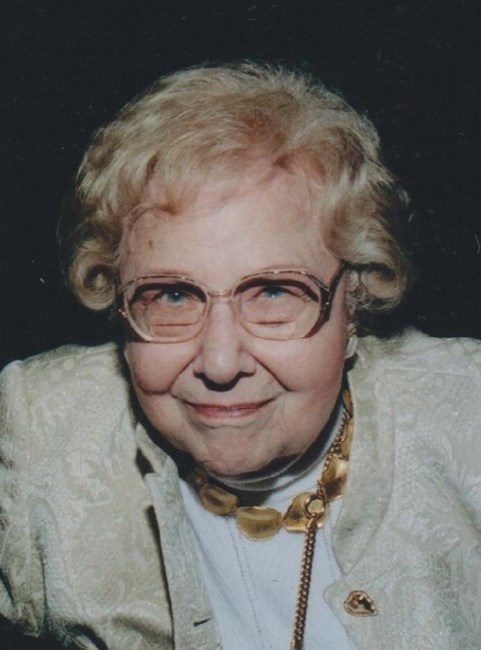
She attended the University of Illinois at Chicago, graduating in 1935 from the University of Illinois in Champaign. She earned her MA in 1937 and her Ph.D. in English Literature in 1942, graduating with honors, both from Northwestern University. Her dissertation was on Henry James.
She taught at the Polytechnic Institute (later Inter American University) in Puerto Rico, where she taught English as a second language. While there, she co-authored a text book entitled Remedial English for Spanish Speaking Students. It was a standard text book in classrooms for many years. She then taught at Whitman College in Walla Walla, Washington, at Wayne State University, in Detroit, Michigan, and Western Reserve University in Cleveland, Ohio.
Ruth then took a job at the Chicago Sun-Times Newspaper. From 1950 to 1952, she was first a copy reader, then moved to the copy desk and finally to the city room as a general reporter. From 1952 – 1968, she was an education writer and originated the position of Education Editor. It was for her by-lines at the Sun-Times that Ruth stopped using her first name, Viola, and just went by Ruth Dunbar. While at the Sun-Times, Ruth, along with a co-worker, wrote the first food column for the Chicago Sun-Times under the nom de plume of “Terry Hunter”.
In 1955, Ruth researched and wrote several in-depth stories about how schools teach reading. The series, entitled “Why Johnny Can’t Read – Or Can He?", was in opposition of Rudolf Flesch’s controversial book of a similar title. Flesch blamed educators for Johnny not being able to read. Her series became so popular that the Sun-Times sold more than 50,000 copies and reprints, increasing the stature of the Sun-Times nationwide. The series of articles became a staple at most major U.S. libraries.
Ruth earned the 1955 Marshall Field Award for her outstanding editorial contributions. That same year, she also received the Education Writers Association Award, and the “Why Johnny Can’t Read – or Can He?” news stories were recognized as “the most outstanding series of articles on educational subjects of national importance in 1955.”
Her 11-part series of articles on her trip to Russia to research their education system earned her the School Bell Award in 1959. It was later reported, in 1968, that Ruth Dunbar was the only Chicago education writer to have received the School Bell Award on all three levels – local, state and national.
In 1960, Ruth received Hall of Fame recognition by B’nai B’rith Women’s Council of Greater Chicago for her contribution to the building of a great American city – Chicago.
In 1965, she was honored with the Good American Award, presented annually to prominent Americans for outstanding contributions within the field of human relations and for practicing the basic principles of American democracy.
She became the Assistant Director of the Department of Education for the State of Illinois in Chicago where she managed the Title One program, a federally sponsored school program for educationally deprived children in low-income areas.
After retiring, Ruth did consulting work in writing, including a book on Egyptology for the University of Chicago.
Ruth was preceded in death by her husband, Ken M. Davee, her parents George and Martha Dunbar and her sister Evelyn Dunbar.
After Ken’s death in 1998, Ruth took over as President of The Davee Foundation.
Survivors include her cousins Betty (Tom) Justie, and their family, and Colin (Edie) Dunbar, and their family.
Burial will be private, with a public memorial service to follow in the near future.
In lieu of flowers, a donation may be made to the organization of your choice.
Arrangements under the direction of Drake & Son Funeral Home, Chicago, IL, 773-561-6874.
Montrez votre soutien
Envoyez Vos
Condoléances
Partager
L'avis De Décès
Obtenir les mises à jour
Prestations de Service
Partager l'avis de décèsPARTAGER
- RECEVOIR DES RAPPELS
v.1.18.0