
AVIS DE DÉCÈS
Broadus Fern F. Horton
10 juillet 1929 – 9 juillet 2017
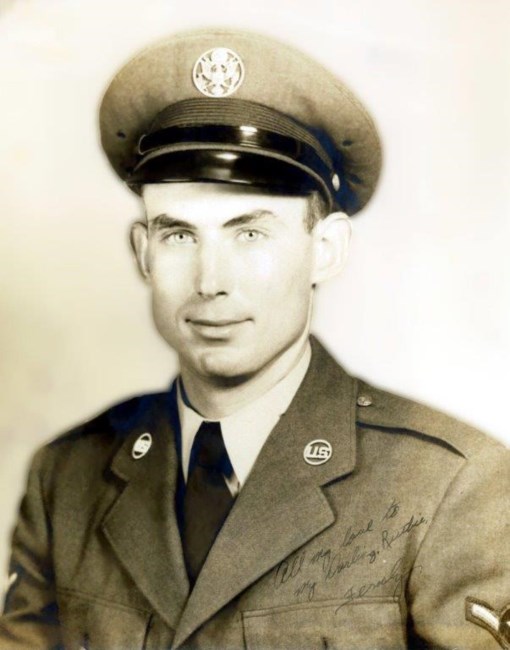
1929 was significant in two ways for the Horton family. July of that year, in Canton, N.C., Broadus Fernly Horton was born in the family home and in October the Great Depression began. Daddy’s distinctive first name came from his father, Broadus Alexander, and his equally unusual middle name came from his mother’s favorite piano teacher. Her infatuation with this teacher and why her only son was so named was neither explained nor asked about. Canton, a town on the Pigeon River, was fortunate to have a paper mill. Although the mill gave the air that “certain smell” and was not kind to the river, it provided work to the men of the area during the austere times of the depression, one of whom was Daddy’s father. While much of Appalachia suffered, the Hortons had plenty. By plenty, I mean enough for the essentials; clothes, food, heat, and education. Daddy and his two sisters never had the newest or finest. They didn’t install an indoor bathroom until Daddy’s first year of college. Recycling meant something different to them than sorting trash into the properly colored containers. Their basement, which Daddy and Granddaddy dug out of the hard red Haywood County dirt, was lined with fruits and vegetables that Granny had canned. Hanging on nails could be found scraps of wire and bits of twine that just might be useful one day. Daddy once said that he didn’t know nails were straight until he was in high school. He also said the depression hit in ’29 and stayed in Canton for twenty-five more years. Daddy grew up thankful for what he was given and could not abide ungratefulness. Although the things of this world were in short supply, the one thing they had in abundance was faith in God. His family was deeply religious and was a pillar of the Baptist community. Don’t drink, don’t smoke, don’t chew, don’t go out with girls that do. Sunday was a day of church and rest. Granddaddy said their apple trees could be pruned all but fifty-two days in the year…Sundays.
World War II was the major event in Daddy’s adolescence. Rationing, victory gardens and war newsreels were ways of life. His boyhood hero was Bob Morgan, pilot of the famed B-17 Memphis Belle. Morgan, a native of nearby Ashville, was allowed to fly to his home town upon completing their 25 mission tour of duty. Daddy watched the Belle fly overhead and would proudly recount the story to all listeners. In 2004, just before his death, Daddy was able to meet Bob Morgan at the Lakeland Sun & Fun Fly-In and tell him that as a boy, he waved as they flew overhead.
After high school came college; first at Mars Hill, a local junior college, then to Louisiana College, where, as in high school, he ran track. Daddy majored in religion and minored in history. Although his degree was in religion, he knew he was not going to be a minister as his parents wished, but since his education was given to him he was not going to be ungrateful. While there he met a dark haired girl from a rice farm in Elton, Louisiana. Her name was Ruth, and she told all her friends to stay away from Fern because she was going to marry him. After graduation, on the first day of summer, sixty-five years ago, they were married in a very warm church in Elton. Daddy said it was so hot the candles were drooping.
The Korean War needed young men so he enlisted in the Air Force because as he said, “Too many of my friends were joining the Army and not coming home.” Military service influenced the rest of his and his family’s lives. The Air Force would take him to Biloxi, Mississippi, Yak Montana, Tacoma, Washington, British Columbia, Canada, Cape Charles, Virginia, Falmouth, Massachusetts, Tampa, Florida, Aviano, Italy, and various schools and training. While in the service he acquired an addiction to airplanes. He loved them. He knew them. The sound of an engine overhead always made him look skyward. Even if it were too high to identify, just the glimpse of a plane, any plane, was significant and worthy of admiration. He passed on his love of flight to both his sons, each of whom became pilots. Daddy had a mistress; her name was Constellation, Connie for short. She had a slender figure that tapered in all the right places back to her graceful tail. Her legs were long and too thin, but you rarely saw them. She was built by Lockheed in the days of complicated piston engined airliners. The Air Force called her EC-121-H Warning Star, but to Daddy she and her sisters were Connies. In the 60s these planes with their eighteen man crews flew twelve hour missions over the North Atlantic searching for Russian bombers. Daddy would point out that the H model was unique in that it had a small hump behind the cockpit and that was the equipment he maintained. Flying on Connies was his job in the Air Force, but as years past, his memories of their time together evoked ever stronger emotions that eclipsed mere duty. He told all listeners about his time spent on flying status. Daddy had a picture of his beloved Connie beside his deathbed. He also said they never saw a Russian. One day, just prior to boarding for a mission, he had a terrible accident that crushed both his thumbs. Fortunately, the flight surgeon was able to re-attach one and repair the other. When he resumed flying many months later, the reshuffled crew structure found him taking his turn at CQ in the barracks while the rest of his crew took their stations in Connie 136. She crashed into the sea that night, losing all but three men. Daddy’s replacement did not survive. His 6,000 flight hours earned him the privilege of proudly wearing permanent wings on his uniform, signifying to all that Sergeant Horton was indeed an airman.
After serving 23 years he retired back in Tampa, but with five children, retirement from work was not an option. Using the Master’s degree earned while in the Air Force, he briefly taught school before beginning his twenty-one year career as the Veterans Counselor for the Clearwater office of the State Employment Service. Daddy retired again in 1998. Two jobs well done.
Daddy was an athlete. In high school he played football in the days of leather helmets with no face guards. His nose was broken at least twice. He ran track on cinder with spiked shoes. He told of a race where he was leading, but could hear the ever louder footsteps behind him as the finish line grew closer. Try as he might, he could not hold off his pursuer and ultimately lost the race. Victory, he said, was not what was important. What was important was that he gave it his very best. As a proud father, he would exhort Neal at track meets with, “Run easy, Neal!” Probably the same encouragement his father gave him.
Daddy was a musician with a lovely tenor voice. He sang in the church choir and especially enjoyed quartets. He played the trombone and ukulele, but the harmonica was his favorite. He would carry it to church socials and family gatherings eager to share his talent. All his children would play musical instruments, but his daughters excelled; Annette and Marie on piano, and Beth with her voice and flute. The Lawrence Welk show was a favorite. I can still remember him whistling.
Daddy was the best speller I ever knew. I used to try to stump him and only succeeded once after finding some obscure medieval word from the Prince Valiant comic strip. I’ll bet he could beat any National Spelling Bee champ.
Daddy hated cats. We never knew why. Perhaps it was their perceived ingratitude, but he waged war on cats. Woe unto the feline who dared walk on his truck or sneak through his back yard. “I planted another hibiscus,” was his code for another missing cat. Thankfully, no unexplained demise ever befell our many pet kitties.
Daddy loved the outdoors. As a boy, at his father’s side, he hunted rabbits and squirrels up and down the nearby mountains. He learned to grow things, especially tomatoes. He was a camper before the days of air conditioned RVs and portable generators. He knew every bird by its call. When he was stationed in Canada, is off- time found him fishing for trout in wild lakes and rivers. While there, he was a tutor in the ways of nature to a city boy who became a lifelong friend. In Virginia and Massachusetts he hunted for small game and fished whenever possible. I still remember the day he bought me a 20 gauge, single shot shotgun. We went to the hardware store where he asked the clerk for some high brass shells. I had no idea what high brass meant. After my first shot at a target, Daddy smiled and said, “You won’t feel that kick when you shoot at a rabbit.” Often we would go stalking through the snow and woods where he taught lessons learned from his father, “Aim a little off from the rabbit’s head, so you don’t get too much shot in the meat. Back away and let the beagle find the rabbit as her reward for the hunt, she earned it.” Once, after firing at a rabbit I asked if he hit it. “I shot at it didn’t I?” He could skin a rabbit in less than thirty seconds. Hunting was more than sport to him. I think in his mind he would harken back to those days in the depression, when anything he put on the table was of value and appreciated, delighting in the gratitude of his family. One influential lesson I learned from our walks through the woods was a tip he gave me on perspective. Only in recent years have I realized what an effect it had on me. He said, “Once in a while stop, stoop down and look under the trees. Things look different. You can see things you’d miss while standing up.” These words, I believe, instilled in me a trait that will not allow me to agree with a commonly accepted conclusion or belief until I have stopped, stooped down and taken a look under the trees.
Daddy was a survivor. While a young father, he contracted Guillain Barre Syndrome, a form of polio that causes progressive paralysis. Prayers and the iron lung kept him alive until the disease could be overcome. He suffered a broken femur, pneumonia, and an aspiration condition all at the same time when he was in his middle eighties. The aspiration rehab alone would have broken a younger and lesser man, but daddy never gave up or lost his sense of humor, even while drinking coffee as thick as honey.
Daddy was Mr. Fixit. He could repair anything! He did everything from car repair to carpentry. Brother Neal’s first bike was a hand-me-down that daddy expertly customized with candy apple red paint, banana seat, stingray handlebars and a larger sprocket that helped Neal out pedal kids on newer bikes. Once for my school project in music class, he built a ukulele out of plywood and pine that looked real and sounded pretty good. I got an A and the teacher kept it. When wiring in a 240V air conditioner, he tied a rope around himself and gave Neal instructions that if he started shaking or smoking to pull real hard! Our cars never went to the repair shop. Daddy could fix it.
Daddy loved God. When we moved to Florida, finding a church was just as important as finding a house. Church attendance was not an option for us. We went. He served in churches as a deacon, teacher, choir member, usher, greeter, and common laborer. We had family devotions around the supper table. Missionaries, home on furlough, would share experiences over dinner. Daddy would offer single airmen a home cooked meal on Sundays between church services. In our home it was understood that honoring God came first wherever we were and he set the example. In Italy he helped found the Aviano Baptist Church. His service and love of God were not for show or duties meant to be added to a list of credits on his account. He served and honored his savior out of love and gratitude.
Daddy was an historian. He really enjoyed reading, especially military history and anything on flight. Often, our conversations turned to facts and opinions on notable planes and the pilots who flew them. Sharing books and magazines with someone of like interests is always fun, but when it’s your father it makes it extra special. The satisfaction of finishing an exceptional book would then bring anticipation of Daddy’s enjoyment when reading the same words.
Daddy loved his family. He was faithful to his wife for all their years. He said that while in Canada, the outdoors help keep him from pursuing other available diversions. Our family, especially in the early years, didn’t have the newest or finest. I didn’t appreciate it then, but now as adult I realize how much our parents sacrificed to give their children far more than they had. He had the honor and satisfaction to witness his five children all prosper in adulthood, each having success in life travelling their own unique paths. Daddy enjoyed our hobbies and shared in our fun. The skill of building and flying model airplanes was taught to Neal and me by Daddy. He took tempered delight in our peculiar affection with things that sometimes flew erratically and quite often went boom. He also shared our disappointments and mistakes without criticism or judgement. He was always willing to help in any way he could from seeing his daughters through college, to swinging a hammer on our projects, or to keep his kids’ unwilling cars running. His seven grandchildren and three great-grandchildren gave him pleasure as the physical joys of life were becoming memories of time past.
In latter years Daddy suffered with scoliosis and emphysema, both of which were probably caused by others, but he never, ever complained. He enjoyed visits with his children and their growing families. Often he would sit on our dock and catch bluegills, and was good at it. One week before his death he looked outside and said, “I think my fishing days are over.”
A Successful Man by Unknown Author
That man is a success:
Who has lived well, laughed often, and loved much
Who has gained the respect of intelligent men and the love of children
Who has filled his niche and accomplished his task
Who leaves the world better than he found it
Who has never lacked appreciation of earth’s beauty or failed to express it
Who looked for the best in others and gave the best he had.
Fern Horton, a successful man, ran many races in life, a lot of them uphill. He didn’t win them all, but he gave each one his very best and we loved him.
* * * * * * * * * *
USAF Tech Sgt. (retired) Broadus Fernly “Fern” Horton, 87, shed his broken body and joined the heavenly chorus on Sunday, July 9, one day before his 88th birthday. Fern was predeceased by his parents, Broadus Alexander Horton and Ethel Harrison Horton, of Canton, North Carolina, by his older sister, Rebekah Horton Ballard, of Shreveport, Louisiana, and one infant son, George Franklin.
After graduating from Canton High School in 1948, Fern attended Mars Hill Junior College, near Asheville, and then transferred to Louisiana College in Pineville, Louisiana, where he earned his degree in Biblical Studies. After graduation, Fern and his college sweetheart, the former Ruth Garbarino, were married on the first day of summer, 1952.
Later that year, Fern enlisted in the U.S. Air Force and attended technical training at Keesler Air Force Base in Biloxi, Mississippi. While on temporary duty at the Air Force station in Yaak Montana the next year, Fern became ill and was eventually diagnosed with Guillain-Barré syndrome. Fern was very thankful for the doctors and staff at Madigan Army Hospital at McCord Field in Tacoma, Washington, for taking care of him while his complete paralysis was cured.
Following his illness, in August, 1954, Fern was transferred to the 917th Aircraft Control and Warning Station at Puntzi Mountain, British Columbia, where he thoroughly enjoyed hunting rabbits in the snow during his off-duty time. While he was at Puntzi Mountain, Fern learned to build and fly model airplanes, a hobby that he enjoyed with his sons for many years. After a brief exit from the Air Force to investigate other opportunities, Fern re-enlisted in 1958 and moved the family to Cape Charles, Virginia for more work with the 917th AC and W.
In 1961, Fern’s training expanded from radar to digital circuitry, and he was transferred to Otis Air Force Base in Massachusetts. Fern’s fondest Air Force memories were of the many hours he spent as part of the 14-member Constellation EC-121H aircraft crew, which flew extended missions over the north Atlantic, listening and watching for missile attacks from the Soviet Union.
In 1968, Fern was transferred to MacDill Air Force Base in Tampa, Florida, and he and the family moved to a neighborhood close to Tampa Airport. Some might have found the sound of jets irritating, but to Fern, it was music. Often, just for fun, he’d drive to the top floor of Tampa Airport’s parking garage to park and watch the aircraft.
In 1973, Fern was assigned to Aviano Air Force Base, Italy, and the small town of Vajont, Friuli, became home for two years. He was part of the 15th Communications Squadron, again watching for hostile activity from the Soviet bloc. Fern was honored to have been a founding member of Aviano Baptist Fellowship (later to become Aviano Baptist Church). While stationed at Aviano, he completed his Master’s degree in Educational Psychology from Wayne State University’s satellite program.
Upon returning to Tampa in 1975, Fern retired from the Air Force. He then briefly taught junior high school at West Gate Christian before joining the Florida State Employment Service’s Clearwater office, where he coordinated job placement of other veterans with community businesses.
Fern retired from this second government job in 1998, and in 2012, he and Ruth moved to their final home in Palm Harbor, to be closer to family. During his time in Florida, Fern had been a member of the West Gate Baptist and Hillsdale Baptist churches in Tampa, and then Berea Baptist Church in Palm Harbor.
Fern is fondly remembered for his wry wit, his love of his tomato plants, his harmonica playing, and his hatred of cats and all things spicy. He was kind and gentle and was very proud to have kept a valid driver’s license until his passing. His memory was outstanding, even to the end, and we will miss his stories.
Fern is survived by his wife of sixty-five years, Ruth Garbarino Horton, sister Marian Horton (and Rev. Carroll) Hamilton; sons Jim (and Diane) Horton, Neal (and Carrie) Horton, daughters Annette (and Zeke) Westfall, Marie (and Ted) Griggs, and Beth (and Paul) Barnard; grandchildren David, Esq. (and Amanda, Esq.) Horton , Dr. Steven (and Dr. Maura Manion) Horton, Kelly, Rachel, Jamie, and Melinda Westfall, and John Paul Barnard; great-grandchildren Stevie, Annabelle, and Liam Horton; and numerous nieces and nephews.
Viewing will be Saturday, July 15 at 10 a.m. at Berea Baptist Church, 370 Alternate US Highway 19, Palm Harbor, Florida, followed by funeral services at 11 a.m. and internment at Sylvan Abbey Cemetery, Clearwater, at 12:30 p.m.
Precious in the eyes of the Lord is the death of his saints. Psalm 116:15Arrangements under the direction of Sylvan Abbey -- Funeral Home, CLEARWATER, FL.
Montrez votre soutien
Envoyez Vos
Condoléances
Partager
L'avis De Décès
Obtenir les mises à jour
Prestations de Service
Partager l'avis de décèsPARTAGER
- RECEVOIR DES RAPPELS
v.1.18.0