
AVIS DE DÉCÈS
Rev. Pascal Kis-Horvath
9 décembre 1924 – 10 août 2013
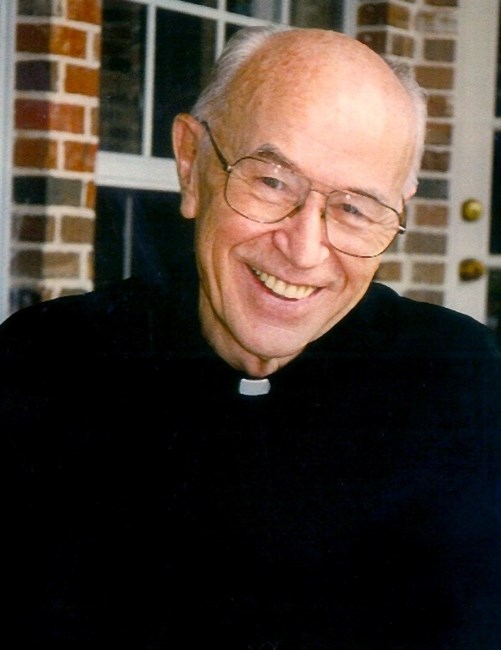
Kis-Horváth, Mihály 1924-2013 Mihály Kis-Horváth was born on December 9, 1924 to Domonkos Kis-Horváth and Maria Hadarits in Petoháza, Hungary, a small town of farmers close to the Austrian border. His father died when he was still a child, leaving his mother to raise him and his older sister, Maria. As a child he contracted tuberculosis in his hip. After the removal of the infected bone, he recovered from the disease but remained handicapped for life. In the midst of these trials and suffering, his religious vocation was born. While studying in Budapest for his high school diploma, he lived in the residence of the young Cistercians attending universities there. All who lived through the long and terrifying days of the 1944-1945 siege of Budapest remembered the limping young man, full of jokes, encouragement and hope. He finished high school after the war, and on August 29, 1947, joined the Cistercian monastery of Zirc. Pascal took his first vows on August 30, 1948, even though the Communist government had confiscated the Cistercians' land and schools. Within two years, the government had completely suppressed the Cistercians along with most other religious groups in Hungary. Six weeks before the monks were disbanded and the abbot imprisoned, Brother Pascal, who knew the country's Western border from his childhood, worked out a plan to prepare the "Great Escape" by clandestinely leaving the country for Austria. Using a chain of acquaintances, Fr. Pascal with 20 other young monks successfully crossed the Iron Curtain (with its mine fields, barbed wire fences, watch towers, armed guards and watch dogs) on September 5, 1950 and passed into Austria. However, the Austrian police under the command of the Soviet occupying forces captured nine of the refugees, and returned them to the Communist rulers of Hungary. As the organizer of the escape and a nephew of Abbot Wendelin of Zirc, Pascal was dealt with particular harshly. In Abbot Wendelin's show trial, the government tried to use Pascal as a crown witness to prove a string of drummed up charges against his Abbot. Both Abbot Wendelin and Father Pascal were subjected to severe beatings and torture. Pascal, however, refused to testify against his abbot. He was sentenced to four years of prison. Pascal was still in solitary confinement when on August 30, 1951 his first set of temporary vows expired. As he later testified in a written deposition to the Holy See, in the absence of anyone to witness his vows, he wrote the renewal of his first vows on the wall of his prison cell. Three years later, when the time had come for his permanent, perpetual religious vows, he was still in prison. At that time, however, he was already allowed to work in a factory staffed by political prisoners with five Cistercians among them. In the lunch break of August 30, 1954, with Fr. Leonard Barta presiding, and four other Cistercians murmuring the text of their religious vows, Br. Pascal made his perpetual vows to seek Christ and his love in the Cistercian Order for the rest of his life. Soon after he was released from prison, a popular uprising made the Communist regime tumble for a few weeks, leaving the borders unguarded. At the advice of Abbot Wendelin, who also became free for a short period of time, Fr. Pascal left Hungary and joined other refugee Cistercians in Rome. After intensive theological studies, he was ordained a priest on July 21, 1957 in the Cistercian Abbey Church of Zwettl. For the following two years Fr. Pascal was chaplain in Hungarian refugee camps, and worked as an assistant pastor in an Austrian village. In spite of the request of many Austrians that he remain among them, Fr. Pascal came to America. From 1959, he lived in the newly founded Cistercian monastery Our Lady of Dallas, working in numerous parishes in Dallas and Ft. Worth. From 1976 to 1988 he was subprior of the monastery. Until 1990 he served as the bursar and cellarer. For many years, he worked at the parish of Saint Monica in Dallas, where he was highly regarded for his service in hearing confessions and providing spiritual guidance. Fr. Pascal had an extraordinary talent for understanding, guiding and consoling people of all walks of life and all age groups. His deep prayer life, warmth in human relations and pragmatic sense for solving real-life problems made him unforgettable for all who turned to him. The many physical sufferings that had accompanied him since early childhood made him an expert in understanding a wide spectrum of human situations and trials. Although he never believed he was able to live up to expectations, his confreres and friends admired him as a model priest and an exceptional blessing to all those to whom he ministered. The Rosary will be at 7:30 p.m. Tuesday August 13, 2013 in the Cistercian Monastery, Mass Wednesday 10.00 am, also at Cistercian. Interment will follow in Calvary Hill Cemetery - Dallas, TX.
Montrez votre soutien
Visiter Le Cimetière
Envoyez Vos
Condoléances
Partager
L'avis De Décès
Obtenir les mises à jour
Prestations de Service
La sépulture
Rev. Pascal Kis-Horvath
CISTERCIAN ABBEY
- Section0
- Lot18
- Sépulture1
Partager l'avis de décèsPARTAGER
- RECEVOIR DES RAPPELS
v.1.18.0