
AVIS DE DÉCÈS
Wallace E. Kane
9 juin 1930 – 26 juin 2012
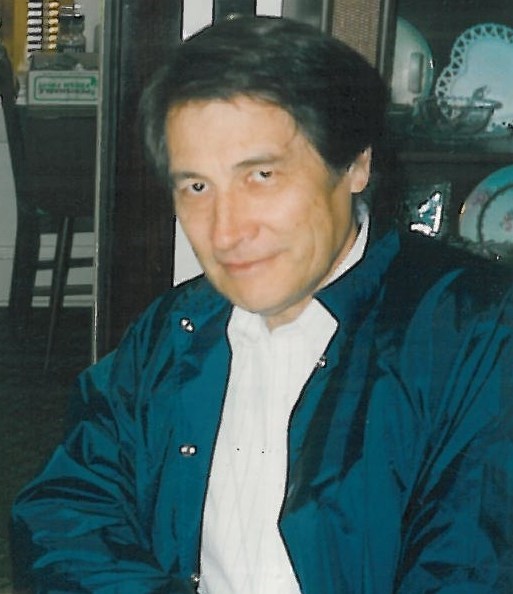
A lifelong musician, professional physicist and engineer, lover of Nature, maker of wonderful drawings, cook and lover of fine Chinese food, and an inventive, quietly surprising humorist, Wally crossed over on June 26 in Eureka CA at the age of 82,
after a brief acute illness.
His wife, Moira, preceded him in 2007. His only sibling, Herb Kawainui Kane,
preceded him in 2011.
Wally's and Herb's mother, the former Dorothy Christina Hansen, was the second of
six children of Andrew and Katharine (Larson) Hansen. Andrew was a Danish
immigrant; Katharine, the child of Danish immigrants. The family homesteaded in
the Town of Rock, 12 miles southwest of Marshfield, Wisconsin, a place of farms
and sparse corduroy roads, amid woods and wildlife. Very intelligent and curious
(like all the family) and very artistic, Dorothy continued self-education all her life.
She managed the office work for her husband's successive small businesses, as
well as the homemaking.
..
Their father, Herbert Sr., was the second of three sons of a South Chinese
immigrant father who farmed taro in Waipi'o Valley, Hawai'i, and also started the first
poi factory in the Islands. The parents intended all three boys to continue the family businesses, and only allowed Herb and Ernest, his older brother, to finish ninth grade
at school. Herb Sr, later said that he had had to do a lot of persuading for the parents
to allow the youngest, Edward, to continue in school; but he did prevail, and Edward
went on to become a fine dentist.
.
The family in Hawai'i used the surname Akioka, the name bestowed upon the father (whose Chinese surname was Mock, and personal name, Chock) by his Hawai'ian neighbors in Waipi'o after he arrived in 1879. Herb Sr, and Dorothy changed
surname in 1946 in Wisconsin, wishing to deflect harassment apparently due to
people mistaking “Akioka” for a Japanese name, and also wishing to honor Herb's Chinese and Hawai'ian antecedents. Their surname became Mock Kane [KAH-nay],
from Herb's father's and mother's surnames, respectively. Herb always took a strong interest in Chinese culture, both serious and fun aspects. A gifted musician in several diverse genres (he played ukulele, guitar, and brass), he was passionate all his life
about Hawai'ian music, as well as about all other aspects of Hawai'ian native culture
and traditional life. Music led him and Dorothy to meet each other, when he traveled
as a member of a Hawai'ian band that included Wisconsin in its US tour. He and
Dorothy mixed Chinese and Danish and Hawai'ian and American elements happily
and lovingly in their family life.
.
Herb Sr. was a man of many skills, intelligent, enterprising, and conscientious.
Examples from his diverse work life: pianolo; bookkeeper; auto and truck mechanic; machinist; proprietor of a meat market; and all along, he could give music lessons.
.
Herb Jr. was born in Paynesville, Minnesota, in 1928; Wally was born in Marshfield, Wisconsin (Dorothy's home area) in 1930. The family lived in Marshfield until 1933,
then spent three years in Hawai'i, near family, then returned to Marshfield
permanently in 1936. Although they loved their Hawai'ian family, Marshfield was a
much better choice economically. The couple's many Wisconsin relatives and friends made for a rich web of caring in their lives through the years.
.
Wally inherited musical abilities from both parents, and started on piano as a small
boy. His teacher recognized him as very gifted, and the family made the economic
effort for him to continue lessons. Starting in ninth grade, the family needed each
boy to take part-time work. Herb Jr., although already an enthusiastic artist, had to
take mundane sorts of jobs, whereas already at that age Wally could earn his share
with steady work playing in a dance band, doing what he loved most. Wally did well
in school, and also took an interest in scouting activities, becoming an Eagle scout.
.
When the US entered WWII, Herb Sr. was decidedly older than the average recruit,
but he was very determined to serve. His WWI service had been in the National
Guard, stationed in Honolulu. After Pearl Harbor he first enlisted in the Army Air
Corps, but after about six months they found his age (he was then 47) a barrier. In
June of 1944 the Navy accepted him, and after outstanding performance in basic
training, he served well throughout the rest of the Pacific War. He used GI Bill
benefits to realize at last his dream of a full education, completing H.S., then A.S.,
then a degree at Northern Illinois College of Optometry, before establishing a
successful private practice at home in Marshfield.
Herb Jr. served in the Navy after high school, then went on to art school, and as he
had wished since early childhood, he became a professional artist. Returning to live
in Hawai'i in 1970, he focused, in art, research and experimental application, on Polynesian heritage, as well as on post-Contact Hawai'ian history. He was officially
named a Living Treasure for this seminal work, as well as other honors; and he had
the gratitude of his dad for helping preserve/revive vital, endangered skills, values,
and consciousness.
.
Wally planned a career as a pianist and composer. Although he enjoyed modern
music – jazz – most, he also loved playing classical, especially Romantic repertoire.
He studied for three years at Lawrence College Conservatory, then decided to enter
the Air Force as a musician, and think over his career plans the while.
.
The Air Force did need musicians – just not piano players. So they sent Wally to
their music school in Washington, DC, where he became, literally, a 90-day-wonder saxophonist. He served his three-year hitch playing in the parade and dance bands
at the Keflavik, Iceland, base. Recollecting later, with deep pleasure, Wally said that
as a saxophonist, he would have made a pretty good piano player, but they had fun.
He always looked back on that experience (it was in fact a very good band) and those friendships as some of the very best in all his long life. He also recalled humorous incidents such as a brawl among the patrons (lonely enlisted men), during which the
band members formed a huddle with their instruments behind the piano – although
Wally and a couple of other tall-framed guys couldn't really get much cover that way.
Some members of the 519th Air Force Band went on to long careers in music, as for example the late Ray Miller and the late Ardash Marderosian. Some surviving
members have kept in touch now for 60 years and counting.
.
Returning to civilian life, Wally decided to save music for pleasure and to make
physics his profession. This meant starting as a freshman again, to take all of the necessary science and math course sequences. He studied at University of
Wisconsin in Madison, earning a Master's degree in 1959. He accepted a job offer at
the facility in California now known as Lawrence Livermore National Laboratory. Here
he not only got to do physics (letters from superiors show admiration for his work), but
he also met his wife.
.
Ruth Mary (Moira) Farwell Kilby had also first become a professional pianist – in her
case with classical emphasis since early childhood – as well as playing guitar and teaching college choral courses. Later she had studied astrophysics at nearby UC Berkeley before accepting a job in physics at The Lab. Her daughter had just started college in Berkeley when they began dating in 1962. They married in 1963. One immediate benefit to both mother and daughter was that Wally cooked and served wonderful Chinese meals for Mom (and for me as eager guest) – cooking being a
manly art in Chinese life. He also taught us how to cook Chinese. Mom and Wally
shared many interests, and an active curiosity, and enjoyed social life with many lively friends of various backgrounds.
.
In 1973 the couple relocated to live near Puget Sound in Moira's home area, settling
on 20 acres bought from a timber company and beginning their 34 years of
ecorestoration there. Wally took another defense-related job, which he held until age
75. Their home was very secluded, so they could play music as loudly as they liked,
at any hour. They found that somehow each successive family dog, down through the years, enjoyed participating with them in making music. The last one, Winnie, was a
Large Munsterlander, a breed of gun dog, and was very attuned to personal
relationship and communication. She would use specific gestures and sequence to request that one of them go to the piano and play; she also virtually sang to music, actually approximating the melodic patterns and intervals in her own vocalizations. Although he loved the wildlife and natural beauties very much, Wally began by feeling isolated there, missing friends and favorite activities down south. But although always
shy, he found that people liked him, and gradually he came to feel himself a part of
the community.
One of several severe trials in their life was the attempt by county commissioners
during the 1990's to impose rezoning upon a large, rural neighborhood, including their nicely-flourishing small forest. The community struggle to save rural properties and
secure fairness cost Mom and Wally, and many others, hugely in energy, time, and
stress endured, as well as costing many thousands of dollars mostly paid by the
Kanes, over eight years just when they were facing old age. In the event, the
Washington State Supreme Court reaffirmed some rulings by lower courts, so that
some of the basic rights of the afflicted residents (and future targeted residents) were recognized and enforced. This partial redress saved at least some homes, including
the Kanes' home and forest.
.
Wally retired in 2005, mainly because Parkinsonian delays with reflexes meant he
had to stop driving. Over the following year, he got less steady on his pins, and being
still six feet tall, he had a problem. Moira, still vigorous at 85 but a foot shorter than
he and vulnerable to neck problems, had to call neighbors (the closest were a
half-mile away) to help him up when he fell into brush outdoors and couldn't get
himself back up. She saw that she couldn't keep him safe there at home. So we all decided they would see how life might suit them in Humboldt County, California,
where my husband and I could help out, and we could all enjoy the companionship.
Wally would live in a small assisted-living group home, and Mom would get an
apartment in the same small city, Eureka. Our own very rural home, accessed by a daunting flight of stairs and by paths decidedly muddy most of the year, would be a summertime picnic destination (featuring goats and llamas as well as nice redwood
trees.) We wanted them to live near each other, and near to the amenities and
medical offices. With both a community college and a state university (both with
excellent music departments) and a varied, effervescent, committed community, we
hoped they would find friends to share their favorite pursuits and be glad of moving
near us. It was a good enough plan, and we made a beginning on it, but then Moira
left this life suddenly, in October 2007, leaving us three to pick up the pieces as best
we could. We formed a family that was tiny but warmly close.
.
In contending with his physical issues, Wally felt fortunate to live at Especially You assisted living, where staff created a loving home life and gave fine individualized
care. Although other residents could not offer Wally real companionship, staff
members recognized his awareness and intelligence as well as his warm heart, and
he enjoyed very much his relationship with each one of them. He also enjoyed being together with me and/or Anders, my husband. But his disability was truly onerous,
and gradually more so, and of course he naturally needed far more autonomy and
scope to use his capabilities, and more variety and adventure, than the situation
allowed.
All the same, he enjoyed reading Science News each week, and liked to watch a
variety of PBS programs on the TV that Herb had given him for his room. We drove
him to and from appointments (normally including fun and food in the outing, too) –
luckily we had a small pickup truck whose seats were at just the height for Wally's
long legs. He and Anders, or all three of us, would drive to birding spots or other nice natural places. Of the range of bird species (we are on a major flyway), Wally had
long found pelicans very fascinating, and enjoyed parking by the harbor in Eureka to watch them hang out and dance in the air there. He was also enthusiastic about accompanying us to our local dairy goat shows. Because Anders is a zookeeper, he
could put little embellishments into our zoo visits – but what Wally appreciated most
was just associating with other species, quietly and closely, whether at the petting
zoo or at goat shows, or when care-home staff brought their pets in to visit.
.
Anders and Wally shared well-developed musicianship, and also specific musical interests, especially certain Romantic composers; and of course Wally continued to
reflect upon jazz in general; and he continued his near-lifelong love affair with
George Gershwin's music. Anders began working on ways to adapt recordings and equipment so that Wally might enjoy hearing them despite his combination of upper-register hearing loss (and he found hearing aids very uncomfortable), Parkinsonian variable skewing in auditory perception (which changed from day to day), and always-possible sensory overload (if the sounds as perceived didn't add up to desirable
music.) The sensory overload tendency (extending to heat, fragrances, skin
sensation, and visual hypnotics) dated from his early years, and music had usually
been a guaranteed help (especially before Parkinsonism), whereas in other types of situations he could feel overwhelmed. In these last years, some days Wally
processed sensory input really well, others, just OK; sometimes he just slept off an overload through most of a day. He bore these and his other issues with equanimity.
.
As a foodie, Wally was in a select class. Even as an elder getting little exercise, he continued his lifelong need to eat as much as a teenager, and with good nutritional content, just to maintain himself. He would gladly eat breakfast and lunch at the home, then go out with us and relish a snack of, say, a large extra-cheese pizza, then enjoy
an ample dinner back home – without growing fat. For special occasions, the choice
was always Chinese food, from a good local place. (Once, a visiting doctor asked him what his favorite Chinese dishes would be; Wally pondered for long moments, his expression warm, then gave up with a smile, saying, “I like it all.”)
Brian Keeler came into our lives two and a half years ago, originally hired to help
Wally with physical therapy and exercise. Noticing that Brian also offered
warmhearted and intelligent companionship, we were very happy to find that he
could arrange to be with Wally regularly, a couple of hours five days a week, adding
to his health and very much to his gladness.
Wally was clearly growing less substantial in recent months, yet continued in his
usual ways, until (like Herb in 2011) suddenly one day he had extensive, fierce pneumonia. After giving hospital treatment (meds, fluids, oxygen by mask) a chance
for two days, we understood that he was about to be on his way. St. Joseph Hospital
staff gave wonderful care and support. We kept him company for the next days, as
he spent his still considerable vigor so that he could go ahead and let go in his
sleep – just at dawn, when in each tree and shrub around the hospital building
(literally) a single bird sang with verve, and the day was lit by a sun whose clear
face the area hadn't seen for weeks.
.
Miss him every day.
..
Dear Relatives and Friends,
In lieu of flowers, please consider contributing to a rescue/rehab facility that serves pelicans. Wally would also appreciate having trees planted in his memory. Or a
person could volunteer time or give some in-kind help to a local rescue/rehab
agency, or to a tree-planting effort...
.
I'm sure folks will notice errors, due either to my misunderstanding something or to
lack of information. If you really want to honor me, please speak up (in print or in
private, as you prefer) and set things straight – the same way any of us might do if
we were sitting around at one of our homes and exchanging memories and ideas,
as a bunch of good friends and relatives.
.
I also hope that anyone who has reminiscences (or even hearsay!) about Wally
and/or Herb, or about any of the family, Wisconsin or Hawai'i or China, recent or far
back – please share them with us all. You could put them into guestbook entries here
(my information is that guestbook entries don't have to fit within any set length.) Even though we are geographically far apart, and maybe haven't even met each other yet,
we might all enjoy and learn from this together.
.
With loving wishes,
Ann Kilby
(Wally's stepdaughter)
P.O. Box 338
Arcata CA 95518
.
Aunt Alvina (Alvina Andrea Hansen Floistad) wrote a couple of short, vivid memoirs
that folks may enjoy reading. Some of us have printed copies (she had them
published privately – she and Dorothy also put out some booklets of poems each
had written.) I could xerox and send to anyone interested:
Times to Keep: about her memories of life at the family's first home,
the little log cabin, where she (aged 4), Dorothy (2),
and August (newborn) lived with their parents.
Fresh Air: about her experiences over several years during the
1920's, working summers at a large orchard in Sturgeon
Bay, with a few adventures.
.
.
.
Here are a few websites offering more about some things I've mentioned that were important to Wally:
.
Article about Herb Kawainui Kane on Wikipedia:
(http://en.wikipedia.org/wiki/Herb[underline]Kawainui[underline]Kane)
.
Short biographical sketches about Mom and Wally, and a reminiscence of my own – composed to accompany the family slide rule collection, when I donated them to The International Slide Rule Museum. The easiest way to find them is to Google Wallace E. Kane, then choose the listing at sliderulemuseum.com that says PDF file with family biographies. (Some of you will note a couple of errors of fact; please make allowances, I intend to correct them...)
.
“Stories of the Development of Large Scale Scientific Computing at Lawrence Livermore National Laboratory: an oral and pictorial history compiled by George A. Michael”:
Wally wasn't interviewed for this series, but he took part in the milieu and activities as described, so these are his experiences, too – a special world very seldom described in print
Montrez votre soutien
Envoyez Vos
Condoléances
Partager
L'avis De Décès
Obtenir les mises à jour
Prestations de Service
Partager l'avis de décèsPARTAGER
- RECEVOIR DES RAPPELS
v.1.18.0