AVIS DE DÉCÈS
Thomas Irenaeus Ochalek
5 mars 1922 – 18 août 2014
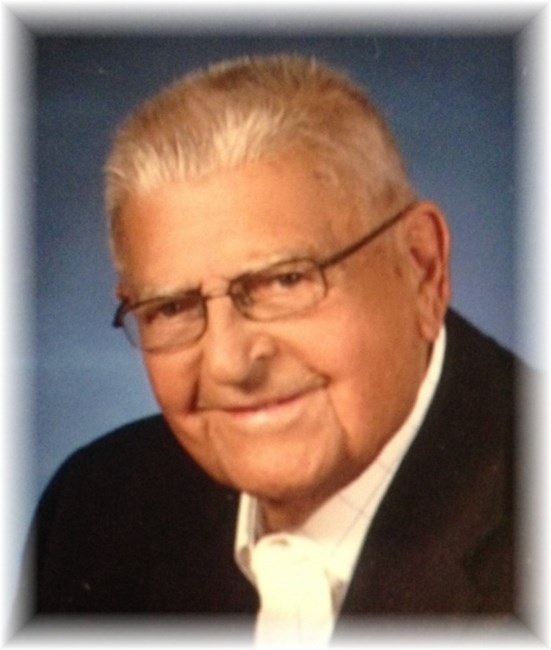
Tom Ochalek gave this speech at a 90th birthday celebration thrown by his friends at his community, River Villas, in Florida and later at another Birthday party at the Polish Village Caf in Hamtramck. Afterwards his talk at the Polish Village Caf, he gave me the notes and asked me to edit them and keep them as I was the family historian. I have edited them and added some names and dates but the content is essentially his story in his words. His voice, his humor, his gregariousness, his joy in life and his unflagging optimism come through this brief account of his life in the military. The short talk shows why he leaves such a void in our world, our hearts and our lives. Thad Radzilowski A REPORT MY LIFE 90 years in 9 minutes I remember Hoover was President. I remember the Great Depression I remember my dad was unemployed and it was a difficult time. We had no radio, nor phone. Our communication was limited to two sources #1 the Press #2 word of mouth. Only 90 years ago, you could say it was very primitive, almost biblical. By the middle of the 20th century we experienced the greatest innovations in communications. Invented or fully developed were the phone, radio, TV, computer, Cell phones, GPS, and we sent a man to the moon. I think it was the greatest century of all mankind. When I was 20 years old a dream ended. I received a letter from the government, a draft notice. I was inducted into the Army on February 6, 1943 I was proud of the war effort. After my 90 days of Basic training, I traveled by train to the West Coast to Seattle, Washington and boarded a ship to Alaska. I was to spend 14 months there. For security reasons, we were issued summer dress military khakis like we were going to the tropics. OD Olive Drab. I'm sure the Japanese had spies checking troops boarding ship in Seattle. In a short time, we arrived in Dutch Harbor. I remember disembarking. The port was not deep enough to dock a large ship so we anchored the troop ship about of a mile out to sea. A tender ship was anchored nearby; the crew strung a rope ladder over the side to the tender. It was about 50 feet wide and 100 feet long. We had to climb over board with a back pack and lower ourselves to the tender. It was scary, the sea was rough. It was touch and go, I would say, but I finally descended. (This is hard on Fruit of the Loom underwear). The Aleutian Islands are 1, 000 miles out to sea between the Pacific Ocean and the Bering Sea - very cold waters. At that time, the Japanese occupied two leading islands, Kiska and Attu. We were located nearby on a large island, Umnack. We joined a 90 MM Anti-Aircraft Unit. Dutch Harbor suffered devastating air attacks by the Japanese. Our job was to protect the area from Japanese bombers and fighters. The weather was unbelievable, constant winds of 100 to 150 miles an hour coming from all four directions. They called these storms but they were far more than that. The Temperatures were near freezing even in the summer. We had no sun. It was very depressing. Should you have the misfortune (or was it fortune) to break a bone, leg or arm they would ship you to California. Do you know why? Without Vitamin D from sunlight you could not heal. We had virtually no sun for a period of 6 months. We recorded 58 minutes of sunshine in about 4 months. After we won back Kiska and Attu and the Japanese evacuated all of their positions in the Aleutians, we secured the area. Then almost everybody regardless of rank was shipped to California. On arrival we were placed in a personal replacement pool. In December, we boarded a large troop ship which according to reports carried 18, 000 troops. It was the English luxury liner, Queen Elizabeth converted to a troop ship. Bunks were set up even in the swimming pool. The crossing took six days. We were escorted by seven sub chasers. We arrived in England, crossed the English Channel and ended up in France. We were greeted by General George Patton (Old Blood and Guts). I joined the 3rd Army six months after D. Day. We participated in the last days of the Battle of the Bulge while in France. Shortly after clearing the Bulge salient, General George Patton gave us a welcome speech. He told us we are the greatest soldiers, and couldn't praise us enough. I remembered he said and I quote "As a whole we're a great unit that just isn't big enough". We slept in the Luxemburg castle one night on the way to our next battle. I remember approaching the battle lines and seeing dead soldiers, both German and American a bloody sight. As we approached the Siegfried line of defense, we dug into the ground. The Germans had bunkers with three foot thick concrete walls to defend their position. Every bunker was contested. We had to take them out one by one. Heavy artillery would soften the bunkers and we would follow up to be sure they were empty. (Sometimes they weren't) The noise of the battlefield was deafening. The pounding of heavy artillery -German 88 MMs and American 155 MMs-was continuous. The drone of American airplanes flying could be heard overhead all day. I was an assistant BAR man. A BAR is a small machine gun. I carried and fed the ammo. On one of our assaults, my BAR man was killed right beside me and I replaced him. One day, as we were moving forward, I was involved in a blast of some sort. I gained consciousness in a US medical ambulance. We arrived in a front line hospital. I remembered, pretty nurses dressed in white. I think they were French. I could not understand their language. I was lying on a stretcher. I had shrapnel all over me but the main injury was to my leg. After some emergency treatment, they decided to evacuate us. Shortly thereafter, I was moved to an airplane. I recall we were in the air for some time. I asked a male nurse what was happening. He said that we could not land because of heavy bombing of the airport. We returned to the continent. The next day we tried again and we made it to the 5th General Hospital in England. After five months, I returned to full duty serving in the Occupation of Germany and doing more training. A short time later, we were preparing to board ships. We were going to the Pacific to fight the Japanese. I just left the Pacific eight months earlier. In August, 1945 President Truman authorized the use of the Atomic bomb on Hiroshima and Nagasaki. The Japanese surrendered. That was the greatest news. We celebrated. About five months later, on January 9, 1946, I was discharged. I had made it home. Editorial Note: Tom was assigned on his arrival in France to the 80th Infantry Division. Called the Blue Ridge Division because it was originally recruited in West Virginia, Virginia, Pennsylvania and Tennessee, it became the one of the mainstays of Patton's famed Third Army. It fought one of the last battles of the War in Czechoslovakia in May, 1945. The Battle that Tom was wounded in was at the Siegfried Line on the Our River which formed the boundary between Germany and Luxembourg. The 80th Division was attempting to breakthrough and seize a foothold on the German side of the river. Tom's efforts were not in vain. Two days after he was wounded, on February 7, 1945, the 80th finally broke through and began to roll up the German line. Memorial Gifts *The family suggests in lieu of flowers donations can be made to the American Cancer Society. *For the development of a long term memorial to Thomas Ochalek, please consider a donation to the The Thomas I. Ochalek Memorial Monograph Series in the History of the 20th Century established by the Piast institute, a national research and policy institute for Polish and Polish Affairs, with an initial gift of $1000 from the Institute and individual staff members in honor of his memory. The Institute will create a series of short monographs (30-40 pages) on topics such as Poland in World War II, The September 1939 Campaign, Polish Americans in the U.S. Armed Forces, Immigrant Women and their Daughters, the Polish Story in Detroit, etc. Each monograph will carry the Title of the Series and feature a picture and biography of Tom Ochalek. The series along with accompanying videos will be designed for teachers, students and the general public. Tom was one of the earliest supporters and friends of the Piast institute. He first visited in May 2003, five months after we were established. He generously donated funds, books, recorded lectures, and historical materials over the next decade. His last gift was only two months ago. He was always very proud of us. He was also proud of his Polish Heritage and his service to his country. He asked that his medals and awards be displayed prominently on our wall. He was especially interested in the institute's work in preserving the History of the Polish Experience in Europe and America in the broad context of Modern History. What impressed us most about him was his deep love of learning. He read widely or purchased recordings of lectures by famous scholars in fields so diverse as philosophy, history, archeology, theology and science. To donate make Checks payable to: The Piast Institute, 11633 Jos Campau, Hamtramck, MI 48212. Ph 313-733-4535. Donations are Tax Deductible. Visit us@ www.piastinstitute.org Thomas I. Ochalek "Reno" was born in Hamtramck, Michigan March 5, 1922 and entered into rest August 18, 2014 in Port St. Lucie, Florida at the age of 92. He was the beloved husband of the late Jane M. (nee Kazmer) and devoted father of Michael, Michele and grandfather to Michael and Joseph. Thomas is also survived by daughter-in-law Kathy. Visitation Wednesday 3:00 pm to 8:00 pm. Funeral Thursday 10:00 am at the A.H. Peters Funeral Home, 20705 Mack at Vernier Road, Grosse Pointe Woods 48236. Monsignor Peter Lentine will be officiating. In lieu of flowers donations to the American Cancer Society.
Funeral Home:
A. H. Peters Funeral Home of Grosse Pointe Woods
20705 Mack
Grosse Pointe Woods, MI
US 48236
Montrez votre soutien
Envoyez Vos
Condoléances
Partager
L'avis De Décès
Obtenir les mises à jour
Prestations de Service
Partager l'avis de décèsPARTAGER
- RECEVOIR DES RAPPELS
v.1.18.0