
AVIS DE DÉCÈS
Emero Sylvester Stiegman
25 décembre 1926 – 21 avril 2017
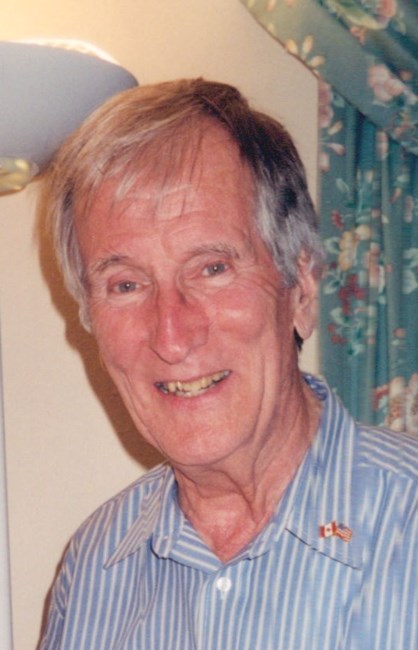
Emero Sylvester Stiegman, 90, died peacefully on Friday, April 21, at Parkland at the Gardens. He was born December 25, 1926 in New Orleans, the son of Monique and Emero Stiegman. He is survived by his daughter, Dr. Martha Stiegman, and grandson Ellis of Toronto. Emero was predeceased by his loving wife, Joan.
Emero joined the Salesian Order as a young man and studied in the United States and Europe. He taught in the Order’s high schools throughout the U.S. where he took great joy in his students and their achievements, including the high school bands he developed. He left the Salesians in 1968 and in 1970 moved to Halifax with his bride, Joan Welling.
Emero was a celebrated teacher in the Religious Studies Department at Saint Mary's University. His contributions to the curriculum were groundbreaking in the 1970s. “Ecology and Religion” was first offered in 1972 and helped create a new field of inquiry for Religious Studies in Canada. His many courses included “Love”, “Death”, “Religion and Art in the West”, Religion and the Social Order”, and “the God Problem”. His creativity in the classroom made him a teacher in constant demand. Among his many remarkable pedagogical moments in his justly famous “Love” course, students and colleagues recall him trucking in his stereo equipment from home so that his students could be introduced to Richard Wagner’s opera Tristan and Isolde in a special evening class – for a small credit, of course. It is one of the great ironies of his teaching career that he never offered a course on St. Bernard, though the influence of Bernard’s thought was everywhere in his courses.
Emero was a dedicated scholar. He built a remarkable scholarly portfolio on the foundation of his doctoral studies at Fordham University. His dissertation on St. Bernard of Clairvaux was praised internationally. Annually he attended the International Congress on Medieval Studies in Kalamzoo, Michigan where he was a respected contributor both of his own papers and commentaries on other’s scholars work. He wrote Bernard of Clairvaux On Loving God: An Analytical Commentary and contributed introductions to works such as Bernard of Clairvaux: Sermons on the Song of Songs. Out of sheer fascination with the topic, and never being daunted by exploring new fields, he accepted an invitation to write a monograph, Rabbinic Anthropology. As with his other work, the result was an excellent scholarly contribution.
At his retirement in 1993 the Senate of Saint Mary's University recognized Emero’s contributions to the university in teaching and research by naming him Professor Emeritus.
One of Emero’s great passions was landscape and building architecture. In his retirement he delivered a series of lectures over several weeks on Cistercian architecture at Gethsemane Abbey in Kentucky. He published a remarkable essay on the light imagery in Bernard of Clairvaux as evidenced by Cistercian architecture. On the applied side, his passion inspired him to create the most remarkable gardens at his retirement home on Piggot Lake. There, the lake, its rocky shores and coastal trees, framed a proliferation of flowers and vegetables. It was his landscape poetry.
Emero and his beloved Joan were hosts par excellence. Their legions of friends were welcomed with an engaging warmth. While Joan prepared the most remarkable table, Emero was the court jester, the resident ‘sommelier’, the maestro of the stereo recordings and the embodiment of southern courtesies.
Friends at Parkland often brought Emero to events. At evenings centered on readings, the hosts frequently prepared in large type a classic poem or section from Shakespeare for him to read. Remarkably, as his memory in other respects seemed to be fading, Emero, ever the teacher and performer, would recite from memory the literature he always loved so dearly.
Shakespeare
SONNET 30
When to the sessions of sweet silent thought
I summon up remembrance of things past,
I sigh the lack of many a thing I sought,
And with old woes new wail my dear time's waste:
Then can I drown an eye, unus'd to flow,
For precious friends hid in death's dateless night,
And weep afresh love's long since cancell'd woe,
And moan the expense of many a vanish'd sight:
Then can I grieve at grievances foregone,
And heavily from woe to woe tell o'er
The sad account of fore-bemoaned moan,
Which I new pay as if not paid before.
But if the while I think on thee, dear friend,
All losses are restor'd and sorrows end.
http://www.shakespeare-online.com/sonnets/30.html
There will be a visitation to honour Emero at Cruikshank's Funeral Home, 2666 Windsor St., Thursday, April 27 from 4 to 7 p.m. A Mass of Christian Burial will be celebrated at 11:00 a.m. on Friday, April 28, at St. Patrick’s Church, 2263 Brunswick Street. A reception will follow at Garden Crest Condominiums, 1540 Summer Street.
In lieu of flowers, donations in Emero's memory may be made to the Halifax Kairos for their continuing work for Truth and Reconciliation.
https://www.gifttool.com/donations/Donate?ID=1992&;AID=1663, designated for the Blanket Exercise.
Montrez votre soutien
Envoyez Vos
Condoléances
Partager
L'avis De Décès
Obtenir les mises à jour
Prestations de Service
Partager l'avis de décèsPARTAGER
- RECEVOIR DES RAPPELS
v.1.18.0